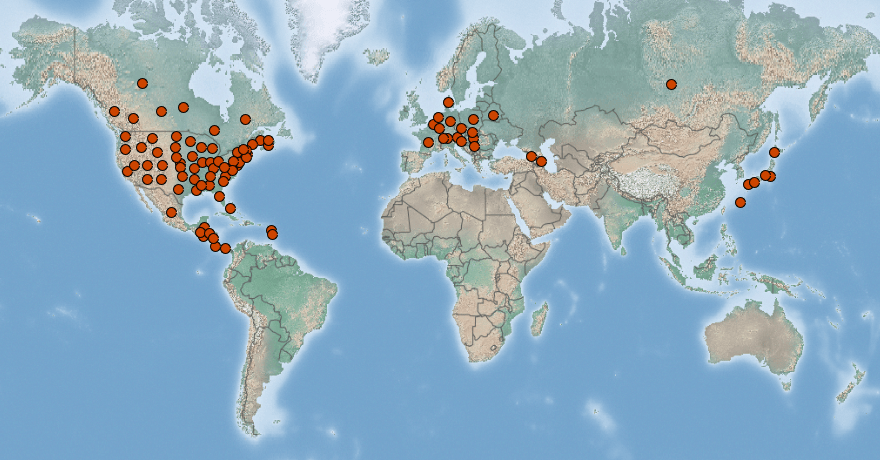
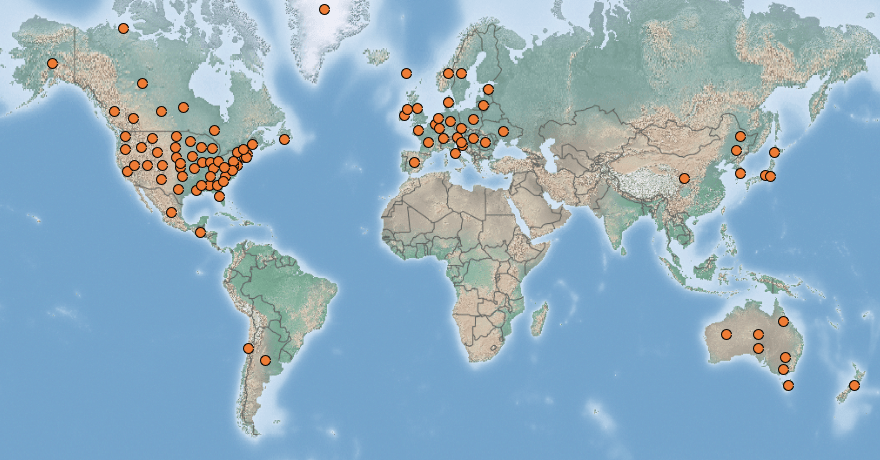
Lupinus polyphyllus Lindl.

English Garden lupin Status LU: established. 1st record: LU <1901, ITW 1991.
Lëtzebuergesch Gaarde-Luppéng Status Eur.: established. 1st record: UK 1826. 1
Français Lupin des jardins RA: ISEIA: C1. Harmonia+: 0,26.
Deutsch Vielblättrige Lupine Wikipedia: Wikipedia - English - Garden Lupin Wikipedia - Français - Lupin des jardins Wikipedia - Deutsch - Vielblättrige Lupine Wikipedia - Nederlands - Vaste lupine | Wikispecies: Wikispecies - Lupinus polyphyllus | CABI
Nederlands Vaste lupine Back to the list of neophytes

Brief description

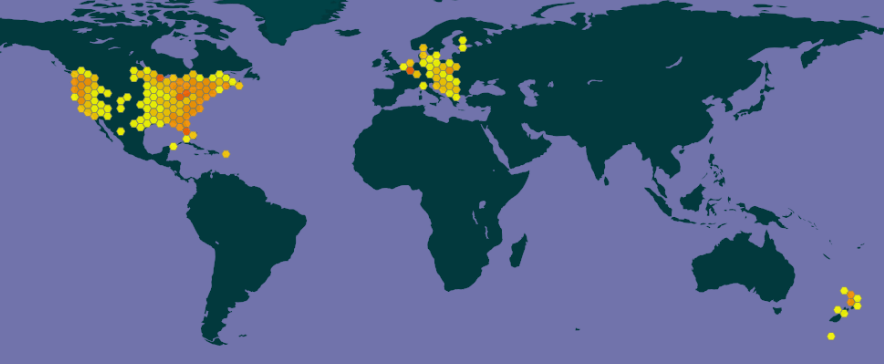
Lupinus polyphyllus UA 2015 G5The pioneer and ruderal plant Lupinus polyphyllus Lindl. prefers medium-moist and shaded sites, with a nutrient-poor sandy or loamy soil. It is found in riparian habitats, abandoned grasslands, forest clearings, clearcuts and on road verges. The strong invasion of semi-natural habitats, as it can be seen in Scandinavia for example, has so far been reported only rarely in western Europe. Seeds are dispersed in the immediate vicinity of the mother plant.

L. polyphyllus may occur in extensive, rather dense stands. It reduces the diversity of early successional plant communities, but has little effect on later successional stages. In central Europe, the plant replaces species-rich dry acidic grasslands with monocultures. Due to the nitrogen-fixing nodules it may change the soil chemistry in favour of nitrogen-demanding species; eutrophication of nutrient-poor sites and consequent changes in community structure and diversity is the main problem when it invades an area (Branquart et al. 2010).

Status and distribution in Luxembourg

Records of Lupinus polyphyllus Lindl. in Luxembourg. Data source: Recorder-Lux, iNaturalist & GBIF, 2021-04-22.

Lupinus polyphyllus Lindl. was first mentioned at a meeting of the Luxembourg Naturalist Society on 1901-05-19 in Diekirch: “Mr. Klein 2 shows: (1) a specimen of Lupinus polyphyllus, a perennial plant that overwinters and, because it is very rich in nitrogen, is most suitable for green manure. […]” (Bricher 1901: 179).

The oldest herbarium specimen at the Museum was collected in June 1949 by Jos. Witry in a garden in Bergem (Specimen № 51392, MNHNL 2000-).

Lupinus polyphyllus Lindl. was first documented in the wild in Luxembourg by Yves Krippel (1992) in the forest Bambësch in Luxembourg City. The species was next documented in the wild by Guy Colling on 2002-06-15 during the Biodiversity Weekend 2002 in the municipality of Bettembourg (MNHNL 2000-).

Whereas only 7 records of the species are listed in the MNHNL-mdata online portal (MNHNL, iNaturalist & GBIF 2019), the species is more common in Luxembourg. In recent years, occurrences have been reported from the Gréngewald forest, next to the new motorway A7, the Bambësch forest next to the road CR 215 or the Kuelent forest east of Helmdange.

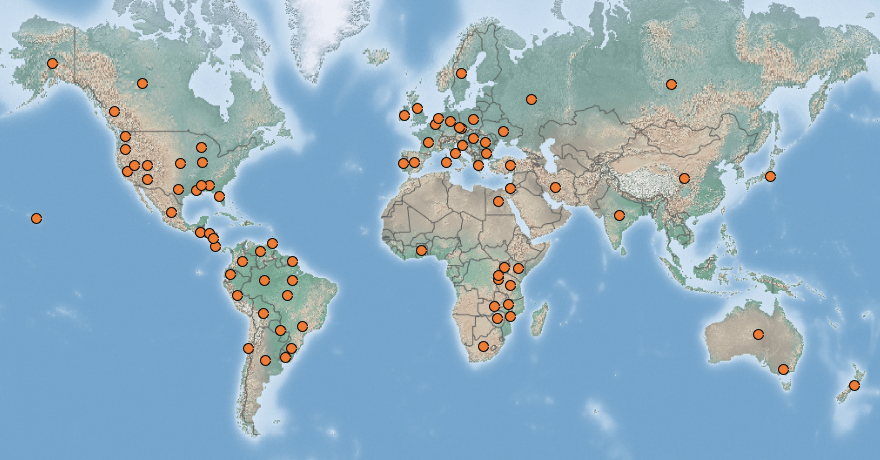
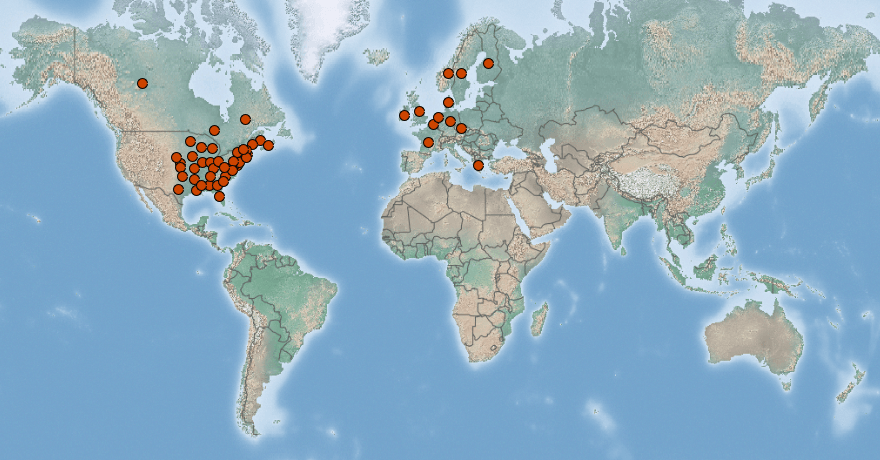
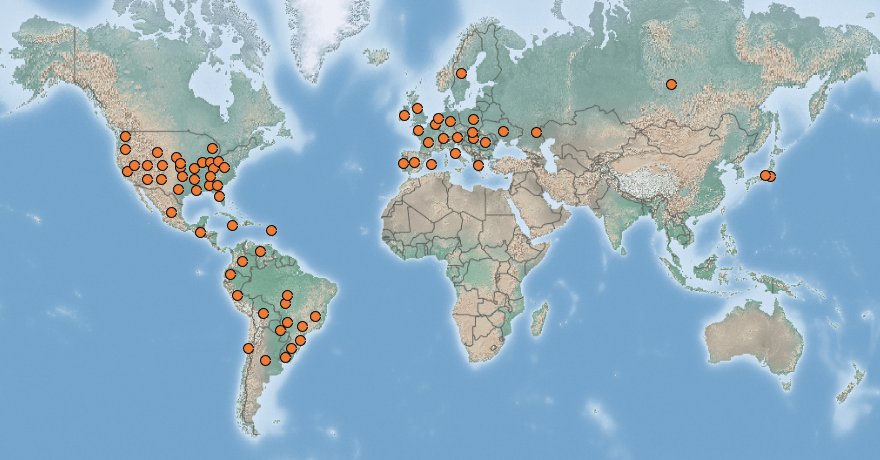
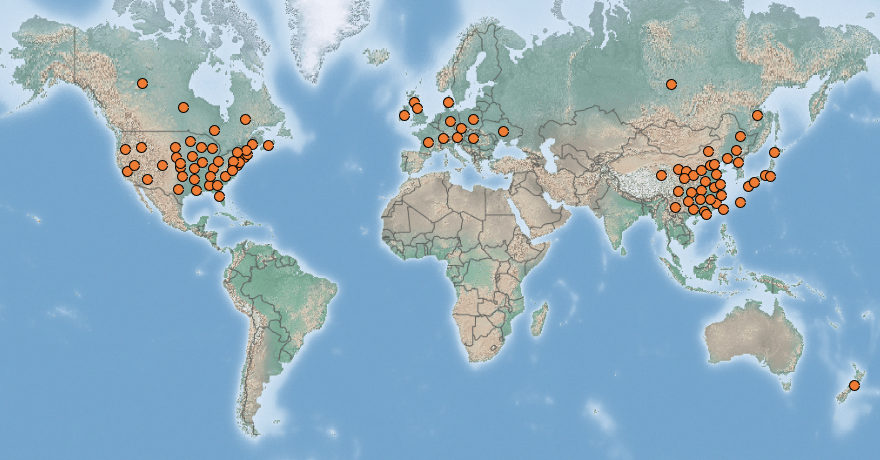
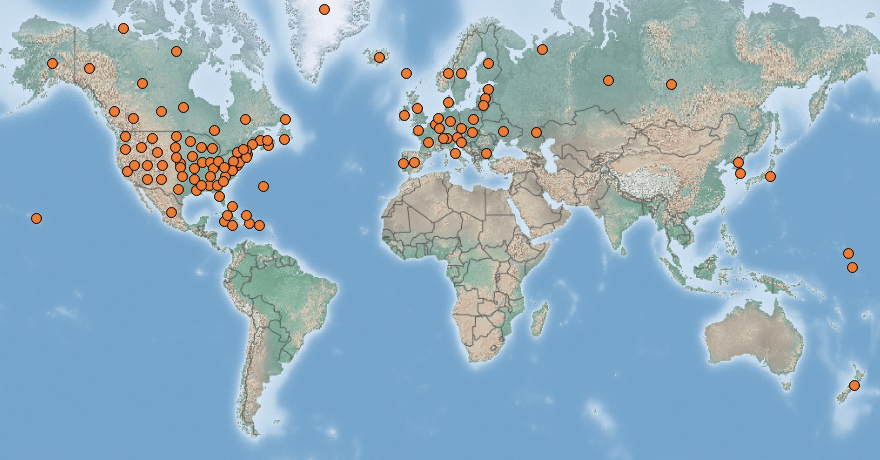
The melliferous garden lupin originates from western North America. Under the name of Lupinus polyphyllus several species, hybrids or cultivars may be confused; next to L. polyphyllus s. str., characterised by the entire upper lip of the calyx, one could observe L. perennis L., L. nootkatensis Donn ex Sims and L. ×regalis Bergm. (L. arboreus Sims × polyphyllus), recognisable by the emarginated upper lip of the calyx (Lambinon & Verloove 2012: 392).

Risk assessment

ISEIA protocol

C1 (1+2+2+2) (Ries et al. 2013: 18).

Harmonia+ protocol

Overall risk score 0,26 = (Overall Invasion score 0,55 x Overall Impact score 0,47) (Ries et al. 2020).

0,55Invasion
0,47Impact
0,26Risk

Worldwide distribution

Bibliography

  • Branquart, E., S. Vanderhoeven, W. Van Landuyt, F. Van Rossum, F. Verloove & A. Vervoort, 2010. Harmonia database: Lupinus polyphyllus Lindl.. Harmonia version 1.2, Belgian Forum on Invasive Species. URL: http://ias.biodiversity.be [accessed on 2019-10-11]
  • Bricher, E., 1901. Wanderversammlung in Diekirch am 19. Mai. Bulletin de la Société des Naturalistes Luxembourgeois 11 (6): 178-183.
  • CABI, 2021. Lupinus polyphyllus. In: Invasive Species Compendium. Wallingford, UK: CAB International. URL: www.cabi.org/isc [accessed 2021-03-04]
  • Krippel, Y., 1992. Effets à court terme d’un apport de fertilisants sur la forêt du Bambësch (Luxembourg-Ville). Travail de fin d’études d’Ingénieur agronome à l’Université Libre de Bruxelles (ULB), section interfacultaire d’agronomie, orientation agronomie générale. [mémoire non publié].
  • Lambinon J. & F. Verloove, 2012. Nouvelle flore de la Belgique, du grand-duché de Luxembourg, du Nord de la France et des régions voisines. Sixième édition. Avec la collaboration de L. Delvosalle, B. Toussaint, D. Geerinck, I. Hoste, F. Van Rossum, B. Cornier, R. Schumacker, A. Vanderpoorten et H. Vannerom. Jardin botanique national de Belgique, Meise. CXXXIX + 1195 pp. ISBN : 9789072619884.
  • MNHNL, 2000-. Lupinus polyphyllus Lindl. in Recorder-Lux, database on the natural heritage of the Grand Duchy of Luxembourg. Musée national d’histoire naturelle, Luxembourg. URL: https://mdata.mnhn.lu [Accessed 2019-10-11]
  • MNHNL, iNaturalist & GBIF, 2019. Lupinus polyphyllus Lindl. in MNHNL-mdata, online portal combining species observation from Recorder-Lux, iNaturalist and GBIF. National Museum of Natural History, Luxembourg. URL: https://mdata.mnhn.lu [Accessed 2019-10-11]
  • Ries, C. & Y. Krippel, 2021 [Unpublished manuscript]. First records of 56 invasive alien vascular plants in Luxembourg. MNHNL & Naturpark Öewersauer.
  • Ries, C., Y. Krippel & M. Pfeiffenschneider, 2020. Risk assessment after the Harmonia+ protocol of invasive alien vascular plant species in Luxembourg. Bull. Soc. Nat. luxemb. 122: 197-205. [PDF 132 KB]
  • Ries, C., Y. Krippel, M. Pfeiffenschneider & S. Schneider, 2013. Environmental impact assessment and black, watch and alert list classification after the ISEIA Protocol of non-native vascular plant species in Luxembourg. Bull. Soc. Nat. luxemb. 114: 15-21. [PDF 652 KB]

 Page content last updated on 2021-03-04. Last proofread by Caroline Grounds on 2019-11-19.

Mahonia aquifolium (Pursh) Nutt.

English Oregon-grape Status LU: established. 1st record: LU 1842, ITW <1875.
Lëtzebuergesch Gewéinlech Mahonie Status Eur.: established. 1st record: 1822. 1
Français Mahonia faux houx RA: ISEIA: B1 – Watch List. Harmonia+: 0,35.
Deutsch Gewöhnliche Mahonie Wikipedia: Wikipedia - English - Oregon-grape Wikipedia - Français - Mahonia faux houx Wikipedia - Deutsch - Gewöhnliche Mahonie Wikipedia - Nederlands - Mahonie (plant) | Wikispecies: Wikispecies - Mahonia/Berberis aquifolium | CABI
Nederlands Mahonie Back to the list of neophytes

Brief description

Berberis aquifolium 4207The shrub Mahonia aquifolium (Pursh) Nutt. occurs in a wide range of semi-natural habitats like dunes, rock outcrops, grasslands and woodlands. They prefer calcic soils and can grow in dry to moist conditions, often in shaded habitats. Mahonia produces numerous flowers and berries that are dispersed by birds over long distances. The recent expansion of this species in western Europe is probably triggered by climate warming.

Mahonia aquifolium has a high growth rate due to hybridisation and subsequent selection by breeders. Rapid clonal growth takes place through root suckers and stem layering, leading to the formation of large and dense populations that are known to overgrow and outcompete native species and accelerate the colonisation of open habitats by woody vegetation (Branquart et al. 2010).

Status and distribution in Luxembourg

Records of Mahonia aquifolium (Pursh) Nutt. in Luxembourg. Data source: Recorder-Lux, iNaturalist & GBIF, 2021-04-22.

Mahonia aquifolium (Pursh) Nutt. is a common ornamental plant in Luxembourg which regularly escapes from cultivation in private and public gardens to form spontaneous woody vegetation. Occurrences in the wild remain rare.

Koltz (1875:18) reports that the species was introduced into the Walferdange Park in 1842 (= 1st record); furthermore, it sometimes occurs subspontaneously, e.g. in the fir grove above the Jewish cemetery in Clausen (Luxembourg City), which is why we consider <1875 as the date of 1st record in the wild.

It was next documented in the wild in Luxembourg on 1950-07-20 by Léopold Reichling (1921-2009) in Verluerekascht (Municipality of Larochette) (MNHNL 2000-).

The oldest herbarium specimen at the MNHNL was collected by Jos. Witry on 1935-04-21 in a park in Bergem (Specimen № 51941, MNHNL 2000-).

13 records are accessible through the MNHNL-mdata portal (MNHNL, iNaturalist & GBIF 2019).

The melliferous Oregon-grape originates from North America (Lambinon & Verloove 2012: 92).

Other Mahonia species, cultivars and hybrids

Various cultivars and hybrids of this species are planted for ornamental purposes, the latter resulting from hybridisation with other North American species Mahonia pinnata (Lag.) Fedde and M. repens (Lindl.) D. Don in particular. The following taxa could thus be observed escaping from culture: M. aquifolium, M. ×wagneri (Jouin) Rehd. (M. aquifolium × pinnata) and M. ×decumbens Stace (M. aquifolium × repens) (Lambinon & Verloove 2012: 92).

Krombach (1875: 38) mentions Mahonia repens (Lindl.) G.Don for Luxembourg: “Introduced from America and cultivated for its early flowering and evergreen foliage.”

In total, Jean-Pierre-Joseph Koltz (1875: 18) mentions six Mahonia species introduced to Luxembourg:

  • Mahonia aquifolium (Pursh) Nutt.: introduced into the Walferdange Park in 1842;
  • Mahonia fascicularis DC.: introduced into the Walferdange Park in 1842;
  • Mahonia fortunei (Lindl.) Fedde: introduced into the Dominican Park in 1853;
  • Mahonia japonica (Thunb.) DC.: introduced into the Dominican Park in 1854;
  • Mahonia nervosa (Pursh) Nutt.: introduced into the Dominican Park in 1861;
  • Mahonia repens (Lindl) G. Don: introduced into the Walferdange Park in 1842.

Risk assessment

ISEIA protocol

B1 (3+2+2+2) = Watch List (Ries et al. 2013: 18).

Harmonia+ protocol

Overall risk score 0,35 = (Overall Invasion score 0,72 x Overall Impact score 0,48) (Ries et al. 2020).

0,72Invasion
0,48Impact
0,35Risk

Worldwide distribution

Bibliography

  • Branquart, E., S. Vanderhoeven, W. Van Landuyt, F. Van Rossum, F. Verloove & A. Vervoort, 2010. Harmonia database: Mahonia aquifolium (Pursh) Nutt.. Harmonia version 1.2, Belgian Forum on Invasive Species. URL: http://ias.biodiversity.be [accessed on 2019-10-11]
  • CABI, 2021. Mahonia aquifolium. In: Invasive Species Compendium. Wallingford, UK: CAB International. URL: www.cabi.org/isc [accessed 2021-03-04]
  • Koltz, J.-P.-J., 1875. Dendrologie luxembourgeoise. Catalogue des arbres, arbrisseaux et arbustes spontanés, subspontanés ou introduits dans la culture du Grand-Duché de Luxembourg. Imprimerie V. Buck, Luxembourg, 217 pp.
  • Krombach, J.-H.-G., 1875. Flore du grand-duché de Luxembourg. Plantes phanérogames. 564 p. Luxembourg, Imprimerie Joris.
  • Lambinon J. & F. Verloove, 2012. Nouvelle flore de la Belgique, du grand-duché de Luxembourg, du Nord de la France et des régions voisines. Sixième édition. Avec la collaboration de L. Delvosalle, B. Toussaint, D. Geerinck, I. Hoste, F. Van Rossum, B. Cornier, R. Schumacker, A. Vanderpoorten et H. Vannerom. Jardin botanique national de Belgique, Meise. CXXXIX + 1195 pp. ISBN : 9789072619884.
  • MNHNL, 2000-. Mahonia aquifolium (Pursh) Nutt. in Recorder-Lux, database on the natural heritage of the Grand Duchy of Luxembourg. Musée national d’histoire naturelle, Luxembourg. URL: https://mdata.mnhn.lu [Accessed 2019-10-11]
  • MNHNL, iNaturalist & GBIF, 2019. Mahonia aquifolium (Pursh) Nutt. in MNHNL-mdata, online portal combining species observation from Recorder-Lux, iNaturalist and GBIF. National Museum of Natural History, Luxembourg. URL: https://mdata.mnhn.lu [Accessed 2019-10-11]
  • Ries, C. & Y. Krippel, 2021 [Unpublished manuscript]. First records of 56 invasive alien vascular plants in Luxembourg. MNHNL & Naturpark Öewersauer.
  • Ries, C., Y. Krippel & M. Pfeiffenschneider, 2020. Risk assessment after the Harmonia+ protocol of invasive alien vascular plant species in Luxembourg. Bull. Soc. Nat. luxemb. 122: 197-205. [PDF 132 KB]
  • Ries, C., Y. Krippel, M. Pfeiffenschneider & S. Schneider, 2013. Environmental impact assessment and black, watch and alert list classification after the ISEIA Protocol of non-native vascular plant species in Luxembourg. Bull. Soc. Nat. luxemb. 114: 15-21. [PDF 652 KB]

 Page content last updated on 2021-03-04. Last proofread by Caroline Grounds on 2019-11-19.

Prunus laurocerasus L.

English Cherry laurel Status LU: established. 1st record: LU <1875, ITW 1989.
Lëtzebuergesch Lorberkiischt Status Eur.: established. 1st record: IT ~1550.
Français Laurier-cerise RA: ISEIA: B3, Watch List. Harmonia+: 0,45.
Deutsch Lorbeerkirsche Wikipedia: Wikipedia - English - Cherry laurel Wikipedia - Français - Laurier-cerise Wikipedia - Deutsch - Lorbeerkirsche Wikipedia - Nederlands - Laurierkers | Wikispecies: Wikispecies - Prunus laurocerasus
Nederlands Laurierkers Back to the list of neophytes

Spot the cherry laurel – citizen science with children

The Department of Ecology of MNHNL carried out a citizen science survey with children who are members of the Panda Club of the Luxembourg National Museum of Natural History (Schaltz 2017). See the post Spot the cherry laurel – A citizen science survey with children for more details.

Brief description

Cherry laurel in a forest near Steinsel. 11/03/2017, Manou Pfeiffenschneider.

Prunus laurocerasus L. is a shrub that thrives in woodland areas with moist, slightly acidic soils, both in well-lit and shaded conditions. Fruits are dispersed over long distances by birds. In recent years, seedlings have increasingly been observed in the wild.

So far, strong invasion by cherry laurel is not known in western Europe. Invasion histories are, however, numerous in southern and central Europe, where the plant rapidly expands by root-suckering, layering and stump-sprouting. It has a dense and permanent canopy that outcompetes native species, prevents forest regeneration and reduces biodiversity. Elevated atmospheric CO2 concentration and global warming recently favoured plant installation in Atlantic conditions as well, where it is likely to become a new threat for native biodiversity. The plant is a potential vector of different Phytophtora pathogens. Leaves contain cyanogenic glucoside that are toxic for humans (Branquart et al. 2010).

A field survey in the region of Basel, Switzerland, assessed the impact of the invasive shrub Prunus laurocerasus on the native vegetation and soil properties in suburban deciduous forests. A lower native plant species richness in both the ground vegetation and shrub layer was observed in plots with presence of P. laurocerasus. A different species composition of the ground vegetation was also found among plots with and without the invasive shrub. Plots invaded by P. laurocerasus had a lower soil moisture content than control plots. The intensity, diversity and substrate richness of the carbon sources were elevated in soil from invaded plots compared to soil in control plots. However, the chemical soil characteristics examined and the activities of enzymes were not influenced by the invasive plant. The effects of P. laurocerasus became more pronounced with the time elapsed since the establishment of the invasive plant. Thus, the removal of young P. laurocerasus individuals would be an appropriate management practice for this invasive shrub species (Rusterholz et al. 2018).

Picture galleries

Prunus laurocerasus near the natural reserve Haard – Hesselsbierg – Staebierg, Dudelange. Photos by Tiago de Sousa (ANF), 15 March 2017.

Disposal of hedge cuttings of Prunus laurocerasus in the forest at the edge of the road between Meysembourg and Angelsberg. Photos: C. Ries, 2021-03-12.

Status and distribution in Luxembourg

Records of Prunus laurocerasus L. in Luxembourg. Data source: Recorder-Lux, iNaturalist & GBIF, 2021-04-22.

Koltz (1875: 55) lists Prunus laurocerasus L. under its synonym Padus laurocerasus (L.) Mill. as cultivated for a long time. Krombach (1875: 145) lists the species under its synonym Cerasus laurocerasus DC. as a cultivated evergreen shrub.

The oldest herbarium specimen at the MNHNL was collected in 1952 by Adolphe Molitor in Höhenhof near Luxembourg City (Specimen № MNHNL34303, MNHNL 2000-).

Kariger states “This ornamental shrub, which originates from south-eastern Europe and often runs wild in the Mediterranean region and in western France, is rarely found in this condition in our country”. He then reports first observations in the wild for Luxembourg: the variety with narrow-pointed, sharply toothed leaves in late 1989 (seminary garden on the Würthsberg in Clausen, Luxembourg City; Kuebebierg near Weimerskirch) (Kariger 1990: 86) and the variety with oval leaves in 1990 (Pulvermühl, Luxembourg City; Schlaed, Dommeldange) (Kariger 1990: 94). 1

Since 2017, the plant was discovered in forest areas west of Steinsel, between Steinsel and Bridel, in Bereldange, close to the Haard – Hesselsbierg – Staebierg nature reserve next to Dudelange, near Cruchten (Krippel et al. 2018: 70). Since then, further locations have been found which suggest that the species is expanding into the wild (e.g. Findel, Remich). A similar behaviour can be observed in neighbouring Belgium (Henneresse 2014).

Currently, 120 records (2019: 75) of the cherry laurel are accessible through the MNHNL-mdata portal (MNHNL, iNaturalist & GBIF 2021). This trend confirms this species is more and more often observed far from any dwelling (Krippel et al. 2020: 45).

Nowadays in Luxembourg, cherry laurel is a common garden plant, mostly planted to build hedges.

Prunus laurocerasus planted on both sides of a bench along a forest road near Kopstal. Photo: C. Ries, 2019-03-21.

Management

Distribution of Prunus lauroceraus east of Bridel. Map: efor-ersa, 2021-03.

Since 2020, a project has been running on behalf of the MNHNL in cooperation with two forestry offices to map Prunus laurocerasus in their forest areas and to develop control methods: in principle, small specimens are uprooted, medium-sized ones are dug up and large ones are curled. The experience and knowledge gained are then incorporated into control recommendations. Initial mapping shows that the species has spread rapidly in recent times.

Left: Prunus lauroceraus in a spruce forest near Weiswampach. Right: small individuals (here: 60 cm above soil) can easily be uprooted by hand. Photos: C. Ries, 2021-03-18.

Management in the Steinsel forestry district

Distribution of Prunus lauroceraus west of Steinsel. Map: efor-ersa, 2021-03.

The cherry laurel is mainly found on the Luxembourg sandstone plateaus, usually around nurseries and on the outskirts of settlements. In general, a main plant establishes itself in the forest and multiplies horizontally by shoots. Removal from sandy soil is fairly easy and allows the plant to be removed almost entirely.

About 30 cherry laurel plants were removed in the Steinsel forest district in 2020. The removal of this plant is done manually, with simple tools (square cross pick, spade). Moving through the forest is done on foot. The uprooted cherry laurels are then thrown into a communal “household waste” container which will be transferred to the SIDOR incineration plant in Leudelange. The only thing left to do is to check the areas for rootlets later (Lichtenberger 2020).

Cultivated evergreen Prunus species and cultivars

Two species of hardy, evergreen Prunus are grown for ornamental purposes in parks and gardens: P. laurocerasus L. (Syn.: Laurocerasus officinalis M.J. Roem.) [of which two varieties are mainly cultivated: P. laurocerasus var. caucasica (Kirchner) Jaeger and P. laurocerasus var. schipkaensis Späth ex H. Späth] and P. lusitanica L. [Syn. : Laurocerasus lusitanica (L.) M.J. Roem.] ; these two species are sometimes observed in a subspontaneous state, the first more and more often, the second very rarely (Lambinon & Verloove 2012: 365).

Native hedge plants as alternatives to the cherry laurel

The following species are good alternatives 2 for creating a privacy hedge:

  • Carpinus betulus: leaves deep green, bright yellow to brown in autumn; there are varieties that lose their leaves only at the end of winter.
  • Fagus sylvatica: orange-red leaves in autumn; there are varieties that lose their leaves only at the end of winter.
  • Acer campestre: grows quickly, popular for higher hedges.
  • Prunus spinosa: dense hedge; good retreat and food source for animals; fruits can be harvested after the first night frosts and made into jam or liqueur.
  • Cornus mas: three to six metres high; flowers from February, valuable food for bees; leaves yellow to orange in autumn; red, edible fruits very rich in vitamins; good protective hedge for birds.
  • Corylus avellana: up to 7 m high; from late January to April it forms flowers in golden-yellow catkins; pollen allergy sufferers should avoid these plants, however, as the male catkins release a lot of pollen; nuts are a food source for native wildlife, birds use the hedge for nesting.
  • Sorbus aucuparia: up to 15 m high, red fruit clusters in autumn; berries are eaten by many bird species; very rich in vitamins.

Risk assessment

ISEIA protocol

B3 (3 + 2 + 2 + 2) = Watch list, reassessed on 2021-03-21 by C. Ries & M. Pfeiffenschneider. First assessed as C1 (2+2+0+1) (Ries et al. 2013: 18).

Harmonia+ protocol

Overall risk score 0,45 = (Overall Invasion score 0,70 x Overall Impact score 0,63) (Ries et al. 2020).

0,70Invasion
0,63Impact
0,45Risk

Worldwide distribution

Bibliography

  • Branquart, E., P. Dupriez, S. Vanderhoeven, W. Van Landuyt, F. Van Rossum & F. Verloove, 2010. Harmonia database: Prunus laurocerasus L.. Harmonia version 1.2, Belgian Forum on Invasive Species. URL: http://ias.biodiversity.be [accessed on 2019-10-15]
  • GBIF 2020. Prunus laurocerasus in GBIF Secretariat (2019). GBIF Backbone Taxonomy. Checklist dataset https://doi.org/10.15468/39omei accessed via GBIF.org on 2020-03-02.
  • Henneresse, T., 2014. Notes floristiques inédites sur la Lorraine belge et l’Ardenne méridionale (2009–2013). Adoxa 81: 29-40.
  • Kariger, J.-J., 1990. Auf der Suche nach Seltenheiten und verschwundenem 1970-1989. Bericht und Auswahl floristischer Tätigkeit ergänzt durch ökologische Betrachtungen.. Bulletin de la Société des naturalistes luxembourgeois 90: 71-101. [PDF 1762 KB]
  • Koltz, J.-P.-J., 1873. Prodrome de la flore du grand-duché de Luxembourg. Première partie. Plantes phanérogames. Imprimerie V. Buck, Luxembourg. 279 S.
  • Krippel, Y., T. Helminger & G. Colling, 2018. Notes floristiques. Observations faites au Luxembourg (2016-2017). Bull. Soc. Nat. luxemb. 120: 57-76. [PDF 265 KB]
  • Krippel, Y., T. Helminger & G. Colling, 2020. Notes floristiques. Observations faites au Luxembourg (2018-2019). Bulletin Soc. Nat. luxemb. 122 : 29-55. [PDF 132 KB]
  • Krombach, J.-H.-G., 1875. Flore du grand-duché de Luxembourg. Plantes phanérogames. 564 p. Luxembourg, Imprimerie Joris.
  • Lambinon J. & F. Verloove, 2012. Nouvelle flore de la Belgique, du grand-duché de Luxembourg, du Nord de la France et des régions voisines. Sixième édition. Avec la collaboration de L. Delvosalle, B. Toussaint, D. Geerinck, I. Hoste, F. Van Rossum, B. Cornier, R. Schumacker, A. Vanderpoorten et H. Vannerom. Jardin botanique national de Belgique, Meise. CXXXIX + 1195 pp. ISBN : 9789072619884.
  • Lichtenberger, G., 2020. Traitement de Prunus laurocerasus dans le triage forestier de Steinsel, Luxembourg. Rapport non publié, 2020-10-22, 4 pp.
  • MNHNL, 2000-. Prunus laurocerasus L. in Recorder-Lux, database on the natural heritage of the Grand Duchy of Luxembourg. Musée national d’histoire naturelle, Luxembourg. URL: https://mdata.mnhn.lu [Accessed 2019-10-15]
  • MNHNL, iNaturalist & GBIF, 2021. Prunus laurocerasus L. in MNHNL-mdata, online portal combining species observation from Recorder-Lux, iNaturalist and GBIF. National Museum of Natural History, Luxembourg. URL: https://mdata.mnhn.lu [Accessed 2021-01-13]
  • Ries, C. & Y. Krippel, 2021 [Unpublished manuscript]. First records of 56 invasive alien vascular plants in Luxembourg. MNHNL & Naturpark Öewersauer.
  • Ries, C., Y. Krippel & M. Pfeiffenschneider, 2020. Risk assessment after the Harmonia+ protocol of invasive alien vascular plant species in Luxembourg. Bull. Soc. Nat. luxemb. 122: 197-205. [PDF 132 KB]
  • Ries, C., Y. Krippel, M. Pfeiffenschneider & S. Schneider, 2013. Environmental impact assessment and black, watch and alert list classification after the ISEIA Protocol of non-native vascular plant species in Luxembourg. Bull. Soc. Nat. luxemb. 114: 15-21. [PDF 652 KB]
  • Rusterholz, H.P., J. Schneuwly, B. Baur, 2018. Invasion of the alien shrub Prunus laurocerasus in suburban deciduous forests: Effects on native vegetation and soil properties. Acta Oecologica 92, 44-51.
  • Schaltz, Michèle, 2017. Fuerschung am ‘Natur Musée’: Ekologie. Panewippchen 4: 6-11. [PDF 2.2 MB]

 Page content last updated on 2021-03-26. Last proofread by Caroline Grounds on 2021-03-26.

Rhus typhina L.

English Stag’s-horn sumach Status LU: established. 1st record: LU <1875, ITW 1986.
Lëtzebuergesch Essegbam Status Eur.: established. 1st record: unkn.
Français Sumac vinaigrier RA: ISEIA: B1, Watch List. Harmonia+: 0,28.
Deutsch Essigbaum Wikipedia: Wikipedia - English - Stag's-horn sumach Wikipedia - Français - Sumac vinaigrier Wikipedia - Deutsch - Essigbaum Wikipedia - Nederlands - Fluweelboom | Wikispecies: Wikispecies - Rhus typhina | CABI
Nederlands Fluweelboom Back to the list of neophytes

Brief description

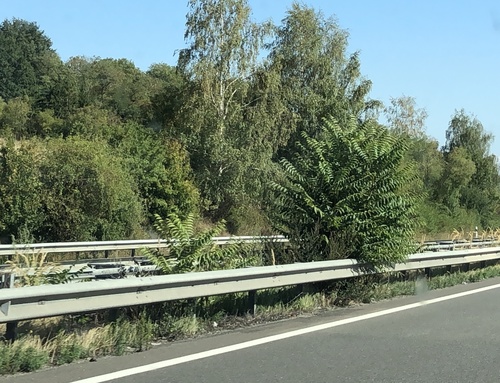
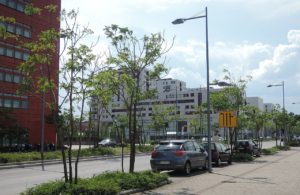
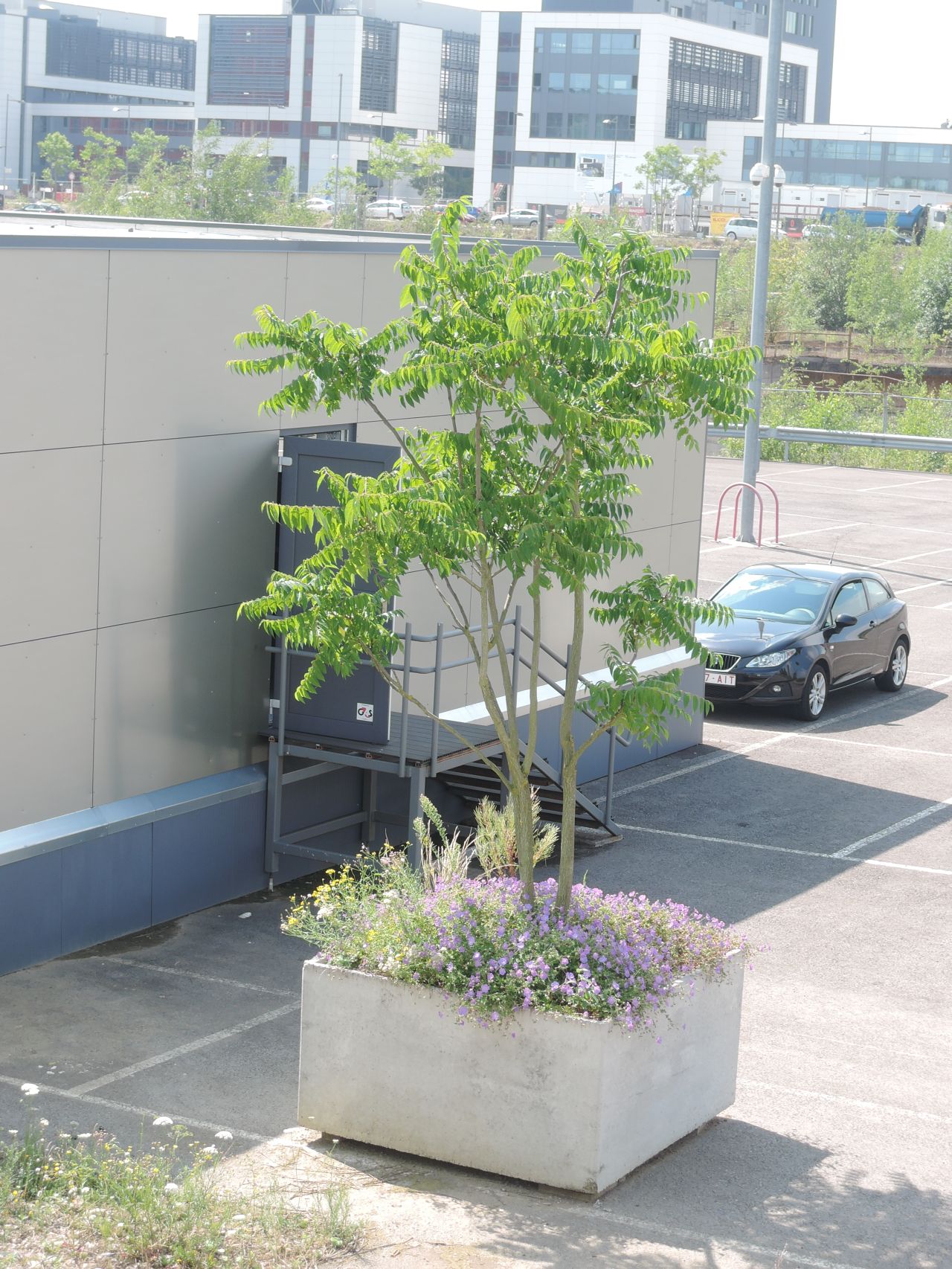
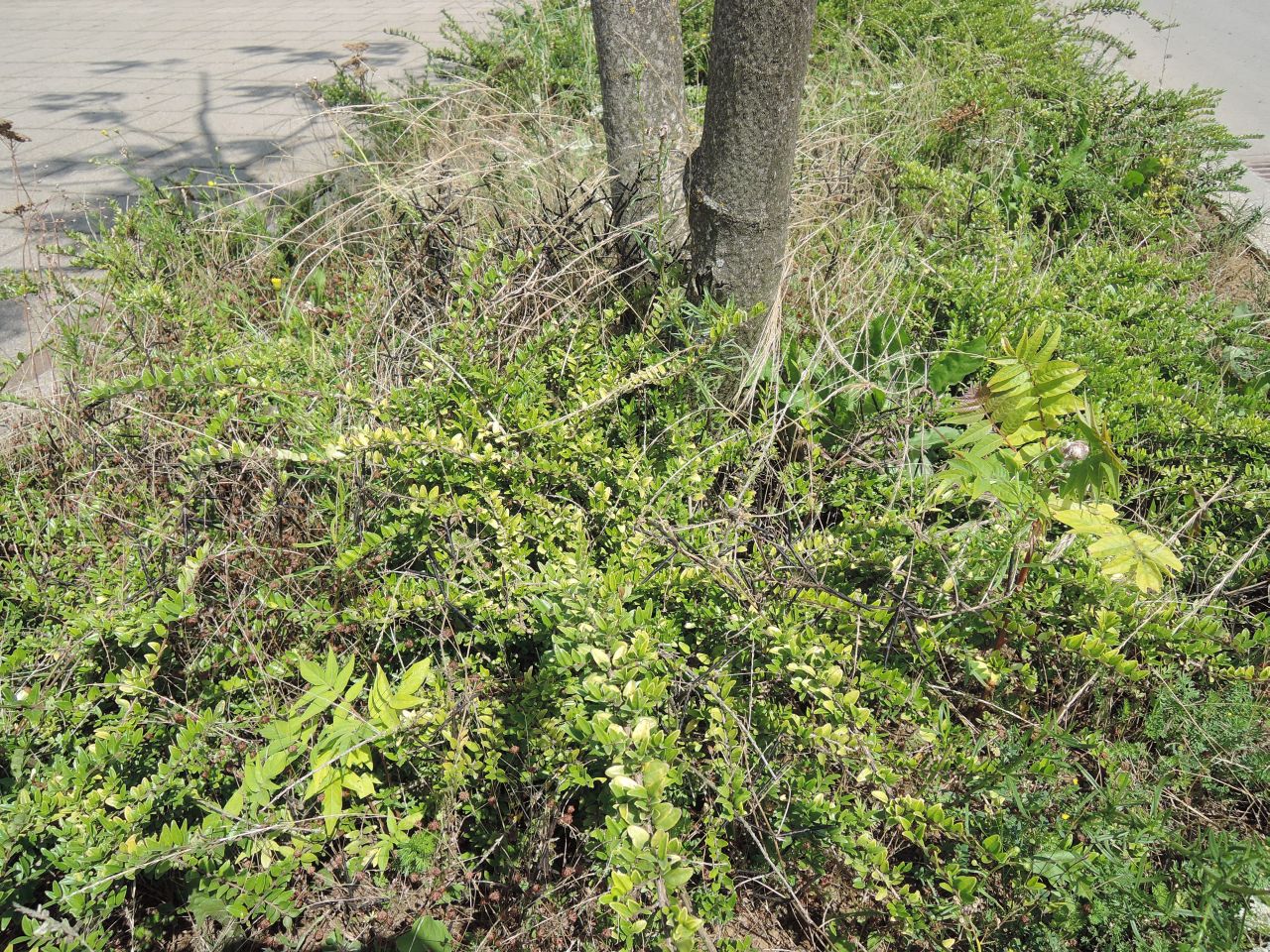
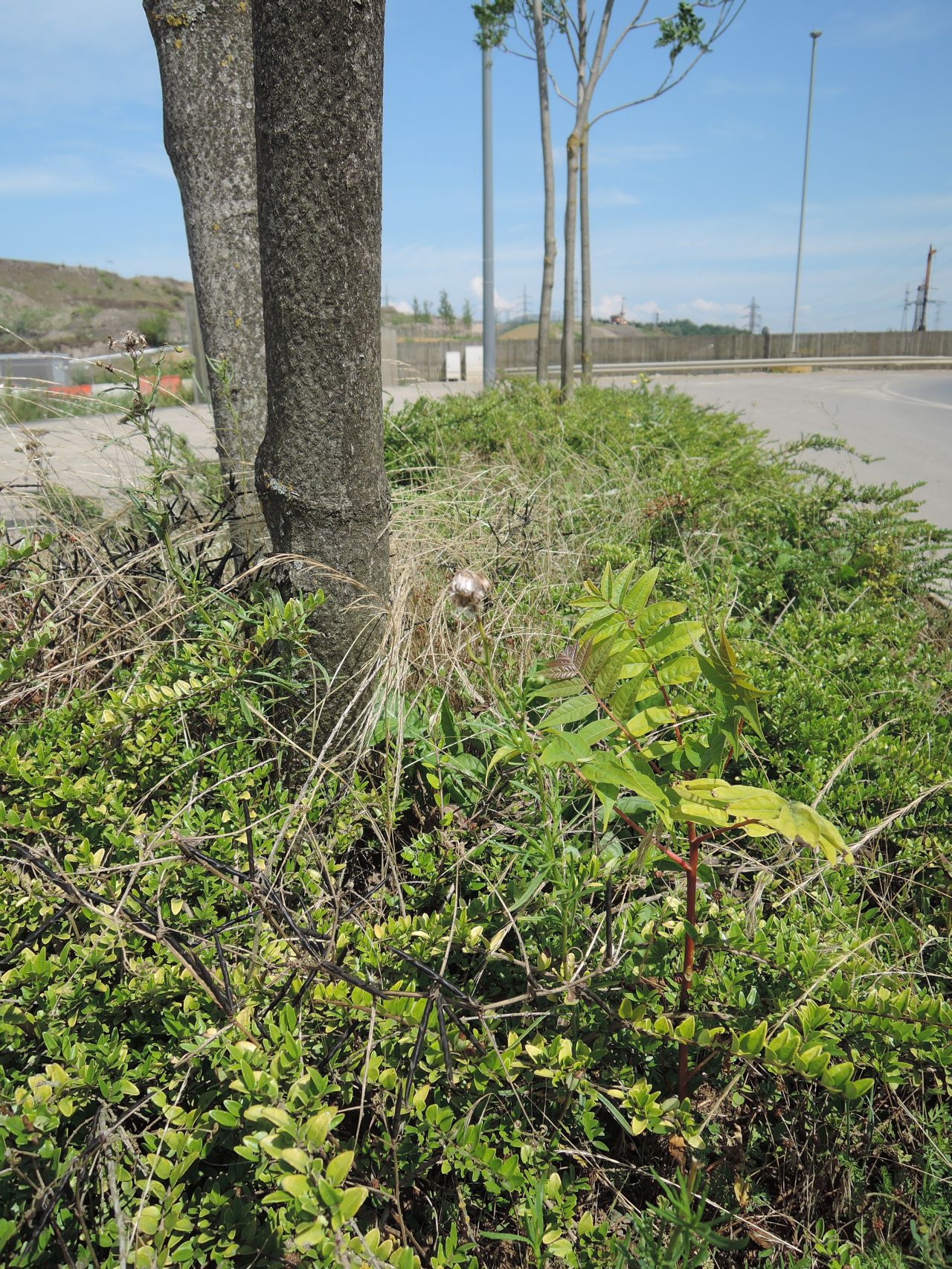
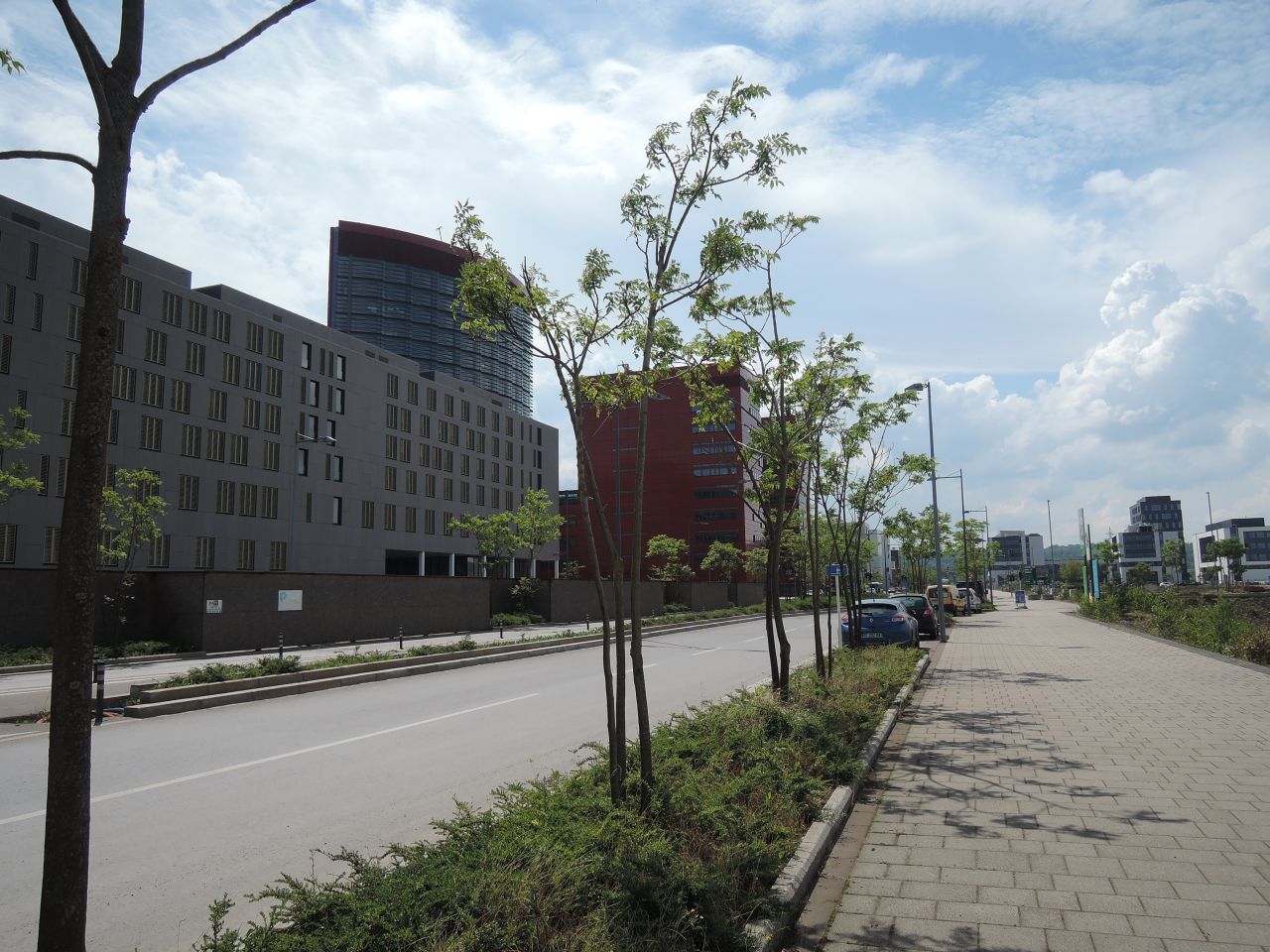
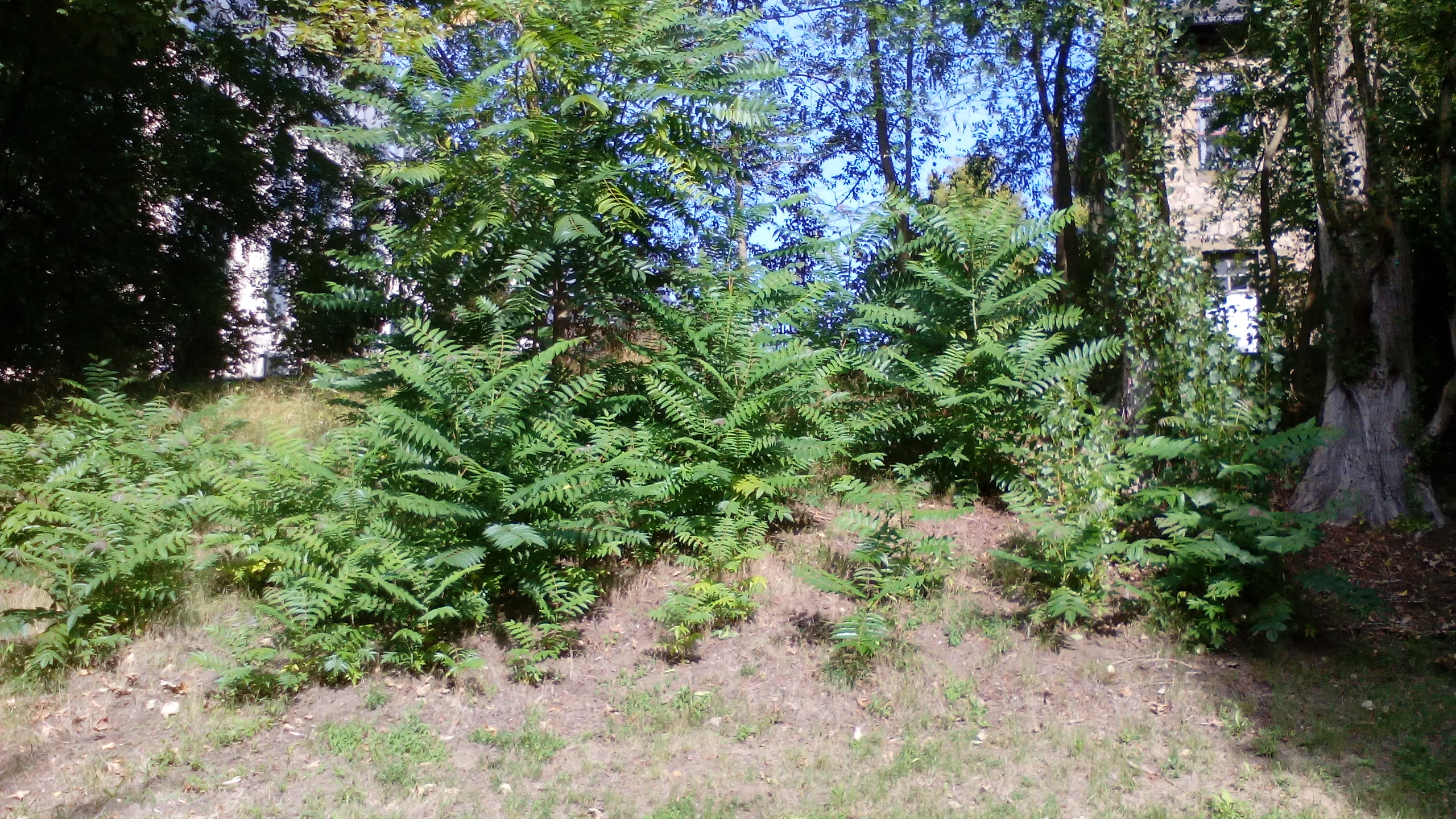
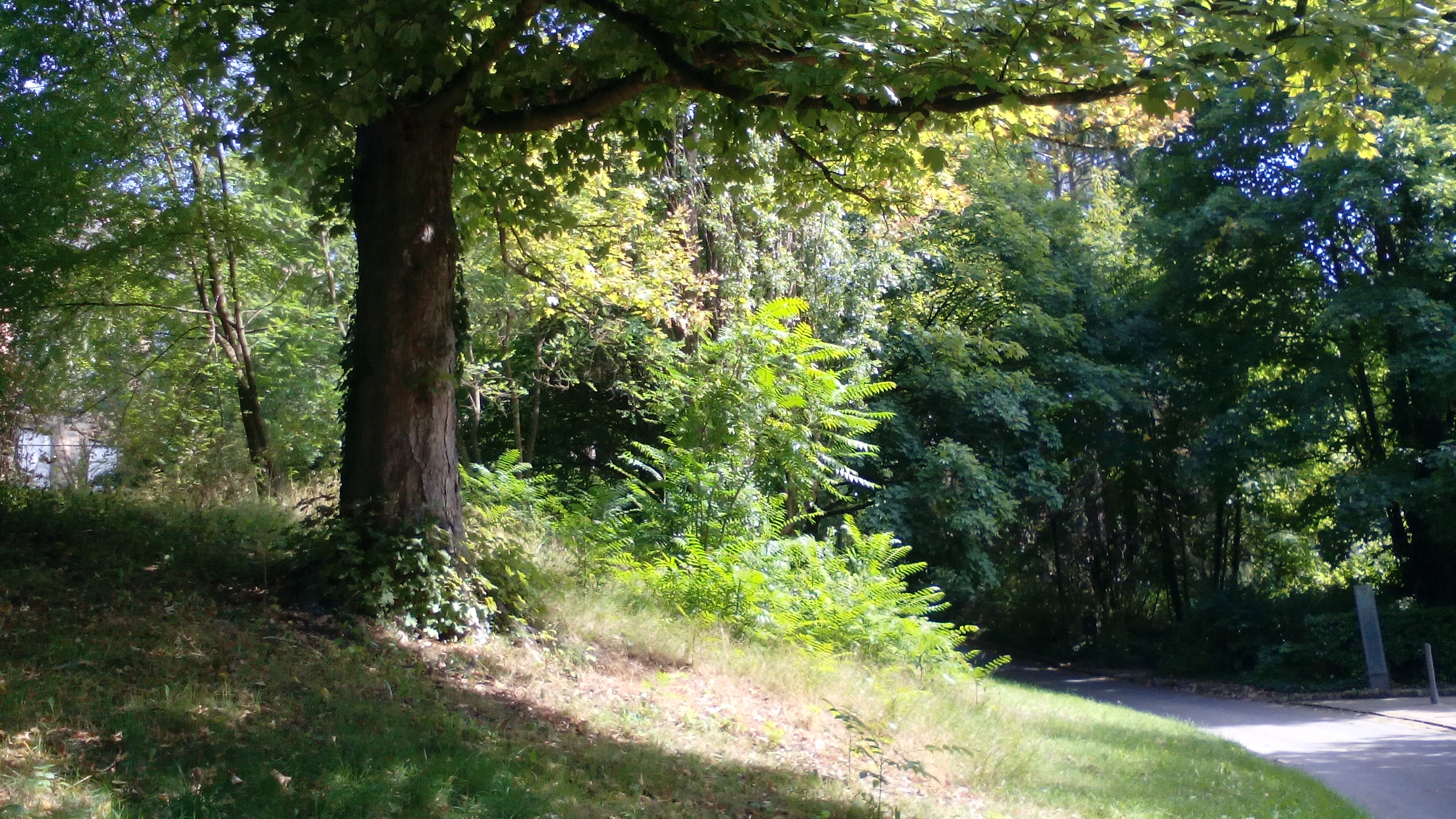
Zelený pralesRhus typhina L. is a tree species generally preferring fertile, upland sites, but tolerating a wide range of conditions. Typical habitats of this pioneer plant include ruderal areas, open fields and roadsides, fence rows, railroad rights-of-way and burned areas, but also forest edges, clearings, and shrublands. It is resistant to abiotic stresses, can thrive in polluted city air and grow in inhospitable sites such as pavement cracks. However, R. typhina is not very shade-tolerant and is considered to be an early successional species. The plant has the potential to inhibit vegetation succession and tree regeneration. Contact with its sap causes dermatitis in humans (Branquart et al. 2011).

Status and distribution in Luxembourg

Records of Rhus typhina L. in Luxembourg. Data source: Recorder-Lux, iNaturalist & GBIF, 2021-04-22.

Rhus typhina L. is first mentioned for Luxembourg by Koltz (1875: 38); “Native to Canada. Introduced from ancient times and also cultivated under the name of R. canadensis.” The 1st record is thus anterior to 1875.

The first documentation of Stag’s-horn sumach dates from 1886, when Jean Feltgen (1833-1904) included a specimen from a garden in Berschbach in his herbarium (Specimen № 15466, MNHNL 2000-). The next documentation of Stag’s-horn Sumach dates from 1981. It was recorded on 9th September 1981 by Léopold Reichling (1921-2009) in Avenue Guillaume in the Belair district of Luxembourg City (MNHNL 2000-). The species was first documented in the wild by Léopold Reichling on 26 June 1986 at Léiffrächen on the Bromeschbierg, municipality of Kayl (MNHNL 2000-).

Until 2012 only four occurrences were documented in Recorder-Lux. In 2013, systematic inventories of invasive species along Luxembourg’s main watercourses (Pfeiffenschneider et al. 2014a) and along the railway lines (Pfeiffenschneider et al. 2014b) showed that the species is more common in Luxembourg than earlier data suggested.

Currently, 76 records are accessible through the MNHNL-mdata portal (MNHNL, iNaturalist & GBIF 2019).

According to Lambinon & Verloove (2012: 463) Rhus typhina (Syn.: R. hirta) is planted in parks, as well as R. glabra and their hybrid R. ×pulvinata.

Risk assessment

ISEIA protocol

B1 (2+2+3+3) = Watch List (Ries et al. 2013: 18).

Harmonia+ protocol

Overall risk score 0,28 = (Overall Invasion score 0,57 x Overall Impact score 0,50) (Ries et al. 2020).

0,57Invasion
0,50Impact
0,28Risk

Worldwide distribution

Bibliography

  • Branquart, E., P. Dupriez , S. Vanderhoeven, W. Van Landuyt, F. Van Rossum & F. Verloove, 2011. Harmonia database: Rhus typhina L. Harmonia version 1.2, Belgian Forum on Invasive Species. URL: http://ias.biodiversity.be [accessed on 2019-10-28]
  • CABI, 2019. Rhus typhina. In: Invasive Species Compendium. Wallingford, UK: CAB International. URL: www.cabi.org/isc [accessed 2020-03-02]
  • Koltz, J.-P.-J., 1875. Dendrologie luxembourgeoise. Catalogue des arbres, arbrisseaux et arbustes spontanés, subspontanés ou introduits dans la culture du Grand-Duché de Luxembourg. Imprimerie V. Buck, Luxembourg, 217 pp.
  • Lambinon J. & F. Verloove, 2012. Nouvelle flore de la Belgique, du grand-duché de Luxembourg, du Nord de la France et des régions voisines. Sixième édition. Avec la collaboration de L. Delvosalle, B. Toussaint, D. Geerinck, I. Hoste, F. Van Rossum, B. Cornier, R. Schumacker, A. Vanderpoorten et H. Vannerom. Jardin botanique national de Belgique, Meise. CXXXIX + 1195 pp. ISBN : 9789072619884.
  • MNHNL, 2000-. Rhus typhina L. in Recorder-Lux, database on the natural heritage of the Grand Duchy of Luxembourg. Musée national d’histoire naturelle, Luxembourg. URL: https://mdata.mnhn.lu [Accessed 2019-09-05]
  • MNHNL, iNaturalist & GBIF, 2019. Rhus typhina L. in MNHNL-mdata, online portal combining species observation from Recorder-Lux, iNaturalist and GBIF. National Museum of Natural History, Luxembourg. URL: https://mdata.mnhn.lu [Accessed 2019-09-06]
  • Pfeiffenschneider, M., P. Gräser & C. Ries, 2014a. Distribution of selected neophytes along the main rivers of Luxembourg. Bull. Soc. Nat. luxemb. 115: 101-108. [PDF 3668 KB]
  • Pfeiffenschneider, M., P. Gräser & C. Ries, 2014b. Distribution of selected neophytes along the national railway network of Luxembourg. Bull. Soc. Nat. luxemb. 115: 95-100. [PDF 1457 KB]
  • Ries, C. & Y. Krippel, 2021 [Unpublished manuscript]. First records of 56 invasive alien vascular plants in Luxembourg. MNHNL & Naturpark Öewersauer.
  • Ries, C., Y. Krippel & M. Pfeiffenschneider, 2020. Risk assessment after the Harmonia+ protocol of invasive alien vascular plant species in Luxembourg. Bull. Soc. Nat. luxemb. 122: 197-205. [PDF 132 KB]
  • Ries, C., Y. Krippel, M. Pfeiffenschneider & S. Schneider, 2013. Environmental impact assessment and black, watch and alert list classification after the ISEIA Protocol of non-native vascular plant species in Luxembourg. Bull. Soc. Nat. luxemb. 114: 15-21. [PDF 652 KB]

 Page content last updated on 2021-03-11.

Rosa rugosa Thunb.

English Japanese rose Status LU: established. 1st record: LU <1923, ITW 2002.
Lëtzebuergesch Geradderegt Rous Status Eur.: established. 1st record: 1796. 1
Français Rosier rugueux RA: ISEIA: C1. Harmonia+: 0,18.
Deutsch Kartoffel-Rose Wikipedia: Wikipedia - English - Japanese rose Wikipedia - Français - Rosier rugueux Wikipedia - Deutsch - Kartoffel-Rose Wikipedia - Nederlands - Rimpelroos | Wikispecies: Wikispecies - Rosa rugosa | CABI
Nederlands Rimpelroos Back to the list of neophytes

Brief description

Rosa rugosa TokyoRosa rugosa Thunb. is a predominantly coastal shrub species, which grows on dunes, in grasslands and healthlands but also in coastal woodlands. However, it can grow further inland, where it can be found in fields, boreal forest, disturbed areas, grasslands, heathlands, riparian zones, temperate broadleaf forest and in urban areas. Open dry grasslands, as well as heathlands, especially those with bare patches, are potentially in danger of an invasion by R. rugosa. The species also occurs in various open ruderal habitats like road verges, railway embankments or waste ground (garden escape), but appears to grow less vigorously there.

Rosa rugosa forms extensive impenetrable thickets due to root and stem suckering. It displaces the natural flora of beach and dune vegetation and outcompetes early successional plant species in these habitats (Arenaria serpyllifolia, Empetrum nigrum, Festuca rubra, Veronica arvensis, Viola tricolor, etc.). Thickets of R. rugosa are species-poor, irrespective of the dune type on which the shrub has established. They change humus conditions, favour the installation of other neophytes like Lupinus polyphyllus and Parthenocissus inserta and alter habitat structure through shading effect and initiation of dune formation. They may also act as a reservoir for potential pest species like gall-forming insects. Hybrids with native Rosa species occur (Branquart et al. 2010).

Status and distribution in Luxembourg

Records of Rosa rugosa Thunb. in Luxembourg. Data source: Recorder-Lux, iNaturalist & GBIF, 2021-04-22.

Rosa rugosa Thunb. is commonly planted in public green areas and private gardens in Luxembourg since a long time, as documented in old newspapers (Anonym 1923): “Large-fruited rosehips Rosa rugosa and Rosa villosa are popular rosehip varieties for conserving.” 2 We thus consider the first record of Rosa rugosa as cultivated species to be anterior to 1923.

Rosa rugosa Thunb. was first documented in the wild by Guy Colling on 15th June 2002 in the Stréissel nature reserve, north of the municipality of Bettembourg (MNHNL 2000-).

Currently, 15 records of Japanese rose are accessible through the MNHNL-mdata portal (MNHNL, iNaturalist & GBIF 2019).

The east Asian melliferous species is often cultivated for ornamental purposes in parks and along roadsides. Subspontaneous or naturalised: coastal dunes, roadsides, embankments, stream banks, especially in the west (Lambinon & Verloove 2012: 362).

Risk assessment

ISEIA protocol

C1 (1+1+1+1) (Ries et al. 2013: 19).

Harmonia+ protocol

Overall risk score 0,18 = (Overall Invasion score 0,45 x Overall Impact score 0,38) (Ries et al. 2020).

0,45Invasion
0,38Impact
0,18Risk

Worldwide distribution

Bibliography

  • Anonym, 1923. Hof, Garten, Land. Praktische Winke für den Kleingärtner und Tierhalter für den Monat April. Rubrik. Obermosel-Zeitung 55: 2 (1923-04-07).
  • Branquart Etienne, Vanderhoeven Sonia, Van Landuyt Wouter, Van Rossum Fabienne, Verloove Filip
  • Branquart, E., S. Vanderhoeven, W. Van Landuyt, F. Van Rossum & F. Verloove, 2010. Harmonia database: Rosa rugosa Thunb.. Harmonia version 1.2, Belgian Forum on Invasive Species. URL: http://ias.biodiversity.be [accessed on 2019-10-15]
  • CABI, 2019. Rosa rugosa. In: Invasive Species Compendium. Wallingford, UK: CAB International. URL: www.cabi.org/isc [accessed 2020-03-02]
  • Lambinon J. & F. Verloove, 2012. Nouvelle flore de la Belgique, du grand-duché de Luxembourg, du Nord de la France et des régions voisines. Sixième édition. Avec la collaboration de L. Delvosalle, B. Toussaint, D. Geerinck, I. Hoste, F. Van Rossum, B. Cornier, R. Schumacker, A. Vanderpoorten et H. Vannerom. Jardin botanique national de Belgique, Meise. CXXXIX + 1195 pp. ISBN : 9789072619884.
  • MNHNL, 2000-. Rosa rugosa Thunb. in Recorder-Lux, database on the natural heritage of the Grand Duchy of Luxembourg. Musée national d’histoire naturelle, Luxembourg. URL: https://mdata.mnhn.lu [Accessed 2019-10-15]
  • MNHNL, iNaturalist & GBIF, 2019. Rosa rugosa Thunb. in MNHNL-mdata, online portal combining species observation from Recorder-Lux, iNaturalist and GBIF. National Museum of Natural History, Luxembourg. URL: https://mdata.mnhn.lu [Accessed 2019-10-15]
  • Ries, C. & Y. Krippel, 2021 [Unpublished manuscript]. First records of 56 invasive alien vascular plants in Luxembourg. MNHNL & Naturpark Öewersauer.
  • Ries, C., Y. Krippel & M. Pfeiffenschneider, 2020. Risk assessment after the Harmonia+ protocol of invasive alien vascular plant species in Luxembourg. Bulletin de la Société des naturalistes luxembourgeois 122: 197-205. [PDF 132 KB]
  • Ries, C., Y. Krippel, M. Pfeiffenschneider & S. Schneider, 2013. Environmental impact assessment and black, watch and alert list classification after the ISEIA Protocol of non-native vascular plant species in Luxembourg. Bulletin de la Société des naturalistes luxembourgeois 114: 15-21. [PDF 652 KB]

 Page content last updated on 2021-03-11. Last proofread by Caroline Grounds on 2019-11-21.

Impatiens parviflora DC.

English Small balsam Status LU: established. 1st record: LU & ITW 1956.
Lëtzebuergesch Klengt Sprangkraut Status Eur.: established. 1st record CH: <1831. 1
Français Balsamine à petites fleurs RA: ISEIA: C3. Harmonia+: 0,13.
Deutsch Kleines Springkraut Wikipedia: Wikipedia - English - Small balsam Wikipedia - Français - Balsamine à petites fleurs Wikipedia - Deutsch - Kleines Springkraut Wikipedia - Nederlands - Klein springzaad | Wikispecies: Wikispecies -Impatiens parviflora | CABI
Nederlands Klein springzaad Back to the list of neophytes

Brief description

Impatiens parviflora Dc. (7796979734)Impatiens parviflora DC. is an annual herb that is widely dispersed in European forests. It prefers shaded and moist nutrient-rich stands, but can also grow in acidic conditions. It thrives in beech and alder forests, but can also be found in parks, along hedgerows, on forest edges, in waste grounds and ruderal habitats (Branquart et al. 2010).

Status and distribution in Luxembourg

Records of Impatiens parviflora DC. in Luxembourg. Data source: Recorder-Lux, iNaturalist & GBIF, 2021-04-22.

Impatiens parviflora DC. was first documented by Jean-Jacques Kariger (1925-2018) in late June 1956 in an alluvial forest along the Attert, downstream of Redange (Reichling 1958, Specimen № 24952, MNHNL 2000-, Krippel & Proess 2017: 57).

456 records of the species are listed in the MNHNL-mdata online portal and the plant is widespread throughout the country’s forests (MNHNL, iNaturalist & GBIF 2019). Most of these data have been collected during systematic inventories along the main watercourses in 2013 (Pfeiffenschneider et al. 2014).

This annual plant species from central and eastern Asia is naturalised in a large part of Europe (Lambinon & Verloove 2012: 480).

Other Impatiens taxa

Three other alien balsam species occur in Luxembourg:

  • Impatiens balfourii Hook.f.: Balfour’s touch-me-not, first observed in 2016 in the wild in Luxembourg.
  • Impatiens balsamina L.: the garden balsam was mentioned in Krombach’s flora of 1875 as “Introduced from the East Indies and grown in all gardens” (Krombach 1875: 56).
  • Impatiens glandulifera Royle: the invasive Himalayan Balsam, which is widespread in riparian ecosystems and forests across Luxembourg.

In 2011 the annual hybrid Impatiens parviflora × I. balfourii was discovered in the canton of Ticino in Switzerland. The fertile hybrid with alternating leaves can be up to 60 cm high. Considerable populations of the hybrid were observed in 2014 in the canton of Ticino in the absence of the parent species (Van Valkenburg et al. 2019).

Risk assessment

ISEIA protocol

C3 (3+2+1+1) (Ries et al. 2013: 18).

Harmonia+ protocol

Overall risk score 0,13 = (Overall Invasion score 0,63 x Overall Impact score 0,20) (Ries et al. 2020).

0,63Invasion
0,20Impact
0,13Risk

Worldwide distribution

Bibliography

  • Branquart, E., S. Vanderhoeven, W. Van Landuyt, F. Van Rossum, F. Verloove & A. Vervoort, 2010. Harmonia database: Impatiens parviflora DC. Harmonia version 1.2, Belgian Forum on Invasive Species. URL: http://ias.biodiversity.be [accessed on 2019-10-09]
  • CABI, 2021. Impatiens parviflora. In: Invasive Species Compendium. Wallingford, UK: CAB International. URL: www.cabi.org/isc [accessed 2021-03-04]
  • Krippel, Y. & R. Proess, 2017. Impatiens balfourii Hook. f. (Balsaminaceae), nouvelle espèce subspontanée au Luxembourg ?. Bull. Soc. Nat. luxemb. 119: 55-61.
  • Krombach, J.-H.-G., 1875. Flore du grand-duché de Luxembourg. Plantes phanérogames. 564 p. Luxembourg, Imprimerie Joris.
  • Lambinon J. & F. Verloove, 2012. Nouvelle flore de la Belgique, du grand-duché de Luxembourg, du Nord de la France et des régions voisines. Sixième édition. Avec la collaboration de L. Delvosalle, B. Toussaint, D. Geerinck, I. Hoste, F. Van Rossum, B. Cornier, R. Schumacker, A. Vanderpoorten et H. Vannerom. Jardin botanique national de Belgique, Meise. CXXXIX + 1195 pp. ISBN : 9789072619884.
  • MNHNL, 2000-. Impatiens parviflora DC. in Recorder-Lux, database on the natural heritage of the Grand Duchy of Luxembourg. Musée national d’histoire naturelle, Luxembourg. URL: https://mdata.mnhn.lu [Accessed 2019-10-09]
  • MNHNL, iNaturalist & GBIF, 2019. Impatiens parviflora DC. in MNHNL-mdata, online portal combining species observation from Recorder-Lux, iNaturalist and GBIF. National Museum of Natural History, Luxembourg. URL: https://mdata.mnhn.lu [Accessed 2019-10-09]
  • Pfeiffenschneider, M., P. Gräser & C. Ries, 2014. Distribution of selected neophytes along the main rivers of Luxembourg. Bull. Soc. Nat. luxemb. 115: 101-108. [PDF 3668 KB]
  • Reichling, L., 1958. Notes floristiques – Observations faites dans le grand-duché de Luxembourg en 1956. Bull. Soc. Nat. luxemb. 61: 63-123. [PDF 3355 KB]
  • Ries, C. & Y. Krippel, 2021 [Unpublished manuscript]. First records of 56 invasive alien vascular plants in Luxembourg. MNHNL & Naturpark Öewersauer.
  • Ries, C., Y. Krippel & M. Pfeiffenschneider, 2020. Risk assessment after the Harmonia+ protocol of invasive alien vascular plant species in Luxembourg. Bull. Soc. Nat. luxemb. 122: 197-205. [PDF 132 KB]
  • Ries, C., Y. Krippel, M. Pfeiffenschneider & S. Schneider, 2013. Environmental impact assessment and black, watch and alert list classification after the ISEIA Protocol of non-native vascular plant species in Luxembourg. Bull. Soc. Nat. luxemb. 114: 15-21. [PDF 652 KB]
  • Van Valkenburg, J. L. C. H., N. Schoenenberger, B. T. L. H. van de Vossenberg, W. A. Man in’t Veld, M. Westenberg & E. Boer, 2019. A natural hybrid of Impatiens, in the introduced range, demonstrated by sequence analysis of the nuclear ribosomal DNA-gene repeat. Botany Letters 166: 144-152.

 Page content last updated on 2021-03-04. Last proofread by Caroline Grounds on 2019-11-19.

Buddleja davidii Franch.

English Butterfly-bush, summer lilac Status LU: established. 1st record: LU & ITW 1961.
Lëtzebuergesch Päiperlekstrausch Status Eur.: established. 1st record: FR 1893.
Français Buddleia de David RA: ISEIA: C2. Harmonia+: 0,41
Deutsch Schmetterlingsflieder, -strauch Wikipedia: Wikipedia - English - Butterfly-bush Wikipedia - Français - Buddleia de David Wikipedia - Deutsch - Schmetterlingsstrauch Wikipedia - Nederlands - Vlinderstruik | Wikispecies: Wikispecies - Buddleja davidii | CABI
Nederlands Vlinderstruik Back to the list of neophytes

Brief description

Buddleja davidii Franch. is a shade-intolerant woody melliferous species. The deciduous shrub mostly thrives in various ruderal areas and disturbed grounds, which it colonises rapidly, but also grows in warm semi-natural habitats with well-drained soils like gravel shores, rock outcrops or open woodlands. Climate change is likely to trigger higher invasiveness in Europe during the next decades (Branquart et al. 2010). It often blooms as soon as it reaches a few tens of centimetres in height (Lambinon & Verloove 2012: 535).

Buddleja davidii was introduced as a horticultural plant to Europe in the 1890ies and naturalized on a significant scale in the 1930s in parts of Europe, after the destruction of cities during World War II. Bombed sites and building rubble were suitable colonization habitats and therefore dense B. davidii thickets established on these sites. In the 1950s and 1960s, B. davidii became a popular garden shrub, which further contributed to its spread when it escaped from cultivation and naturalized in the wild (CABI 2019).

Status and distribution in Luxembourg

Records of Buddleja davidii Franch. in Luxembourg. Data source: Recorder-Lux, iNaturalist & GBIF, 2021-04-22.

In Luxembourg, Buddleja was first documented in the wild by Léopold Reichling on 1961-05-02 in Luxembourg City (Grund, Verluerekascht). As only one species of Buddleja occurs in the territory of the Flore (Lambinon & Verloove 2012: 535), we can assume that Reichling reported Buddleja davidii. In the following year, Reichling found summer lilac on 1962-06-06 near Schleifmuehle upstream from Medernach.

The next observation in the wild was reported by Gérard Schmidt on 1993-08-05 in the gravel quarries of Remerschen near Wintrange, Municipality of Schengen (Schmidt 1993; MNHNL 2000-). More than 140 observations of the butterfly-bush are documented in the data portal of the Museum (MNHNL, iNaturalist & GBIF 2020).

Summer lilac is widely cultivated in gardens across Luxembourg, from where it can easily make its way into the wild. The distribution map for Luxembourg shows that the species occurs most frequently in the south of the country, while less observations of Buddleja davidii in the wild exist for the Oesling.

A survey along the national railway network of Luxembourg revealed that summer lilac is spreading along the railway tracks in the South West of the country and in the Moselle valley (Pfeiffenschneider et al. 2014a).

Buddleja davidii has been spreading continuously in recent years, especially in urban environments, on rocks and railways (Krippel et al. 2018: 60-61). The butterfly-bush is still expanding its distribution area and increasingly found in urban wastelands (Krippel et al. 2020: 34).

The first observation of this species in its subspontaneous state in Belgium and northern France dates back to 1940. It spread mainly from the 1970s onwards (Lambinon & Verloove 2012: 535).

Risk assessment

ISEIA protocol

C2 (2+2+2+2) (Ries et al. 2013: 18).

Harmonia+ protocol

Overall risk score 0,41 = (Overall Invasion score 0,81 x Overall Impact score 0,50) (Ries et al. 2020).

0,81Invasion
0,50Impact
0,41Risk

Worldwide distribution

Bibliography

  • Branquart, E., S. Vanderhoeven, W. Van Landuyt, F. Van Rossum, F. Verloove, 2010. Harmonia database:Buddleja davidii Franch. Harmonia version 1.2, Belgian Forum on Invasive Species. URL: http://ias.biodiversity.be [accessed on 2019-10-02]
  • CABI, 2019. Buddleja davidii. In: Invasive Species Compendium. Wallingford, UK: CAB International. URL: www.cabi.org/isc [accessed 2021-02-26]
  • Krippel, Y., T. Helminger & G. Colling, 2018. Notes floristiques. Observations faites au Luxembourg (2016-2017). Bull. Soc. Nat. luxemb. 120: 57-76. [PDF 265 KB]
  • Krippel, Y., T. Helminger & G. Colling, 2020. Notes floristiques. Observations faites au Luxembourg (2018-2019). Bulletin Soc. Nat. luxemb. 122 : 29-55. [PDF 132 KB]
  • Lambinon J. & F. Verloove, 2012. Nouvelle flore de la Belgique, du grand-duché de Luxembourg, du Nord de la France et des régions voisines. Sixième édition. Avec la collaboration de L. Delvosalle, B. Toussaint, D. Geerinck, I. Hoste, F. Van Rossum, B. Cornier, R. Schumacker, A. Vanderpoorten et H. Vannerom. Jardin botanique national de Belgique, Meise. CXXXIX + 1195 pp. ISBN : 9789072619884.
  • MNHNL, 2000-. Buddleja davidii Franch. in Recorder-Lux, database on the natural heritage of the Grand Duchy of Luxembourg. Musée national d’histoire naturelle, Luxembourg. URL: https://mdata.mnhn.lu [Accessed 2020-01-12]
  • MNHNL, iNaturalist & GBIF, 2019. Buddleja davidii Franch. in MNHNL-mdata, online portal combining species observation from Recorder-Lux, iNaturalist and GBIF. National Museum of Natural History, Luxembourg. URL: https://mdata.mnhn.lu [Accessed 2019-09-06]
  • Pfeiffenschneider, M., P. Gräser & C. Ries, 2014a. Distribution of selected neophytes along the national railway network of Luxembourg. Bull. Soc. Nat. luxemb. 115: 95-100. [PDF 1457 KB]
  • Pfeiffenschneider, M., P. Gräser & C. Ries, 2014b. Distribution of selected neophytes along the main rivers of Luxembourg. Bull. Soc. Nat. luxemb. 115: 101-108. [PDF 3668 KB]
  • Ries, C. & Y. Krippel, 2021 [Unpublished manuscript]. First records of 56 invasive alien vascular plants in Luxembourg. MNHNL & Naturpark Öewersauer.
  • Ries, C., Y. Krippel & M. Pfeiffenschneider, 2020. Risk assessment after the Harmonia+ protocol of invasive alien vascular plant species in Luxembourg. Bull. Soc. Nat. luxemb. 122: 197-205. [PDF 132 KB]
  • Ries, C., Y. Krippel, M. Pfeiffenschneider & S. Schneider, 2013. Environmental impact assessment and black, watch and alert list classification after the ISEIA Protocol of non-native vascular plant species in Luxembourg. Bull. Soc. Nat. luxemb. 114: 15-21. [PDF 652 KB]
  • Schmidt, G., 1993. Fiches de terrain, cartographie des biotopes de la commune de Remerschen. Fondation Oeko-Fonds, Luxembourg. Non published document.

 Page content last updated on 2021-03-02.

Aster novi-belgii L.

English Confused Michaelmas-daisy Status LU: established. 1st record: LU & ITW <1872.
Lëtzebuergesch Neibelsch Aster Status Eur.: established. 1st record: 1710, ITW 1865.
Français Aster de viriginie RA: ISEIA: C1. Harmonia+: 0,08
Deutsch Neubelgische Aster Wikipedia: Wikipedia - English - Confused Michaelmas-daisy Wikipedia - Français - Aster de viriginie Wikipedia - deutsch - Neubelgische Aster Wikipedia - Nederlands - Nieuw-Nederlandse aster | Wikispecies: Wikispecies - Symphyotrichum novi-belgii | CABI
Nederlands Nieuw-Nederlandse aster Back to the list of neophytes

Brief description

Aster novi-belgii L. thrives mostly in ruderal and waste areas, especially on rich and moist soils. It is less often observed in riparian habitats than other North American asters. The plant mainly spreads vegetatively and through fly-tipping of green waste and waste grounds. Seeds do not seem to be able to maturate under Belgian climatic conditions. 1

Asters are rhizomatous species, propagating clonally. They easily form dense and wide monospecific colonies, displacing native wetland plants, and favouring the sedimentation and stabilisation of riverbanks, which reduces the ability of rivers to meander and flood (Branquart et al. 2010).

Status and distribution in Luxembourg

Records of Aster novi-belgii L. in Luxembourg. Data source: Recorder-Lux, iNaturalist & GBIF, 2021-04-22.

Back in 1872, Eugène Fischer listed the species under its synonym Aster floribundus Willd.: “This plant, with a very apparent and late flowering, is often and vulgarly cultivated for the decoration of gardens and especially cemeteries, where it still flowers during the All Saints’ Day period. Many of our cemeteries are teeming with them. It spreads easily and is maintained with persistence. It is frequently found subspontaneously in hedges around homes, gardens and cemeteries. It is so common in the surroundings of Luxembourg that I have often been surprised that Tinant [1836] and the authors of the local flora do not mention it. It is therefore a very modern introduction. It is of American origin” (Fischer 1872: 83). 2

Both Koltz (1873: 129; 1874: 30) and Krombach (1875: 345) reiterate it grows in cemeteries, gardens and often subspontaneously in the vicinity of dwellings.

On the 12th November 1906, Félix Heuertz collected Aster novi-belgii ssp. eu-novi-belgii var. tardiflorus on the Prussian riverside across Echternach (Specimen № 13911, MNHNL 2000-a).

The first documented observation of the species in Luxembourg dates from 1949. On 12th September 1949, François Léon Lefort (1917-1975) collected a specimen of Aster novi-belgii ssp. laevigatus (Lam.) Thell. pro parte on the Moselle river bank in Schengen (Specimen № 26905, MNHNL 2000-a).

According to Lambinon & Verloove (2012: 706), the species is rare to very rare (R-RR) around villages, vacant lots, wastelands, and river banks.

Currently, 14 records of the species and its subspecies are accessible through the MNHNL-mdata portal (MNHNL, iNaturalist & GBIF 2019).

Other Aster taxa

  1. Aster dumosus L. (Syn.: Symphyotrichum dumosum (L.) G. L. Nesom): the bushy aster is first reported by Tinant on the banks of the Moselle (Wirtgen 1842: 89; Lefort 1950: 41). A hybrid Aster dumosus x novi-belgii was collected by Paul Grzonka and Léopold Reichling on 29 September 1959 in Bech-Kleinmacher in the Moselle valley (MNHNL 2000-b).
  2. Aster lanceolatus Willd.: the narrow-leaved Michaelmas-daisy was first collected by Jos. Witry on 24th August 1934 in Grevenmacher in the Moselle valley (MNHNL, iNaturalist & GBIF 2019).
  3. Aster ×salignus: this hybrid between A. lanceolatus x A. novi-belgii is much confused with both its parents, particularly A. lanceolatus. The common michaelmas daisy was first mentioned by Yves Krippel in 2001 at Pällembierg (MNHNL 2000-b).

Risk assessment

ISEIA protocol

C1 (1+1+1+1) (Ries et al. 2013: 18).

Harmonia+ protocol

Overall risk score 0,08 = (Overall Invasion score 0,31 x Overall Impact score 0,30) (Ries et al. 2020).

0,31Invasion
0,30Impact
0,08Risk

Worldwide distribution

Bibliography

  • Beck, E., Jungblut, F., Lefort, F.L., Reichling, L., Stumper, R., 1952. Herborisations faites au Grand-Duché de Luxembourg en 1951. Bull. Soc. Nat. luxemb. 56: 67-88. [PDF 1080 KB]
  • Branquart, E., S. Vanderhoeven, W. Van Landuyt, F. Van Rossum & F. Verloove, 2010. Harmonia database: Aster novi-belgii L. Harmonia version 1.2, Belgian Forum on Invasive Species. URL: http://ias.biodiversity.be [accessed on 2019-10-23]
  • CABI, 2016. Aster novi-belgii [original text by Ilias Travlos]. In: Invasive Species Compendium. Wallingford, UK: CAB International. URL: www.cabi.org/isc [accessed 2020-02-28]
  • Fischer, E., 1872. Les plantes subspontanées et naturalisées de la flore du grand-duché de Luxembourg. Publications de l’Institut royal grand-ducal de Luxembourg, section des sciences naturelles et mathématiques XII: 1-115. Imprimerie V. Buck, Luxembourg.
  • Koltz, J.-P.-J., 1873. Prodrome de la flore du grand-duché de Luxembourg. Première partie. Plantes phanérogames. Imprimerie V. Buck, Luxembourg. 279 S.
  • Koltz, J.-P.-J., 1874. Plantes phanérogames découvertes dans le Grand-Duché depuis la publication de la flore luxembourgeoise de Tinant (1836). Recueil des mémoires et des travaux publiés par la Société de botanique du grand-duché de Luxembourg 1: 12-39.
  • Krombach, J.-H.-G., 1875. Flore du grand-duché de Luxembourg. Plantes phanérogames. 564 p. Luxembourg, Imprimerie Joris.
  • Lambinon J. & F. Verloove, 2012. Nouvelle flore de la Belgique, du grand-duché de Luxembourg, du Nord de la France et des régions voisines. Sixième édition. Avec la collaboration de L. Delvosalle, B. Toussaint, D. Geerinck, I. Hoste, F. Van Rossum, B. Cornier, R. Schumacker, A. Vanderpoorten et H. Vannerom. Jardin botanique national de Belgique, Meise. CXXXIX + 1195 pp. ISBN : 9789072619884.
  • Lefort, F. L., 1950. Contribution à l’histoire botanique du Luxembourg (av. 18 planches). Bull. Soc. Nat. luxemb. 54: 31-160. [PDF 6781 KB]
  • MNHNL, 2000-a. Aster novi-belgii L. in Recorder-Lux, database on the natural heritage of the Grand Duchy of Luxembourg. Musée national d’histoire naturelle, Luxembourg. URL: https://mdata.mnhn.lu [Accessed 2019-09-03]
  • MNHNL, 2000-b. Recorder-Lux, database on the natural heritage of the Grand Duchy of Luxembourg. Musée national d’histoire naturelle, Luxembourg. URL: https://mdata.mnhn.lu [Accessed 2019-10-24]
  • MNHNL, iNaturalist & GBIF, 2019. Aster novi-belgii L. in MNHNL-mdata, online portal combining species observation from Recorder-Lux, iNaturalist and GBIF. National Museum of Natural History, Luxembourg. URL: https://mdata.mnhn.lu [Accessed 2019-09-06]
  • Ries, C. & Y. Krippel, 2021 [Unpublished manuscript]. First records of 56 invasive alien vascular plants in Luxembourg. MNHNL & Naturpark Öewersauer.
  • Ries, C., Y. Krippel & M. Pfeiffenschneider, 2020. Risk assessment after the Harmonia+ protocol of invasive alien vascular plant species in Luxembourg. Bull. Soc. Nat. luxemb. 122: 197-205. [PDF 132 KB]
  • Ries, C., Y. Krippel, M. Pfeiffenschneider & S. Schneider, 2013. Environmental impact assessment and black, watch and alert list classification after the ISEIA Protocol of non-native vascular plant species in Luxembourg. Bull. Soc. Nat. luxemb. 114: 15-21. [PDF 652 KB]
  • Wirtgen, P., 1842. Prodromus der Flora der preussischen Rheinlande. Henry & Cohen, Bonn. 242 p.

 Page content last updated on 2021-03-02. Last proofread by Caroline Grounds on 2019-11-13.

Acer negundo L.

English Ashleaf maple Status LU: established. 1st record: LU <1825, ITW <1875
Lëtzebuergesch Eschen-Äerchen Status Eur.: established. 1st record: UK 1688
Français Erable negundo RA: ISEIA: C1. Harmonia+: 0,23
Deutsch Eschen-Ahorn Wikipedia: Wikipedia - English - Ashleaf Maple Wikipedia - Français - Erable negundo Wikipedia - Deutsch - Eschen-Ahorn Wikipedia - Nederlands - Vederesdoorn | Wikispecies: Wikispecies - Acer negundo | CABI
Nederlands Vederesdoorn Back to the list of neophytes

Brief description

Acer negundo L. is reported to prefer moist, eutrophic and warm conditions. It readily colonises resource-rich riparian forests in Central and Southern Europe (e.g. Salicion albae and Alno-Padion). Young trees prefer moist sites, but become drought tolerant once well established. Seeds are easily dispersed by wind and running water over long distances.

In Central Europe, box-elder is tolerant to flooding and is especially competitive in wide floodplains where vegetative regrowth can be impressive. However, in the absence of flooding, it is usually replaced in the course of succession by more shade-tolerant species. In optimal conditions, its permanent and fast vegetative regrowth leads to the formation of dense clones and to the exclusion of other tree species (Salix alba) and herbaceous plants. It favours replacement of softwood by hardwood tree species and makes a threat for this endangered habitat. A more invasive behaviour is likely to be observed in the future due to climate warming (Branquart et al. 2010).

Status and distribution in Luxembourg

Records of Acer negundo L. in Luxembourg. Data source: Recorder-Lux, iNaturalist & GBIF, 2021-04-22.

The who oldest reference to Acer negundo L. in Luxembourg are found in the floras of Krombach and Koltz: Krombach (1875: 66) reports it being grown in parks and avenues, while Koltz (1875:  27) mentions Acer negundo as “Introduced at the beginning of this century under the name of green maple [Orig.: érable vert] and subspontaneous in the vicinity of Ansembourg”. We thus deduct the 1st record as anterior to 1825 and the 1st record in the wild as anterior to 1875 (Ries & Krippel 2021).

Acer negundo as a cultivated species was first recorded in 1948 by Jos. Witry in a park in Rumelange (Specimen № 51452, MNHNL 2000-).

The first documentation of Acer negundo in the wild dates from 1958. It was recorded on 1st June 1958 by Léopold Reichling at Stromberg, a wooded hill in the municipality of Schengen (MNHNL 2000-).

14 observations are accessible via the MNHNL-mdata portal (MNHNL, iNaturalist & GBIF 2019).

The species is expanding into the territory of the flora (Lambinon & Verloove 2012: 461).

Risk assessment

ISEIA protocol

C1 (1+1+1+1) (Ries et al. 2013: 18).

Harmonia+ protocol

Overall risk score 0,23 = (Overall Invasion score 0,53 x Overall Impact score 0,43) (Ries et al. 2020).

0,53Invasion
0,43Impact
0,23Risk

Worldwide distribution

CABI 2019: https://www.cabi.org/isc/datasheet/2862#toDistributionMaps

Bibliography

  • Branquart, E., S. Vanderhoeven, W. Van Landuyt, F. Van Rossum & F. Verloove, 2012. Harmonia database: Acer negundo L. Harmonia version 1.2, Belgian Forum on Invasive Species. URL: http://ias.biodiversity.be [accessed on 2019-10-23]
  • CABI, 2019. Acer negundo L. In: Invasive Species Compendium. Wallingford, UK: CAB International. URL: www.cabi.org/isc [accessed 2019-11-26]
  • Krombach, J.-H.-G., 1875. Flore du grand-duché de Luxembourg. Plantes phanérogames. 564 p. Luxembourg, Imprimerie Joris.
  • Lambinon J. & F. Verloove, 2012. Nouvelle flore de la Belgique, du grand-duché de Luxembourg, du Nord de la France et des régions voisines. Sixième édition. Avec la collaboration de L. Delvosalle, B. Toussaint, D. Geerinck, I. Hoste, F. Van Rossum, B. Cornier, R. Schumacker, A. Vanderpoorten et H. Vannerom. Jardin botanique national de Belgique, Meise. CXXXIX + 1195 pp. ISBN : 9789072619884.
  • MNHNL, 2000-. Acer negundo L. in Recorder-Lux, database on the natural heritage of the Grand Duchy of Luxembourg. Musée national d’histoire naturelle, Luxembourg. URL: https://mdata.mnhn.lu [Accessed 2018-01-08]
  • MNHNL, iNaturalist & GBIF, 2019. Acer negundo L. in MNHNL-mdata, online portal combining species observation from Recorder-Lux, iNaturalist and GBIF. National Museum of Natural History, Luxembourg. URL: https://mdata.mnhn.lu [Accessed 2019-09-06]
  • Ries, C. & Y. Krippel, 2021 [Unpublished manuscript]. First records of 56 invasive alien vascular plants in Luxembourg. MNHNL & Naturpark Öewersauer.
  • Ries, C., Y. Krippel & M. Pfeiffenschneider, 2020. Risk assessment after the Harmonia+ protocol of invasive alien vascular plant species in Luxembourg. Bull. Soc. Nat. luxemb. 122: 197-205. [PDF 132 KB]
  • Ries, C., Y. Krippel, M. Pfeiffenschneider & S. Schneider, 2013. Environmental impact assessment and black, watch and alert list classification after the ISEIA Protocol of non-native vascular plant species in Luxembourg. Bull. Soc. Nat. luxemb. 114: 15-21. [PDF 652 KB]
  • Welter A., J.Turk & J. Trossen, 2008. Les arbres introduits au Luxembourg. Inventaire des essences arborescentes non indigènes de pleine terre présentes sur le territoire du Grand-Duché de Luxembourg. Ferrantia 53, Musée national d’histoire naturelle, Luxembourg, ISSN 1682-5519, 111 pp.

 Page content last updated on 2021-03-02. Last proofread by Caroline Grounds on 2019-11-12.
Hymenoscyphus fraxineus (T. Kowalski) Baral, Queloz, Hosoya

English n/a Status LU: established. 1st record: 2012.
Lëtzebuergesch Falsche wäisse Stillbecherchen Status Eur.: established.
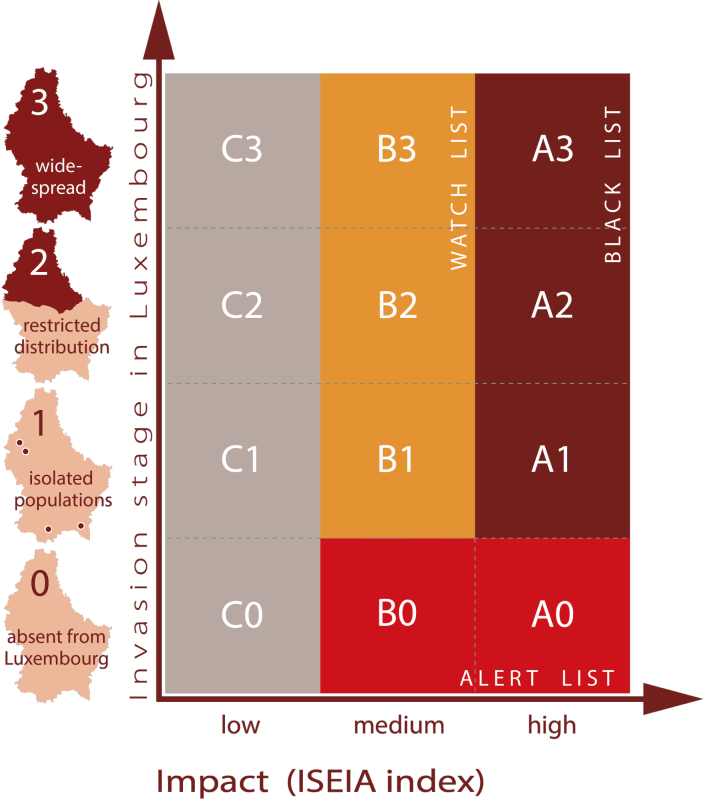
Français n/a RA: ISEIA: A3. Harmonia+: 0,16.
Deutsch Falsches weißes Stängelbecherchen Wikipedia: Wikipedia - English - Hymenoscyphus pseudoalbidus Wikipedia - Français - Chalara fraxinea Wikipedia - Deutsch - Falsches Weißes Stängelbecherchen Wikipedia - Nederlands - Chalara fraxinea | Wikispecies: n/a (2020) | CABI
Nederlands Vals essenvlieskelkje Back to the list of neomyceta

Brief description

Hymenoscyphus fraxineus, Park in Colmar-Berg, June 6th 2014. Picture by Christian Ries, June 6th 2014.

Crown dieback in ash tree infected by Hymenoscyphus fraxineus near Colmar-Berg. Photo: Christian Ries, June 6th 2014.

Hymenoscyphus fraxineus (T. Kowalski) Baral, Queloz, Hosoya (Baral et al. 2014) is an ascomycete fungus that causes ash dieback, a chronic fungal disease of ash trees (Fraxinus excelsior) in Europe characterised by leaf loss and crown dieback in infected trees. It was first described in Japan (Zhao et al. 2012).

Hymenoscyphus fraxineus is an invasive anamorphic fungal pathogen which comes from the Far East and has greatly expanded its reach throughout Central and Western Europe in recent years. Studies of herbarium material show that Hymenoscyphus fraxineus was already present in Central Europe in 1978 (Queloz et al. 2011). It is now entrenched in Europe. It is closely related to a native fungus Hymenoscyphus albidus, which is saprotrophic and also grows on the petioles of dead leaves of ash trees.

The entire natural range of known hosts, including North Africa, Russia and south-west Asia, is currently threatened by ash dieback, with large areas already affected. Little is known about the susceptibility of the other species of ash in temperate zones (CABI 2019).

Hymenoschyphus fraxineus, Neudorf, Luxembourg. Photo par Guy Marson, June 2012.

Hymenoschyphus fraxineus, Neudorf, Luxembourg. Photo: Guy Marson, June 2012.

Status and distribution in Luxembourg

Records of Hymenoscyphus fraxineus (T. Kowalski) Baral, Queloz, Hosoya in Luxembourg. Data source: Recorder-Lux, iNaturalist & GBIF, 2021-04-22.

Hymenoscyphus fraxineus (T. Kowalski) Baral, Queloz, Hosoya was first recorded on 16th June 2012 in Bois de Cessange (Municipality of Luxembourg) under its synonym Hymenoscyphus pseudoalbidus (Garnier-Delcourt et al. 2013: 35-36). It was reported in 2002 in Germany (Heydeck et al. 2005) and in 2010 in Belgium (Delhaye et al. 2010). The fungus is rapidly spreading throughout Luxembourg and in 2014 it was found in all regions of Luxembourg: a considerable number of young ash trees are affected while only a part of the elder ash trees show dieback symptoms.

Only few observations have been reported to the Recorder-Lux database so that the map does not reflect the actual distribution of the species, occurring everywhere where ash occurs.

Risk assessment

ISEIA protocol

B3 (3+3+3+1) = Watch List. First assessed on 22 September 2017 by Christian Ries and Yves Krippel.

Harmonia+ protocol

Overall risk score 0,16 = (Overall Invasion score 0,79 x Overall Impact score 0,20) (Non publ. RA by C. Ries).

0,79Invasion
0,20Impact
0,16Risk

Worldwide distribution

Bibliography

  • Baral H-O, V Queloz & T Hosoya (2014) Hymenoscyphus fraxineus, the correct scientific name for the fungus causing ash dieback in Europe. IMA Fungus 5(1): 79-80.
  • CABI, 2019. Hymenoscyphus fraxineus (T. Kowalski) Baral, Queloz, Hosoya. In: Invasive Species Compendium. Wallingford, UK: CAB International. URL: www.cabi.org/isc [accessed 2020-04-28]
  • Garnier-Delcourt M, G Marson, Ch Reckinger, B Schultheis & M-T Tholl (2013) Notes mycologiques luxembourgeoises. VII. Bull. Soc. Nat. luxemb. 114: 35-54. (Pdf 6.5 MB)
  • Heydeck P, M Bemmann, H-G Kontzog (2005) Triebsterben an Gemeiner
    Esche (Fraxinus excelsior) im nordostdeutschen Tiefland. Forst und Holz 60: 505–506.
  • MNHNL, iNaturalist & GBIF, 2020. Hymenoscyphus fraxineus (T. Kowalski) Baral, Queloz, Hosoya in MNHNL-mdata, online portal combining species observation from Recorder-Lux, iNaturalist and GBIF. National Museum of Natural History, Luxembourg. URL: https://mdata.mnhn.lu [accessed 2020-04-28]
  • Queloz V, C R Grünig, R Berndt, T Kowalski, T N Sieber & O Holdenrieder (2011) Cryptic speciation in Hymenoscyphus albidus. For. Path. 41: 133–142, published online 30 March 2010 – doi:10.1111/j.1439-0329.2010.00645.x
  • Zhao Y-J, T Hosoya, H-O Baral, K Hosaka & M Kakishima (2012) Hymenoscyphus pseudoalbidus, the correct name for Lambertella albida reported from Japan. Mycotaxon 122: 25-41.

 Page content last updated on 2020-09-23. Last proofread by Caroline Grounds on 2019-12-12.