Cotoneaster horizontalis Decne.

English Wall Cotoneaster Status LU: established. 1st record: LU & ITW 1949.
Lëtzebuergesch Fächer-Zwergmëspel Status Eur.: established. 1st record: FR 1860s-1870s.
Français Cotonéaster horizontal RA: ISEIA: C1. Harmonia+: 0,34
Deutsch Fächer-Zwergmispel Wikipedia: Wikipedia - English - Wall Cotoneaster Wikipedia - Français - Cotonéaster horizontal Wikipedia - Deutsch - Fächer-Zwergmispel | Wikispecies: Wikispecies - Cotoneaster horizontalis | CABI
Nederlands Vlakke dwergmispel Back to the list of neophytes

Brief description

Cotonéaster horizontal (12)

Père Igor, CC BY-SA 3.0, via Wikimedia Commons

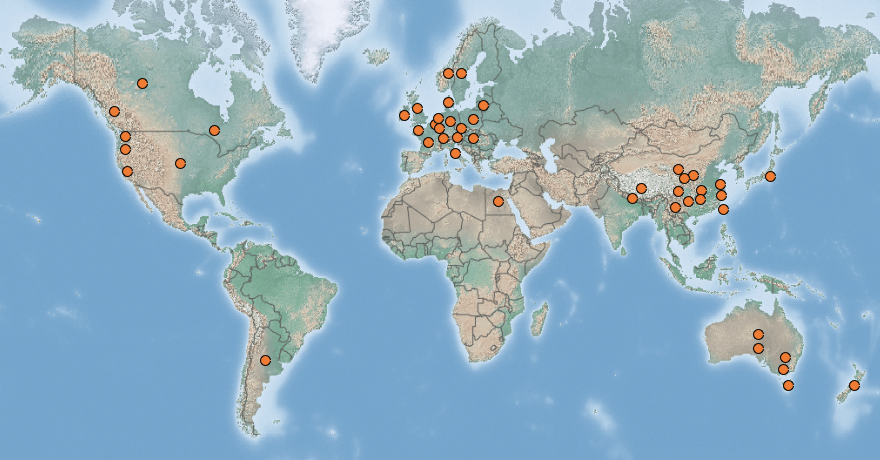
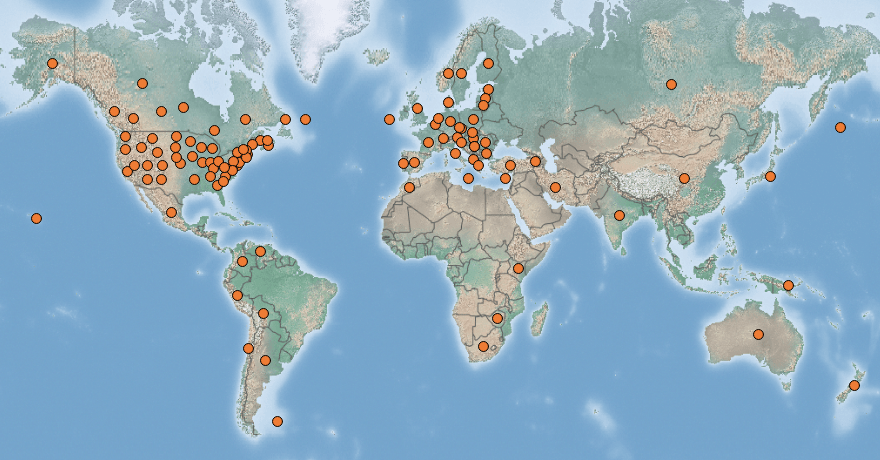
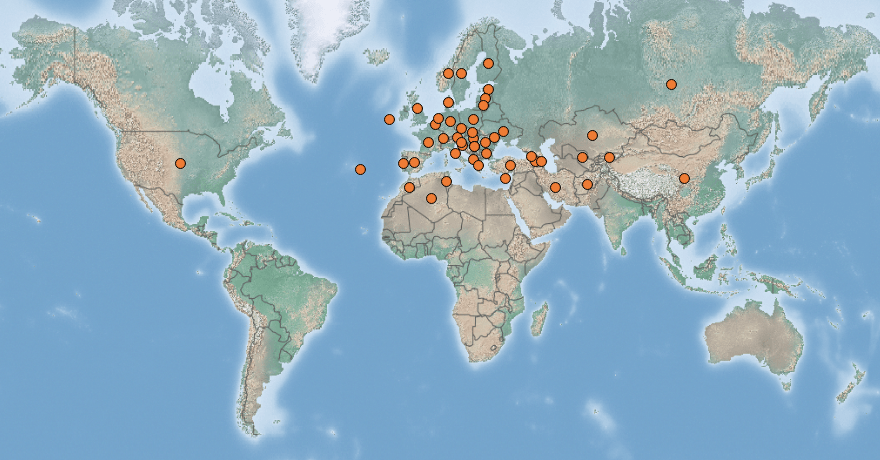
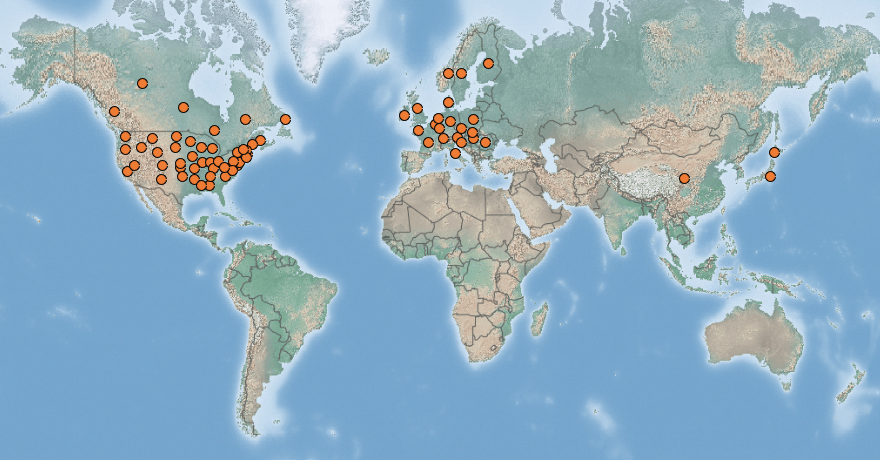
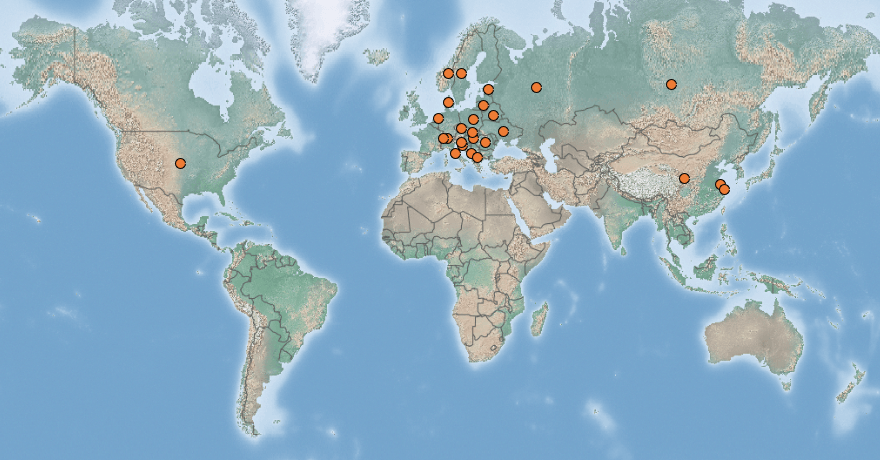
Cotoneaster horizontalis Decne. is a small shrub that thrives in man-made habitats such as walls, railway embankments or sand quarries. It can form large spontaneous and self-sustaining populations in dunes, rock outcrops and a wide range of calcicolous grassland communities. The plant is easily dispersed by birds (Branquart et al. 2010).

Status and distribution in Luxembourg

Records of Cotoneaster horizontalis Decne. in Luxembourg. Data source: Recorder-Lux, iNaturalist & GBIF, 2026-09-21.

Cotoneaster horizontalis Decne. was first documented on 6 August 1949 by François Léon Lefort (1917-1975) in Kelsbach in the Moselle valley between Grevenmacher and Machtum (Specimen № 21984 MNHNL 2000-).

The 15 occurrences in the MNHNL-mdata online portal hardly reflect the real distribution of the species (MNHNL, iNaturalist & GBIF 2019). The species seems constrained to urban areas. Commonly used as an ornamental plant, its distribution in the wild outside of urban areas is expected to increase in the future.

This melliferous species native to western China is grown for ornamental purposes in parks, gardens and roadsides. It is the most invasive exotic Cotoneaster species in sub-natural or semi-natural environments like calcicolous dry grassland, etc. (Lambinon & Verloove, 2012: 372).

Risk assessment

ISEIA protocol
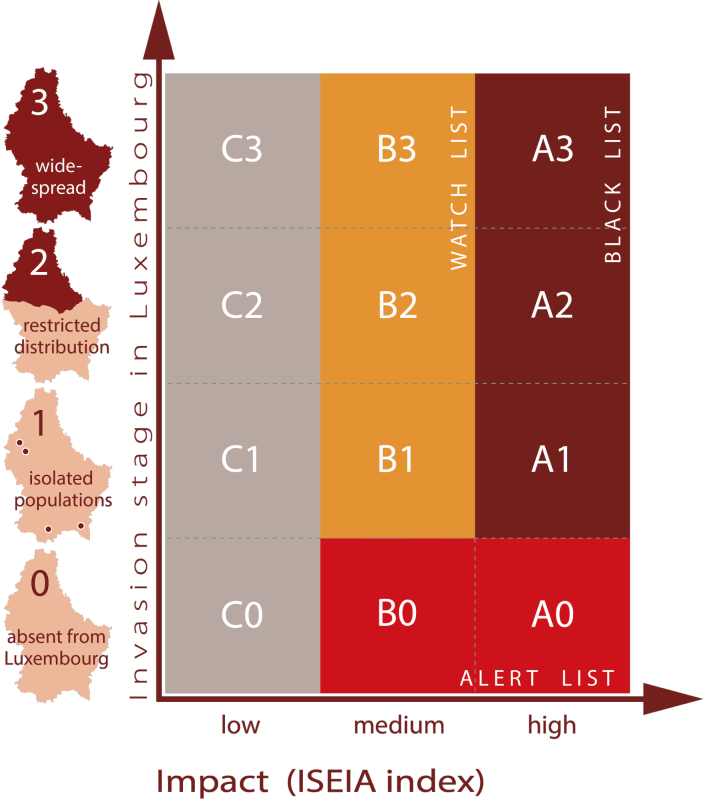
C1 (1+2+2+2) (Ries et al. 2013: 18).

Harmonia+ protocol

Overall risk score 0,34 = (Overall Invasion score 0,68 x Overall Impact score 0,50) (Ries et al. 2020).

0,68Invasion
0,50Impact
0,34Risk

Worldwide distribution

Bibliography

  • Branquart, E., S. Vanderhoeven, W. Van Landuyt, F. Van Rossum, F. Verloove, 2010. Harmonia database: Cotoneaster horizontalis Decne. Harmonia version 1.2, Belgian Forum on Invasive Species. URL: http://ias.biodiversity.be [accessed on 2019-10-09]
  • CABI, 2019. Cotoneaster horizontalis. In: Invasive Species Compendium. Wallingford, UK: CAB International. URL: www.cabi.org/isc [accessed 2020-02-28]
  • Lambinon J. & F. Verloove, 2012. Nouvelle flore de la Belgique, du grand-duché de Luxembourg, du Nord de la France et des régions voisines. Sixième édition. Avec la collaboration de L. Delvosalle, B. Toussaint, D. Geerinck, I. Hoste, F. Van Rossum, B. Cornier, R. Schumacker, A. Vanderpoorten et H. Vannerom. Jardin botanique national de Belgique, Meise. CXXXIX + 1195 pp. ISBN : 9789072619884.
  • MNHNL, 2000-. Cotoneaster horizontalis Decne. in Recorder-Lux, database on the natural heritage of the Grand Duchy of Luxembourg. Musée national d’histoire naturelle, Luxembourg. URL: https://mdata.mnhn.lu [Accessed 2019-09-05]
  • MNHNL, iNaturalist & GBIF, 2019. Cotoneaster horizontalis Decne. in MNHNL-mdata, online portal combining species observation from Recorder-Lux, iNaturalist and GBIF. National Museum of Natural History, Luxembourg. URL: https://mdata.mnhn.lu [Accessed 2019-09-06]
  • Ries, C. & Y. Krippel, 2021. First records of 56 invasive alien vascular plants in Luxembourg. Bulletin de la Société des naturalistes luxembourgeois 123: 115-127. [PDF 241 KB]
  • Ries, C., Y. Krippel & M. Pfeiffenschneider, 2020. Risk assessment after the Harmonia+ protocol of invasive alien vascular plant species in Luxembourg. Bull. Soc. Nat. luxemb. 122: 197-205. [PDF 132 KB]
  • Ries, C., Y. Krippel, M. Pfeiffenschneider & S. Schneider, 2013. Environmental impact assessment and black, watch and alert list classification after the ISEIA Protocol of non-native vascular plant species in Luxembourg. Bull. Soc. Nat. luxemb. 114: 15-21. [PDF 652 KB]

 Page content last updated on 2026-09-18. Last proofread by Caroline Grounds on 2019-11-14.

Lepomis gibbosus (Linnaeus, 1758)

English Pumpkinseed Status LU: established. 1st record: 1996.
Lëtzebuergesch Gewéinlech Sonnepiisch Status Eur.: established.
Français Perche soleil RA: ISEIA: C2. Harmonia+: n/a.
Deutsch Gemeiner Sonnenbarsch Wikipedia: Wikipedia - English - Pumpkinseed Wikipedia - Français - Perche soleil Wikipedia - Deutsch - Gemeiner Sonnenbarsch Wikipedia - Nederlands - Zonnebaars | Wikispecies: Wikispecies - Lepomis gibbosus | CABI
Nederlands Zonnebaars Back to the list of vertebrates

Brief description

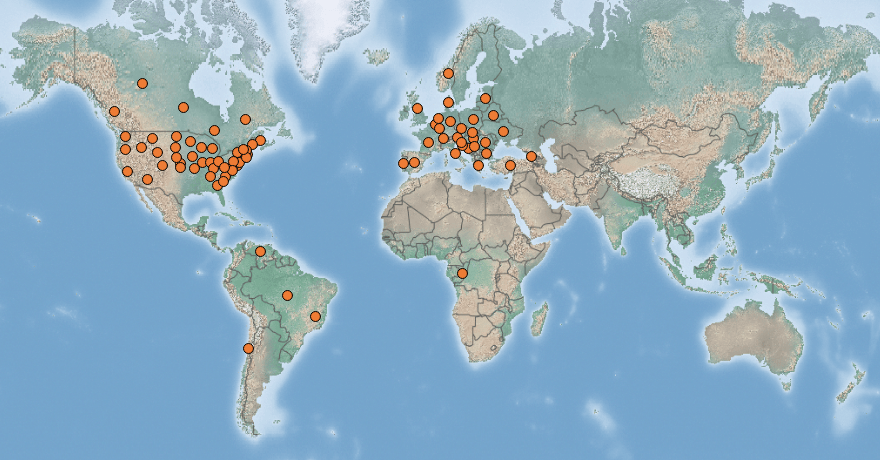
Lepomis gibbosus PAQIntroduced to Europe from North America in the late 1800s (Maes, 1898), Lepomis gibbosus (Linnaeus, 1758) is now established in a minimum of 28 countries in Europe and Asia Minor (Copp and Fox, 2007), with a population reported for Brazil and possibly also Chile. Initial reports (early 1900s) mentioned large specimens but with repeated introductions needed for establishment. Later in the 1930s, the species was blamed for the decline of native Eurasian perch (Perca fluviatilis), but this hypothesis was never tested. There is little direct evidence of adverse impacts except from Iberia. Few parasites are reported, though non-native monogeneans have been reported for Norwegian and English populations. Invasiveness in L. gibbosus appears to be a function of juvenile growth (length at age two) and age at maturity, with invasive populations reported almost exclusively for southern Europe, However, even in northern Europe, L. gibbosus may represent a considerable proportion of the fish assemblage in water bodies that have been subjected to human impacts. The species is not listed on any conservation alert list (CABI 2019).

Status and distribution in Luxembourg

Records of Lepomis gibbosus Linnaeus, 1758 in Luxembourg. Data source: Recorder-Lux, iNaturalist & GBIF, 2026-09-21.

Lepomis gibbosus (Linnaeus, 1758) was first documented by Julius Troschel on 19th July 1996 in Syr/Syre north of Medingen (municipality of Contern), in Syr/Syre in Schrassig (municipality of Schuttrange) and in the delta of Lennéngerbach in Ehnen (municipality of Wormeldange) (MNHNL, iNaturalist & GBIF 2020).

During river surveys in 2005, the species was documented in 6 out of 68 sampling spots in the rivers Alzette, Moselle and Syre. 57 observations of the species are documented in the national database in 2024 ((MNHNL, iNaturalist & GBIF 2024).

Management

Action plan

An action plan regarding the species has been published in 2020:

Finalised Action Plan for Lepomis gibbosus (Pfeiffenschneider & Hoppe 2020)

Risk assessment

ISEIA protocol

C2 (2+2+2+2) (Ries et al. 2014: 199).

Harmonia+ protocol

Not assessed yet.

Worldwide distribution

Bibliography

  • Administration de la gestion de l’eau, 2010. Les poissons au Luxembourg, Cartographie des poissons, lamproies et écrevisses du grand-duché de Luxembourg, 213 pp.
  • CABI, 2019. Lepomis gibbosus (Linnaeus, 1758). In: Invasive Species Compendium. Wallingford, UK: CAB International. URL: www.cabi.org/isc [accessed 2020-04-22]
  • MNHNL, iNaturalist & GBIF, 2020. Lepomis gibbosus (Linnaeus, 1758) in MNHNL-mdata, online portal combining species observation from Recorder-Lux, iNaturalist and GBIF. National Museum of Natural History, Luxembourg. URL: https://mdata.mnhn.lu [accessed 2020-04-22]
  • Pfeiffenschneider, M. & F. Hoppe 2020. Plan d’action pour espèces exotiques envahissantes au Grand-Duché de Luxembourg : Perche soleil, Lepomis gibbosus (Linnaeus, 1758). Version 3.1 – 2021-01-22. Administration de la nature et des forêts, Luxembourg. 20 pp.
  • Ries, C., M. Pfeiffenschneider, Engel, E., J.-C. Heidt & M. Lauff, 2014. Environmental impact assessment and black, watch and alert list classification after the ISEIA Protocol of vertebrates in Luxembourg. Bull. Soc. Nat. luxemb. 115: 195-201. [PDF 247 KB]

 Page content last updated on 2024-07-31. Last proofread by Caroline Grounds on 2019-11-27.

Oncorhynchus mykiss (Walbaum, 1792)

English Rainbow trout Status LU: established. 1st record: 1887.
Lëtzebuergesch Reeboufrell1 Status Eur.: established.
Français Truite arc-en-ciel RA: ISEIA: C2. Harmonia+: n/a.
Deutsch Regenbogenforelle Wikipedia: Wikipedia - English - Rainbow trout Lëtzebuergesch Wikipedia - Français - Truite arc-en-ciel Wikipedia - Deutsch - Regenbogenforelle Wikipedia - Nederlands - Regenboogforel | Wikispecies: Wikispecies - Oncorhynchus mykiss | CABI
Nederlands Regenboogforel Back to the list of vertebrates

Brief description

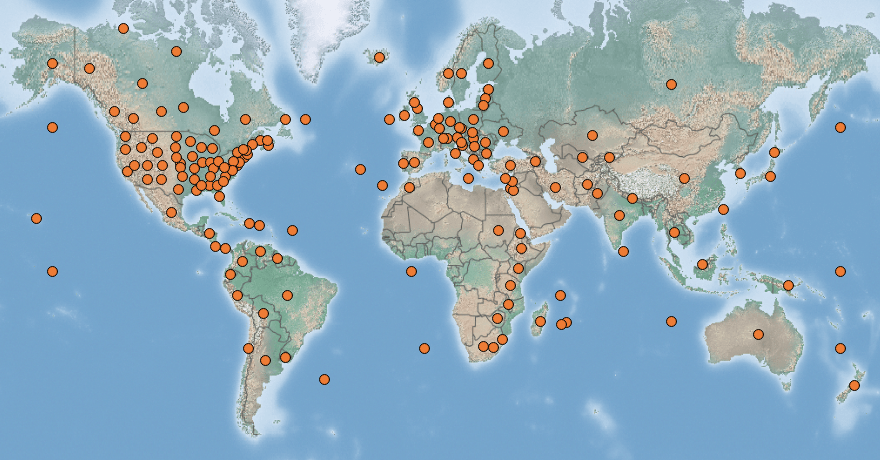
Female Rainbow Trout in handOncorhynchus mykiss (Walbaum, 1792) is a competitive trout species which can displace native trout species when introduced into new environments; the fisheries management literature is replete with papers that document this phenomenon. The fact that O. mykiss has been widely distributed throughout the temperate regions of the world for 125 years virtually guarantees that they have had a negative impact on biodiversity in areas outside their original distribution. Even within their native range, the indiscriminate planting of trout derived from coastal stocks into areas containing inland stocks has had a profound effect on population abundance of native strains of redband trout, cutthroat trout, bull trout and other native salmonids. Escapees from fish farms are an additional concern, but the most harm to biodiversity has resulted from fisheries management agencies planting O. mykiss over the past century (CABI 2019).

Status and distribution in Luxembourg

Records of Oncorhynchus mykiss Walbaum, 1792 in Luxembourg. Data source: Recorder-Lux, iNaturalist & GBIF, 2026-09-21.

Oncorhynchus mykiss (Walbaum, 1792) (Syn: Trutta iridea (Gibbons, 1855)) was introduced to Luxembourg in 1887: “On 2 July 1887 Mr. Koltz introduced the ‘rainbow trout’ (Trutta iridea) to us and released it in the Canacherbach (Anonym 1892; Feltgen 1902).2

During the river inventory of 1996/1997 the Rainbow trout was found in 33 spots. During a similar inventory in 2005, the species was only documented in two rivers: the Lower Syre (3 individuals) and the Reierbaach in the vicinity of Lasauvage (49 indivduals). The latter population indicates natural reproduction in the Reierbaach, which happens rarely in Europe (Administration de la gestion de l’eau 2010).

The introduction of the Rainbow trout was reduced considerably with, for example, a total ban in border rivers since 1986 (Administration de la gestion de l’eau 2010), resulting in the decline of the species in Luxembourg.

Currently, 59 records of in Luxembourg are accessible through the MNHNL-mdata portal (MNHNL, iNaturalist & GBIF 2020).

Risk assessment

ISEIA protocol

C2 (1+2+1+1) (Ries et al. 2014: 199).

Harmonia+ protocol

Not assessed yet.

Worldwide distribution

Bibliography

  • Administration de la gestion de l’eau (2010): Les poissons au Luxembourg, Cartographie des poissons, lamproies et écrevisses du grand-duché de Luxembourg. 213 pp.
  • A.E., 1951. La truite arc-en-ciel dans les cours d’eau luxembourgeois. Service Information et presse, Bulletin d’information 5: 88-90. [PDF 544 KB]
  • Anonym, 1892. Sitzung vom 8. Februar 1892. Bull. Soc. Nat. luxemb. 2, H. 1: 3. [eluxemburgensia]
  • CABI, 2019. Oncorhynchus mykiss (Walbaum, 1792). In: Invasive Species Compendium. Wallingford, UK: CAB International. URL: www.cabi.org/isc [accessed 2020-04-22]
  • Feltgen, E., 1902. Vademecum des Luxemburger Fischereiliebhabers. P. Worré-Mertens, Luxemburg. 148 S.
  • Klees, H., 1981. Luxemburger Tiernamen. Beiträge zur luxemburgischen Sprach- und Volkskunde XIV. Institut grand-ducal, Section de linguistique, de folklore et de toponymie. 2. Aufl. 131 S. Imprimerie Pierre Linden, Luxembourg.
  • MNHNL, iNaturalist & GBIF, 2020. Oncorhynchus mykiss (Walbaum, 1792) in MNHNL-mdata, online portal combining species observation from Recorder-Lux, iNaturalist and GBIF. National Museum of Natural History, Luxembourg. URL: https://mdata.mnhn.lu [accessed 2020-04-22]
  • Ries, C., M. Pfeiffenschneider, Engel, E., J.-C. Heidt & M. Lauff, 2014. Environmental impact assessment and black, watch and alert list classification after the ISEIA Protocol of vertebrates in Luxembourg. Bull. Soc. Nat. luxemb. 115: 195-201. [PDF 247 KB]

 Page content last updated on 2021-02-02. Last proofread by Caroline Grounds on 2019-11-28.

  1. Cf. Klees 1981: 26.[]
  2. Original text: ‘Am 2. Juli 1887 wurde durch Hr. Koltz die “Regenbogenforelle” (Trutta iridea) bei uns eingeführt und im Canacherbach ausgesetzt.'[]

Pseudorasbora parva Temminck & Schlegel, 1846

English Topmouth Gudgeon Status LU: established. 1st record: 2005.
Lëtzebuergesch Asiatesche Goujong1 Status Eur.: established. IAS of EU concern (2016).
Français Goujon asiatique RA: ISEIA: C1. Harmonia+: n/a.
Deutsch Blaubandbärbling Wikipedia: Wikipedia - English - Topmouth Gudgeon Wikipedia - Français - Goujon asiatiqueo Wikipedia - Deutsch - Blaubandbärbling Wikipedia - Nederlands - Blauwband | Wikispecies: Wikispecies - Pseudorasbora parva | CABI
Nederlands Blauwband Back to the list of vertebrates

Brief description

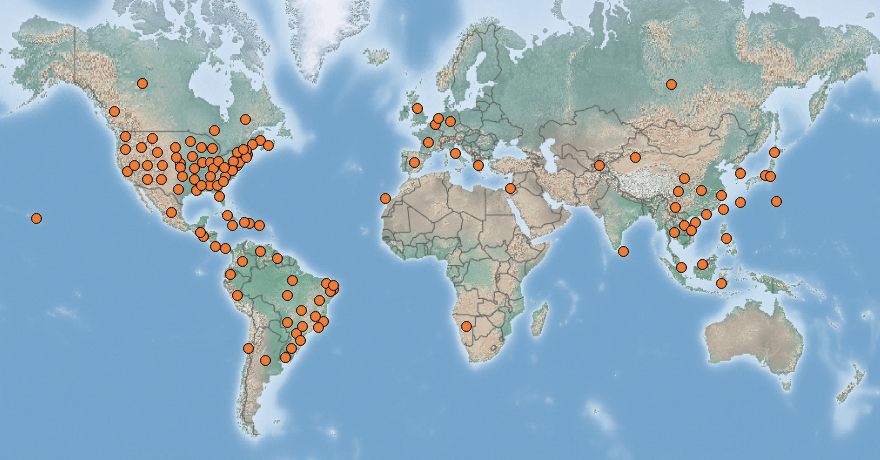
Pseudorasbora parva(edited version)Pseudorasbora parva Temminck & Schlegel, 1846 typically inhabits eutrophic ponds, ditches and muddy brooks rich in aquatic vegetation; it is sometimes found in larger streams and lakes. It is very tolerant to a wide range of environmental conditions. This highly invasive fish in Europe is a healthy host for a deadly, non-specific pathogen (Sphaerothecum destruens) that poses a threat to the conservation of European fish diversity. Moreover, it consumes large quantities of planktonic crustaceans which results in a high exploitative competition with native fish species (e.g. indigenous gudgeon) and an increase in the biomass of phytoplankton, and further in increasing eutrophication of water bodies (Anseeuw et al. 2007).

IAS of Union concern

In 2016, Pseudorasbora parva Temminck & Schlegel, 1846 was added to the list of invasive alien species of Union concern (Anonymous 2016) which implies that member states shall take all necessary steps to prevent it’s unintentional introduction or spread.

Status and distribution in Luxembourg

Records of Pseudorasbora parva Temminck & Schlegel, 1846 in Luxembourg. Data source: Recorder-Lux, iNaturalist & GBIF, 2026-09-21.

Pseudorasbora parva Temminck & Schlegel, 1846 was first detected in Luxembourg during the systematic river inventory of 2005, when it was found in the upstream dam of the Upper Sauer Lake in Bavigne (Administration de la gestion de l’eau 2010).

Management

Action plan

An action plan concerning the species has been published in 2020:

Finalised Action Plan for Pseudorasbora parva (De Sousa 2020)

Risk assessment

ISEIA protocol

C1 (1+1+1+1) (Ries et al. 2014: 199).

Harmonia+ protocol

Not assessed yet.

Worldwide distribution

Fact sheet

PDF fact sheet of the Nature and Forestry Administration: FR | DE

Bibliography

  • Administration de la gestion de l’eau, 2010. Les poissons au Luxembourg, Cartographie des poissons, lamproies et écrevisses du grand-duché de Luxembourg, 213 pp.
  • Anonymous, 2016. Commission implementing regulation (EU) 2016/1141 of 13 July 2016 adopting a list of invasive alien species of Union concern pursuant to Regulation (EU) No 1143/2014 of the European Parliament and of the Council. Official Journal of the European Union L 189: 4-5.
  • Anseeuw, D., E. Branquart, F. Lieffrig, J.-C. Micha, D. Parkinson & H. Verreycken, 2007. Harmonia database: Pseudorasbora parva Temminck & Schlegel, 1846. Harmonia version 1.2, Belgian Forum on Invasive Species. URL: http://ias.biodiversity.be [accessed 2020-04-23]
  • CABI, 2019. Pseudorasbora parva Temminck & Schlegel, 1846. In: Invasive Species Compendium. Wallingford, UK: CAB International. URL: www.cabi.org/isc [accessed 2020-04-22]
  • De Sousa, T., 2020. Plan d’action pour espèces exotiques envahissantes au Grand-Duché de Luxembourg: le Goujon asiatique, Pseudorasbora parva (Temminck & Schlegel, 1846). Version 2020-09-04. Administration de la nature et des forêts, Luxembourg. 21 pp.
  • Klees, H., 1981. Luxemburger Tiernamen. Beiträge zur luxemburgischen Sprach- und Volkskunde XIV. Institut grand-ducal, Section de linguistique, de folklore et de toponymie. 2. Aufl. 131 S. Imprimerie Pierre Linden, Luxembourg.
  • MNHNL, iNaturalist & GBIF, 2020. Pseudorasbora parva Temminck & Schlegel, 1846 in MNHNL-mdata, online portal combining species observation from Recorder-Lux, iNaturalist and GBIF. National Museum of Natural History, Luxembourg. URL: https://mdata.mnhn.lu [accessed 2020-04-22]
  • Ries, C., M. Pfeiffenschneider, Engel, E., J.-C. Heidt & M. Lauff, 2014. Environmental impact assessment and black, watch and alert list classification after the ISEIA Protocol of vertebrates in Luxembourg. Bull. Soc. Nat. luxemb. 115: 195-201. [PDF 247 KB]

 Page content last updated on 2024-07-31. Last proofread by Caroline Grounds on 2019-11-28.

  1. Goujong, Gründling cf. Klees 1981: 27.[]

Lithobates catesbeianus Shaw, 1802

Syn.: Rana catesbeiana Shaw, 1802

English American bullfrog Status LU: absent.
Lëtzebuergesch Nordamerikaneschen Ochsefräsch Status Eur.: established. IAS of EU concern (2016).
Français Ouaouaron, grenouille-taureau RA: ISEIA: A0, Alert List. Harmonia+: n/a.
Deutsch Nordamerikanischer Ochsenfrosch Wikipedia: Wikipedia - English - American bullfrog Wikipedia - Français - Grenouille-taureau Wikipedia - Deutsch - Nordamerikanischer Ochsenfrosch Wikipedia - Nederlands - Amerikaanse brulkikker | Wikispecies: Wikispecies - Rana catesbeiana | CABI
Nederlands Amerikaanse brulkikker Back to the list of vertebrates

Brief description

Lithobates catesbeianus Shaw, 1802 inhabits slow-running waters, permanent ponds and ditches with dense vegetation. In Belgium, it is often found in fish ponds. The introduction of the bullfrog outside its native range poses a threat to amphibian populations around the world. The frog negatively affects native amphibians through competition and predation (namely green frog populations). It also preys on many other species, including arthropods, molluscs, fish and birds (eggs and young). Its tadpoles contribute to the species’ negative impact on native biodiversity. Moreover, the bullfrog is frequently reported to be a healthy carrier of the fungus Batrachochytrium dendrobatidis, an emergent infectious disease that is highly virulent, has low host-specificity and has been implicated in numerous species extinctions and global amphibian declines. The species is included in the appendix under recommendation no.77 of the Council of Europe as a species which has proven to be a threat to biological diversity and for which eradication is strongly recommended (Branquart et al. 2013).

IAS of Union concern

In 2016, Lithobates catesbeianus Shaw, 1802 was added to the list of invasive alien species of Union concern (Anonymous 2016) which implies that member states shall take all necessary steps to prevent it’s unintentional introduction or spread.

Status and distribution in Luxembourg

To date, there is no documentation of the species in Luxembourg (MNHNL, iNaturalist & GBIF, 2020).

Risk assessment

ISEIA protocol

A0 (3+3+3+3) = Alert List (Ries et al. 2014: 199).

Harmonia+ protocol

Not assessed yet.

Worldwide distribution

Bibliography

  • Anonymous, 2016. Commission implementing regulation (EU) 2016/1141 of 13 July 2016 adopting a list of invasive alien species of Union concern pursuant to Regulation (EU) No 1143/2014 of the European Parliament and of the Council. Official Journal of the European Union L 189: 4-5.
  • Branquart E., A. Laudelout, G. Louette, Y. Martin & C. Percsy, 2013. Harmonia database: Rana catesbeiana. Harmonia version 1.2, Belgian Forum on Invasive Species. URL: http://ias.biodiversity.be [accessed on 2019-10-25]
  • CABI, 2019. Lithobates catesbeianus Shaw, 1802. In: Invasive Species Compendium. Wallingford, UK: CAB International. URL: www.cabi.org/isc [accessed 2020-04-21]
  • MNHNL, iNaturalist & GBIF, 2020. Lithobates catesbeianus Shaw, 1802 in MNHNL-mdata, online portal combining species observation from Recorder-Lux, iNaturalist and GBIF. National Museum of Natural History, Luxembourg. URL: https://mdata.mnhn.lu [Accessed 2020-04-21]
  • Ries, C., M. Pfeiffenschneider, Engel, E., J.-C. Heidt & M. Lauff, 2014. Environmental impact assessment and black, watch and alert list classification after the ISEIA Protocol of vertebrates in Luxembourg. Bull. Soc. Nat. luxemb. 115: 195-201. [PDF 247 KB]

 Page content last updated on 2020-04-21. Last proofread by Caroline Grounds on 2019-11-29.

Salvelinus fontinalis (Mitchill, 1814)

English Brook trout Status LU: established. 1st record: 1872.
Lëtzebuergesch Bur-Séifrell1 Status Eur.: established.
Français Truite mouchetée RA: ISEIA: C1. Harmonia+: n/a.
Deutsch Bachsaibling Wikipedia: Wikipedia - English - Brook trout Wikipedia - Français - Truite mouchetée Wikipedia - Deutsch - Bachsaibling Wikipedia - Nederlands - Bronforel | Wikispecies: Wikispecies - Salvelinus fontinalis | CABI
Nederlands Bronforel Back to the list of vertebrates

Brief description

Brook trout 1918Introductions of Salvelinus fontinalis (Mitchill, 1814) began in the nineteenth century, to more than 40 countries in temperate areas on all continents, including the southern hemisphere. The brook trout is considered a poor to moderate invader. Potential impacts include predation on various species of amphibians, zooplankton and other invertebrates as well as increases in primary productivity, alteration of nutrient cycles, and hybridization with native species. This species is competitive, with broad dietary breadth, has a fast growth rate, often lacks predators or parasites, and is moderately tolerant of abiotic conditions. Introductions may lead to replacement of native salmonids (e.g. brown trout, Salmo trutta) (CABI 2019).

Status and distribution in Luxembourg

Records of Salvelinus fontinalis Mitchill, 1814 in Luxembourg. Data source: Recorder-Lux, iNaturalist & GBIF, 2026-09-21.

Salvelinus fontinalis (Mitchill, 1814) was first mentioned in 1872 by Alphonse de la Fontaine, who wrote that the brook trout occasionally enters the Moselle from time to time (De la Fontaine 1872).

The species was introduced in Luxembourg in 1902 in Limbach (Lintgen), Rollingerbach and Berschbach (Feltgen 1902).

In 2005, a systematic inventory of Luxembourg rivers only showed isolated individuals in the Alzette. There is no indication of reproduction of the species in Luxembourg.

The distribution map is not complete because records still have to be entered into the Recorder-Lux database (MNHNL, iNaturalist & GBIF 2019).

Currently, 6 records of in Luxembourg are accessible through the MNHNL-mdata portal (MNHNL, iNaturalist & GBIF 2020).

Risk assessment

ISEIA protocol

C1 (1+1+1+1) (Ries et al. 2014: 199).

Harmonia+ protocol

Not assessed yet.

Worldwide distribution

Bibliography

  • Administration de la gestion de l’eau, 2010. Les poissons au Luxembourg, Cartographie des poissons, lamproies et écrevisses du Grand-Duché de Luxembourg. 2e éd. 213 pp.
  • CABI, 2019. Salvelinus fontinalis (Mitchill, 1814). In: Invasive Species Compendium. Wallingford, UK: CAB International. URL: www.cabi.org/isc [accessed 2020-04-23]
  • De la Fontaine, A., 1872. Faune du Pays du Luxembourg. Poissons. Publ. Inst. Roy. Gr.-D. Luxb. 8: 1-88.
  • Feltgen, E., 1902. Vademecum des Luxemburger Fischereiliebhabers. P. Worré-Mertens, Luxemburg. 148 S.
  • Klees, H., 1981. Luxemburger Tiernamen. Beiträge zur luxemburgischen Sprach- und Volkskunde XIV. Institut grand-ducal, Section de linguistique, de folklore et de toponymie. 2. Aufl. 131 S. Imprimerie Pierre Linden, Luxembourg.
  • MNHNL, iNaturalist & GBIF, 2019. MNHNL-mdata, online portal combining species observation from Recorder-Lux, iNaturalist and GBIF. National Museum of Natural History, Luxembourg. URL: https://mdata.mnhn.lu [Accessed 2019-10-25]
  • Ries, C., M. Pfeiffenschneider, Engel, E., J.-C. Heidt & M. Lauff, 2014. Environmental impact assessment and black, watch and alert list classification after the ISEIA Protocol of vertebrates in Luxembourg. Bull. Soc. Nat. luxemb. 115: 195-201. [PDF 247 KB]

 Page content last updated on 2020-04-27.

  1. Saibling cf. Klees 1981: 26.[]

Sander lucioperca (Linnaeus, 1758)

English Zander Status LU: established. 1st record: 1894.
Lëtzebuergesch Zander Status Eur.: established.
Français Sandre doré européen RA: ISEIA: B2, Watch List. Harmonia+: 0,22
Deutsch Zander Wikipedia: Wikipedia - English - Zander Wikipedia - Français - Sandre doré européen Wikipedia - Deutsch - Zander Wikipedia - Nederlands - Snoekbaars | Wikispecies: Wikispecies - Sander lucioperca | CABI
Nederlands Snoekbaars Back to the list of vertebrates

Brief description

Sander lucioperca 1Sander lucioperca (Linnaeus, 1758) can be invasive in lakes, channels and slow running waters. The introduction of this predatory fish in Western Europe created a crash in some cyprinid fish communities. Populations of native piscivorous fish species (Esox lucius, Perca fluviatilis) were locally depleted due to interspecific competition. The pike-perch is also a vector of the Bucephalus polymorphus parasite, that can affect native cyprinid fish species; however, a massive outbreak of this parasite has never been reported from Belgium (Anseeuw et al. 2008).

Status and distribution in Luxembourg

Records of Sander lucioperca Linnaeus, 1758 in Luxembourg. Data source: Recorder-Lux, iNaturalist & GBIF, 2026-09-21.

In Luxembourg, Sander lucioperca (Linnaeus, 1758) was first documented in 1894 in the Moselle, probably near Ehnen in the municipality of Wormeldange, and in 1898 in the Sûre near Moersdorf, municipality of Mompach (Feltgen 1902).

Currently, 34 records of in Luxembourg are accessible through the MNHNL-mdata portal (MNHNL, iNaturalist & GBIF 2020). Its most important populations are located in the Moselle and the Upper Sûre lake.

Risk assessment

ISEIA protocol

B2 (2+2+3+2) = Watch List (Ries et al. 2014: 199).

Harmonia+ protocol

Overall risk score 0,22 = (Overall Invasion score 0,84 x Overall Impact score 0,26) (evaluated by Carole Molitor, Roland Proess and Manou Pfeiffenschneider).

0,84Invasion
0,26Impact
0,22Risk

Worldwide distribution

Bibliography

  • Administration de la gestion de l’eau, 2010. Les poissons au Luxembourg, Cartographie des poissons, lamproies et écrevisses du grand-duché de Luxembourg, 213 pp.
  • Anseeuw D., E. Branquart, F. Lieffrig, J.-C. Micha, D. Parkinson & H. Verreycken, 2008. Harmonia database: Sander lucioperca (Linnaeus, 1758). Harmonia version 1.2, Belgian Forum on Invasive Species. URL: http://ias.biodiversity.be [accessed 2020-04-27]
  • CABI, 2019. Sander lucioperca (Linnaeus, 1758). In: Invasive Species Compendium. Wallingford, UK: CAB International. URL: www.cabi.org/isc [accessed 2020-04-27]
  • Feltgen, E. (1902): Vademecum des Luxemburger Fischereiliebhabers. – P. Worré-Mertens, Luxemburg: 148 S.
  • MNHNL, iNaturalist & GBIF, 2020. Sander lucioperca (Linnaeus, 1758) in MNHNL-mdata, online portal combining species observation from Recorder-Lux, iNaturalist and GBIF. National Museum of Natural History, Luxembourg. URL: https://mdata.mnhn.lu [accessed 2020-04-27]
  • Moris, J.P., 1900. Ein Wort über den Zander (Lucioperca Sandra), und sein Vorkommen in unsern Flüssen. Bull. Soc. Nat. luxemb. 10: 131-132. [PDF 88 KB]
  • Ries, C., M. Pfeiffenschneider, Engel, E., J.-C. Heidt & M. Lauff, 2014. Environmental impact assessment and black, watch and alert list classification after the ISEIA Protocol of vertebrates in Luxembourg. Bull. Soc. Nat. luxemb. 115: 195-201. [PDF 247 KB]

 Page content last updated on 2024-03-06.

Elodea nuttallii (Planch.) H. St. John

English Nuttall’s Waterweed Status LU: established. 1st record: LU & ITW 1975.
Lëtzebuergesch Schmuelbliedereg Waasserpescht Status Eur.: established. 1st record: BE 1939. IAS of EU concern (2017).
Français Elodée de Nuttall RA: ISEIA: A3, Black List. Harmonia+: 0,42
Deutsch Schmalblättrige Wasserpest Wikipedia: Wikipedia - English - Nuttall's Waterweed Wikipedia - Français - Elodée de Nuttall Wikipedia - Deutsch - Schmalblättrige Wasserpest | Wikispecies: Wikispecies - Elodea nuttallii | CABI
Nederlands Smalle waterpest Back to the list of neophytes

Brief description

ElodeaNuttallii2

Christian Fischer, CC BY-SA 3.0, via Wikimedia Commons

Elodea nuttallii (Planch.) H. St. John is an aquatic plant that thrives in various types of freshwater habitats, from still to slow-flowing systems and from very shallow to deep waters. It is very tolerant to water pollution and prefers warm eutrophic and calcareous waters; it is often found in species-poor macrophyte communities. This submerged perennial makes dense monospecific populations which often colonise whole water bodies, restrict water movement, cut off light, produce anoxic conditions and trap sediments in the system. Due to its quick nutrient uptake and very high growth rate, the species has been reported to outcompete several native aquatic plants (Branquart et al. 2019).

IAS of Union concern

In 2017, Elodea nuttallii (Planch.) H. St. John was added to the list of invasive alien species of Union concern (Anonymous 2017) which implies that member states shall take all necessary steps to prevent it’s unintentional introduction or spread.

Status and distribution in Luxembourg

Records of Elodea nuttallii (Planch.) H. St. John in Luxembourg. Data source: Recorder-Lux, iNaturalist & GBIF, 2026-09-21.

Elodea nuttallii (Planch.) H. St. John has been first documented by Paul Verheggen in the Upper Sûre lake near Boulaide in 1975 (Parent 1983 cit. in Diederich 1984: 39)1. The species, observed since 1941 in the Netherlands, was harvested in 1939 in northern Belgium, but was only identified later (around 1967). It tends to locally supplant Elodea canadensis Michx. (Lambinon & Verloove 2012: 790).

Elodea nuttallii (Planch.) H. St. John is so far less common in Luxembourg than the Canadian waterweed. 

An identification sheet of the species has been published by the MECB in French and German.

Management

Action plan

The action plan dedicated to Nuttall’s Waterweed was published September 2020:

Finalised Action Plan for Elodea nuttallii (Pfeiffenschneider & Hoppe 2020).

Risk assessment

ISEIA protocol

A3 (3+3+3+3) = Black List (Ries et al. 2013: 18).

Harmonia+ protocol

Overall risk score 0,42 = (Overall Invasion score 0,71 x Overall Impact score 0,60) (Ries et al. 2020).

0,71Invasion
0,60Impact
0,42Risk

Worldwide distribution

Bibliography

  • Anonymous, 2017. Commission implementing regulation (EU) 2017/1263 of 12 July 2017 updating the list of invasive alien species of Union concern established by Implementing Regulation (EU) 2016/1141 pursuant to Regulation (EU) No 1143/2014 of the European Parliament and of the Council. Official Journal of the European Union L 182: 37-39 (13.7.2017).
  • CABI, 2019. Elodea nuttallii. In: Invasive Species Compendium. Wallingford, UK: CAB International. URL: www.cabi.org/isc [accessed 2020-02-28]
  • Branquart, E., I. Stiers, L. Triest, S. Vanderhoeven, W. Van Landuyt, F. Van Rossum, F. Verloove, 2019. Harmonia database: Elodea nuttallii (Planch.) H. St. John. Harmonia version 1.2, Belgian Forum on Invasive Species. URL: http://ias.biodiversity.be [accessed on 2019-10-09]
  • Diederich, P., 1984. Les monocotylédones aquatiques (excl. Potamogeton s.l.) du Grand-Duché de Luxembourg. Dumortiera 29-30: 34-41. [PDF 5 MB].
  • Lambinon J. & F. Verloove, 2012. Nouvelle flore de la Belgique, du grand-duché de Luxembourg, du Nord de la France et des régions voisines. Sixième édition. Avec la collaboration de L. Delvosalle, B. Toussaint, D. Geerinck, I. Hoste, F. Van Rossum, B. Cornier, R. Schumacker, A. Vanderpoorten et H. Vannerom. Jardin botanique national de Belgique, Meise. CXXXIX + 1195 pp. ISBN : 9789072619884.
  • MNHNL, 2000-. Elodea nuttallii (Planch.) H. St. John in Recorder-Lux, database on the natural heritage of the Grand Duchy of Luxembourg. Musée national d’histoire naturelle, Luxembourg. URL: https://mdata.mnhn.lu [Accessed 2019-09-05]
  • MNHNL, iNaturalist & GBIF, 2019. Elodea nuttallii (Planch.) H. St. John in MNHNL-mdata, online portal combining species observation from Recorder-Lux, iNaturalist and GBIF. National Museum of Natural History, Luxembourg. URL: https://mdata.mnhn.lu [Accessed 2019-09-06]
  • Oly, M., 2022. Kartierung invasiver gebietsfremder Wasserpflanzen im Großherzotum Luxemburg, Untersuchungen zur Verbreitung von invasiven gebietsfremden Wasserpflanzen in einer beispielhaften Auswahl an Stillgewässern, Musée national d’histoire naturelle, Luxembourg. 117 pp. 
  • Parent, G. H., 1983. Données floristiques inédites tirées de l’herbier du docteur Paul Verheggen. Dumortiera 25 : 12-21.
  • Pfeiffenschneider, M. & F. Hoppe, 2020. Plan d’action pour espèces exotiques envahissantes au GrandDuché de Luxembourg : Elodéede Nuttall, Elodea nuttallii (Planch.) H. St. John. Version 23/09/2020. Administration de la nature et des forêts, Luxembourg. 22pp.
  • Ries, C. & Y. Krippel, 2021. First records of 56 invasive alien vascular plants in Luxembourg. Bulletin de la Société des naturalistes luxembourgeois 123: 115-127. [PDF 241 KB]
  • Ries, C., Y. Krippel & M. Pfeiffenschneider, 2020. Risk assessment after the Harmonia+ protocol of invasive alien vascular plant species in Luxembourg. Bull. Soc. Nat. luxemb. 122: 197-205. [PDF 132 KB]
  • Ries, C., Y. Krippel, M. Pfeiffenschneider & S. Schneider, 2013. Environmental impact assessment and black, watch and alert list classification after the ISEIA Protocol of non-native vascular plant species in Luxembourg. Bull. Soc. Nat. luxemb. 114: 15-21. [PDF 652 KB]

 Page content last updated on 2026-09-18. Last proofread by Caroline Grounds on 2019-11-17.

  1. Diederich 1984, p. 39: Oesling : Boulaide, au lac, K7.48. 1975. herb. Verheggen (PARENT. 1983).[]

Erigeron annuus (L.) Pers.

English Tall fleabane Status LU: established. 1st record: LU & ITW <1836.
Lëtzebuergesch Jäerlecht Beruffkraut Status Eur.: established. 1st record: DK 1810.
Français Vergerette annuelle RA: ISEIA: C1. Harmonia+: 0,03
Deutsch Feinstrahl Wikipedia: Wikipedia - English - Tall fleabane Wikipedia - Français - Vergerette annuelle Wikipedia - Deutsch - Feinstrahl Wikipedia - Nederlands - Zomerfijnstraal | Wikispecies: Wikispecies - Erigeron annuus | CABI
Nederlands Zomerfijnstraal Back to the list of neophytes

Brief description

Erigeron annuus (1292154577)

Jason Hollinger, CC BY 2.0, via Wikimedia Commons

Erigeron annuus (L.) Pers. is a North American plant that often populates ruderal sites. Because of its ability to form dense stands, the species can become problematic from a nature conservation point of view, if it enters established natural plant communities.

Erigeron annuus is a highly variable species, in which American studies have distinguished several infraspecific taxa, generally with a more or less limited geographical distribution. Their application to naturalised populations in Europe has led to their being reported as two or even three distinct subspecies. In the environment two subspecies have often been distinguished: Erigeron annuus subsp. annuus and Erigeron annuus subsp. septentrionalis (Lambinon & Verloove 2012: 707-708).

Status and distribution in Luxembourg

Records of Erigeron annuus (L.) Pers. in Luxembourg. Data source: Recorder-Lux, iNaturalist & GBIF, 2026-09-21.

Tinant (1836: 428) indicates Erigeron annuus (L.) Pers. under its synonym Aster annuus L. on “the gravels of the banks of the Moselle near Remich”. Erigeron annuus was sampled on the edge of the Moselle river near Remich before 1842 (Holandre 1842: 336).1 The first edition of this flora from 1829 does not mention the species (Holandre 1829: 450). According to Lefort (1949: 46), Holandre’s “Flore de la Moselle” mentions Erigeron annuus near Schengen. It seems that all these refer to original material and observations of Tinant dating before 1836. An explanation of the confusion between Remich and Schengen as location may be read in the “Flore de Lorraine” by Grodron (1857: 387) who mentions Aster annuus L. at the “Banks of the Moselle near Remich, a little beyond the French border”2, which suggests the location of the finding by Tinant might have been closer to Schengen than to Remich. In 1873, Koltz lists the species under its synonyms Stenactis alba [in the text] and Aster stenactis [in the index] and confirms that it occurs on roadsides, in hedges, lawns, and at forest edges. “Remich. T. près Schengen (Hollandre)” (Koltz 1873: 129).

The next documented observation of the species in Luxembourg dates from 1953. Marcel Etringer collected a specimen of the species on a slag heap in Dommeldange on 15th September 1953 (Specimen № 48214, MNHNL 2000-). Nowadays Erigeron annuus is quite common to quite rare in the Lorraine district (AC-AR) and very rare (RR) or non-existent in the Ardennes district (Lambinon & Verloove 2012: 707).

Risk assessment

ISEIA protocol

C1 (2+2+1+1) (Ries et al. 2013: 18).

Harmonia+ protocol

Overall risk score 0,03 = (Overall Invasion score 0,28 x Overall Impact score 0,13) (Ries et al. 2020).

0,28Invasion
0,13Impact
0,03Risk

Worldwide distribution

Bibliography

  • CABI, 2019. Erigeron annuus. In: Invasive Species Compendium. Wallingford, UK: CAB International. URL: www.cabi.org/isc [accessed 2020-03-02]
  • Gordon, A., 1857. Flore de Lorraine. 504 p. 2e édition, tome 1. Nancy, Metz & Paris.
  • Holandre, J.-J.-J., 1829. Flore de la Moselle, ou, Manuel d’herborisation, précédé d’un aperçu géologique sur le département et d’élémens abrégés de botanique. Tome 1. 712 p. Metz : Mme Thiel, libraire-éditeur.
  • Holandre, J.-J.-J., 1842. Nouvelle flore de la Moselle, ou Manuel d’herborisation dans les environs de Metz principalement, et les autres parties du département. Tome 1 et 2, 948 p. Metz : Verronnais. Paris : Roret.
  • Koltz, J.-P.-J., 1873. Prodrome de la flore du grand-duché de Luxembourg. Première partie. Plantes phanérogames. Imprimerie V. Buck, Luxembourg. 279 S.
  • Lambinon J. & F. Verloove, 2012. Nouvelle flore de la Belgique, du grand-duché de Luxembourg, du Nord de la France et des régions voisines. Sixième édition. Avec la collaboration de L. Delvosalle, B. Toussaint, D. Geerinck, I. Hoste, F. Van Rossum, B. Cornier, R. Schumacker, A. Vanderpoorten et H. Vannerom. Jardin botanique national de Belgique, Meise. CXXXIX + 1195 pp. ISBN : 9789072619884.
  • Lefort, F. L., 1950. Contribution à l’histoire botanique du Luxembourg (av. 18 planches). Bull. Soc. Nat. luxemb. 54: 31-160. [PDF 6781 KB]
  • MNHNL, 2000-. Erigeron annuus (L.) Pers. in Recorder-Lux, database on the natural heritage of the Grand Duchy of Luxembourg. Musée national d’histoire naturelle, Luxembourg. URL: https://mdata.mnhn.lu [Accessed 2018-01-18]
  • MNHNL, iNaturalist & GBIF, 2019. Erigeron annuus (L.) Pers. in MNHNL-mdata, online portal combining species observation from Recorder-Lux, iNaturalist and GBIF. National Museum of Natural History, Luxembourg. URL: https://mdata.mnhn.lu [Accessed 2019-09-06]
  • Ries, C. & Y. Krippel, 2021. First records of 56 invasive alien vascular plants in Luxembourg. Bulletin de la Société des naturalistes luxembourgeois 123: 115-127. [PDF 241 KB]
  • Ries, C., Y. Krippel & M. Pfeiffenschneider, 2020. Risk assessment after the Harmonia+ protocol of invasive alien vascular plant species in Luxembourg. Bull. Soc. Nat. luxemb. 122: 197-205. [PDF 132 KB]
  • Ries, C., Y. Krippel, M. Pfeiffenschneider & S. Schneider, 2013. Environmental impact assessment and black, watch and alert list classification after the ISEIA Protocol of non-native vascular plant species in Luxembourg. Bull. Soc. Nat. luxemb. 114: 15-21. [PDF 652 KB]

 Page content last updated on 2026-09-18. Last proofread by Caroline Grounds on 2019-11-18.

  1. Cette plante a été trouvée sur les bords de la Moselle près de Remich, d’où proviennent mes échantillons.[]
  2. Bords de la Moselle près de Remich, un peu au-delà de la frontière de France[]

Egeria densa Planch.

English Large-flowered waterweed Status LU: established. 1st record: LU & ITW 2016.
Lëtzebuergesch Dichtbliedreg Waasserpescht Status Eur.: established. 1st record: unkn.
Français Égérie dense RA: ISEIA: A1 – Black List. Harmonia+: 0,32
Deutsch Dichtblättrige Wasserpest Wikipedia: Wikipedia - English - Large-flowered waterweed Wikipedia - Deutsch - Dichtblättrige Wasserpest Wikipedia - Nederlands - Egeria (plant) | Wikispecies: Wikispecies - Egeria densa | CABI
Nederlands Egeria (plant) Back to the list of neophytes

Brief description

Egeria densa iceland

Lara Gudmundsdottir, CC BY-SA 4.0, via Wikimedia Commons

Egeria densa Planch. is a South American aquatic plant with a very wide ecological amplitude. It thrives in a variety of freshwater habitats: while it prefers flowing systems it may also be found in still waters. The species is not light-demanding and is able to develop in deep and turbid waters. The submerged perennial makes dense monospecific populations which often colonise whole water bodies, restrict water movement, cut off light, produce anoxic conditions and trap sediments in the system. The large-flowered water weed has been reported to outcompete native aquatic plants and to adversely affect fish communities (Branquart et al. 2013).

Status and distribution in Luxembourg

Records of Egeria densa Planch. in Luxembourg. Data source: Recorder-Lux, iNaturalist & GBIF, 2026-09-21.

Egeria densa Planch. was observed twice in 2016 in the Eisch valley East of Hobscheid (mdata.mnhn.lu) and in 2019 in Luxembourg City (MNHNL, iNaturalist & GBIF 2019).

Risk assessment

ISEIA protocol

A1 (2+3+3+3) = Black List. Updated on 22 June 2018 by Christian Ries and Manou Pfeiffenschneider. Former assessment: A0 (2+3+3+3) = Alert List (Ries et al. 2013: 18).

Harmonia+ protocol

Overall risk score 0,32 = (Overall Invasion score 0,53 x Overall Impact score 0,62) (Ries et al. 2020).

0,53Invasion
0,62Impact
0,32Risk

Worldwide distribution

Bibliography

  • Branquart, E., I. Stiers, L. Triest, S. Vanderhoeven, W. Van Landuyt, F. Van Rossum & F. Verloove, 2013. Harmonia database: . Harmonia version 1.2, Belgian Forum on Invasive Species. URL: http://ias.biodiversity.be [accessed on 2020-02-28]
  • CABI, 2019. Egeria densa. In: Invasive Species Compendium. Wallingford, UK: CAB International. URL: www.cabi.org/isc [accessed 2020-02-28]
  • MNHNL, iNaturalist & GBIF, 2019. Egeria densa in MNHNL-mdata, online portal combining species observation from Recorder-Lux, iNaturalist and GBIF. National Museum of Natural History, Luxembourg. URL: https://mdata.mnhn.lu [Accessed 2020-02-28]
  • Oly, M., 2022. Kartierung invasiver gebietsfremder Wasserpflanzen im Großherzotum Luxemburg, Untersuchungen zur Verbreitung von invasiven gebietsfremden Wasserpflanzen in einer beispielhaften Auswahl an Stillgewässern, Musée national d’histoire naturelle, Luxembourg. 117 pp. 
  • Ries, C. & Y. Krippel, 2021. First records of 56 invasive alien vascular plants in Luxembourg. Bulletin de la Société des naturalistes luxembourgeois 123: 115-127. [PDF 241 KB]
  • Ries, C., Y. Krippel & M. Pfeiffenschneider, 2020. Risk assessment after the Harmonia+ protocol of invasive alien vascular plant species in Luxembourg. Bull. Soc. Nat. luxemb. 122: 197-205. [PDF 132 KB]
  • Ries, C., Y. Krippel, M. Pfeiffenschneider & S. Schneider, 2013. Environmental impact assessment and black, watch and alert list classification after the ISEIA Protocol of non-native vascular plant species in Luxembourg. Bull. Soc. Nat. luxemb. 114: 15-21. [PDF 652 KB]

 Page content last updated on 2026-09-18. Last proofread by Caroline Grounds on 2019-11-14.