Orconectes immunis (Hagen, 1870)

English Papershell crayfish Status LU: absent.
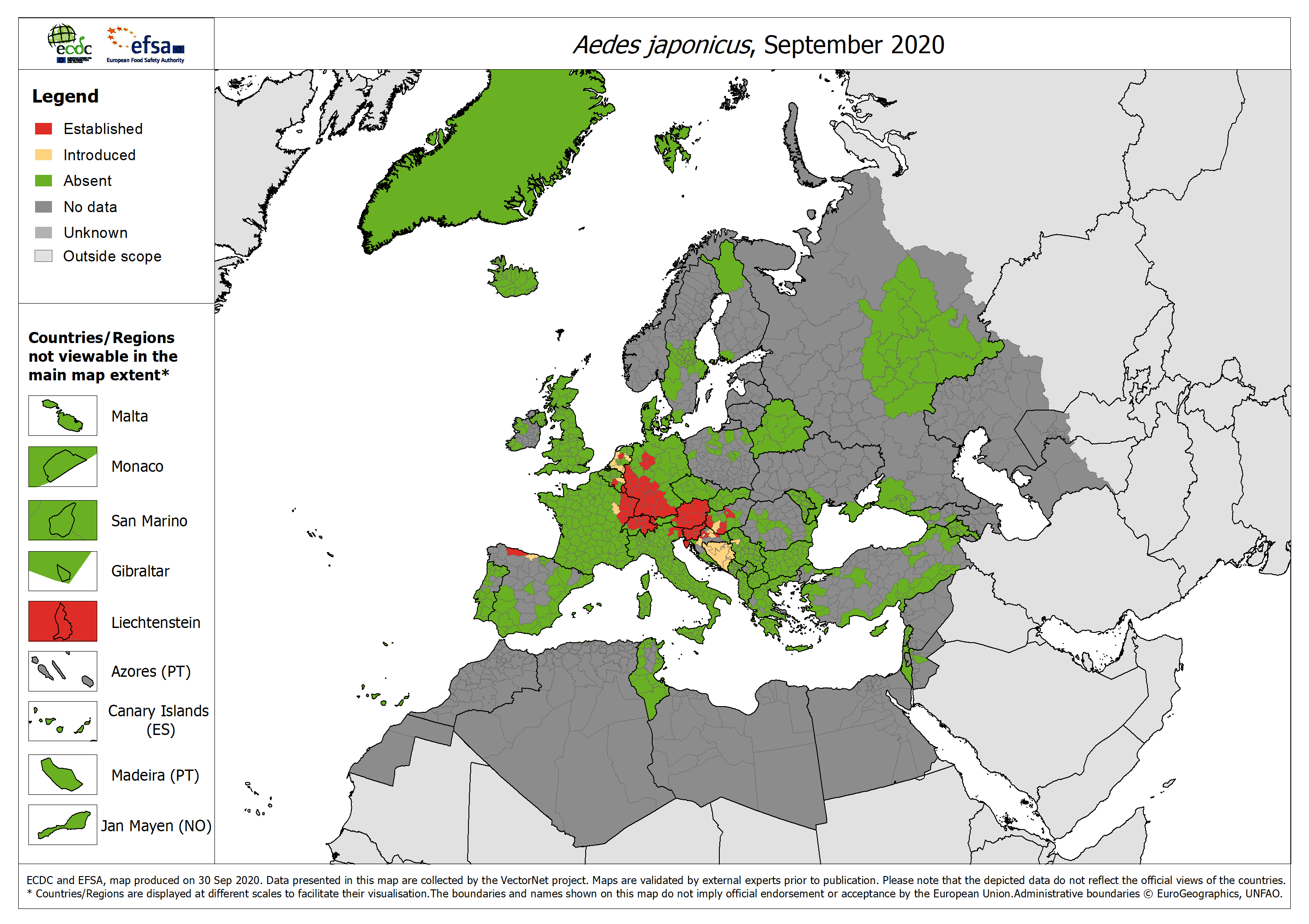
Lëtzebuergesch Kalikokriibs Status Eur.: established.
Français Ecrevisse calicot RA: ISEIA: A0, Alert List. Harmonia+: n/a.
Deutsch Kalikokrebs Wikipedia: Wikipedia - English - Orconectes immunis  Wikipedia - Français - Ecrevisse calicot Wikipedia - Deutsch - Kalikokrebs Nederlands - Calicotrivierkreeft | Wikispecies: n/a (2020)
Nederlands Calicotrivierkreeft Back to the list of invertebrates

Brief description

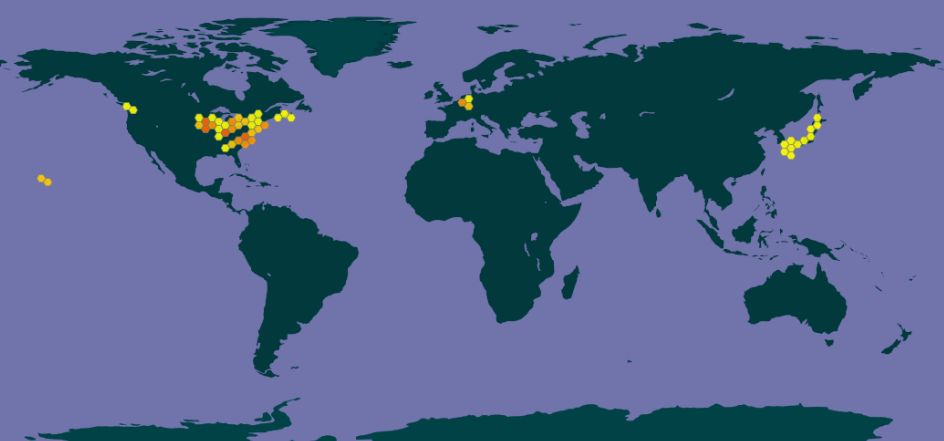
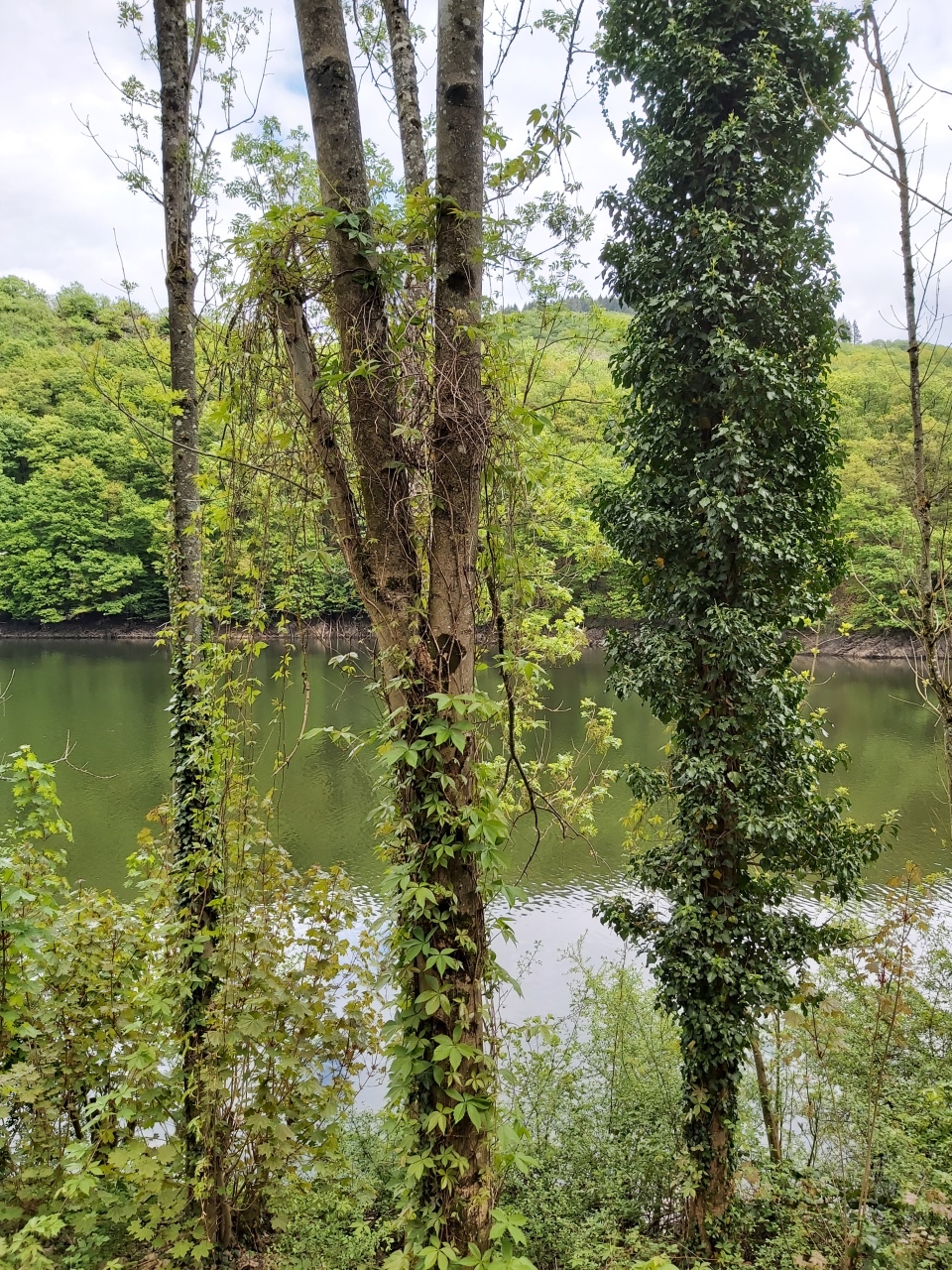
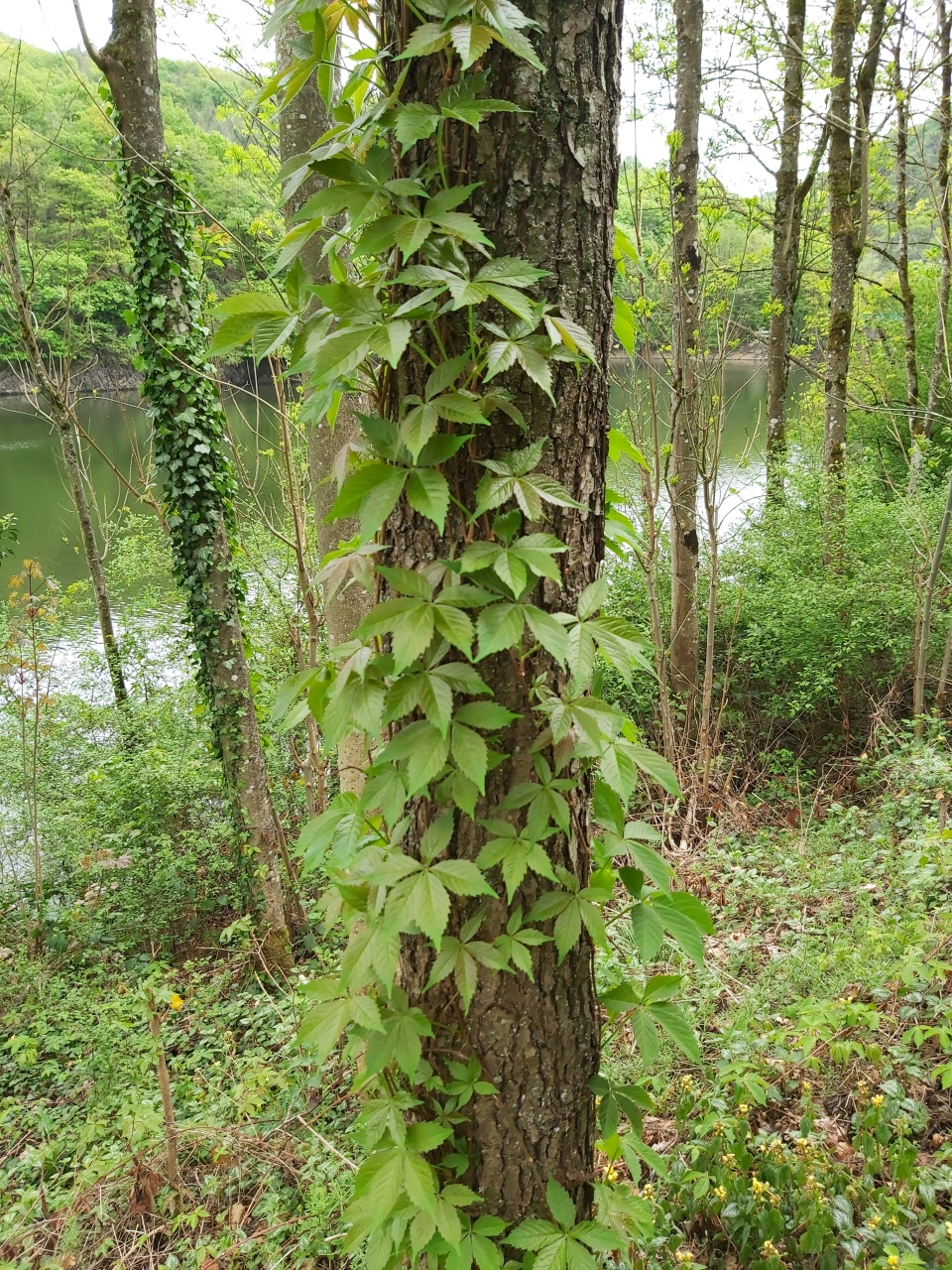
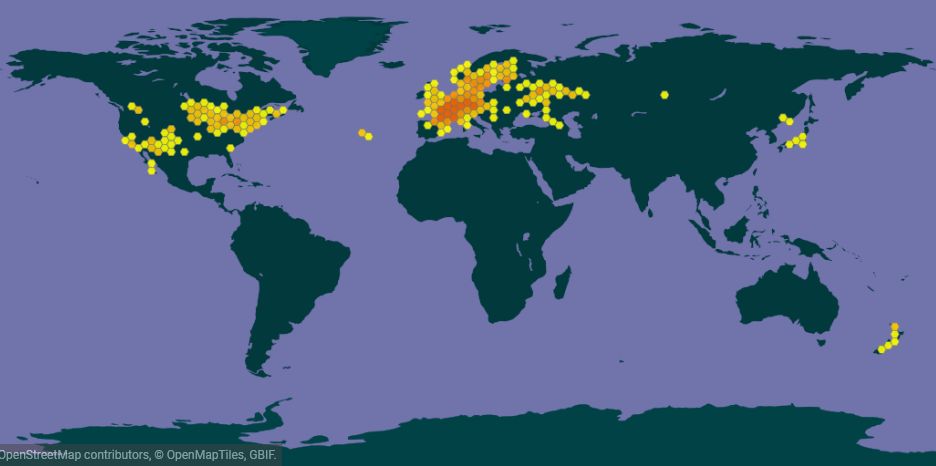
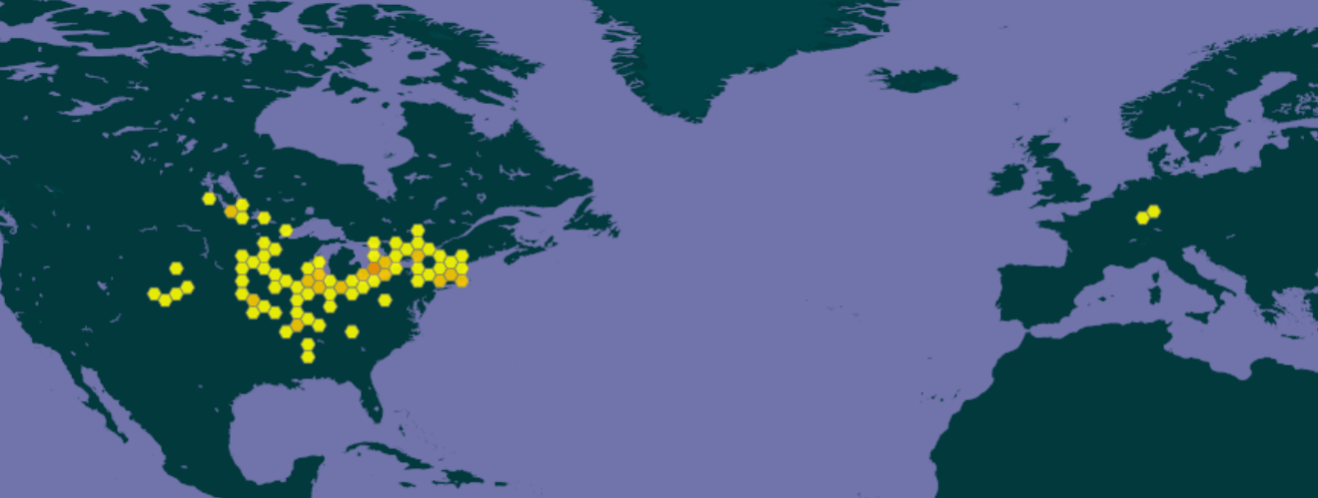
Orconectes immunis Kalikokrebs calico crayfishOrconectes immunis is a species of crayfish in the family Cambaridae. It is native to North America and it is an introduced species in Europe. O. immunis is only found in slow-flowing bodies of water, such as streams, ponds, marshes and roadside ditches, in contrast to O. virilis which also lives in rivers with moderate flow. It can survive in areas with large fluctuations in the amount of available water, by burrowing into the ground when the surface waters recede. Orconectes immunis has been popular in the aquarium trade in Germany, and is kept as a pet both in aquaria and garden ponds. The first recorded escape was a single individual in a small canal in the Rhine valley of Baden-Württemberg in 1997. It appears to be outcompeting another invasive species, Orconectes limosus, which has been present in the area for five decades (Wikipedia contributors 2018).

Status and distribution in Luxembourg

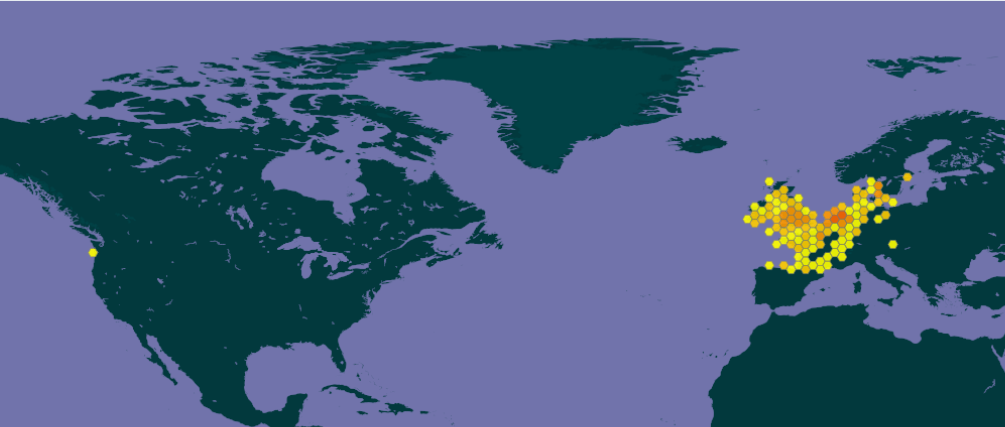
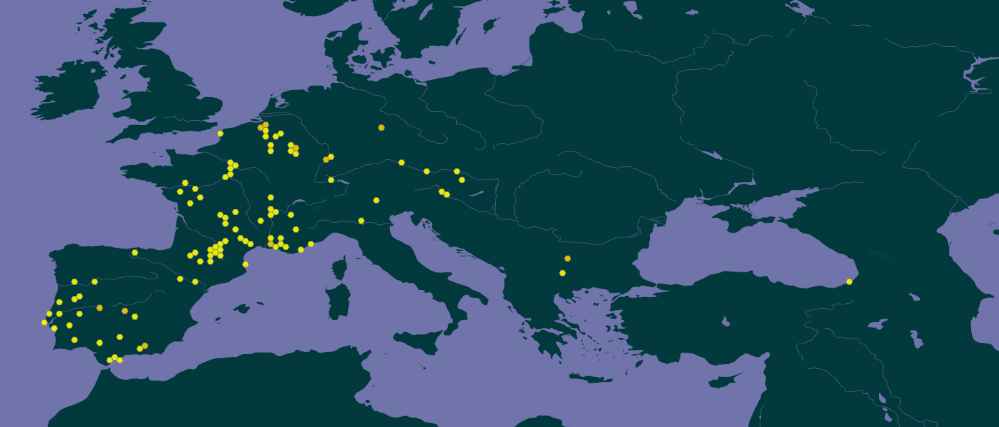
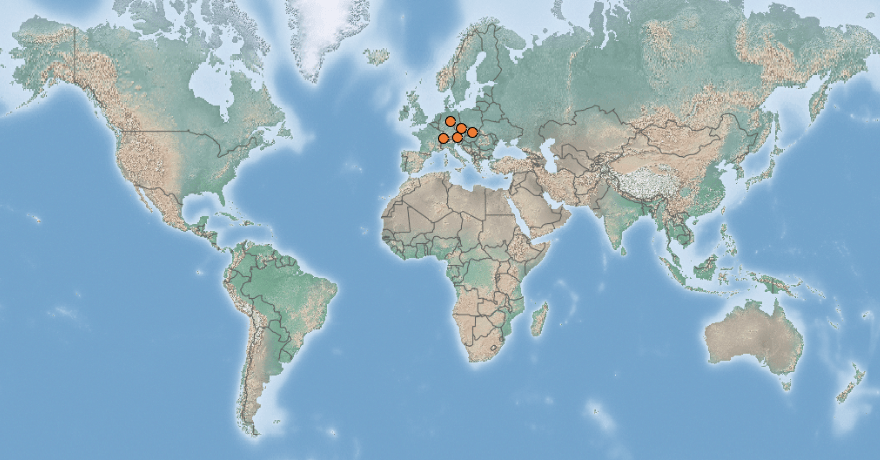
Orconectes immunis (Hagen, 1870) has not yet been documented in Luxembourg (MNHNL, iNaturalist & GBIF 2020). The species is spreading in several neighbouring countries as France and Germany (cf. Albes 2019).

Risk assessment

ISEIA protocol

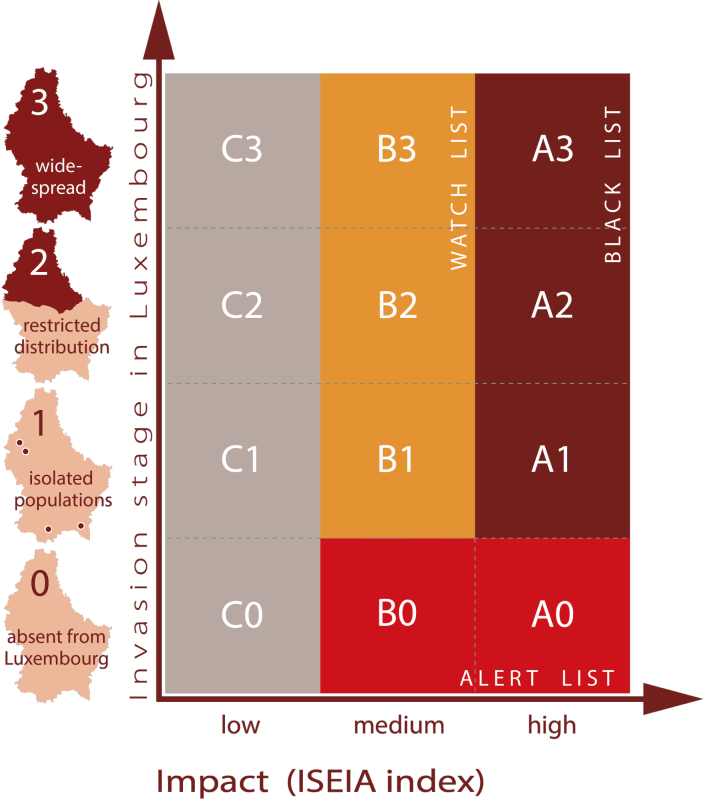
A0 (3+3+3+2) = Alert List (Ries et al. 2017: 68).

Harmonia+ protocol

Not assessed yet.

Worldwide distribution

Bibliography

  • Albes, J., 2019. Invasoren mit Scheren – Der amerikanische Kalikokrebs vermehrt sich rasant im Rheintal – Für die hiesige Tierwelt eine Katastrophe. Journal 2019-12-11: 18. [PDF 168 KB]
  • GBIF 2020. Orconectes immunis (Hagen, 1870) in GBIF Secretariat (2019). GBIF Backbone Taxonomy. Checklist dataset https://doi.org/10.15468/39omei [accessed 2020-03-13]
  • MNHNL, iNaturalist & GBIF, 2020. Orconectes immunis in MNHNL-mdata, online portal combining species observation from Recorder-Lux, iNaturalist and GBIF. National Museum of Natural History, Luxembourg. URL: https://mdata.mnhn.lu [accessed 2020-03-13]
  • Ries, C., A. Arendt, C. Braunert, S. Christian, A. Dohet, A. Frantz, G. Geimer, M. Hellers, J. A. Massard, X. Mestdagh, R. Proess, N. Schneider & M. Pfeiffenschneider, 2017. Environmental impact assessment and black, watch and alert list classification after the ISEIA Protocol of invertebrates in Luxembourg. Bull. Soc. Nat. luxemb. 119: 63-70. [PDF 360 KB]
  • Wikipedia contributors, 2018. ‘Orconectes immunis’, Wikipedia, The Free Encyclopedia, 14 October 2018, 18:38 UTC, <https://en.wikipedia.org/w/index.php?title=Orconectes_immunis&oldid=864041343> [accessed 2020-03-13]

 Page content last updated on 2020-05-04.

Dicranopalpus ramosus (Simon, 1909)

English n/a Status LU: established. 1st record:2007.
Lëtzebuergesch Streckfouss Status Eur.: established.
Français n/a RA: ISEIA: C2. Harmonia+: n/a.
Deutsch Streckfuß Wikipedia: Wikipedia - English - Dicranopalpus ramosus Wikipedia - Français - Dicranopalpus ramosus Wikipedia - Deutsch - Nederlands - Strekpoot | Wikispecies: n/a (2020)
Nederlands Strekpoot Back to the list of invertebrates

Brief description

4139 Dicranopalpus ramosusOriginally the species was found in Morocco. Later it spread into Europe, with first reports in Portugal (1948), where it spread to Spain (1965) and France (1969). The Netherlands were reached in 1992. Since 2004 it is known to occur in Germany. As early as 1957, it was reported in Bournemouth, southern England, from where it spread all over the island, reaching Scotland in 2000. In 2010, one occurrence in Denmark was documented (Wikipedia contributors 2019).

Status and distribution in Luxembourg

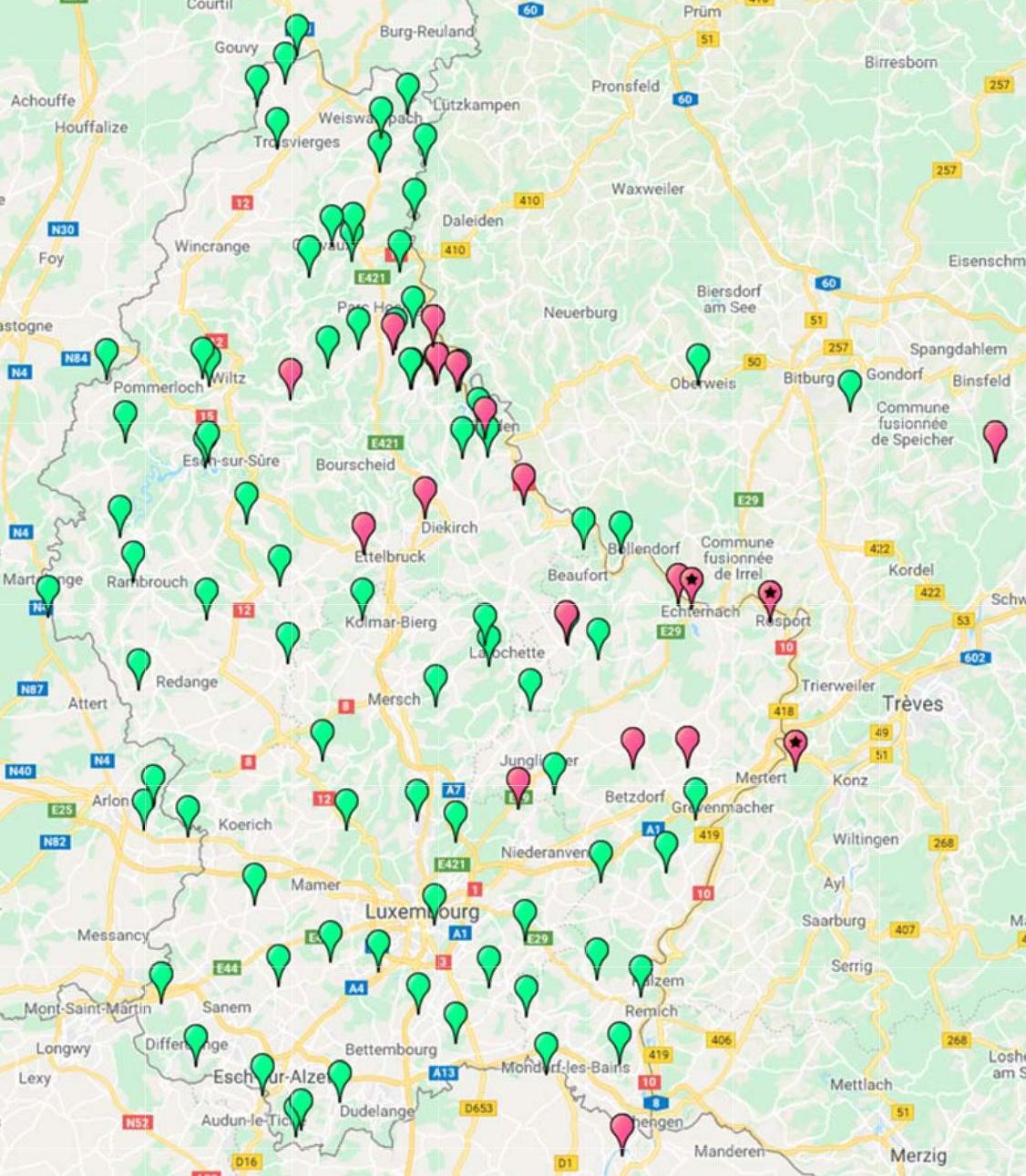
Records of Dicranopalpus ramosus (Simon, 1909) in Luxembourg. Data source: Recorder-Lux, iNaturalist & GBIF, 2021-07-23.

Dicranopalpus ramosus (Simon, 1909) was first documented by Dieter Weber on 18 August 2007 in the railway tunnel near Junglinster (MNHNL 2000-).

Currently, 5 records of the species are accessible through the MNHNL-mdata portal (MNHNL, iNaturalist & GBIF 2019).

While it appears to be widespread in the Gutland, the species seems to be largely missing in the Ösling (Muster & Meyer 2014: 38-39).

Risk assessment

ISEIA protocol

C2 (2+2+2+1) (Ries et al. 2017: 68).

Harmonia+ protocol

Not assessed yet.

Worldwide distribution

Bibliography

  • GBIF, 2020. Dicranopalpus ramosus in GBIF Secretariat (2019). GBIF Backbone Taxonomy. Checklist dataset https://doi.org/10.15468/39omei [accessed 2020-03-05]
  • MNHNL, 2000-. Dicranopalpus ramosus (Simon, 1909) in Recorder-Lux, database on the natural heritage of the Grand Duchy of Luxembourg. Musée national d’histoire naturelle, Luxembourg. URL: https://mdata.mnhn.lu [Accessed 2019-10-24]
  • MNHNL, iNaturalist & GBIF, 2019. Dicranopalpus ramosus (Simon, 1909) in MNHNL-mdata, online portal combining species observation from Recorder-Lux, iNaturalist and GBIF. National Museum of Natural History, Luxembourg. URL: https://mdata.mnhn.lu [Accessed 2019-10-24]
  • Muster, C. & M. Meyer, 2014. Verbreitungsatlas der Weberknechte des Großherzogtums Luxemburg. Ferrantia 70, Musée national d’histoire naturelle, Luxembourg, 112 p.
  • Ries, C., A. Arendt, C. Braunert, S. Christian, A. Dohet, A. Frantz, G. Geimer, M. Hellers, J. A. Massard, X. Mestdagh, R. Proess, N. Schneider & M. Pfeiffenschneider, 2017. Environmental impact assessment and black, watch and alert list classification after the ISEIA Protocol of invertebrates in Luxembourg. Bull. Soc. Nat. luxemb. 119: 63-70. [PDF 360 KB]
  • Wikipedia contributors, 2019. Dicranopalpus ramosus (Simon, 1909) in Wikipedia, The Free Encyclopedia, 25 July 2018, 21:25 UTC, URL: https://en.wikipedia.org/w/index.php?title=Dicranopalpus_ramosus&oldid=851987120 [accessed 24 October 2019]

 Page content last updated on 2020-05-04.

Brigittea civica (Lucas, 1850)

English n/a Status LU: established. 1st record: 2008.
Lëtzebuergesch Biergerlech Mauerspann 1 Status Eur.: established.
Français n/a RA: ISEIA: C3. Harmonia+: n/a.
Deutsch Echte Mauerspinne 2 Wikipedia: Wikipedia - English - Brigittea civica Nederlands - Zuiders kaardertje | Wikispecies: n/a (2017)
Nederlands Zuiders kaardertje Back to the list of invertebrates

Brief description

Brigittea civica 02Brigittea civica (Lucas, 1850) is distributed in Europe, North Africa, Turkey, Iran and introduced to North America (Nentwig et al. 2020). In Central Europe, it is mainly known as a resident of house facades, which gave it the trivial name “wall spider”. On structured walls it spins around its hiding place, usually a recess in the plaster, a ruffled web up to the size of a palm. In this net not only the prey of the spider is caught, but also street dust, so that the settlement of even light-coloured house walls can be easily recognised from a distance (Hohner 2019). The species occurs synanthropically in central European conditions. It is well adapted to coexistence with humans, and since there is no natural enemy, it may freely redistribute (Novotný et al. 2017).

Status and distribution in Luxembourg

Records of Brigittea civica (Lucas, 1850) in Luxembourg. Data source: Recorder-Lux, iNaturalist & GBIF, 2021-07-23.

Since 2008, 30 occurrences of the species have been documented in Luxembourg in the Recorder-Lux database under it’s synonym Dictyna civica (MNHNL, iNaturalist & GBIF 2020). The status appears unclear and is estimated to be very common in Luxembourg. The current (2020) distribution is probably linked to the fact that the only person reporting the species is living in the Moselle area.

The status of the species seems unclear in other European countries, e.g. in the Czech Republic, where it is considered to probably be non-native; furthermore a study suggests that Brigittea civica is much more common than was previously mapped and the presence of this species in the Czech Republic was underestimated (Novotný et al. 2017).

Risk assessment

ISEIA protocol

C3 (2+1+2+1) (Ries et al. 2017: 68).

Harmonia+ protocol

Not assessed yet.

Distribution in Europe

Source: https://www.gbif.org/species/7555806

Worldwide distribution

Bibliography

  • CABI, 2019. Brigittea civica (Lucas, 1850) . In: Invasive Species Compendium. Wallingford, UK: CAB International. URL: www.cabi.org/isc [accessed 2020-03-04]
  • GBIF, 2020. Brigittea civica (Lucas, 1850) in GBIF Secretariat (2019). GBIF Backbone Taxonomy. Checklist dataset https://doi.org/10.15468/39omei [accessed 2020-03-04]
  • Hohner, M., 2019. Neue Nachweise von Brigittea civica (Araneae: Dictynidae) in Bayern. Arachnologische Mitteilungen: Arachnology Letters 57(1): 84-86.
  • MNHNL, iNaturalist & GBIF, 2020. in MNHNL-mdata, online portal combining species observation from Recorder-Lux, iNaturalist and GBIF. National Museum of Natural History, Luxembourg. URL: https://mdata.mnhn.lu [Accessed 2020-03-04]
  • Nentwig W, Blick T, Bosmans R, Gloor D, Hänggi A, Kropf C, 2020. Version {2}.2020. Online at https://www.araneae.nmbe.ch. https://doi.org/10.24436/1 [Accessed 2020-03-04]
  • Novotný, B., V. Hula & J. Niedobová, 2017. Insufficiency in Distributional Faunistic Data in Synanthropic Spiders: a Case Study of the Occurrence of Brigittea Civica (Araneae, Dictynidae) in South Moravia, Czech Republic. Acta Universitatis Agriculturae et Silviculturae Mendelianae Brunensis 65(3):899-906. DOI: 10.11118/actaun201765030899
  • Ries, C., A. Arendt, C. Braunert, S. Christian, A. Dohet, A. Frantz, G. Geimer, M. Hellers, J. A. Massard, X. Mestdagh, R. Proess, N. Schneider & M. Pfeiffenschneider, 2017. Environmental impact assessment and black, watch and alert list classification after the ISEIA Protocol of invertebrates in Luxembourg. Bull. Soc. Nat. luxemb. 119: 63-70. [PDF 360 KB]
  • Wiki der Arachnologischen Gesellschaft e. V.-Bearbeiter, 2020. Brigittea civica. Wiki der Arachnologischen Gesellschaft e. V. URL: https://wiki.arages.de/index.php?title=Brigittea_civica&oldid=118852 [accessed 2020-03-05]

 Page content last updated on 2020-12-08.

Public conference on IAS – 20 March 2018 @ MNHNL

Presentation slides in PDF format

Invasive alien species of Luxembourg and EU concern

European regulation and challenges for Luxembourg

In order to combat invasive alien species with a significant impact on biodiversity, public health or the economy, a European regulation (No. 1143/2014) defines a whole range of measures and obligations. Member States must therefore, among other things, set up a monitoring system, provide for management measures or even eradication, and impose restrictions on the keeping and marketing of these species.

The conference aims to give an overview of the obligations arising from these regulations and to present the targeted species with a particular focus on those already present in Luxembourg. Finally, the widely used species’ action plans currently under development will be presented.

Within the framework of setting up a surveillance system in Luxembourg, the contribution of field workers is a key element. The conference is also intended to motivate naturalists and other interested parties to share their observations.

Detailed program

  1. The European Regulation on the prevention and management of the introduction and spread of invasive alien species – Nora Elvinger (MDDI)
  2. Species covered by European regulations – Sandra Cellina (ANF), Carole Molitor (AGE), Christian Ries (MNHNL)
  3. Action Plans for the Management of Widely Spread Alien Species – Tiago de Sousa (ANF)

Organisation: Ministry of Sustainable Development and Infrastructure – Environment Department (MDDI), Nature and Forestry Administration (ANF), Water Management Administration (AGE), National Museum of Natural History (MNHNL), The Luxembourg Naturalist Society (SNL), Association of Luxembourg Biologists (ABIOL).

Registration

Registration requested by email at

Invitation [French, PDF 294 KB]

 Page content last updated on 2019-11-12. Last proofread by Caroline Grounds on 2019-11-12.

Spot the cherry laurel – A citizen science survey with children

The children’s magazine Panewippchen, edited for the members of the Panda Club of the Luxembourg National Museum of Natural History, has published an interview with Dr Christian Ries, curator of the Department of Ecology:

  • Schaltz, Michèle, 2017. Fuerschung am ‘Natur Musée’: Ekologie. Panewippchen 4: 6-11. [PDF 2.2 MB]

The last page of the article encourages the young readers to participate in a citizen science survey concerning the recent spread into the wild of the cherry laurel (Prunus laurocerasus L.), a common garden plant in Luxembourg, mostly planted to build hedges. Fruits can be dispersed over long distances by birds.

Interested children are asked to look in the forests around their neighbourhood, the evergreen cherry laurel being very easy to spot in winter time, when trees and shrubs lose their leaves.

The children are asked to send the following basic information to :

  1. How many cherry laurel individuals have been spotted?
  2. Where were they spotted (using GPS of portable devices)
  3. Observer’s name, age, address and email address.

 Page content last updated on 2019-11-11. Last proofread by Caroline Grounds on 2019-11-11.

DNADIVE – New research project on invasive crayfish

See the project web page at https://faune-flore.lu/dnadive/

DNADIVE aims to develop a molecular toolbox enabling eDNA detection for Invasive crayfish in streams of Luxembourg. This Public2 Partnership project was accepted by FNR in November 2017 and will start on 1st January 2018. The project will be hosted by Fondation faune-flore and its principal investigator will be the French researcher Dr David Porco. Project partnership: Luxembourg National Museum of Natural History (MNHNL), Luxembourg Institute of Science & Technology (LIST), Water management Agency (AGE), Ministry for Sustainable Development and Infrastructure (MDDI), University of Duisburg-Essen (Germany).

Abstract

DNADIVE aims to develop a toolbox for the molecular monitoring of invasive crayfish in the streams of Luxembourg. Three exotic species (Orconectes limosus, Pacifastacus leniusculus and Astacus leptodactylus) and a native one (Astacus astacus) will be targeted for the project.

This molecular toolbox will encompass several techniques of detection comprising (1) a simple amplification method easily performed in a laboratory with few elements, (2) a digital droplet amplification (ddPCR) which is a more elaborated lab method that can allow for a higher detection sensitivity and a possible quantification of DNA that could be related through the proxy of biomass and abundance to the size of the populations detected and (3) an isotherm amplification method (iPCR) i.e. a simple, cost effective approach which will allow for field detection usable by untrained individuals.

The results will enable the development of a predictive species distribution model for the target species and to infer their impact on freshwater communities through the comparison with previous sampling campaigns. This set of methods has the high potential to efficiently contribute to early detection and routine monitoring of the invasive crayfish species in Luxembourg, thus allowing for timely and efficient decision-making and appropriate management.

 Page content last updated on 2019-11-12. Last proofread by Caroline Grounds on 2019-11-12.

Public conference on the management of the Greater Canada goose in Flanders, Belgium

By Tim Adriaens & Frank Huysentruyt, Research Institute for Nature and Forest, Brussels.

In Flanders, Canada geese are causing social, economic and ecological impacts. The population is managed using a combination of methods which requires an adaptive management approach involving multiple groups and stakeholders and monitoring of the population. The lecture will also address the Egyptian goose.

Tim Adriaens is a research associate at the Research Institute for Nature and Forest in Brussels where he co-ordinates invasive species activities throughout the institute. Current invasion biology research topics include, among others: sustainable control of invasive amphibian and feral exotic geese populations, invasive weeds, ruddy duck eradication and monitoring, aquatic invasive species, exotic insects used for biological control.

Frank Huysentruyt is also a research associate at the Research Institute for Nature and Forest and specialised in Wildlife Management and Alien Species.

Tuesday 28 November 2017, 18:30 – 20:00
Musée national d’histoire naturelle
25, rue Münster, L-2160 Luxembourg

Download the Invitation in PDF format

 Page content last updated on 2019-11-12. Last proofread by Caroline Grounds on 2019-11-12.

Luxembourg reports Nutria to the EU within the EASIN notification system

On 19th September 2017, a forester captured a Nutria (Myocastor coypus) in Osweiler (commune of Rosport, eastern Luxembourg) and put it to sleep.

The Luxembourg authorities were notified of this detection of an IAS of Union concern (Anonymous 2016) on 26 September 2017 and an Eradication Measure Set was also submitted on 26 September 2017, pursuant to Article 16(2) of R. 1143/2014 (Anonymous 2014).

Biberratte - Nutria - coypu - Myocastor coypus - ragondin - castor des marais - Mönchbruch - December 25th 2012 - 03

Coypu (Myocastor coypus), Moenchbruch lake, Hesse, Germany.
By Norbert Nagel (Own work) [CC BY-SA 3.0], via Wikimedia Commons

The species was first documented in Luxembourg in 1957 at the Alzette river next to Hunsdorf (Municipality of Lorentzweiler). Currently, it is only observed sporadically in Luxembourg. Because of its occurrence in the bordering regions of France (Chiers, Moselle) and Germany (Saar), it is likely that the species will populate national watercourses within the near future (Becker-Krüll & Schaefer 2013).

Bibliography

  • Anonymous, 2014. Regulation (EU) No 1143/2014 of the European Parliament and of the Council of 22 October 2014 on the prevention and management of the introduction and spread of invasive alien species. Official Journal of the European Union 4.11.2014 L 317: 35-55.
  • Anonymous, 2016. Commission implementing regulation (EU) 2016/1141 of 13 July 2016 adopting a list of invasive alien species of Union concern pursuant to Regulation (EU) No 1143/2014 of the European Parliament and of the Council. Official Journal of the European Union L 189: 4-5.
  • Becker-Krüll, L. & P. Schaefer, 2013. Jagdbare Wildtierarten Luxemburgs. Administration de la nature et des forêts, Luxembourg, 96 pp.

 Page content last updated on 2021-04-14. Last proofread by Caroline Grounds on 2019-11-12.

Update of the list of IAS of Union concern

The European Commission published an update of the list of invasive alien species of Union concern in the Official Journal on July 13th 2017:

http://eur-lex.europa.eu/legal-content/EN/TXT/?uri=uriserv:OJ.L_.2017.182.01.0037.01.ENG&toc=OJ:L:2017:182:TOC

The webpage http://ec.europa.eu/environment/nature/invasivealien/ has been updated accordingly and includes a new brochure on all 49 species (at the moment only available in English pdf format): http://ec.europa.eu/environment/nature/pdf/IAS_brochure_species.pdf

The JRC report on the baseline distribution of the 37 species on the first list is available here: https://easin.jrc.ec.europa.eu/Docum entation/Baseline

Communicated on July 13th 2017 by the IAS team of DG ENV, European Commission

 Page content last updated on 2020-04-30. Last proofread by Caroline Grounds on 2019-11-12.

2016 Mosquito survey catches identified

In 2016, the Luxembourg National Natural History Museum started a survey on mosquito species in Luxembourg. Between July and October mosquitoes have been trapped on a weekly basis at 10 sites throughout the country, in co-operation with local and regional partner organizations and private individuals.

On June 14th and 15th 2017, Mosquito specialist Dr Francis Schaffner from the University of Zurich identified the 2016 catches at the Museum.

F.l.t.r.: Svenja Christian (Department of Invertebrates Zoology MNHNL) and Dr Francis Schaffner (University of Zurich) in the Lab of the Department of Ecology. Photo: Dr Christian Ries, MNHNL, 15 June 2017.

Results

182 mosquitoes were caught during 90 catches from 10 sites.

Culex pipiens / torrentium (9 out of 10 sites)
175
Anopheles plumbeus (Kockelscheuer, Steinsel)
3
Culiseta annulata (Remerschen)
1
Coquillettidia richiardii (Remerschen)
1
Aedes vexans (Kockelscheuer)
1
Aedes cinereus (Kockelscheuer) 1

Locality, Partners (#Catches|#Specimen)

We thank the following partners who have run the traps on their sites.

  • Diekirch, Administration de la nature et des forêts (11|0)
  • Esch-sur-Sûre, Naturpark Öewersauer (PNHS) (12|9)
  • Kalborn-Moulin, natur&ëmwelt – Fondation Hëllef fir d’Natur (10|6)
  • Kockelscheier, natur&ëmwelt – Haus vun der Natur (11|48)
  • Leudelange, private owner (10|27)
  • Lintgen, private owner (9|23)
  • Luxembourg / Grund, MNHNL (11|19)
  • Remerschen, Biodiversum (5|16)
  • Schrassig, private owner (6|24)
  • Steinsel, private owner (5|10)

 Page content last updated on 2019-11-12. Last proofread by Caroline Grounds on 2019-11-12.