Cheiracanthium punctorium (Villers, 1789)

English Yellow sac spider 1 Status LU: established. 1st record: 1988.
Lëtzebuergesch Getëppelten Darfanger Status Eur.: established.
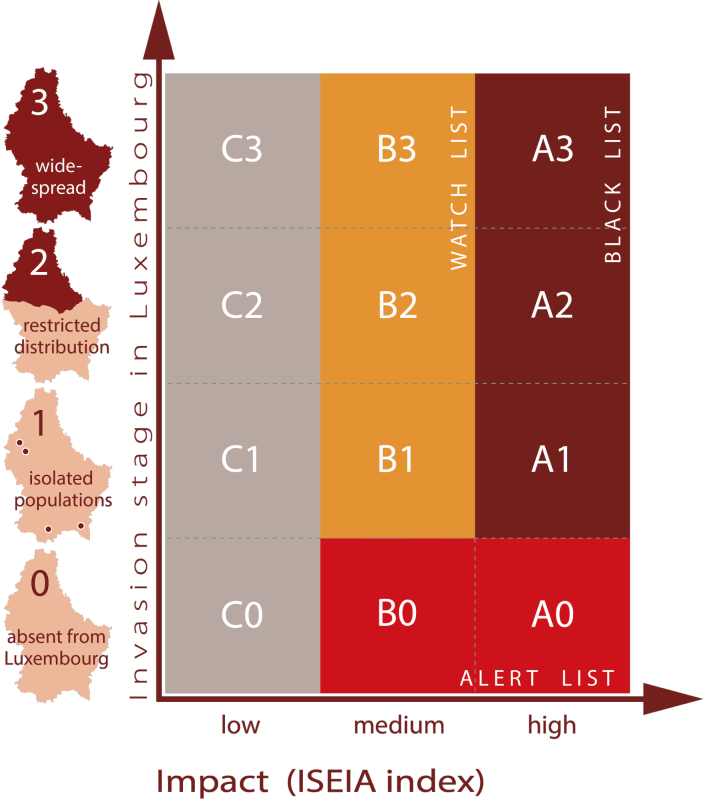
Français n/a RA: ISEIA: C2. Harmonia+: n/a.
Deutsch Ammendornfinger Wikipedia: Wikipedia - English - Yellow sac spider Wikipedia - Français - Chiroconthe ponctu Wikipedia - Deutsch - Ammen-Dornfinger Wikipedia - Nederlands - Grote bermzakspin | Wikispecies: Wikispecies - Cheiracanthium punctorium | wiki.arages.de
Nederlands Grote bermzakspin Back to the list of invertebrates

Brief description

Female Cheiracanthium punctorium in opened cocoon. Clutch of eggs in the Back of the cocoon.Cheiracanthium punctorium (Villers, 1789) lives in grasslands, preferring tall stalks. Being rather similar to several native Cheiracanthium species in its biology, C. punctorium should have no greater influence on the composition of native prey species in a colonised biotope. There may, however, be some competition with similar predators.

The species is known as quite aggressive when disturbed, especially pregnant or egg-protecting females. The chelicerae (fangs) of bigger individuals can easily penetrate through human skin and inject their venom. A bite of C. punctorium is painful and causes itching and swellings, and sometimes stronger reactions like vertigo, nausea, shivering, circulatory collapse and light fever. The symptoms usually decline after 24-30 hours. As the species leads a rather hidden lifestyle, the probability for bites should be rather small. There is a certain, but unfortunately sometimes overstated, media exposure of the species and its venomousness.

Status and distribution in Luxembourg

Records of Cheiracanthium punctorium (Villers, 1789) in Luxembourg. Data source: Recorder-Lux, iNaturalist & GBIF, 2021-07-23.

Cheiracanthium punctorium (Villers, 1789) was first documented in 1988 at the Aarnescht nature conservation reserve near Oberanven, municipality of Niederanven (Hermann 1998).

The species is rather thermophilous and therefore geographically restricted to the south of Luxembourg. Most observations have been made in dry grassland in the Moselle valley. Climate warming may favour further spread of the species.

Currently, 12 records of the species are accessible through the MNHNL-mdata portal; at the previously mentioned Aarnescht, and also at Roudebierg and Haard near Dudelange (MNHNL, iNaturalist & GBIF 2021).

Risk assessment

ISEIA protocol

C2 (2+2+2+1) (Ries et al. 2017: 68).

Harmonia+ protocol

Not assessed yet.

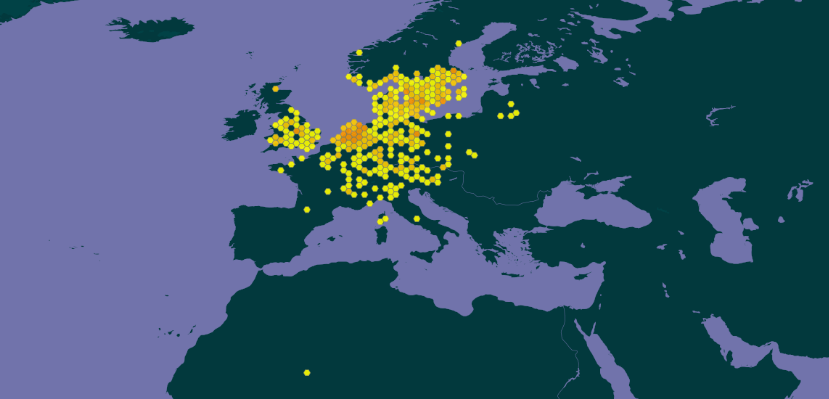
Distribution in Europe

Source: Arachnologische Gesellschaft (2020).

Bibliography

  • Arachnologische Gesellschaft, 2020. Atlas of the European Arachnids, accessed at https://atlas.arages.de [accessed 2020-03-05]
  • Hermann, E., 1998. Die Spinnen (Araneae) ausgewählter Halbtrockenrasen im Osten Luxemburgs. Bull. Soc. Nat. luxemb. 99: 189-199. [PDF 165KB]
  • MNHNL, 2000-. Cheiracanthium punctorium (Villers, 1789) in Recorder-Lux, database on the natural heritage of the Grand Duchy of Luxembourg. Musée national d’histoire naturelle, Luxembourg. URL: https://mdata.mnhn.lu [Accessed 2019-10-24]
  • MNHNL, iNaturalist & GBIF, 2021. Cheiracanthium punctorium (Villers, 1789) in MNHNL-mdata, online portal combining species observation from Recorder-Lux, iNaturalist and GBIF. National Museum of Natural History, Luxembourg. URL: https://mdata.mnhn.lu [Accessed 2019-10-24]
  • Ries, C., A. Arendt, C. Braunert, S. Christian, A. Dohet, A. Frantz, G. Geimer, M. Hellers, J. A. Massard, X. Mestdagh, R. Proess, N. Schneider & M. Pfeiffenschneider, 2017. Environmental impact assessment and black, watch and alert list classification after the ISEIA Protocol of invertebrates in Luxembourg. Bull. Soc. Nat. luxemb. 119: 63-70. [PDF 360 KB]
  • Schneider, N., 2003. Auf Spurensuche. 22. Op der Aarnescht. Regulus 12/03: 22
  • Thiel, M., 2016. Ein unheimlicher Zuwanderer. Eine südeuropäische Giftspinne zieht zunehmend nach Norden. Luxemburger Wort, 14.9.2016.

 Page content last updated on 2021-04-14. Last proofread by Caroline Grounds on 2019-12-05.

Argiope bruennichi (Scopoli, 1772)

English Wasp spider Status LU: established. 1st record: 1906.
Lëtzebuergesch Harespelspann Status Eur.: established.
Français Argiope frelon RA: ISEIA: C3. Harmonia+: n/a
Deutsch Wespenspinne Wikipedia: Wikipedia - English - Wasp spider Wikipedia - Français - Argiope frelon Wikipedia - Deutsch - Wespenspinne Nederlands | Wikispecies: Wikispecies | CABI
Nederlands Wespspin Back to the list of invertebrates

Brief description

Argiope_bruennichi_Belgrad_060714

Argiope bruennichi in a pasture near Frisange (14.07.2006)

Like many other members of its genus, Argiope bruennichi (Scopoli, 1772) shows striking yellow and black markings on its abdomen. The spider builds a spiral orb web at dawn or dusk, commonly in long grass a little above ground level (Wikipedia contributors 2019a).

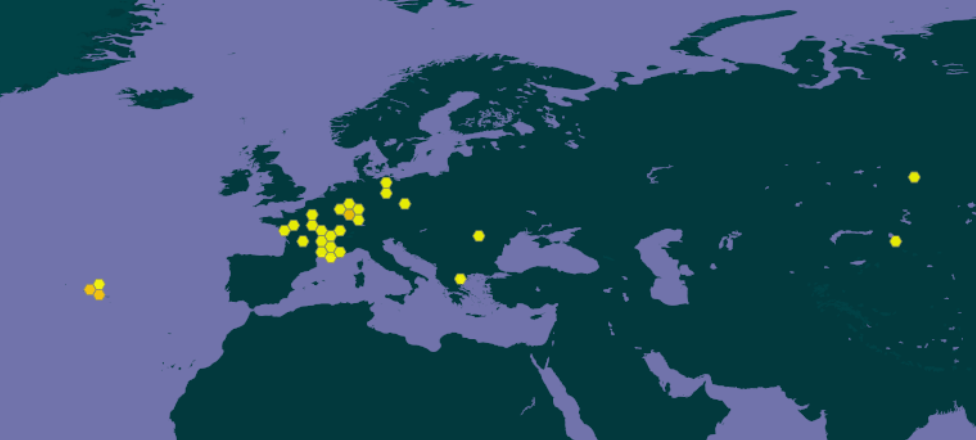
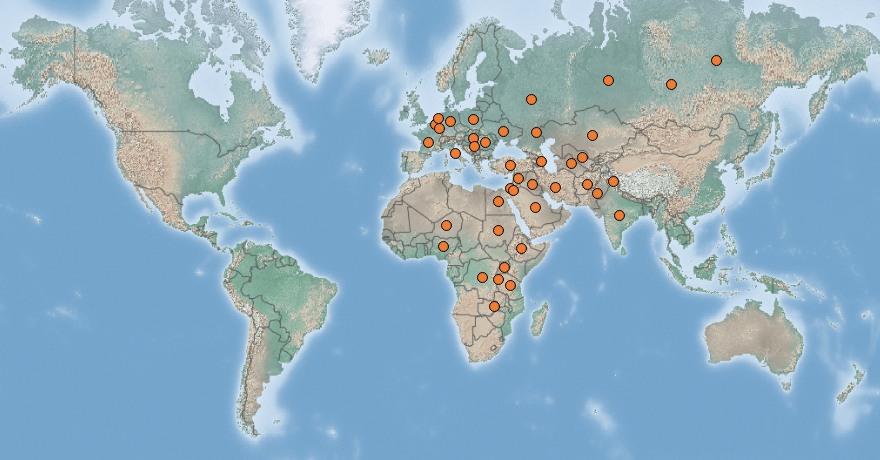
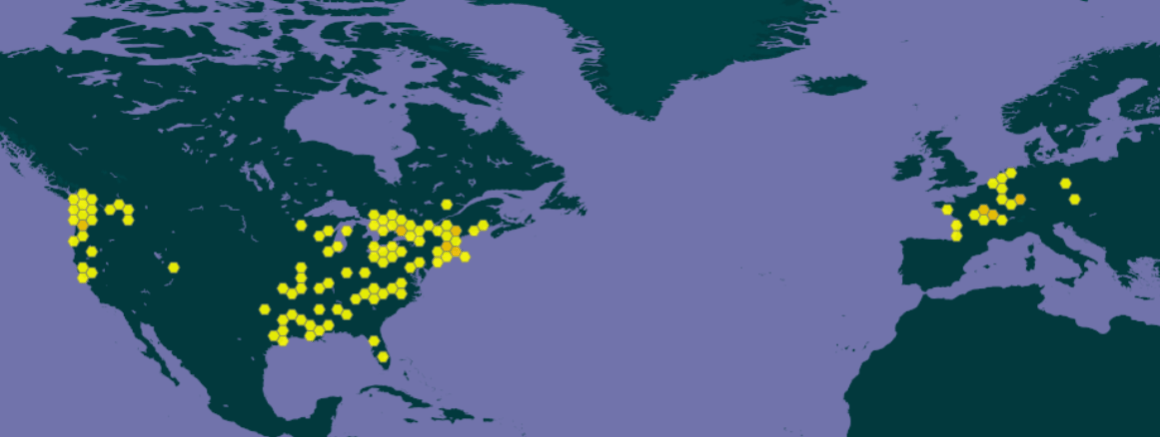
Until around 50 years ago, the wasp spider was widespread in southern Europe, and very rarely present in central Europe. Since then the species has greatly enlarged and extended its area. Now it can be found in almost all European countries, as well as in some Asian and North African countries (Wikipedia contributors 2019b). The rapid spread of the species across Europe is generally thought to be facilitated by climate warming.

On sites where this strikingly marked spider occurs, the individual number can be very high. Argiope bruennichi populations might be a certain threat for rare species of their favourite prey and provoke changes in invertebrate communities of conquered sites. However the spider seems to integrate rather well in invaded countries, causing no great damage.

Status and distribution in Luxembourg

Records of Argiope bruennichi (Scopoli, 1772) in Luxembourg. Data source: Recorder-Lux, iNaturalist & GBIF, 2021-07-23.

Argiope bruennichi (Scopoli, 1772) was first documented by Dr Ernest Feltgen on 24 August 1906 in Lintgen (Weinachter 1906; MNHNL 2000-).

Currently, 188 records of the wasp spider are accessible through the MNHNL-mdata portal (MNHNL, iNaturalist & GBIF 2019).

The species can be considered as widespread in the Grand Duchy.

Risk assessment

ISEIA protocol

C3 (2+2+2+2) (Ries et al. 2017: 68).

Harmonia+ protocol

Not assessed yet.

Worldwide distribution
Bibliography

  • CABI, 2019. Argiope bruennichi. In: Invasive Species Compendium. Wallingford, UK: CAB International. URL: www.cabi.org/isc [accessed 2020-03-04]
  • MNHNL, 2000-. Argiope bruennichi (Scopoli, 1772) in Recorder-Lux, database on the natural heritage of the Grand Duchy of Luxembourg. Musée national d’histoire naturelle, Luxembourg. URL: https://mdata.mnhn.lu [Accessed 2019-10-16]
  • MNHNL, iNaturalist & GBIF, 2019. Argiope bruennichi (Scopoli, 1772) in MNHNL-mdata, online portal combining species observation from Recorder-Lux, iNaturalist and GBIF. National Museum of Natural History, Luxembourg. URL: https://mdata.mnhn.lu [Accessed 2019-10-16]
  • Ries, C., A. Arendt, C. Braunert, S. Christian, A. Dohet, A. Frantz, G. Geimer, M. Hellers, J. A. Massard, X. Mestdagh, R. Proess, N. Schneider & M. Pfeiffenschneider, 2017. Environmental impact assessment and black, watch and alert list classification after the ISEIA Protocol of invertebrates in Luxembourg. Bull. Soc. Nat. luxemb. 119: 63-70. [PDF 360 KB]
  • Weinachter, P., 1906. Comptes Rendus des Séances Fauna 16, 10: 215. [eluxembourgensia]
  • Weiss, J., 1992. Die Ecke des Naturbeobachters. Regulus 3/92: 96-97.
  • Wikipedia contributors, 2019a. Argiope bruennichi (Scopoli, 1772) in Wikipedia, The Free Encyclopedia. URL: https://en.wikipedia.org/w/index.php?title=Argiope_bruennichi&oldid=921986406 [accessed 24 October 2019]
  • Wikipedia contributors, 2019b. Argiope bruennichi (Scopoli, 1772) in Wikipedia, Die freie Enzyklopädie. URL: https://de.wikipedia.org/w/index.php?title=Wespenspinne&oldid=192274595 [accessed 24 October 2019]

 Page content last updated on 2020-04-28. Last proofread by Caroline Grounds on 2019-12-04.

Procambarus clarkii (Girard, 1852)

English Red swamp crayfish Status LU: absent.
Lëtzebuergesch Roude Suppekriibs Status Eur.: established. IAS of EU concern (2016).
Français Écrevisse de Louisiane RA: ISEIA: A0, Alert List.
Deutsch Roter Amerikanischer Sumpfkrebs Wikipedia: Wikipedia - English - Signal crayfish Wikipedia - Français - Ecrevisse de Californie Wikipedia - Deutsch - Signalkrebs Nederlands | Wikispecies: Wikispecies | CABI
Nederlands Rode rivierkreeft Back to the list of invertebrates

Brief description

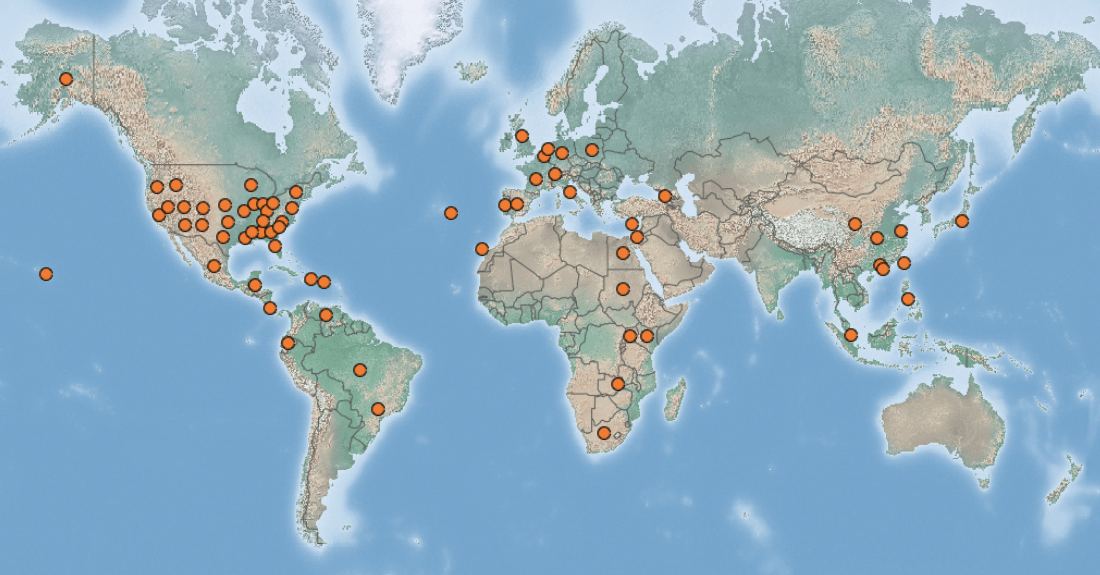
Procambarus clarkii (Girard, 1852) is a species of cambarid freshwater crayfish, native to northern Mexico, and southern and southeastern United States, but also introduced elsewhere, where it is often an invasive pest. P. clarkii is typically dark red, with long claws and head, small or no spines on the sides of its carapace just below the head, and rows of bright red bumps on the front and side of the first leg (Wikipedia contributors 2020).

The red swamp crayfish is most commonly found in warm fresh water, such as slowly flowing rivers, marshes, reservoirs, irrigation systems and rice paddies. It is considered to be the most ecologically plastic species in the order Decapoda, and is able to grow quickly even in only seasonally present water, being able to tolerate dry spells of up to four months. The red swamp crayfish grows quickly, and is capable of reaching weights in excess of 50 g, and sizes of 5.5–12 cm long. It is also able to tolerate slightly saline water, which is unusual for a crayfish. Additionally, P. clarkii are physiologically capable of tolerating relatively low dissolved oxygen concentrations. The average lifetime of Procambarus clarkii is five years (Wikipedia contributors 2020).

The burrowing activities of the red swamp crayfish can lead to damage to water courses and to crops, particularly rice, and its feeding can disrupt native ecosystems. It may out-compete the native crayfish species, and is a vector for the crayfish plague fungus Aphanomyces astaci, for crayfish virus vibriosis, and a number of worms parasitic on vertebrates. Their burrowing activities may also be a threat to civil infrastructure such as storm ponds and levees (Wikipedia contributors 2020).

Status and distribution in Luxembourg

There is no documented occurrence of Procambarus clarkii (Girard, 1852) in Luxembourg yet (MNHNL, iNaturalist & GBIF 2020).

Risk assessment

ISEIA protocol

A0 (3+3+3+3) = Alert List (Ries et al. 2017: 68).

Harmonia+ protocol

Not assessed yet.

Worldwide distribution

Bibliography

  • CABI, 2019. Procambarus clarkii. In: Invasive Species Compendium. Wallingford, UK: CAB International. URL: www.cabi.org/isc [accessed 2020-03-13]
  • MNHNL, iNaturalist & GBIF, 2020. Procambarus clarkii in MNHNL-mdata, online portal combining species observation from Recorder-Lux, iNaturalist and GBIF. National Museum of Natural History, Luxembourg. URL: https://mdata.mnhn.lu [accessed 2020-03-13]
  • Ries, C., A. Arendt, C. Braunert, S. Christian, A. Dohet, A. Frantz, G. Geimer, M. Hellers, J. A. Massard, X. Mestdagh, R. Proess, N. Schneider & M. Pfeiffenschneider, 2017. Environmental impact assessment and black, watch and alert list classification after the ISEIA Protocol of invertebrates in Luxembourg. Bull. Soc. Nat. luxemb. 119: 63-70. [PDF 360 KB]
  • Wikipedia contributors, 2020. Procambarus clarkii, Wikipedia, The Free Encyclopedia, 3 February 2020, 18:43 UTC, <https://en.wikipedia.org/w/index.php?title=Procambarus_clarkii&oldid=939000553> [accessed 2020-03-13]

 Page content last updated on 2021-05-14.

Gammarus tigrinus Sexton, 1939

English n/a Status LU: established. 1st record: 1991.
Lëtzebuergesch n/a Status Eur.: established.
Français n/a RA: ISEIA: C2. Harmonia+: n/a.
Deutsch Gefleckter Flussflohkrebs Wikipedia: n/a (2020) | Wikispecies: n/a (2020)
Nederlands Tijgervlokreeft Back to the list of invertebrates

Brief description

Gammarus tigrinus Sexton, 1939 has eliminated some native species in parts of the river Rhine and the Baltic Sea; it is frequently a superior predator in comparison to indigenous species.

See the copyrighted picture at cabi.org

Status and distribution in Luxembourg

Gammarus tigrinus Sexton, 1939 was first documented on 22 May 1991 in the Moselle river across from Bech-Kleinmacher, municipality of Schengen (Massard & Geimer 1992). Dhur (1993) showed that Gammarus tigrinus was present in the Moselle all the way from Schengen to Wasserbillig.

There is no distribution map available because no data has been entered into the Recorder-Lux database so far (MNHNL, iNaturalist & GBIF 2019).

Risk assessment

ISEIA protocol

C2 (3+1+3+1) (Ries et al. 2017: 68).

Harmonia+ protocol

Not assessed yet.

Worldwide distribution

Bibliography

  • CABI, 2019. Gammarus tigrinus. In: Invasive Species Compendium. Wallingford, UK: CAB International. URL: www.cabi.org/isc [accessed 2020-03-13]
  • Dhur, G., 1993. Étude des espèces d’invertébrés immigrées ou introduites dans la Moselle luxembourgeoise et dans les écosystèmes aquatiques qui en dépendent. Historique et répartition actuelle. Centre univ. Luxemb., Dép. Form. pédag., mém. sci., 213 pp.
  • Dhur, G. & J.A. Massard, 1995. Etude historique et faunistique des Invertébrés immigrés ou introduits dans la Moselle luxembourgeoise et ses affluents. Bull. Soc. Nat. luxemb. 96: 127-156. [PDF 1896 KB]
  • Massard, J.A. & G. Geimer, 1992. Découverte de Gammarus tigrinus Sexton, 1939 dans la Moselle frontalière entre le Luxembourg et l’Allemagne (Crustacea: Amphipoda). Bull. Soc. Nat. luxemb. 93: 195-198. [PDF 173 KB]
  • Meisch, C. & J.A. Massard, 2015. Les recherches sur les crustacés (Crustacea) du Luxembourg : aperçu historique. Bull. Soc. Nat. luxemb. 116: 381-390. [PDF 1,22 MB]
  • MNHNL, iNaturalist & GBIF, 2019. MNHNL-mdata, online portal combining species observation from Recorder-Lux, iNaturalist and GBIF. National Museum of Natural History, Luxembourg. URL: https://mdata.mnhn.lu [Accessed 2019-10-24]
  • Ries, C., A. Arendt, C. Braunert, S. Christian, A. Dohet, A. Frantz, G. Geimer, M. Hellers, J. A. Massard, X. Mestdagh, R. Proess, N. Schneider & M. Pfeiffenschneider, 2017. Environmental impact assessment and black, watch and alert list classification after the ISEIA Protocol of invertebrates in Luxembourg. Bull. Soc. Nat. luxemb. 119: 63-70. [PDF 360 KB]

 Page content last updated on 2021-05-14. Last proofread by Caroline Grounds on 2019-12-10.

Corbicula fluminalis (O.F. Müller, 1774)

English n/a Status LU: established. 1st record: 1996.
Lëtzebuergesch Asiatesch Kuerfmuschel Status Eur.: established.
Français Corbicule asiatique RA: ISEIA: A2, Black List. Harmonia+: n/a.
Deutsch Feingerippte Körbchenmuschel Wikipedia: Wikipedia - English - Corbicula fluminalis Wikipedia - Français - Corbicula fluminalis Wikipedia - Deutsch - Nederlands | Wikispecies: n/a (2020) | CABI
Nederlands Toegeknepen korfmossel Back to the list of invertebrates

Brief description

Feingerippte, innen und außenCorbicula fluminalis (O.F. Müller, 1774) is a species of freshwater clam, an aquatic bivalve mollusk in the family Cyrenidae. This species is distinct from, but often confused with, the rather similar species Corbicula fluminea. Even though both species are native to Asia, they are both present as introduced species in the United States and Europe, and they are both commonly known as “Asian clams” (Wikipedia contributors 2019).

The original distribution area of Corbicula fluminalis includes the Near East (the type material came from the Euphrates), Central Asia (Uzbekistan) and the Caucasus (Azerbaijan) and North Africa. The animals prefer to live on sandy and muddy river bottoms. Corbicula fluminalis is found today in almost all major Central European rivers, often sympatric with Corbicula fluminea (Wikipedia Editor 2019).

Status and distribution in Luxembourg

Records of Corbicula fluminalis (O.F. Müller, 1774) in Luxembourg. Data source: Recorder-Lux, iNaturalist & GBIF, 2021-07-23.

In Luxembourg, Corbicula fluminalis (O.F. Müller, 1774) was first found by Klaus Groh on 17 June 1996 in the Moselle river in the municipality of Remich (MNHNL 2000-, Bachmann & Usseglio-Polatera 1999).

Currently, 8 records (1996-2002) of Corbicula fluminalis are accessible through the MNHNL-mdata portal, all of them from the Moselle river (MNHNL, iNaturalist & GBIF 2019).

Risk assessment

ISEIA protocol

A2 (3+3+3+3) = Black List (Ries et al. 2017: 68).

Harmonia+ protocol

Not assessed yet.

Worldwide distribution

Bibliography

  • Bachmann V. & P. Usseglio-Polatera, 1999. Contribution of the macrobenthic compartment to the oxygen budget of a large regulated river: the Mosel. Hydrobiologia. 410 (17), 39-46.
  • CABI, 2019. Corbicula fluminalis (O.F. Müller, 1774). In: Invasive Species Compendium. Wallingford, UK: CAB International. URL: www.cabi.org/isc [accessed 2020-04-21]
  • MNHNL, 2000-. Corbicula fluminalis (O.F. Müller, 1774) in Recorder-Lux, database on the natural heritage of the Grand Duchy of Luxembourg. Musée national d’histoire naturelle, Luxembourg. URL: https://mdata.mnhn.lu [Accessed 2019-10-24]
  • MNHNL, iNaturalist & GBIF, 2019. Corbicula fluminalis (O.F. Müller, 1774) in MNHNL-mdata, online portal combining species observation from Recorder-Lux, iNaturalist and GBIF. National Museum of Natural History, Luxembourg. URL: https://mdata.mnhn.lu [Accessed 2019-10-24]
  • Ries, C., A. Arendt, C. Braunert, S. Christian, A. Dohet, A. Frantz, G. Geimer, M. Hellers, J. A. Massard, X. Mestdagh, R. Proess, N. Schneider & M. Pfeiffenschneider, 2017. Environmental impact assessment and black, watch and alert list classification after the ISEIA Protocol of invertebrates in Luxembourg. Bull. Soc. Nat. luxemb. 119: 63-70. [PDF 360 KB]
  • Wikipedia Bearbeiter, 2019. Feingerippte Körbchenmuschel. In: Wikipedia, Die freie Enzyklopädie. Bearbeitungsstand: 20. Dezember 2019, 15:19 UTC. URL: https://de.wikipedia.org/w/index.php?title=Feingerippte_K%C3%B6rbchenmuschel&oldid=195082277 [accessed 2020-04-21]
  • Wikipedia contributors, 2019. Corbicula fluminalis, Wikipedia, The Free Encyclopedia, 10 April 2019, 21:39 UTC, <https://en.wikipedia.org/w/index.php?title=Corbicula_fluminalis&oldid=891900774> [accessed 2020-04-21]

 Page content last updated on 2020-04-28.

Corbicula fluminea (O.F. Müller, 1774)

English Asian clam Status LU: established. 1st record: 1996.
Lëtzebuergesch Kleng asiatesch Kuerfmuschel Status Eur.: established.
Français Palourde asiatique RA: ISEIA: A2, Black List. Harmonia+: n/a.
Deutsch Asiatische Körbchenmuschel Wikipedia: Wikipedia - English - Asian clam Wikipedia - Français - Palourde asiatique Wikipedia - Deutsch - Asiatische Körbchenmuschel Nederlands | Wikispecies: n/a (2020) | CABI
Nederlands Aziatische korfmossel Back to the list of invertebrates

Brief description

Corbicula flumineaCorbicula fluminea (O.F. Müller, 1774) is an inland water, filter-feeding bivalve native to southeast Asia but causing numerous problems in its new range of distribution in the Americas, Europe and Australia. C. fluminea spreads when it is attached to boats or carried in ballast water, used as bait, sold through the aquarium trade and carried with water currents. Its reproductive success and ability to spread rapidly has resulted in this species having one of the most rapid expansions of any non-native species in North America. Before the invasion of the zebra mussel Dreissena polymorpha, in North America, C. fluminea was described by McMahon (1983) as ‘one of the most important molluscan pest species ever introduced into the United States’. Aldridge and Muller (2001) review the potential impacts that the spread of C. fluminea may have on British industry and aquatic systems. In the DAISIE project, C. fluminea is listed on the 100 worst invasive species (CABI 2019).

Status and distribution in Luxembourg

Records of Corbicula fluminea (O.F. Müller, 1774) in Luxembourg. Data source: Recorder-Lux, iNaturalist & GBIF, 2021-07-23.

In Luxembourg, Corbicula fluminea (O.F. Müller, 1774) was first documented by Klaus Groh on 17 June 1996 in the Moselle river in the municipality of Remich (MNHNL 2000-). It was expected by 1995 that the species would soon appear in the Moselle (Dhur & Massard 1995: 150).

Currently, 16 records are accessible through the MNHNL-mdata portal (MNHNL, iNaturalist & GBIF 2019).

Risk assessment

ISEIA protocol

A2 (3+3+3+3) = Black List (Ries et al. 2017: 68).

Harmonia+ protocol

Not assessed yet.

Worldwide distribution

Bibliography

  • CABI, 2019. Corbicula fluminea (O.F. Müller, 1774). In: Invasive Species Compendium. Wallingford, UK: CAB International. URL: www.cabi.org/isc [accessed 2020-04-21]
  • Dhur, G. & J.A. Massard, 1995. Étude historique et faunistique des Invertébrés immigrés ou introduits dans la Moselle luxembourgeoise et ses affluents. Bull. Soc. Nat. luxemb. 96: 127-156. [PDF 1896 KB]
  • MNHNL, 2000-. Corbicula fluminea (O.F. Müller, 1774) in Recorder-Lux, database on the natural heritage of the Grand Duchy of Luxembourg. Musée national d’histoire naturelle, Luxembourg. URL: https://mdata.mnhn.lu [Accessed 2019-10-24]
  • MNHNL, iNaturalist & GBIF, 2019. Corbicula fluminea (O.F. Müller, 1774) in MNHNL-mdata, online portal combining species observation from Recorder-Lux, iNaturalist and GBIF. National Museum of Natural History, Luxembourg. URL: https://mdata.mnhn.lu [Accessed 2019-10-24]
  • Ries, C., A. Arendt, C. Braunert, S. Christian, A. Dohet, A. Frantz, G. Geimer, M. Hellers, J. A. Massard, X. Mestdagh, R. Proess, N. Schneider & M. Pfeiffenschneider, 2017. Environmental impact assessment and black, watch and alert list classification after the ISEIA Protocol of invertebrates in Luxembourg. Bull. Soc. Nat. luxemb. 119: 63-70. [PDF 360 KB]

 Page content last updated on 2020-04-28.

Chelicorophium curvispinum (G.O. Sars, 1895)

English Caspian mud shrimp Status LU: (?). 1st record: 1992.
Lëtzebuergesch Kaspesch Bulliscrevette Status Eur.: established.
Français n/a RA: ISEIA: B3, Watch List. Harmonia+: n/a.
Deutsch Süßwasser-Röhrenkrebs Wikipedia: Wikipedia - English - Caspian mud shrimp Wikipedia - Français - Wikipedia - Deutsch - Süßwasser-Röhrenkrebs Nederlands | Wikispecies: n/a (2020) | CABI
Nederlands Kaspische slijkgarnaal Back to the list of invertebrates

Brief description

Chelicorophium curvispinum (G.O. Sars, 1895) (Syn.: Corophium curvispinum) These small crustaceans construct mud tubes on hard materials and are nocturnal filterers. Densities can be extremely high (over 200,000 individuals per m²). They are often associated with seaweeds. With their lifestyle, the crustaceans can provoke important ecological changes in occupied areas.

See the copyrighted pictures at cabi.org

Status and distribution in Luxembourg

Chelicorophium curvispinum (G.O. Sars, 1895) was first documented by Guy Duhr in August 1992 in the Moselle near Stadtbredimus, municipality of Stadtbredimus (Dhur 1993 cited in Dhur & Massard 1995: 138).

Currently, there are no records of the species in the mdata.mnhn.lu portal (MNHNL, iNaturalist & GBIF 2020).

Risk assessment

ISEIA protocol

B3 (3+1+3+2) = Watch List (Ries et al. 2017: 68).

Harmonia+ protocol

Not assessed yet.

Worldwide distribution

Bibliography

  • CABI, 2019. Chelicorophium curvispinum. In: Invasive Species Compendium. Wallingford, UK: CAB International. URL: www.cabi.org/isc [accessed 2020-03-13]
  • Duhr, G., 1993. Étude des espèces d’invertébrés immigrés ou introduites dans la Moselle luxembourgeoise et dans les écosystèmes aquatiques qui en dépendent. Historique et répartition actuelle. Centre univ. Luxemb., Dép. Form. pédag., mém. sci. 213 p.
  • Dhur, G. & J. A. Massard, 1995. Étude historique et faunistique des Invertébrés immigrés ou introduits dans la Moselle luxembourgeoise et ses affluents. Bull. Soc. Nat. luxemb. 96 : 127-156. [PDF 1896 KB]
  • Meisch, C. & J.A. Massard, 2015. Les recherches sur les crustacés (Crustacea) du Luxembourg : aperçu historique. Bull. Soc. Nat. luxemb. 116: 381-390. [PDF 1,22 MB]
  • MNHNL, iNaturalist & GBIF, 2020. Chelicorophium curvispinum in MNHNL-mdata, online portal combining species observation from Recorder-Lux, iNaturalist and GBIF. National Museum of Natural History, Luxembourg. URL: https://mdata.mnhn.lu [accessed 2020-03-13]
  • Ries, C., A. Arendt, C. Braunert, S. Christian, A. Dohet, A. Frantz, G. Geimer, M. Hellers, J. A. Massard, X. Mestdagh, R. Proess, N. Schneider & M. Pfeiffenschneider, 2017. Environmental impact assessment and black, watch and alert list classification after the ISEIA Protocol of invertebrates in Luxembourg. Bull. Soc. Nat. luxemb. 119: 63-70. [PDF 360 KB]

 Page content last updated on 2020-04-28. Last proofread by Caroline Grounds on 2019-12-05.

Cercopagis pengoi (Ostroumov, 1891)

English Fishhook waterflea Status LU: absent.
Lëtzebuergesch Kaspesche Waasserflou Status Eur.: established.
Français n/a RA: ISEIA: B0, Alert List. Harmonia+: n/a.
Deutsch Kaspischer Wasserfloh Wikipedia: Wikipedia - English - Fishhook waterflea Wikipedia - Français - Nederlands | Wikispecies: Wikispecies - Cercopagis pengoi
Nederlands n/a Back to the list of invertebrates

Brief description

Cercopagis pengoi is a voracious predator which feeds on zooplankton and competes with native species. The species appears on the list of “One Hundred of the World’s Worst Invasive Alien Species” as defined by the Global Invasive Species Database (Lowe 2004, Luque et al. 2014).

Source: Wikimedia Commons (original file was cropped to show only this species). Arrow points to the thoracopods (feeding appendages).

See also the copyrighted picture at cabi.org

Status and distribution in Luxembourg

The species has not yet been documented for Luxembourg (MNHNL, iNaturalist & GBIF 2020).

Risk assessment

ISEIA protocol

B0 (2+2+3+3) = Alert List (Ries et al. 2017: 68).

Harmonia+ protocol

Not assessed yet.

Worldwide distribution

Bibliography

  • CABI, 2019. Cercopagis pengoi. In: Invasive Species Compendium. Wallingford, UK: CAB International. URL: www.cabi.org/isc [accessed 2020-03-13]
  • Lowe S., M. Browne, S. Boudjelas, M. De Poorter, 2004. 100 of the World’s worst invasive alien species. A selection from the Global Invasive Species Database. The Invasive Species Specialist Group (ISSG) a specialist group of the Species Survival Commission (SSC) of the World Conservation Union (IUCN).
  • Luque, G.M., C. Bellard, C. Bertelsmeier, E. Bonnaud, P. Genovesi, D. Simberloff, F. Courchamp, 2014. The 100th of the world’s worst invasive alien species. Biol Invasions 16: 981-985. doi:10.1007/s10530-013-0561-5
  • MNHNL, iNaturalist & GBIF, 2020. Cercopagis pengoi in MNHNL-mdata, online portal combining species observation from Recorder-Lux, iNaturalist and GBIF. National Museum of Natural History, Luxembourg. URL: https://mdata.mnhn.lu [accessed 2020-03-13]
  • Ries, C., A. Arendt, C. Braunert, S. Christian, A. Dohet, A. Frantz, G. Geimer, M. Hellers, J. A. Massard, X. Mestdagh, R. Proess, N. Schneider & M. Pfeiffenschneider, 2017. Environmental impact assessment and black, watch and alert list classification after the ISEIA Protocol of invertebrates in Luxembourg. Bull. Soc. Nat. luxemb. 119: 63-70. [PDF 360 KB]

 Page content last updated on 2020-04-28. Last proofread by Caroline Grounds on 2019-12-05.

Astacus leptodactylus Eschscholtz, 1823

English Danube crayfish Status LU: casual (?). 1st record: 1999.
Lëtzebuergesch Europäesche Suppekriibs Status Eur.: established.
Français Ecrevisse turque RA: ISEIA: C1. Harmonia+: n/a.
Deutsch Galizischer Sumpfkrebs Wikipedia: Wikipedia - English - Danube crayfish Wikipedia - Français - Ecrevisse turque Wikipedia - Deutsch - Galizischer Sumpfkrebs | Wikispecies: n/a (2020) | CABI
Nederlands n/a Back to the list of invertebrates

Brief description

Blue crayfish boiledAstacus leptodactylus Eschscholtz, 1823 is a large Eastern European river crayfish. The Galician crayfish grows to a size of 16 to 18 cm, in extreme cases up to 25 cm. The basic colouration is usually light sand-coloured to light brown. It is slimmer than the Noble crayfish and its most conspicuous distinguishing features are the two extremely long, scissor-like claws (Wikipedia contributors 2019).

The crayfish prefers warm, nutrient-rich waters of the lowland or running waters with a slow current. It also lives in very muddy waters (swamp crayfish). If suitable embankments are available, it digs residential caves itself. It has a higher resistance against pollution than the Noble crayfish (Wikipedia contributors 2019).

Originally, the crayfish was resident in the catchment area of the Black Sea and the Caspian Sea. After the crab plague occurred, it was used in some waters of Central Europe, as it was thought that this species was resistant to the crab plague. All current occurrences in Central Europe are based on these stocking measures (Wikipedia contributors 2019).

Status and distribution in Luxembourg

Records of Astacus leptodactylus Eschscholtz, 1823 in Luxembourg. Data source: Recorder-Lux, iNaturalist & GBIF, 2021-07-23.

Astacus leptodactylus Eschscholtz, 1823 was first documented by Yoichi Machino in 1999 in ponds in the valley of the Rouderbaach creek (Grevenmacher) (MNHNL 2000-).

Currently, 2 records of the Danube crayfish are accessible through the MNHNL-mdata portal (MNHNL, iNaturalist & GBIF 2019).

Risk assessment

ISEIA protocol

C1 (1+1+1+1) (Ries et al. 2017: 68).

Harmonia+ protocol

Not assessed yet.

Worldwide distribution

Bibliography

  • CABI, 2019. Astacus leptodactylus. In: Invasive Species Compendium. Wallingford, UK: CAB International. URL: www.cabi.org/isc [accessed 2020-03-04]
  • MNHNL, 2000-. Astacus leptodactylus Eschscholtz, 1823 in Recorder-Lux, database on the natural heritage of the Grand Duchy of Luxembourg. Musée national d’histoire naturelle, Luxembourg. URL: https://mdata.mnhn.lu [Accessed 2019-10-24]
  • MNHNL, iNaturalist & GBIF, 2019. Astacus leptodactylus Eschscholtz, 1823 in MNHNL-mdata, online portal combining species observation from Recorder-Lux, iNaturalist and GBIF. National Museum of Natural History, Luxembourg. URL: https://mdata.mnhn.lu [Accessed 2019-10-24]
  • Ries, C., A. Arendt, C. Braunert, S. Christian, A. Dohet, A. Frantz, G. Geimer, M. Hellers, J. A. Massard, X. Mestdagh, R. Proess, N. Schneider & M. Pfeiffenschneider, 2017. Environmental impact assessment and black, watch and alert list classification after the ISEIA Protocol of invertebrates in Luxembourg. Bull. Soc. Nat. luxemb. 119: 63-70. [PDF 360 KB]
  • Wikipedia contributors, 2019. Astacus leptodactylus Eschscholtz, 1823 in Wikipedia, Die freie Enzyklopädie. URL: https://de.wikipedia.org/w/index.php?title=Galizischer_Sumpfkrebs&oldid=181993475 [accessed 24. October 2019]

 Page content last updated on 2020-04-28. Last proofread by Caroline Grounds on 2019-12-05.

Vespa velutina nigrithorax du Buysson, 1905

English Asian black hornet 1 Status LU: casual. 1st record: 2020.
Lëtzebuergesch Asiatesch Runn mat schwaarzem Thorax Status Eur.: established. IAS of EU concern (2016).
Français Frelon asiatique à thorax noir 2 RA: ISEIA: C1. Harmonia+: n/a.
Deutsch Asiatische Hornisse 3 Wikipedia: Wikipedia - English - Asian hornet Wikipedia - Lëtzebuergesch - Asiatesch Gielfouss-Runn Wikipedia - Français - Frelon à pattes jaunes Wikipedia - Deutsch - Nederlands | Wikispecies:  Wikispecies - Vespa velutina | CABI
Nederlands Aziatische hoornaar 4 Back to the list of invertebrates

Brief description

Asian hornet (Vespa velutina)Vespa velutina nigrithorax du Buysson, 1905 (Hymenoptera: Vespidae) is a hornet of Asian origin which is a generalist predator of medium- to large-sized insects, and scavenger of vertebrate carrion. It has large impacts on Diptera and social hymenopterans, and in particular on honey bees (Apis spp.). It has recently been spreading in Asia (it is an invasive species in South Korea and Japan), and the subspecies V. v. nigrithorax has been accidentally introduced to Europe where it was first recorded from southern France in 2004 (Villemant et al. 2006a: 536, 2006b). Since then it has been found in Spain (2010; López et al. 2011), Portugal (2011; Grosso-Silva & Maia 2012), Belgium (2011, 2016; Barbier & Renneson 2018), Italy (2012; Federazione Apicoltori Italiani 2013), Germany (2014; von Orlow 2014), the Balearic Islands (2015; Leza et al. 2018), the Channel Islands (2016; States of Guernsey Government 2016), the UK (2016; Budge et al. 2017), the Netherlands (2017; Smit et al. 2017), Switzerland (2017; Ebener 2017), Luxembourg (2020; MNHNL, iNaturalist & GBIF, 2020). This invasive species can threaten honey production and native pollinating insects. It may be introduced and transported accidentally with soil associated with plants, garden furniture and pots, timber, vegetables, camping equipment, etc. (CABI 2019).

Further invasions are expected in various countries covering much of Europe.

IAS of Union concern

In 2016, Vespa velutina nigrithorax du Buysson, 1905 was added to the list of invasive alien species of Union concern (Anonymous 2016) which implies that member states shall take all necessary steps to prevent it’s unintentional introduction or spread.

Status and distribution in Luxembourg

Records of Vespa velutina nigrithorax du Buysson, 1905 in Luxembourg. Data source: Recorder-Lux, iNaturalist & GBIF, 2021-07-23.

Vespa velutina nigrithorax du Buysson, 1905 was first recorded in the wild in Luxembourg by Thierry Helminger on 2nd September 2020: a few individuals on grapes from a vine in a garden (Helminger 2020).

Before that, in August 2012, the alleged first observation of Vespa velutina in Luxembourg was published in a daily newspaper, which turned out to be wrong, as it contains photos of V. crabro (Back 2012b). 11 days before, the same journalist had already published an article about this Asian hornet species in Belgium (Back 2012a).

Currently (2021-06-18), 25 records of the Asian black hornet in Luxembourg are accessible through the MNHNL-mdata portal (MNHNL, iNaturalist & GBIF 2020).

2020

On 4th September 2020, a team of experts tried to locate the nest (Renneson & Schneider 2020). The search was unsuccessful because the crowns of the trees in question could not be well inspected due to the dense foliage. The search will only be successful in autumn. However, the young queens will have already left their nest at that time to look for a wintering place. We must then probably expect an expansion of the population in 2021. The nest in Junglinster was found on 29th September under the eaves of a house. Further observations of the Asian black hornet have been since reported from Junglinster (2020-09-09 Cité Kremerich; 2020-09-16 CIPA).

Further observations of the Asian black hornet in Luxembourg:

  • 2020-09-09: Ingeldorf, reported by a beekeeper;
  • 2020-09-19: Schifflange, north of the school in Rue Michel-Rodange;
  • 2020-09-21: Esch-sur-Alzette: a nest of Asian black hornet has been spotted high in a tree in a private garden near the bus station Wobrécken between rue Général G.S. Patton and rue de la Tuilerie. This same nest was already photographed on 13th September, but reported on 30th September.
  • 2020-09-21: Beckerich, 6 beehives were predated, the beekeeper lost 6 out of a total of 8 colonies;
  • 2020-09-27: Beckerich;
  • 2020-09-30: Echternach;
  • 2020-10-07: Colmar-Berg, next to the town hall;
  • 2020-11-24: Colmar-Berg, a nest high up in a tree reported by a beekeeper.
  • 2020-12-14: Beckerich: the entrance of a nest was found between a barn and an attached garage, several young females were sighted around the site. The nest was successfully removed on 2021-01-13.

2021

  • 2021-06-12: Rumelange, an initial nest with one queen.

Photo gallery

Risk assessment

ISEIA protocol

Following its discovery in Luxembourg on 2nd September 2020, the species has been reassessed on 3rd September to C1 (3+1+1+1) by Christian Ries. Assessment before the appearance of the species in Luxembourg: C0 (3+1+1+1) (Ries et al. 2017: 69).

Harmonia+ protocol

Not assessed yet.

Worldwide distribution

Outreach

Between the publication of the leaflet in 2016 (DE) and 2017 (FR) and the first observation of the Asian black hornet in Luxembourg on 2020/09/02, 18 reports were sent to the authorities, mostly mistaken for the native Eurasian hornet. 29 reports were sent between the first observation (2020/09/02) and the press release (2020/09/28), 12 were correct. After the press release, 103 reports were sent to date (2020/11/24), of which 11 were indeed reporting the Asian black hornet.

Of the 151 reports of Vespa velutina nigrithorax, 23 were correct and 19 reports without photo or specimen could not be validated. In the remaining reports, the following species have been mistaken for the Asian black hornet: Bombus sp. (1x), Dolichovespula saxonica (1x),Dolichovespula sp. (1x), Polistes dominula (6x), Polistes nimpha (1x), Tabanus bovinus (2x), Vespa crabro (63x,  the native Eurasian hornet), Vespula germanica (31x), Vespula sp. (1x), Volucella zonaria (2x; the hornet mimic hoverfly).

Press release (2020-09)

Press release of 28 September 2020: “First detections of the Asian black hornet in Luxembourg” (FR & DE)

Leaflets

Updated leaflets (November 2020)


Old versions (2016, 2017)

In spring 2016 the Department for the Environment of the Luxembourg Ministry of sustainable development and infrastructures published a leaflet in German about Vespa velutina, in co-operation with the Nature and Forestry Administration, the National Museum of Natural History, natur&ëmwelt and the national bee-keeping association. A French version was produced in spring 2017. It can be downloaded here in PDF format (~400KB each).

Links

References

  • Anonymous, 2016. Commission implementing regulation (EU) 2016/1141 of 13 July 2016 adopting a list of invasive alien species of Union concern pursuant to Regulation (EU) No 1143/2014 of the European Parliament and of the Council. Official Journal of the European Union L 189: 4-5.
  • Back, A., 2012a. Bienenfresser aus Fernost. Wallonien rüstet sich gegen die Asiatische Hornisse, Luxemburg blieb bislang verschont. tageblatt (03.08.2012). [JPG]
  • Back, A., 2012b. Bienenfresser aus Fernost, Teil II. Asiatische Hornisse auch in Luxemburg angekommen. tageblatt (14.08.2012). [JPG] [Note: This article in a daily newspaper about the arrival of Vespa velutina in Luxembourg is wrong, as it shows photos of V. crabro.]
  • Barbier Y. & J.-L. Renneson (2018) Vespa velutina Lepeletier, 1836. Atlas Hymenoptera. URL: http://www.atlashymenoptera.net/pagetaxon.asp?tx_id=3877 [2018.01.03]
  • Budge G.E., J. Hodgetts, E.P. Jones, J.C. Ostojá-Starzewski, J. Hall, V. Tomkies, et al., 2017. The invasion, provenance and diversity of Vespa velutina Lepeletier (Hymenoptera: Vespidae) in Great Britain. PLoS ONE 12(9): e0185172. https://doi.org/10.1371/journal.pone.0185172
  • CABI, 2019. Vespa velutina [text by Sarah Bunker, UK; CRCNPB Australia]. In: Invasive Species Compendium. Wallingford, UK: CAB International. URL: www.cabi.org/isc [accessed 2020-01-31]
  • Ebener, A., 2017. Arrivée du frelon asiatique en Suisse. Communiqué d’apiservice. URL: https://ffa-vfb.ch/2017/04/26/apiservice-arrivee-du-frelon-asiatique-en-suisse/
  • Federazione Apicoltori Italiani, 2013. Vespa velutina: prima segnalazione in Italia. E’ allarme!. Rome, Italy: Federazione Apicoltori Italiani.
  • Grosso-Silva J.M. & M. Maia, 2012. Vespa velutina Lepeletier, 1836 (Hymenoptera, Vespidae), new species for Portugal. In: Arquivos Entomolóxicos, 6 53-54.
  • Helminger, T., 2020. Personal communication by e-mail to C. Ries on 3rd September 2020.
  • Leza M., M. Á. Miranda & V. Colomar, 2018. First detection of Vespa velutina nigrithorax (Hymenoptera: Vespidae) in the Balearic Islands (Western Mediterranean): a challenging study case. Biological Invasions. 20 (7), 1643-1649. https://link.springer.com/article/10.1007/s10530-017-1658-z DOI:10.1007/s10530-017-1658-z
  • López, S., M. González & A. Goldarazena, 2011. Vespa velutina Lepeletier, 1836 (Hymenoptera: Vespidae): first records in Iberian Peninsula. Bulletin OEPP/EPPO Bulletin. 41 (3), 439-441.
  • MNHNL, iNaturalist & GBIF, 2020. Vespa velutina nigrithorax du Buysson, 1905 in MNHNL-mdata, online portal combining species observation from Recorder-Lux, iNaturalist and GBIF. National Museum of Natural History, Luxembourg. URL: https://mdata.mnhn.lu [Accessed 2020-09-18]
  • Proess, R., 2021. Plan d’action pour espèces exotiques envahissantes au Grand-Duché de Luxembourg : le Frelon asiatique à pattes jaunes (Vespa velutina nigrithorax du Buysson, 1905). Version de janvier 2021. Plan élaboré pour le compte de l’Administration de la nature et des forêts, Luxembourg. 24 pp.
  • Renneson, J.-L. & N. Schneider, 2020. Rapport de visite de terrain – recherche du frelon asiatique à Junglinster. Rapport non-publié du 06/09/2020, Marbehan.
  • Ries, C., A. Arendt, C. Braunert, S. Christian, A. Dohet, A. Frantz, G. Geimer, M. Hellers, J. A. Massard, X. Mestdagh, R. Proess, N. Schneider & M. Pfeiffenschneider, 2017. Environmental impact assessment and black, watch and alert list classification after the ISEIA Protocol of invertebrates in Luxembourg. Bull. Soc. Nat. luxemb. 119: 63-70. [PDF 360 KB]
  • Smit J, R van de Roer, R Fontein & A de Wilde (2017) Eerste vondst van de aziatische hoornaar Vespa velutina nigrithorax in Nederland (Hymenoptera: Vespidae). Nederlandse Faunistische Mededelingen 49: 1-10.
  • States of Guernsey Government, 2016. Asian hornet identified in Alderney., https://www.gov.gg/article/155332/Asian-Hornet-identified-in-Alderney
  • Villemant, C., J. Haxaire & J.-C. Streito, 2006a. Premier bilan de l’invasion de Vespa velutina Lepeletier en France (Hymenoptera, Vespidae). Bulletin de la Société entomologique de France 111 (4): 535-538. [PDF]
  • Villemant, C., J. Haxaire & J.-C. Streito, 2006b. La découverte du frelon asiatique Vespa velutina, en France. In: Insectes, 143 (4) 3-7. [PDF]
  • von Orlow, M., 2014. Asiatische Hornisse hat Deutschland erreicht. Nachweis bei Karlsruhe / Imker befürchten Schäden an Bienenvölkern. URL: https://www.nabu.de/news/2014/09/17045.html

 Page content last updated on 2021-06-18. Last proofread by Caroline Grounds on 2019-12-12.