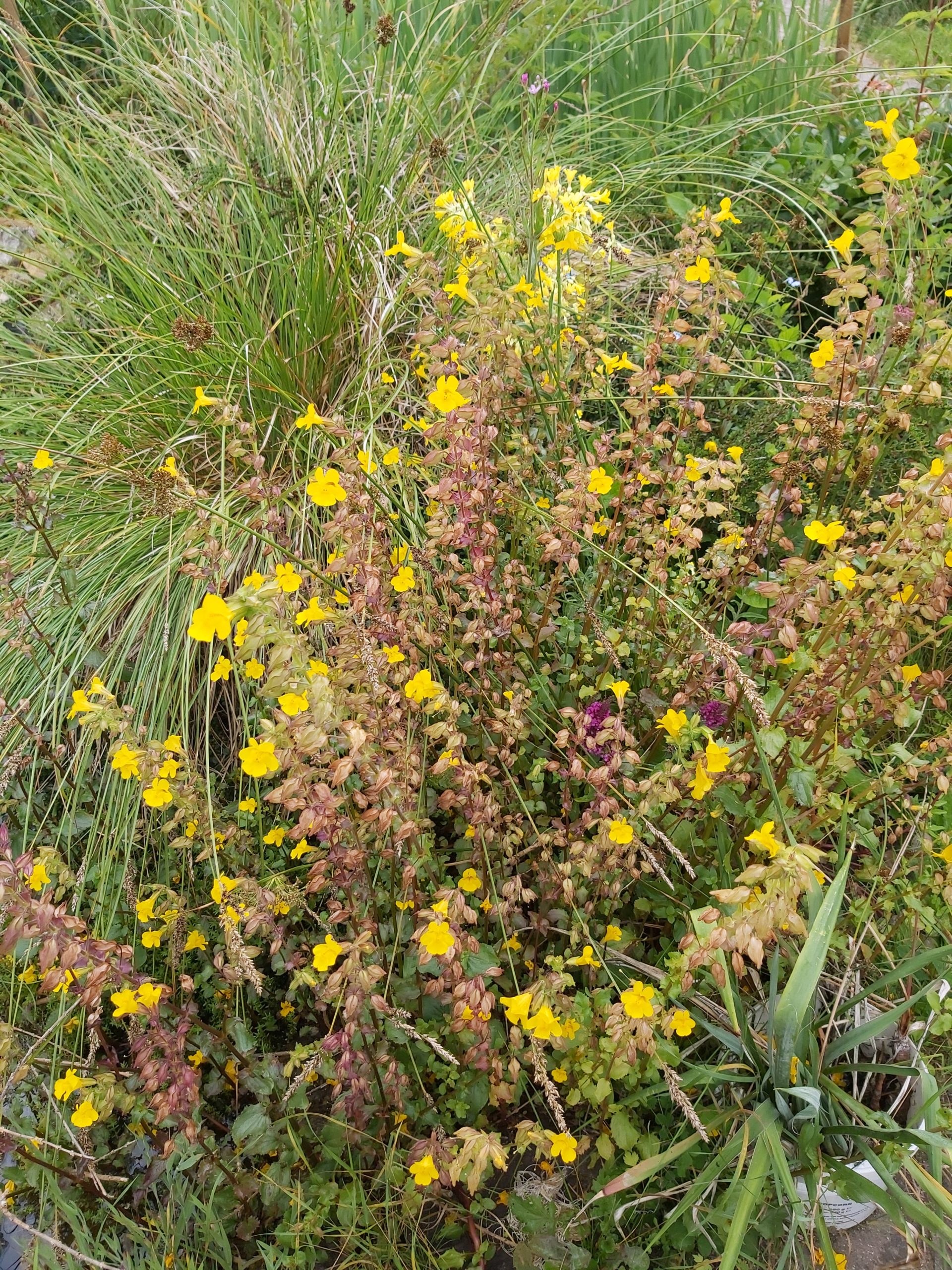
Rudbeckia laciniata L.

English Coneflower Status LU: established. 1st record: LU & ITW 1887.
Lëtzebuergesch Spléckbliedrege Sonnenhutt Status Eur.: established. 1st record: <1625. 1
Français Rudbéckie laciniée RA: ISEIA: C1. Harmonia+: 0,17.
Deutsch Schlitzblättriger Sonnenhut Wikipedia: Wikipedia - English- Coneflower Wikipedia - Deutsch - Schlitzblättriger Sonnenhut Wikipedia - Nederlands - Slipbladige rudbeckia | Wikispecies: Wikispecies - Rudbeckia laciniata | CABI
Nederlands Slipbladige rudbeckia Back to the list of neophytes

Brief description

Slipbladige rudbeckia 20-08-2005 18.25.12Rudbeckia laciniata L. mostly grows in open ruderal and alluvial habitats (e.g. river banks). Seeds may only germinate from bare soil; the low germination and recruitment rates in undisturbed sites reduce plant capacity to colonise natural plant communities. The plant can however form dense and monospecific stands due to vegetative growth (rhizomes). R. laciniata, or coneflower, locally decreases plant species richness and hinders colonisation of open habitats by tree species, especially in riparian areas. The plant is toxic for livestock but also very melliferous (Branquart et al. 2010).

Status and distribution in Luxembourg

Records of Rudbeckia laciniata L. in Luxembourg. Data source: Recorder-Lux, iNaturalist & GBIF, 2021-07-23.

Rudbeckia laciniata L. was first mentioned for Luxembourg in the wild in the surroundings of Mersch by Feltgen (1901: 254).

The oldest herbarium specimen of Rudbeckia laciniata L. at the MNHNL was collected on 20 August 1935 by Jos. Witry in gardens in Schifflange (Specimen № 50794, MNHNL 2000-). The next scientific record that we know of was made by Léopold Reichling (1921-2009) on 12th June 1961 near the river Alzette in the municipality of Walferdange (MNHNL 2000-).

Currently, 2 records of coneflower are accessible through the MNHNL-mdata portal (MNHNL, iNaturalist & GBIF 2019).

This melliferous species from North America is naturalised in Europe, especially in central Europe. River and canal banks, river gravel, sometimes wasteland. Sometimes subspontaneous or adventitious. Sometimes cultivated for garden ornament (Lambinon & Verloove 2012: 719).

The species is comparable to Helianthus tuberosus in its ecology but is much less common in Luxembourg.

Risk assessment

ISEIA protocol
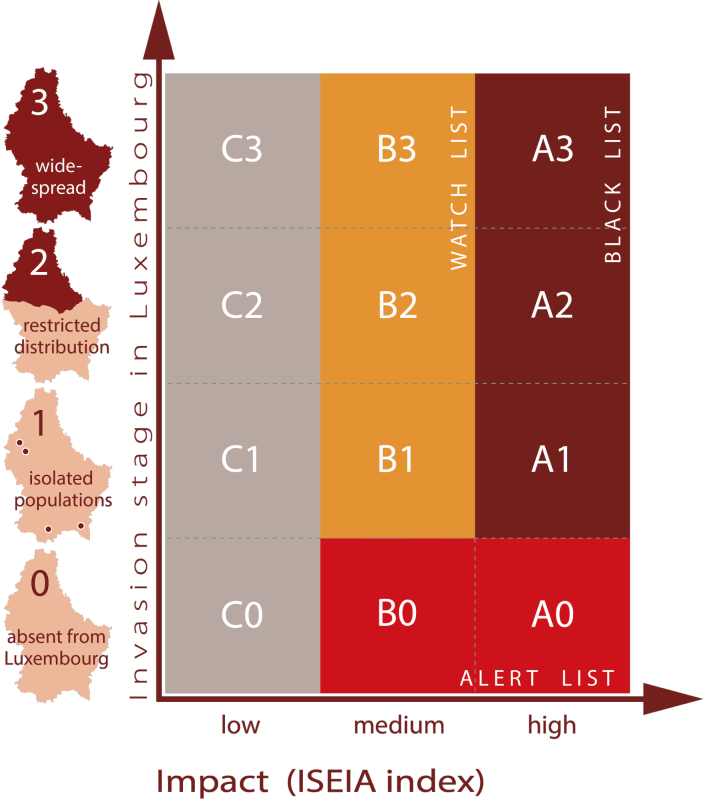
C1 (2+2+2+2) (Ries et al. 2013: 19).

Harmonia+ protocol

Overall risk score 0,17 = (Overall Invasion score 0,51 x Overall Impact score 0,33) (Ries et al. 2020).

0,51Invasion
0,33Impact
0,17Risk

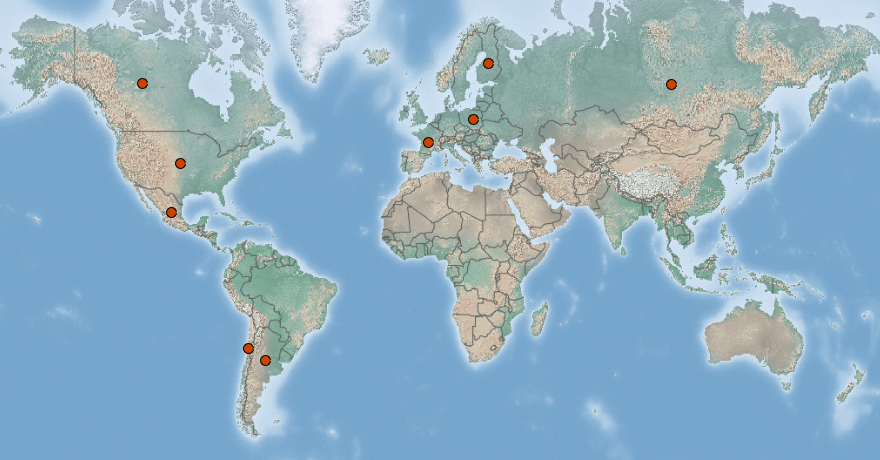
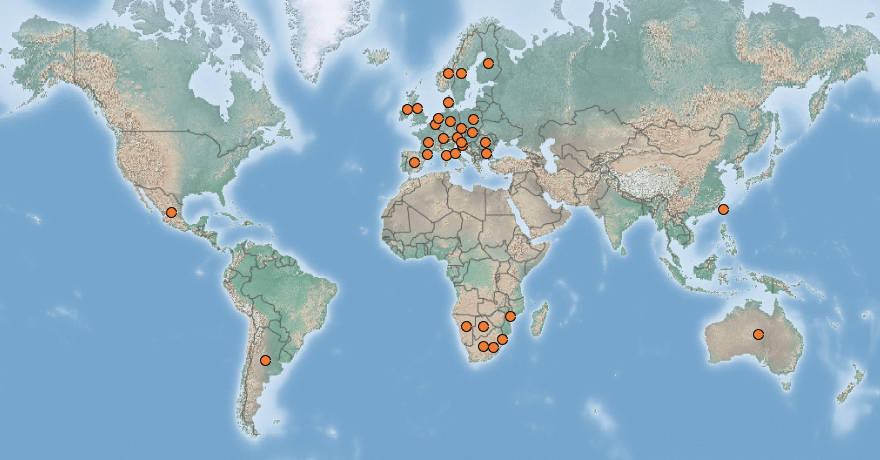
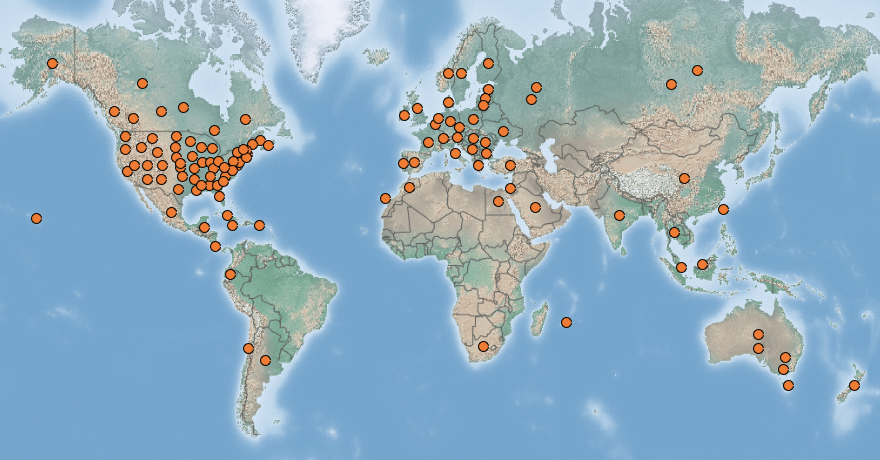
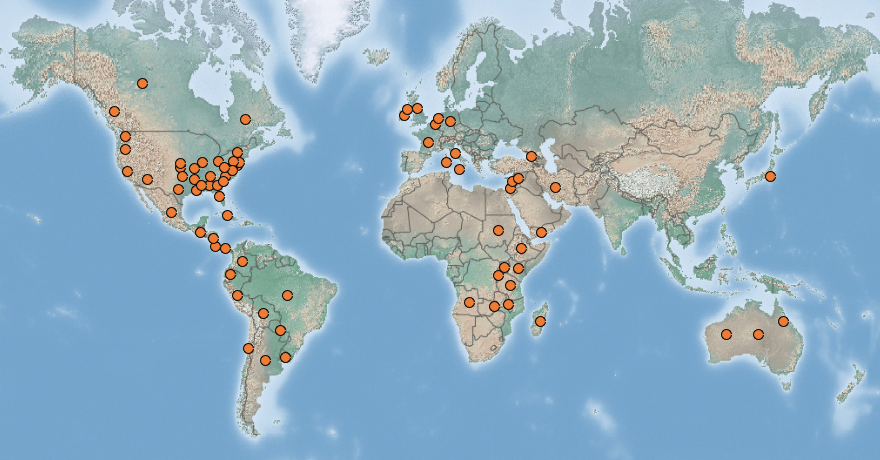
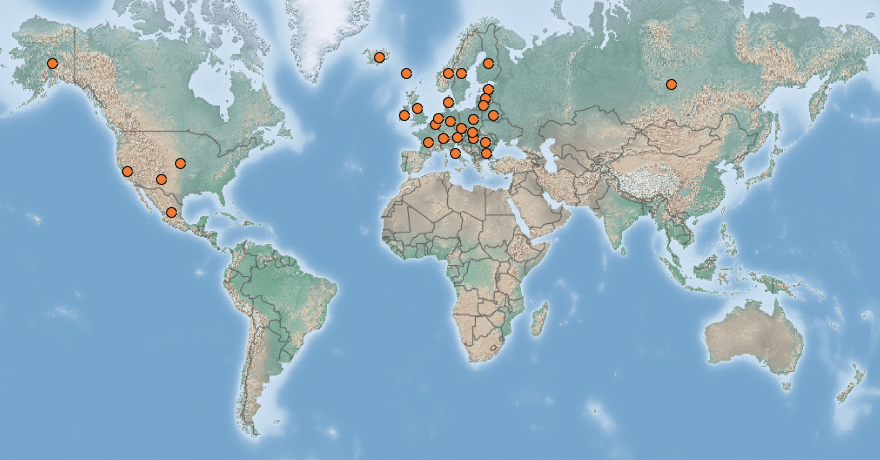
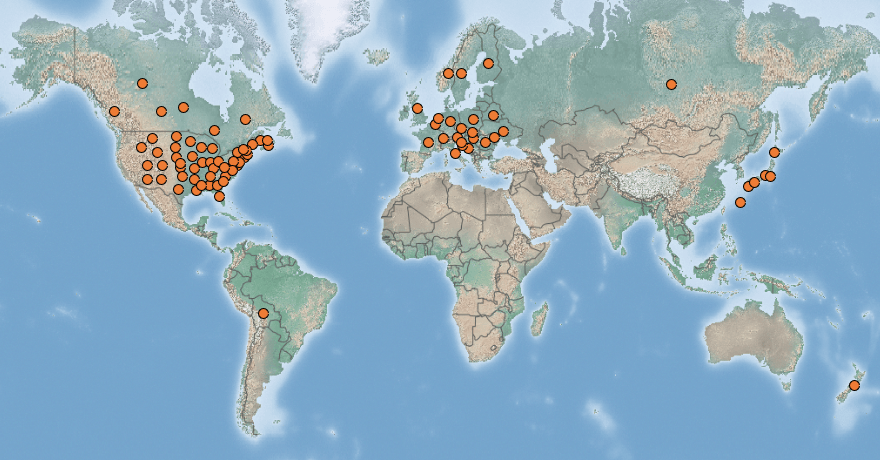
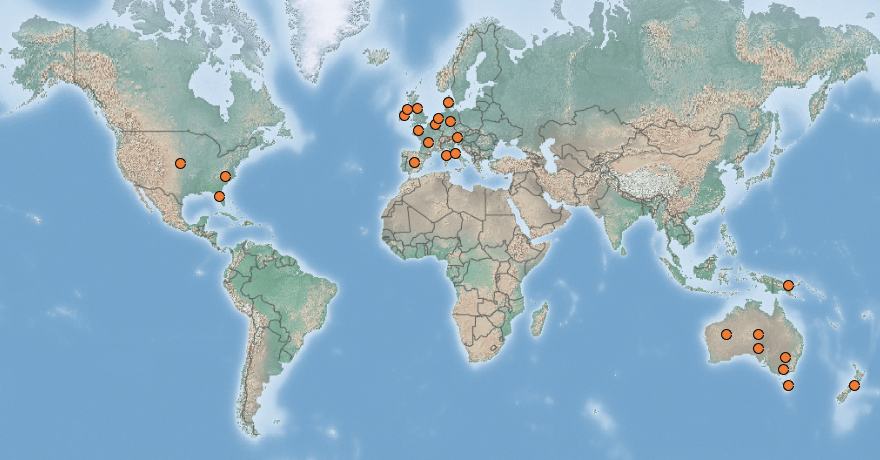
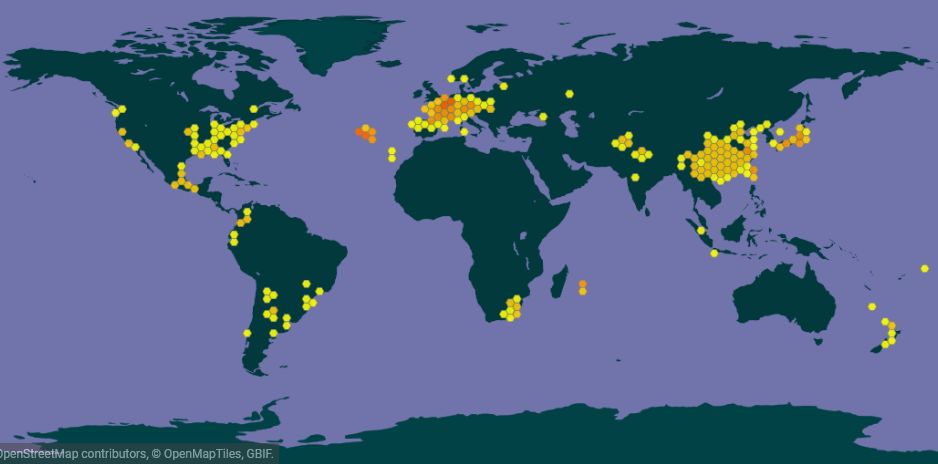
Worldwide distribution

Bibliography

  • Branquart, E., S. Vanderhoeven, W. Van Landuyt, F. Van Rossum & F. Verloove, 2010. Harmonia database: Rudbeckia laciniata L.. Harmonia version 1.2, Belgian Forum on Invasive Species. URL: http://ias.biodiversity.be [accessed on 2019-10-15]
  • CABI, 2019. Rudbeckia laciniata. In: Invasive Species Compendium. Wallingford, UK: CAB International. URL: www.cabi.org/isc [accessed 2020-03-02]
  • Feltgen, E., 1901. Mersch sowie nächste und weitere Umgebung, zum Gebrauch für Naturfreunde. Bulletin de la Société des naturalistes luxembourgeois 11: 246-277.
  • Lambinon J. & F. Verloove, 2012. Nouvelle flore de la Belgique, du grand-duché de Luxembourg, du Nord de la France et des régions voisines. Sixième édition. Avec la collaboration de L. Delvosalle, B. Toussaint, D. Geerinck, I. Hoste, F. Van Rossum, B. Cornier, R. Schumacker, A. Vanderpoorten et H. Vannerom. Jardin botanique national de Belgique, Meise. CXXXIX + 1195 pp. ISBN : 9789072619884.
  • MNHNL, 2000-. Rudbeckia laciniata L. in Recorder-Lux, database on the natural heritage of the Grand Duchy of Luxembourg. Musée national d’histoire naturelle, Luxembourg. URL: https://mdata.mnhn.lu [Accessed 2019-10-15]
  • MNHNL, iNaturalist & GBIF, 2019. Rudbeckia laciniata L. in MNHNL-mdata, online portal combining species observation from Recorder-Lux, iNaturalist and GBIF. National Museum of Natural History, Luxembourg. URL: https://mdata.mnhn.lu [Accessed 2019-10-15]
  • Ries, C. & Y. Krippel, 2021 [Unpublished manuscript]. First records of 56 invasive alien vascular plants in Luxembourg. MNHNL & Naturpark Öewersauer.
  • Ries, C., Y. Krippel & M. Pfeiffenschneider, 2020. Risk assessment after the Harmonia+ protocol of invasive alien vascular plant species in Luxembourg. Bull. Soc. Nat. luxemb. 122: 197-205. [PDF 132 KB]
  • Ries, C., Y. Krippel, M. Pfeiffenschneider & S. Schneider, 2013. Environmental impact assessment and black, watch and alert list classification after the ISEIA Protocol of non-native vascular plant species in Luxembourg. Bull. Soc. Nat. luxemb. 114: 15-21. [PDF 652 KB]

 Page content last updated on 2021-03-11. Last proofread by Caroline Grounds on 2019-11-21.

Claytonia perfoliata Donn ex Willd.

English Spring beauty Status LU: casual. 1st record: LU & ITW 1988.
Lëtzebuergesch Wanter-Portulak Status Eur.: established.
Français Claytone de Cuba RA: ISEIA: C1. Harmonia+: 0,04
Deutsch Gewöhnliches Tellerkraut, Winterportulak Wikipedia: Wikipedia - English - Spring beauty Wikipedia - Français - Claytone de Cuba Wikipedia - Deutsch - Gewöhnliches Tellerkraut Wikipedia - Nederlands - Winterpostelein | Wikispecies: Wikispecies - Claytonia perfoliata
Nederlands Winterpostelein Back to the list of neophytes

Brief description

Claytonia perfoliata — Flora Batava — Volume v14

Claytonia perfoliata — Flora Batava, 1872

Claytonia perfoliata Donn ex Willd. (syn. Montia perfoliata), also known as miner’s lettuce or winter purslane, is a fleshy, herbaceous, annual plant native to the western mountainous and coastal regions of Northern America. The common name of miner’s lettuce refers to how the plant was used by miners during the California Gold Rush, who ate it to prevent scurvy. It has been widely naturalised in western Europe, after being introduced there in the eighteenth century, possibly by the naturalist Archibald Menzies, who brought it to Kew Gardens in London in 1794 (Wikipedia contributors, 2019).

Status and distribution in Luxembourg

Records of Claytonia perfoliata Donn ex Willd. in Luxembourg. Data source: Recorder-Lux, iNaturalist & GBIF, 2021-07-23.

The oldest specimen in the herbarium of the Museum dates from 1866 and was collected in the Brussels district Uccle, Belgium, but it mentions no exact date nor a collectors name (Specimen № 2515, MNHNL 2000-).

In Luxembourg, Claytonia perfoliata Donn ex Willd. was first observed by Paul Diederich in the spring of 1988 en masse in a nursery on the plateau south-east of Lorentzweiler (LUREF 79436 E / 83775 N 1). At the same time, a few individuals were found under a tree planted in front of building n°17 on Avenue Guillaume in Luxembourg City (Reichling 1990: 58). In spring 1989, the plant was observed by Jean-Marie Mangen in an ornamental plantation at Geessekneppchen in Luxembourg City (Reichling 1990: 59). In Summer 1989, it was next observed by Kariger: 1989-06-25 on flower beds of the grounds around the City Theatre on Limpertsberg, Luxembourg City, as weed in a plant association belonging to the Digitario-Setarienion; 1989-06-10 also as a weed in flower pots at the Finsterthal campsite (Kariger 1990: 76).

On May 16, 2004, Yves Krippel and Tania Wambach observed the species growing on a surface of ± 10 m2 in the woods and in a lawn on the edge of the mini-golf of the camping Maartboesch in Berdorf (Krippel et al. 2006).

Currently, 10 records of the species in Luxembourg are accessible through the MNHNL-mdata portal (MNHNL, iNaturalist & GBIF 2021).

Once grown in gardens as a vegetable plant (Lambinon & Verloove 2012: 149).

Risk assessment

ISEIA protocol

C1 (1+1+1+1) (Ries et al. 2013: 18).

Harmonia+ protocol

Overall risk score 0,04 = (Overall Invasion score 0,46 x Overall Impact score 0,08) (Ries et al. 2020).

0,46Invasion
0,08Impact
0,04Risk

Bibliography

  • Kariger, J.-J., 1990. Auf der Suche nach Seltenheiten und verschwundenem 1970-1989. Bericht und Auswahl floristischer Tätigkeit ergänzt durch ökologische Betrachtungen. Bulletin de la Société des naturalistes luxembourgeois 90: 71-101.
  • Krippel, Y. & G. Colling, 2006. Notes floristiques. Observations faites au Luxembourg (2004-2005). Bull. Soc. Nat. luxemb. 107: 89-103. [PDF 288 Kb]
  • Lambinon J. & F. Verloove, 2012. Nouvelle flore de la Belgique, du grand-duché de Luxembourg, du Nord de la France et des régions voisines. Sixième édition. Avec la collaboration de L. Delvosalle, B. Toussaint, D. Geerinck, I. Hoste, F. Van Rossum, B. Cornier, R. Schumacker, A. Vanderpoorten et H. Vannerom. Jardin botanique national de Belgique, Meise. CXXXIX + 1195 pp. ISBN : 9789072619884.
  • MNHNL, 2000-. Claytonia perfoliata Donn ex Willd. in Recorder-Lux, database on the natural heritage of the Grand Duchy of Luxembourg. Musée national d’histoire naturelle, Luxembourg. URL: https://mdata.mnhn.lu [Accessed 2019-09-05]
  • MNHNL, iNaturalist & GBIF, 2019. Claytonia perfoliata Donn ex Willd. in MNHNL-mdata, online portal combining species observation from Recorder-Lux, iNaturalist and GBIF. National Museum of Natural History, Luxembourg. URL: https://mdata.mnhn.lu [Accessed 2021-01-12]
  • Reichling, L., 1990. Observations floristiques au Luxembourg 1980-1989. Bull. Soc. Nat. luxemb. 90: 55-70. [PDF 808 KB]
  • Ries, C. & Y. Krippel, 2021 [Unpublished manuscript]. First records of 56 invasive alien vascular plants in Luxembourg. MNHNL & Naturpark Öewersauer.
  • Ries, C., Y. Krippel & M. Pfeiffenschneider, 2020. Risk assessment after the Harmonia+ protocol of invasive alien vascular plant species in Luxembourg. Bull. Soc. Nat. luxemb. 122: 197-205. [PDF 132 KB]
  • Ries, C., Y. Krippel, M. Pfeiffenschneider & S. Schneider, 2013. Environmental impact assessment and black, watch and alert list classification after the ISEIA Protocol of non-native vascular plant species in Luxembourg. Bull. Soc. Nat. luxemb. 114: 15-21. [PDF 652 KB]
  • Wikipedia contributors, 2019. Claytonia perfoliata Donn ex Willd. in Wikipedia, The Free Encyclopedia, 24 September 2019. URL: https://en.wikipedia.org/w/index.php?title=Claytonia_perfoliata&oldid=917517303 [accessed 2 October 2019]

 Page content last updated on 2021-03-02. Last proofread by Caroline Grounds on 2019-11-14.

Crassula helmsii (Kirk) Cockayne

English New Zealand pigmyweed Status LU: established. 1st record: LU & ITW 2020.
Lëtzebuergesch Weier-Nolkraut Status Eur.: established. 1st record: UK 1911.
Français Crassule des étangs RA: ISEIA: B1 – Watch List. Harmonia+: 0,44
Deutsch Nadelkraut Wikipedia: Wikipedia - English - New Zealand pigmyweed Wikipedia - Deutsch - Nadelkraut Wikipedia - Nederlands - Watercrassula | Wikispecies: Wikispecies - Crassula helmsii | CABI
Nederlands Watercrassula Back to the list of neophytes

Brief description

Crassula helmsii

2011, Pilley, England, UK

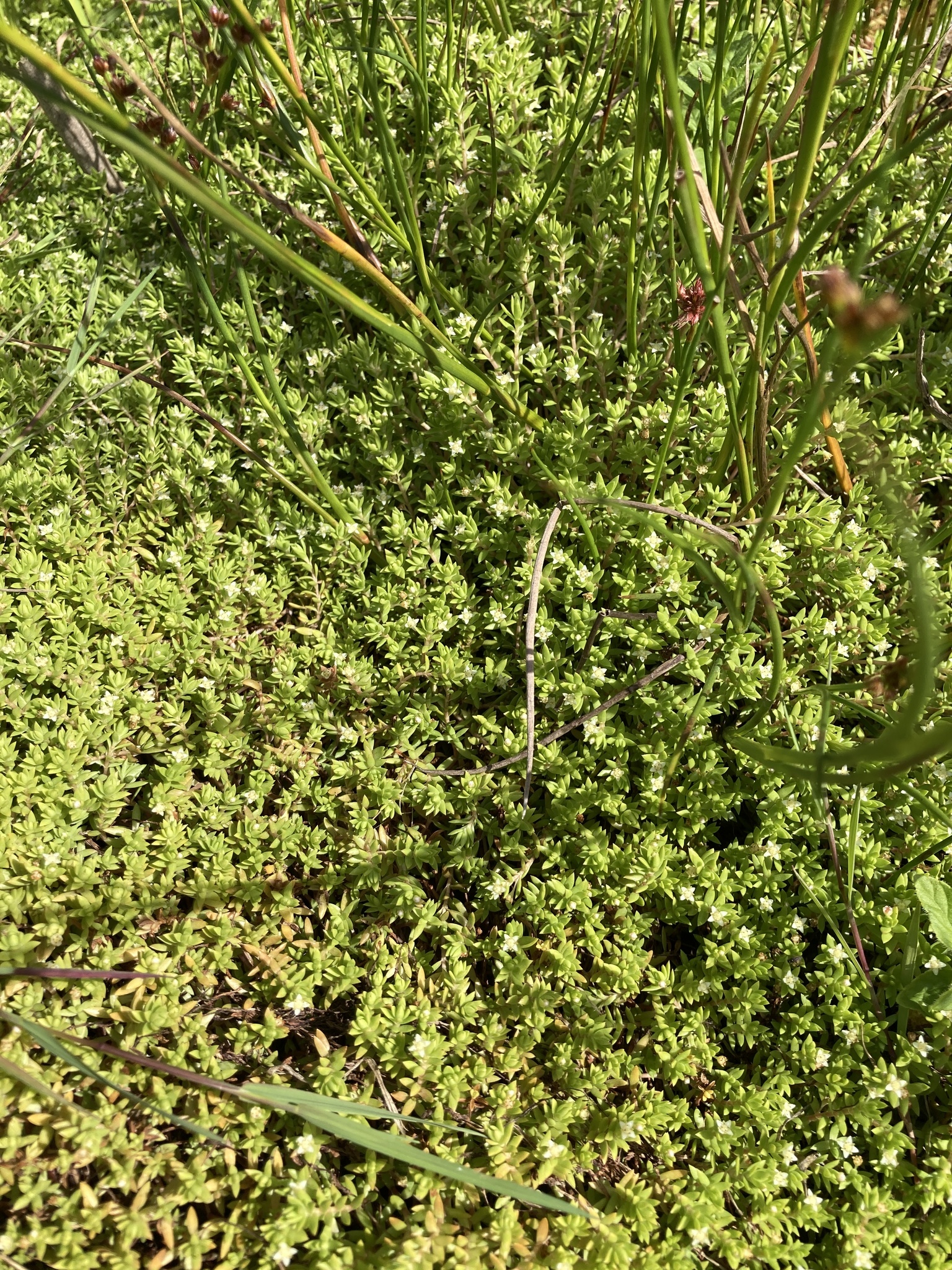
Crassula helmsii (Kirk) Cockayne, native to New Zealand and Australia, is an aquatic or semi-terrestrial plant that colonises a wide variety of freshwater habitats. The plant’s ability to grow from stem fragments enables it to easily spread from ponds and ornamental pools into the wild. Waterfowl, mammals, downstream movement and flooding all play an important role in plant dissemination. New Zealand pigmyweed can cause major environmental problems in freshwater habitats. It forms dense vegetation mats that deplete oxygen, outcompete native species and may affect the breeding success and survival of threatened aquatic plants and amphibians. Mats choke ponds and drainage ditches, impede water flow and adversely affect recreational activities. In rivers, flow behaviour may change when the plant occurs in masses (Branquart et al. 2013).

Status and distribution in Luxembourg

Records of Crassula helmsii (Kirk) Cockayne in Luxembourg. Data source: Recorder-Lux, iNaturalist & GBIF, 2021-07-23.

Crassula helmsii (Kirk) Cockayne was first recorded in the wild by Jean-Paul Wolff on 2020-07-23 as part of a SICONA monitoring project, growing all over a pond in Moukebrill near Grass (MNHNL, 2000-, Wolff 2020).
First reported in Belgium in 1983, this species experienced a strong expansion about 15 years later and will probably be found in other parts of the territory of the Flora. The plant is highly variable depending on whether it grows in water (aquatic phenotype) or on the banks of more or less dry ponds (terrestrial phenotype) (Lambinon & Verloove 2012).
Currently, 2 records of the species in Luxembourg are accessible through the MNHNL-mdata portal (MNHNL, iNaturalist & GBIF 2021).

Management

Our neighbouring countries have already gained experience with the management of the species and made it available in publications: Dortel & Dutartre 2018, Delbart et al. 2011, Ewald 2014, van der Loop et al. 2018.

Risk assessment

ISEIA protocol

Following its discovery in Luxembourg in July 2020, the species has been reassessed on 24 July 2020 to B1 (2+3+2+3) = Watch List by Christian Ries and Yves Krippel. Assessment before the appearance of the species in Luxembourg: B0 (2+3+2+3) = Alert List (Ries et al. 2013: 18).

Harmonia+ protocol

Overall risk score 0,44 = (Overall Invasion score 0,76 x Overall Impact score 0,57) (Ries et al. 2020).

0,76Invasion
0,57Impact
0,44Risk

Worldwide distribution

Bibliography

  • Branquart, E., I. Stiers, L. Triest, S. Vanderhoeven, W. Van Landuyt, F. Van Rossum & F. Verloove, 2013. Harmonia database: . Harmonia version 1.2, Belgian Forum on Invasive Species. URL: http://ias.biodiversity.be [accessed on 2020-02-28]
  • CABI, 2019. Crassula helmsii. In: Invasive Species Compendium. Wallingford, UK: CAB International. URL: www.cabi.org/isc [accessed 2020-02-28]
  • Dortel, F. & A. Dutartre, 2018. La Crassule de Helms (Crassula helmsii Cockayne, 1907) : Fiche d’alerte détaillée, première analyse des risques, possibilités de régulation et mesures de biosécurité. 23 p. [PDF]
  • Delbart, E., A. Monty & G. Mahy, 2011. Gestion de Crassula helmsii en Belgique plus difficile qu’il n’y paraı̂t? Bulletin OEPP/EPPO Bulletin 41: 226–231. [PDF]
  • Ewald, N.C., 2014. Crassula helmsii in the New Forest – a report on the status, spread and impact of this non-native invasive plant, and the efficacy of novel control techniques following a 2 year trial. Partner Annex Report for RINSE prepared on behalf of the New Forest Non-Native Plants Project. Freshwater Habitats Trust, Oxford. [PDF]
  • Lambinon J. & F. Verloove, 2012. Nouvelle flore de la Belgique, du grand-duché de Luxembourg, du Nord de la France et des régions voisines. Sixième édition. Avec la collaboration de L. Delvosalle, B. Toussaint, D. Geerinck, I. Hoste, F. Van Rossum, B. Cornier, R. Schumacker, A. Vanderpoorten et H. Vannerom. Jardin botanique national de Belgique, Meise. CXXXIX + 1195 pp. ISBN : 9789072619884.
  • MNHNL, 2000-. Recorder-Lux, database on the natural heritage of the Grand Duchy of Luxembourg. National Museum of Natural History, Luxembourg. Crassula helmsii (Kirk) Cockayne observed on 2020-07-23, occurrence ID MNHNL00000005TLE, via https://mdata.mnhn.lu [accessed 2021-02-22].
  • MNHNL, iNaturalist & GBIF, 2020. in MNHNL-mdata, online portal combining species observation from Recorder-Lux, iNaturalist and GBIF. National Museum of Natural History, Luxembourg. URL: https://mdata.mnhn.lu [Accessed 2020-02-28]
  • Ries, C. & Y. Krippel, 2021 [Unpublished manuscript]. First records of 56 invasive alien vascular plants in Luxembourg. MNHNL & Naturpark Öewersauer.
  • Ries, C., Y. Krippel & M. Pfeiffenschneider, 2020. Risk assessment after the Harmonia+ protocol of invasive alien vascular plant species in Luxembourg. Bull. Soc. Nat. luxemb. 122: 197-205. [PDF 132 KB]
  • Ries, C., Y. Krippel, M. Pfeiffenschneider & S. Schneider, 2013. Environmental impact assessment and black, watch and alert list classification after the ISEIA Protocol of non-native vascular plant species in Luxembourg. Bull. Soc. Nat. luxemb. 114: 15-21. [PDF 652 KB]
  • van der Loop, J.M.M., L. de Hoop, H.H. van Kleef & R.S.E.W. Leuven, 2018. Effectiveness of eradication measures for the invasive Australian swamp stonecrop Crassula helmsii. Management of Biological Invasions (2018) Volume 9, Issue 3: 343–355. DOI: https://doi.org/10.3391/mbi.2018.9.3.16 [PDF]
  • Wolff, J.-P., 2020. Crassula helmsii observation at iNaturalist. URL: https://www.inaturalist.org/observations/54040409 [accessed 2020.07.24].

 Page content last updated on 2021-03-04.

Duchesnea indica (Andrews) Th.Wolf

English Yellow-flowered Strawberry Status LU: established. 1st record: LU <2007, ITW 2008.
Lëtzebuergesch Schäinäerdbier Status Eur.: established. 1st record: <1850.
Français Fraisier des Indes RA: ISEIA: C1. Harmonia+: 0,05
Deutsch Scheinerdbeere Wikipedia: Wikipedia - English - Yellow-flowered Strawberry Wikipedia - Français - Fraisier des Indes Wikipedia - Deutsch - Scheinerdbeere Wikipedia - Nederlands - Schijnaardbei | Wikispecies: Wikispecies - Duchesnea indica
Nederlands Schijnaardbei Back to the list of neophytes

Brief description

Duchesnea indica (Andrews) Th.Wolf is a plant native to SE-Asia that prefers relatively moist and shaded habitats. It grows preferentially on soils with high nitrogen supply and benefits from increasing anthropogenic nitrogen deposition. It occurs in woods, grasslands and urban parks. Seeds are known to be dispersed by birds (Branquart et al. 2012).

Status and distribution in Luxembourg

Records of Duchesnea indica (Andrews) Th.Wolf in Luxembourg. Data source: Recorder-Lux, iNaturalist & GBIF, 2021-07-23.

In Luxembourg, Duchesnea indica (Andrews) Th.Wolf was first planted in the Mediterranean Garden in Schebsange before 2007 (Moes G. in litt.). The species was first documented in the wild on 2008-10-31 by Florian Hans at Ennëschte Bësch in the municipality of Bertrange (MNHNL 2000-; Krippel et al. 2010). It occurred on about 2 m² along the roadside and a recently cleared softwood plot, together with Alliaria petiolata, Ranunculus repens, Scrophularia nodosa and Urtica dioica.

There are five records of the species in the MNHNL-mdata online portal, four from Luxembourg City and one from Schengen (MNHNL, iNaturalist & GBIF 2019).

The Yellow-flowered Strawberry is cultivated for ornamental purposes in parks and gardens, it is subspontaneous or naturalised in former parks, garden surroundings, forest roads and cemeteries. This rather rare to rare species is expanding, especially in the western part of the environment (Lambinon & Verloove 2012: 351).

Duchesnea indica was planted in 2002 in the Reimerwee park of the Kirchberg arboretum in Luxembourg City. This population has established itself well (Helminger 2018).

Risk assessment

ISEIA protocol

C1 (2+1+2+1) (Ries et al. 2013: 18).

Harmonia+ protocol

Overall risk score 0,05 = (Overall Invasion score 0,59 x Overall Impact score 0,09) (Ries et al. 2020).

0,59Invasion
0,09Impact
0,05Risk

Worldwide distribution

Bibliography

  • Branquart, E., P. Dupriez, S. Vanderhoeven, W. Van Landuyt, F. Van Rossum, F. Verloove, 2012. Harmonia database: Duchesnea indica (Andrews) Th.Wolf. Harmonia version 1.2, Belgian Forum on Invasive Species. URL: http://ias.biodiversity.be [accessed on 2019-10-09]
  • GBIF 2020. Duchesnea indica (Andr.) Focke in GBIF Secretariat (2019). GBIF Backbone Taxonomy. Checklist dataset https://doi.org/10.15468/39omei accessed via GBIF.org on 2020-02-28.
  • Helminger, T., 2018. Personal communication to Lucie Lentz during summer 2018.
  • Krippel, Y. & G. Colling, 2010. Notes floristiques. Observations faites au Luxembourg (2008- 2009). Bull. Soc. Nat. luxemb. 111: 11-32. [PDF 209 KB]
  • Lambinon J. & F. Verloove, 2012. Nouvelle flore de la Belgique, du grand-duché de Luxembourg, du Nord de la France et des régions voisines. Sixième édition. Avec la collaboration de L. Delvosalle, B. Toussaint, D. Geerinck, I. Hoste, F. Van Rossum, B. Cornier, R. Schumacker, A. Vanderpoorten et H. Vannerom. Jardin botanique national de Belgique, Meise. CXXXIX + 1195 pp. ISBN : 9789072619884.
  • MNHNL, 2000-. Duchesnea indica (Andrews) Th.Wolf in Recorder-Lux, database on the natural heritage of the Grand Duchy of Luxembourg. Musée national d’histoire naturelle, Luxembourg. URL: https://mdata.mnhn.lu [Accessed 2019-09-05]
  • MNHNL, iNaturalist & GBIF, 2019. Duchesnea indica (Andrews) Th.Wolf in MNHNL-mdata, online portal combining species observation from Recorder-Lux, iNaturalist and GBIF. National Museum of Natural History, Luxembourg. URL: https://mdata.mnhn.lu [Accessed 2019-09-06]
  • Ries, C. & Y. Krippel, 2021 [Unpublished manuscript]. First records of 56 invasive alien vascular plants in Luxembourg. MNHNL & Naturpark Öewersauer.
  • Ries, C., Y. Krippel & M. Pfeiffenschneider, 2020. Risk assessment after the Harmonia+ protocol of invasive alien vascular plant species in Luxembourg. Bull. Soc. Nat. luxemb. 122: 197-205. [PDF 132 KB]
  • Ries, C., Y. Krippel, M. Pfeiffenschneider & S. Schneider, 2013. Environmental impact assessment and black, watch and alert list classification after the ISEIA Protocol of non-native vascular plant species in Luxembourg. Bull. Soc. Nat. luxemb. 114: 15-21. [PDF 652 KB]

 Page content last updated on 2021-03-03. Last proofread by Caroline Grounds on 2019-11-14.

Bidens frondosa L.

English Beggarticks Status LU: established. 1st record: LU & ITW 1959.
Lëtzebuergesch Schwaarzfriichtegen Duebelzant Status Eur.: established. 1st record: IT 1750-1800.
Français Bident feuillé RA: ISEIA: C2. Harmonia+: 0,18
Deutsch Schwarzfrüchtiger Zweizahn Wikipedia: Wikipedia - English - Beggarticks Wikipedia - Français - Fougère d'eau Wikipedia - Deutsch - Schwarzfrüchtiger Zweizahn Wikipedia - Nederlands - Zwart tandzaad | Wikispecies: Wikispecies - Bidens frondosa | CABI
Nederlands Zwart tandzaad Back to the list of neophytes

Brief description

Bidens frondosa L. is a pioneer plant species of moist grounds; it colonises river banks, mud flats, ditches, ponds and other open alluvial habitats (Branquart et al. 2019).

Status and distribution in Luxembourg

Records of Bidens frondosa L. in Luxembourg. Data source: Recorder-Lux, iNaturalist & GBIF, 2021-07-23.

Bidens frondosa L. was first documented in Luxembourg by Léopold Reichling and Marcel Etringer on 10th September 1959 on the bank of the Moselle between Stadtbredimus and Hüttermühle, 1 km downstream of the Paul Eyschen Monument, municipality of Stadtbredimus (Reichling 1962; Obs. key: DSS00465000000XF, MNHNL 2000-).

Currently, more than 70 observations of Bidens frondosa are documented, most of them originating in the Moselle valley (MNHNL, iNaturalist & GBIF 2019).

The species is currently expanding to the west of the flora territory (Lambinon & Verloove 2012: 722).

Risk assessment

ISEIA protocol

C2 (2+2+2+1) (Ries et al. 2013: 18).

Harmonia+ protocol

Overall risk score 0,18 = (Overall Invasion score 0,64 x Overall Impact score 0,28) (Ries et al. 2020).

0,64Invasion
0,28Impact
0,18Risk

Worldwide distribution

Bibliography

  • Branquart, E., S. Vanderhoeven, W. Van Landuyt, F. Van Rossum, F. Verloove, 2019. Harmonia database: Bidens frondosa L.. Harmonia version 1.2, Belgian Forum on Invasive Species. URL: http://ias.biodiversity.be [accessed on 2019-10-02]
  • CABI, 2014. Bidens frondosa [original text by Ian Popay]. In: Invasive Species Compendium. Wallingford, UK: CAB International. URL: www.cabi.org/isc [accessed 2020-02-28]
  • Lambinon J. & F. Verloove, 2012. Nouvelle flore de la Belgique, du grand-duché de Luxembourg, du Nord de la France et des régions voisines. Sixième édition. Avec la collaboration de L. Delvosalle, B. Toussaint, D. Geerinck, I. Hoste, F. Van Rossum, B. Cornier, R. Schumacker, A. Vanderpoorten et H. Vannerom. Jardin botanique national de Belgique, Meise. CXXXIX + 1195 pp. ISBN : 9789072619884.
  • MNHNL, 2000-. Bidens frondosa L. in Recorder-Lux, database on the natural heritage of the Grand Duchy of Luxembourg. Musée national d’histoire naturelle, Luxembourg. URL: https://mdata.mnhn.lu [Accessed 2019-09-05]
  • MNHNL, iNaturalist & GBIF, 2019. Bidens frondosa L. in MNHNL-mdata, online portal combining species observation from Recorder-Lux, iNaturalist and GBIF. National Museum of Natural History, Luxembourg. URL: https://mdata.mnhn.lu [Accessed 2019-09-06]
  • Reichling, L., 1962. Notes floristiques 1959. Bull. Soc. Nat. luxemb. 64: 3-52. [PDF 3155 KB]
  • Ries, C. & Y. Krippel, 2021 [Unpublished manuscript]. First records of 56 invasive alien vascular plants in Luxembourg. MNHNL & Naturpark Öewersauer.
  • Ries, C., Y. Krippel & M. Pfeiffenschneider, 2020. Risk assessment after the Harmonia+ protocol of invasive alien vascular plant species in Luxembourg. Bull. Soc. Nat. luxemb. 122: 197-205. [PDF 132 KB]
  • Ries, C., Y. Krippel, M. Pfeiffenschneider & S. Schneider, 2013. Environmental impact assessment and black, watch and alert list classification after the ISEIA Protocol of non-native vascular plant species in Luxembourg. Bull. Soc. Nat. luxemb. 114: 15-21. [PDF 652 KB]

 Page content last updated on 2021-03-02.

Azolla filiculoides Lam.

English Water fern Status LU: established. 1st record: LU ~2002, ITW 2009.
Lëtzebuergesch Waasserfar Status Eur.: established. 1st record: 1870s-1880s.
Français Fougère d’eau RA: ISEIA: C1. Harmonia+: 0,22
Deutsch Großer Algenfarn Wikipedia: Wikipedia - English - Water fern Wikipedia - Français - Fougère d'eau Wikipedia - Deutsch - Großer Algenfarn Wikipedia - Nederlands - Grote kroosvaren | Wikispecies: Wikispecies - Azolla filiculoides | CABI
Nederlands Grote kroosvaren Back to the list of neophytes

Brief description

Azolla filiculoides Lam. (Syn.: A. caroliniana Willd.) originates from tropical America and is naturalised in Western, South and Central Europe and the Canary Islands. Azolla filiculoides form stands that may expand or regress rapidly, depending in particular on thermal factors. Two species of Azolla have been reported in the Flora territory: A. filiculoides and A. caroliniana, but it is now known that these two names are synonymous (Lambinon & Verloove 2012: 41).

Azolla filiculoides is an aquatic fern that settles in ponds, ditches, water reservoirs, wetlands, channels and slow flowing rivers, often together with Lemna minuta. It does not tolerate turbulence or fast flowing water. The plant is spread by flood waters and by the movement of birds, animals and people. It can form dense, floating and monospecific mats at the surface of water bodies that reduce light penetration and gas exchange. These mats often reduce the development of algae, other aquatic plants and animals. However, dense populations seem to be transient and well localised (Branquart et al. 2010).

Status and distribution in Luxembourg

Records of Azolla filiculoides Lam. in Luxembourg. Data source: Recorder-Lux, iNaturalist & GBIF, 2021-07-23.

In Luxembourg, Azolla filiculoides was first reported around 2002 from a private garden pond by Claude Reckinger (in litt. 2021). The water fern was first observed in the wild by Karl-Georg Gessner on 10th July 2009 in three ponds close to Bourscheid (Kesselkapp), where it grew in more or less extended carpets in 3 ponds together with Lemna minor, Alisma plantagoaquatica and Glyceria fluitans (MNHNL 2000-, Krippel & Colling 2010: 12).

Discovered in several ponds located in the open countryside, this small fern native to tropical America was known for a few years already in Luxembourg in leisure ponds in private gardens, where it had been introduced with other aquatic plants (Krippel & Colling 2010: 12).

A spectacular proliferation of the water fern appeared in autumn 2005 in the channel of Jouy nearby Metz in French Lorraine (Muller 2006).

Risk assessment

ISEIA protocol

C1 (2+2+2+2) (Ries et al. 2013: 18).

Harmonia+ protocol

Overall risk score 0,22 = (Overall Invasion score 0,66 x Overall Impact score 0,33) (Ries et al. 2020).

0,66Invasion
0,33Impact
0,22Risk

Worldwide distribution

Bibliography

  • Branquart, E., I. Stiers, L. Triest, S. Vanderhoeven, W. Van Landuyt, F. Van Rossum, F. Verloove, 2010. Harmonia database: Azolla filiculoides Lam.. Harmonia version 1.2, Belgian Forum on Invasive Species. URL: http://ias.biodiversity.be [accessed on 2019-10-02]
  • CABI, 2014. Azolla filiculoides [original text by Martin Hill]. In: Invasive Species Compendium. Wallingford, UK: CAB International. URL: www.cabi.org/isc [accessed 2020-02-28]
  • Krippel, Y. & G. Colling, 2010. Notes floristiques. Observations faites au Luxembourg (2008- 2009). Bull. Soc. Nat. luxemb. 111: 11-32. [PDF 209 KB]
  • Lambinon J. & F. Verloove, 2012. Nouvelle flore de la Belgique, du grand-duché de Luxembourg, du Nord de la France et des régions voisines. Sixième édition. Avec la collaboration de L. Delvosalle, B. Toussaint, D. Geerinck, I. Hoste, F. Van Rossum, B. Cornier, R. Schumacker, A. Vanderpoorten et H. Vannerom. Jardin botanique national de Belgique, Meise. CXXXIX + 1195 pp. ISBN : 9789072619884.
  • MNHNL, 2000-. Azolla filiculoides Lam. in Recorder-Lux, database on the natural heritage of the Grand Duchy of Luxembourg. Musée national d’histoire naturelle, Luxembourg. URL: https://mdata.mnhn.lu [Accessed 2019-09-05]
  • MNHNL, iNaturalist & GBIF, 2019. Azolla filiculoides Lam. in MNHNL-mdata, online portal combining species observation from Recorder-Lux, iNaturalist and GBIF. National Museum of Natural History, Luxembourg. URL: https://mdata.mnhn.lu [Accessed 2019-09-06]
  • Muller, S., 2006. Prolifération spectaculaire d’’Azolla filiculoides (Azollaceae, Pteridophyta) dans le canal de Jouy près de Metz (Lorraine, France) à l’automne 2005. Bull. Soc. Nat. luxemb. 107: 31-38. [PDF 828 Kb]
  • Ries, C. & Y. Krippel, 2021 [Unpublished manuscript]. First records of 56 invasive alien vascular plants in Luxembourg. MNHNL & Naturpark Öewersauer.
  • Ries, C., Y. Krippel & M. Pfeiffenschneider, 2020. Risk assessment after the Harmonia+ protocol of invasive alien vascular plant species in Luxembourg. Bull. Soc. Nat. luxemb. 122: 197-205. [PDF 132 KB]
  • Ries, C., Y. Krippel, M. Pfeiffenschneider & S. Schneider, 2013. Environmental impact assessment and black, watch and alert list classification after the ISEIA Protocol of non-native vascular plant species in Luxembourg. Bull. Soc. Nat. luxemb. 114: 15-21. [PDF 652 KB]

 Page content last updated on 2021-03-02. Last proofread by Caroline Grounds on 2019-11-13.

Amelanchier lamarckii F.G. Schroed.

English Juneberry Status LU: established. 1st record: LU 1961, ITW <2000.
Lëtzebuergesch Amerikanesch Leebirchen Status Eur.: established. 1st record: FR ~1850-1900.
Français Amélanchier d’amérique RA: ISEIA: C1. Harmonia+: 0,07
Deutsch Kupfer-Felsenbirne Wikipedia: Wikipedia - English - Juneberry Wikipedia - Français - Amélanchier d'amérique Wikipedia - Deutsch - Kupfer-Felsenbirne Wikipedia - Nederlands - Amerikaans krentenboompje | Wikispecies: Wikispecies - Amelanchier lamarckii | CABI
Nederlands Amerikans krentenboompje Back to the list of neophytes

Brief description

Amelanchier lamarckii A

Amelanchier lamarckii. Photo: 12. April 2007, Wouter Hagens. commons.wikimedia.org

In its introduced range, Amelanchier lamarckii F.G. Schroed. thrives on sandy, acidic soil, especially in heathlands, in open woodlands, along forest edges and in urban areas. Juneberry is apomictic and breeds true from seed. Fruits are dispersed by birds over long distances. Juneberry populations are slowly expanding in Western European countries (Belgium, Germany, Great Britain) and reported to be locally invasive. Juneberry can reduce the development of ground vegetation but it rarely forms dense monospecific stands. Outcompetition of native species is considered as unlikely. Impact on native vegetation is poorly reported in the scientific literature (Branquart et al. 2012).

Status and distribution in Luxembourg

Records of Amelanchier lamarckii F.G. Schroed. in Luxembourg. Data source: Recorder-Lux, iNaturalist & GBIF, 2021-07-23.

Amelanchier lamarckii F.G. Schroed. was first reported as Amelanchier canadensis by Léopold Reichling on 1961-06-06 and 1961-06-08 from his garden in Avenue Guillaume, Belair, Luxembourg City (MNHNL 2000-a, LUXNAT Nr 48638).

The species was first observed in the wild by Yves Krippel on 2000-08-04  in the nature reserve Ditgesbaach near Ettelbruck (MNHNL 2000-b).

Amelanchier lamarckii was next recorded in Luxembourg by Krippel & Scheer (2006: 10) on 2003-09-04 on the western slope of Esch-sur-Sûre castle. The species is currently (2018) still present there (Krippel et al. 2019: 164). The next records date before 2008 and cannot be dated exactly as Welter et al. (2008: 62) list 4 undated locations.

In Luxembourg, juneberry is commonly planted as an ornamental tree, which is the case for the records of the species in the municipalities of Luxembourg City (Cents, Limpertsberg) and Hesperange (Welter et al. 2008: 62). In the municipality of Feulen, the species seems to be widely grown in gardens, squares and along streets (MNHNL 2000-c).

Juneberry is a melliferous species born in Europe from a North American strain (Lambinon & Verloove 2012: 373).

Juneberry is an apomictic microspecies, and presumed to be of hybrid origin (A. laevis and either A. arborea or A. canadensis) and therefore under the rules of botanical nomenclature it would be known as Amelanchier × lamarckii (Wikipedia contributors 2019).

Risk assessment

ISEIA protocol

C1 (1+2+2+1) (Ries et al. 2013: 18).

Harmonia+ protocol

Overall risk score 0,07 = (Overall Invasion score 0,57 x Overall Impact score 0,13) (Ries et al. 2020).

0,57Invasion
0,13Impact
0,07Risk

Worldwide distribution

CABI 2009: https://www.cabi.org/isc/datasheet/4831#toDistributionMaps

Bibliography

  • Branquart, E., S. Vanderhoeven, W. Van Landuyt, F. Van Rossum & F. Verloove, 2012. Harmonia database: Amelanchier lamarckii F.G. Schroed. Harmonia version 1.2, Belgian Forum on Invasive Species. URL: http://ias.biodiversity.be [accessed on 2019-10-16]
  • CABI, 2009. Amelanchier lamarckii F.G. Schroed. [original text by Vicki Bonham]. In: Invasive Species Compendium. Wallingford, UK: CAB International. URL: www.cabi.org/isc [accessed 2019-11-22]
  • Krippel, Y. & A. Scheer, 2006. Flore et végétation du château féodal d’Esch-sur-Sûre au Luxembourg. Bull. Soc. Nat. luxemb. 106: 3-16. [PDF 253 Kb]
  • Krippel, Y., S. Schneider, A. Schopp-Guth & T. Walisch, 2019. Feuchtwiesen, Felsbiotope, Silikatmagerrasen, Burgen, Eichen-Niederwälder – Lebensräume auf Schiefer im Norden Luxemburgs. Tuexenia Beiheft 12: 137-187.
  • Lambinon J. & F. Verloove, 2012. Nouvelle flore de la Belgique, du grand-duché de Luxembourg, du Nord de la France et des régions voisines. Sixième édition. Avec la collaboration de L. Delvosalle, B. Toussaint, D. Geerinck, I. Hoste, F. Van Rossum, B. Cornier, R. Schumacker, A. Vanderpoorten et H. Vannerom. Jardin botanique national de Belgique, Meise. CXXXIX + 1195 pp. ISBN : 9789072619884.
  • MNHNL, 2000-a. Recorder-Lux, database on the natural heritage of the Grand Duchy of Luxembourg. National Museum of Natural History, Luxembourg. Amelanchier lamarckii F. G. Schroeder observed on 1991-06-06, occurrence ID LUXNATFUND398819, via https://mdata.mnhn.lu [accessed 2021-01-13].
  • MNHNL, 2000-b. Recorder-Lux, database on the natural heritage of the Grand Duchy of Luxembourg. National Museum of Natural History, Luxembourg. Amelanchier canadensis observed on 2000-08-04, occurrence ID DSS002920000069H, via https://mdata.mnhn.lu [accessed 2021-01-12].
  • MNHNL, 2000-c. Amelanchier lamarckii F.G. Schroed. in Recorder-Lux, database on the natural heritage of the Grand Duchy of Luxembourg. Musée national d’histoire naturelle, Luxembourg. URL: https://mdata.mnhn.lu [Accessed 2019-10-02]
  • MNHNL, iNaturalist & GBIF, 2019. Amelanchier lamarckii F.G. Schroed. in MNHNL-mdata, online portal combining species observation from Recorder-Lux, iNaturalist and GBIF. National Museum of Natural History, Luxembourg. URL: https://mdata.mnhn.lu [Accessed 2019-10-16]
  • Ries, C. & Y. Krippel, 2021 [Unpublished manuscript]. First records of 56 invasive alien vascular plants in Luxembourg. MNHNL & Naturpark Öewersauer.
  • Ries, C., Y. Krippel, M. Pfeiffenschneider & S. Schneider, 2013. Environmental impact assessment and black, watch and alert list classification after the ISEIA Protocol of non-native vascular plant species in Luxembourg. Bull. Soc. Nat. luxemb. 114: 15-21. [PDF 652 KB]
  • Ries, C., Y. Krippel & M. Pfeiffenschneider, 2020. Risk assessment after the Harmonia+ protocol of invasive alien vascular plant species in Luxembourg. Bull. Soc. Nat. luxemb. 122: 197-205. [PDF 132 KB]
  • Welter A., J.Turk & J. Trossen, 2008. Les arbres introduits au Luxembourg. Inventaire des essences arborescentes non indigènes de pleine terre présentes sur le territoire du Grand-Duché de Luxembourg. Ferrantia 53, Musée national d’histoire naturelle, Luxembourg, ISSN 1682-5519, 111 pp.
  • Wikipedia contributors, 2019. Amelanchier lamarckii F.G. Schroed. in Wikipedia, The Free Encyclopedia, 11 September 2019, 16:47 UTC. URL: https://en.wikipedia.org/w/index.php?title=Amelanchier_lamarckii&oldid=915169386 [accessed 2 October 2019]

 Page content last updated on 2021-03-02. Last proofread by Caroline Grounds on 2019-11-13.

Ameiurus nebulosus Lesueur, 1819

English Brown bullhead Status LU: established. 1st record: 1892.
Lëtzebuergesch Kazewels Status Eur.: established.
Français Barbotte brune RA: ISEIA: C1. Harmonia+: n/a.
Deutsch Katzenwels Wikipedia: Wikipedia - English - Brown bullhead Wikipedia - Français - Barbotte brune Wikipedia - Deutsch - Katzenwels Wikipedia - Nederlands - Bruine dwergmeerval | Wikispecies: Wikispecies - Ameiurus nebulosus
Nederlands Bruine dwergmeerval Back to the list of vertebrates

Brief description

Ameiurus nebulosus HungaryAmeiurus nebulosus Lesueur, 1819 is a fish species that lives in standing and slow-running waters where it can cope with low oxygen levels, water pollution and high temperatures. The omnivorous species can form very dense populations and is able to dominate freshwater fish communities. The diet of large-sized bullheads has been found to consist almost exclusively of juvenile fishes. Although there is some concern about its strong competitive and predatory ability, it is difficult to find hard evidence of species displacement or ecosystem disruption.

Status and distribution in Luxembourg

In Luxembourg, Ameiurus nebulosus Lesueur, 1819 was first documented as early as 1892 (21st January 1892) in a pond in Diekirch (Bull. Soc. Nat. luxemb. 1892 cit. in Feltgen 1902: 101).

In 2005, two adults and 300 juveniles were caught in the Moselle river in Stadtbredimus while some 500 juveniles were observed the same year in the marina near Schwebsange. No other river in Luxembourg seems to be populated by the species.

There is no distribution map available because no data has been entered into the Recorder-Lux database so far (MNHNL, iNaturalist & GBIF 2020).

Risk assessment

ISEIA protocol

C1 (1+1+2+2) (Ries et al. 2014: 199).

Harmonia+ protocol

Not assessed yet.

Worldwide distribution

Bibliography

  • Administration de la gestion de l’eau, 2010. Les poissons au Luxembourg : Cartographie des poissons, lamproies et écrevisses du grand-duché de Luxembourg. 2e éd., 213 pp.
  • Bull. Soc. Nat. luxemb. 2 (1892): 3.
  • Feltgen, E., 1902. Vademecum des Luxemburger Fischereiliebhabers. P. Worré-Mertens, Luxemburg. 148 S.
  • GBIF, 2019. Ameiurus nebulosus (Lesueur, 1819) in GBIF Secretariat (2019). GBIF Backbone Taxonomy. Checklist dataset https://doi.org/10.15468/39omei accessed via GBIF.org on 2020-04-22.
  • MNHNL, iNaturalist & GBIF, 2020. in MNHNL-mdata, online portal combining species observation from Recorder-Lux, iNaturalist and GBIF. National Museum of Natural History, Luxembourg. URL: https://mdata.mnhn.lu [accessed 2020-04-22]
  • Ries, C., M. Pfeiffenschneider, Engel, E., J.-C. Heidt & M. Lauff, 2014. Environmental impact assessment and black, watch and alert list classification after the ISEIA Protocol of vertebrates in Luxembourg. Bull. Soc. Nat. luxemb. 115: 195-201. [PDF 247 KB]

 Page content last updated on 2020-04-30. Last proofread by Caroline Grounds on 2019-11-27.

Lemna minuta Humb., Bonpl. et Kunth

English Least duckweed Status LU: casual. 1st record: LU & ITW 2002.
Lëtzebuergesch Klinzeg Intelëns Status Eur.: established. 1st record: FR 1965. 1
Français Lentille d’eau minuscule RA: ISEIA: B1, Watch List. Harmonia+: 0,24.
Deutsch Winzige Wasserlinse Wikipedia: Wikipedia - English - Least duckweed Wikipedia - Nederlands - Dwergkroos Deutsch | Wikispecies: Wikispecies - Lemna minuta | CABI
Nederlands Dwergkroos Back to the list of neophytes

Brief description

Lemna minor & minuta PG

Mixed stand of Lemna minor (large leaves) and Lemna minuta (small leaves, more transparent).

Lemna minuta Humb., Bonpl. et Kunth is an aquatic plant that settles in shallow standing or slow-flowing waters, often in shaded conditions. Outbreaks of the species cause dense floating mats at the water surface that reduce light penetration and gas exchanges, causing the predominance of respiratory activities and the reduction in dissolved oxygen in water beneath the mats. As for native duckweed species, outbreaks are usually limited in time and space and are favoured by increased levels of water eutrophication that often cause the disappearance of submerged macrophytes. Waterfowl and Cyprinid fish are known to eat duckweeds to supplement their diet which may help to reduce outbreaks (Branquart et al. 2010).

Status and distribution in Luxembourg

Records of Lemna minuta Humb., Bonpl. et Kunth in Luxembourg. Data source: Recorder-Lux, iNaturalist & GBIF, 2021-07-23.

Lemna minuta Humb., Bonpl. et Kunth was first documented in Mecheren near Remerschen (Municipality of Schengen) close to the bird watch station on 21 June 2015 by Guy Colling and on 29 June 2015 by A. Mesterházy (Krippel & Colling 2016: 39; MNHNL 2000-). It should be noted that the tiny water lens had already been reported for the Remerschen ponds in 2002 by Gérard Schmidt (in litt.), but no herbarium specimens had been taken at that time (Krippel & Colling 2016: 39).

3 records of the species are listed in the MNHNL-mdata online portal (MNHNL, iNaturalist & GBIF 2019).

This American aquatic monocotyledon, the smallest species of its kind (Synonym: Lemna minuscula Herter), was discovered in the wild here in 1983 (Lambinon & Verloove 2012: 976). Given its pervasive potential, it was listed on the alert list (Ries et al. 2013).

Risk assessment

ISEIA protocol

B1 (2+3+2+3) = Watch List. Reassessed 16 February 2017 by Yves Krippel and Christian Ries. Assessment before the appearance of the species in Luxembourg: B0 (2+3+2+3) = Alert List (Ries et al. 2013).

Harmonia+ protocol

Overall risk score 0,24 = (Overall Invasion score 0,67 x Overall Impact score 0,35) (Ries et al. 2020).

0,67Invasion
0,35Impact
0,24Risk

Worldwide distribution

Bibliography

  • Branquart, E., I. Stiers, L. Triest, S. Vanderhoeven, W. Van Landuyt, F. Van Rossum & F. Verloove, 2010. Harmonia database: Lemna minuta Humb., Bonpl. et Kunth. Harmonia version 1.2, Belgian Forum on Invasive Species. URL: http://ias.biodiversity.be [accessed on 2019-10-11]
  • CABI, 2021. Lemna minuta. In: Invasive Species Compendium. Wallingford, UK: CAB International. URL: www.cabi.org/isc [accessed 2021-03-04]
  • Krippel, Y. & G. Colling, 2016. Notes floristiques. Observations faites au Luxembourg (2014-2015). Bull. Soc. Nat. luxemb. 118: 27-51. [PDF 1,33 MB]
  • Lambinon J. & F. Verloove, 2012. Nouvelle flore de la Belgique, du grand-duché de Luxembourg, du Nord de la France et des régions voisines. Sixième édition. Avec la collaboration de L. Delvosalle, B. Toussaint, D. Geerinck, I. Hoste, F. Van Rossum, B. Cornier, R. Schumacker, A. Vanderpoorten et H. Vannerom. Jardin botanique national de Belgique, Meise. CXXXIX + 1195 pp. ISBN : 9789072619884.
  • MNHNL, 2000-. Lemna minuta Humb., Bonpl. et Kunth in Recorder-Lux, database on the natural heritage of the Grand Duchy of Luxembourg. Musée national d’histoire naturelle, Luxembourg. URL: https://mdata.mnhn.lu [Accessed 2019-10-11]
  • MNHNL, iNaturalist & GBIF, 2019. Lemna minuta Humb., Bonpl. et Kunth in MNHNL-mdata, online portal combining species observation from Recorder-Lux, iNaturalist and GBIF. National Museum of Natural History, Luxembourg. URL: https://mdata.mnhn.lu [Accessed 2019-10-11]
  • Ries, C. & Y. Krippel, 2021 [Unpublished manuscript]. First records of 56 invasive alien vascular plants in Luxembourg. MNHNL & Naturpark Öewersauer.
  • Ries, C., Y. Krippel & M. Pfeiffenschneider, 2020. Risk assessment after the Harmonia+ protocol of invasive alien vascular plant species in Luxembourg. Bull. Soc. Nat. luxemb. 122: 197-205. [PDF 132 KB]
  • Ries, C., Y. Krippel, M. Pfeiffenschneider & S. Schneider, 2013. Environmental impact assessment and black, watch and alert list classification after the ISEIA Protocol of non-native vascular plant species in Luxembourg. Bull. Soc. Nat. luxemb. 114: 15-21. [PDF 652 KB]

 Page content last updated on 2021-03-04. Last proofread by Caroline Grounds on 2019-11-19.

Cervus nippon Temminck, 1838

English Sika deer Status LU: casual. 1st record: 2012.
Lëtzebuergesch Sikahirsch Status Eur.: established.
Français Cerf Sika RA: ISEIA: B1, Watch List. Harmonia+: n/a.
Deutsch Sikahirsch Wikipedia: Wikipedia - English - Sika deer Wikipedia - Français - Cerf Sika Wikipedia - Deutsch - Sikahirsch Wikipedia - Nederlands - Sikahert | Wikispecies: Wikispecies - Cervus nippon | CABI
Nederlands Sikahert Back to the list of vertebrates

Brief description

Männlicher und weiblicher Sikahirsch Wildpark Klein-Auheim Juni 2012

Sika deer on 26 June 2012 in the game park Alte Fasanerie in Klein-Auheim (Hesse, Germany)

Cervus nippon Temminck, 1838 is found in dense woodland and scrub, including the thicket stages of coniferous forests and adjacent open ground. The population of the species is increasing and expanding in several European countries. Sika can build up higher densities than red dear and can cause great environmental and economic damage to forests and wetlands. Hybrids with the native congeneric red deer are fertile, and further hybridisation or back-crossing to either parental type is rapidly threatening the genetic integrity of the native species. Sika are often reported to be better competitors than native deer species (e.g. roe deer) (Branquart et al. 2013).

The species can easily be confused with the fallow deer Dama dama (Linnaeus, 1758), which the Sika deer resembles in its greetings and colouring. However, the antlers of the sika deer do not develop shovels as they do with the fallow deer as the animal ages (Schley & Herr 2019: 31).

Status and distribution in Luxembourg

Records of Cervus nippon Temminck, 1838 in Luxembourg. Data source: Recorder-Lux, iNaturalist & GBIF, 2021-07-23.

The presence of Cervus nippon Temminck, 1838 in Luxembourg was first documented in December 2012 in the valley of the river Our near Stolzembourg, municipality of Putscheid (Cellina & Schley 2014; MNHNL 2000-). In 2013, three Sika deer were sighted near Bivels (Naturverwaltung 2014).

Supposedly the Sika deer migrated to north-eastern parts of the country after escaping from a deer park in Gemünd (Germany). In order to avoid hybridisation with red deer (Cervus elaphus), an eradication of the individuals found in Luxembourg is recommended.

Risk assessment

ISEIA protocol

B1 (3+2+3+1) = Watch List (Ries et al. 2014: 199).

Harmonia+ protocol

Not assessed yet.

Worldwide distribution

Bibliography

  • Branquart, E., A. Licoppe, G. Motte, V. Schockert & J. Stuyck, 2013. Harmonia database: Cervus nippon Temminck, 1838. Harmonia version 1.2, Belgian Forum on Invasive Species. URL: http://ias.biodiversity.be [accessed on 2019-10-24]
  • CABI, 2009. Cervus nippon Temminck, 1838 [original text by Rory Putman]. In: Invasive Species Compendium. Wallingford, UK: CAB International. URL: www.cabi.org/isc [accessed 2020-02-05]
  • Cellina, S. & L. Schley, 2014. Premières observations du cerf sika (Cervus nippon) au Luxembourg. Bull. Soc. Nat. luxemb. 115: 193-194. [PDF 100 KB]
  • MNHNL, 2000-. Cervus nippon Temminck, 1838 in Recorder-Lux, database on the natural heritage of the Grand Duchy of Luxembourg. Musée national d’histoire naturelle, Luxembourg. URL: https://mdata.mnhn.lu [Accessed 2019-10-24]
  • MNHNL, iNaturalist & GBIF, 2019. Cervus nippon Temminck, 1838 in MNHNL-mdata, online portal combining species observation from Recorder-Lux, iNaturalist and GBIF. National Museum of Natural History, Luxembourg. URL: https://mdata.mnhn.lu [Accessed 2019-10-24]
  • Naturverwaltung , 2014. Bulletin technique de l’Administration de la nature et des forêts en matière de gestion de la faune sauvage et de chasse, numéro 3 (2014), 72 pp [http://www.environnement.public.lu/chasse/publications/bulletintechnique3/index.html].
  • Pir, J.B. & L. Schley, 2015. Développement des connaissances sur la répartition et l’écologie des mammifères au Luxembourg entre 1990 et 2015. Bull. Soc. Nat. luxemb. 116: 437-455.
  • Ries, C., M. Pfeiffenschneider, Engel, E., J.-C. Heidt & M. Lauff, 2014. Environmental impact assessment and black, watch and alert list classification after the ISEIA Protocol of vertebrates in Luxembourg. Bull. Soc. Nat. luxemb. 115: 195-201. [PDF 247 KB]
  • Schley, L. & J. Herr, 2019. Säugetiere Luxemburgs. Hrsg.: natur&ëmwelt a.s.b.l., Ministère du développement durable et des infrastructures, Administration de la nature et des forêts. 219 S. ISBN 978-2-9199511-0-9 [French edition: Les mammifères du Luxembourg, ISBN 978-2-9199511-2-3]

 Page content last updated on 2020-04-28. Last proofread by Caroline Grounds on 2019-11-27.