Salvelinus fontinalis (Mitchill, 1814)

English Brook trout Status LU: established. 1st record: 1872.
Lëtzebuergesch Bur-Séifrell1 Status Eur.: established.
Français Truite mouchetée RA: ISEIA: C1. Harmonia+: n/a.
Deutsch Bachsaibling Wikipedia: Wikipedia - English - Brook trout Wikipedia - Français - Truite mouchetée Wikipedia - Deutsch - Bachsaibling Wikipedia - Nederlands - Bronforel | Wikispecies: Wikispecies - Salvelinus fontinalis | CABI
Nederlands Bronforel Back to the list of vertebrates

Brief description

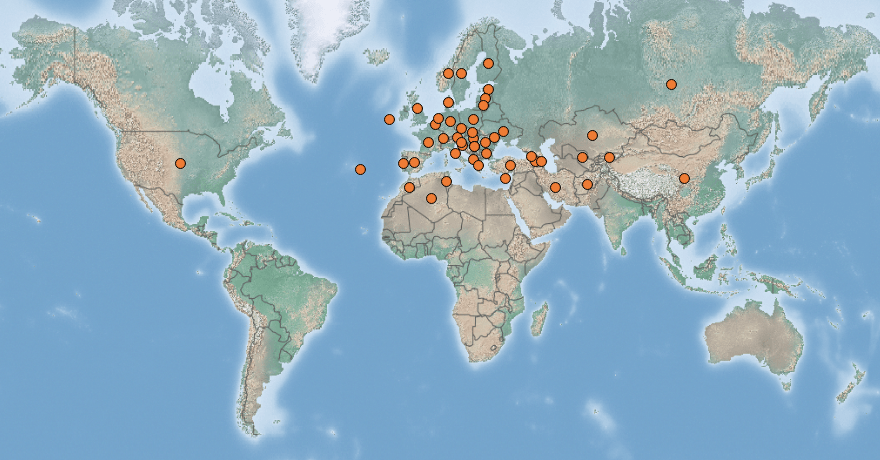
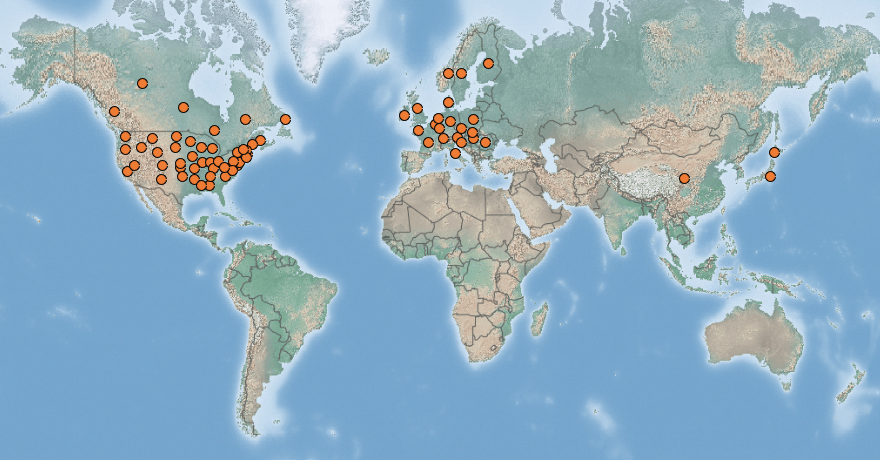
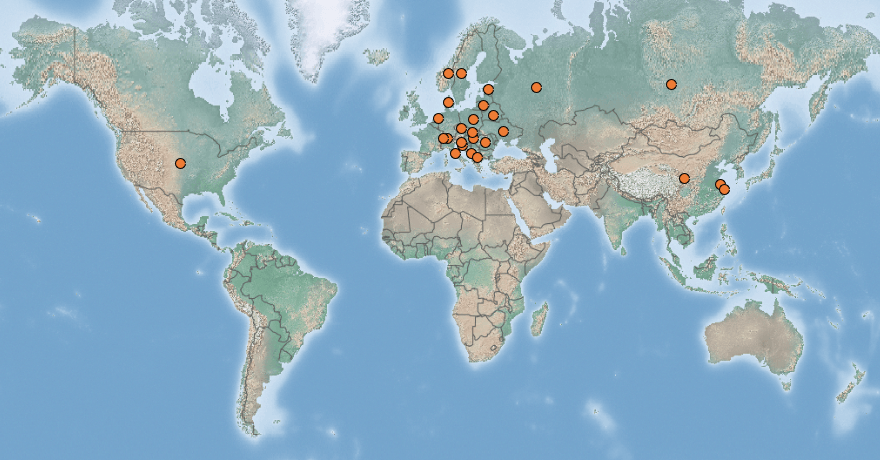
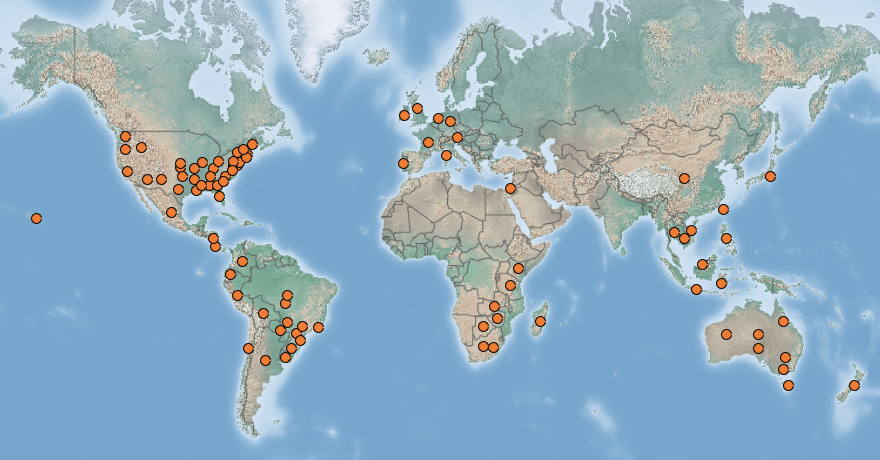
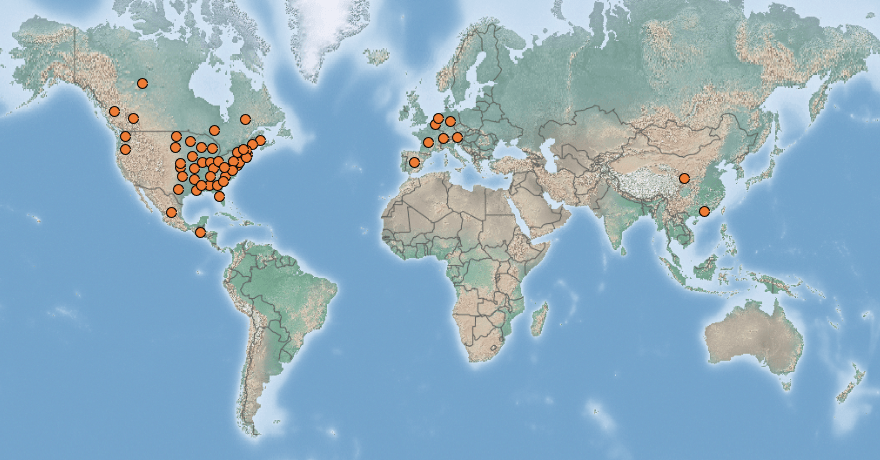
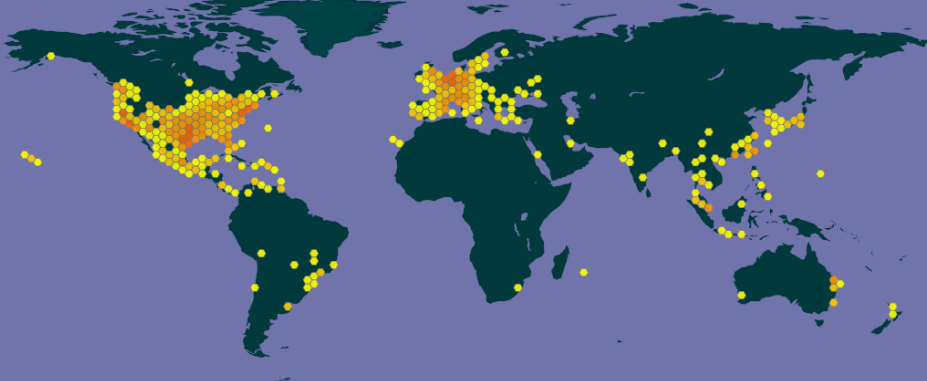
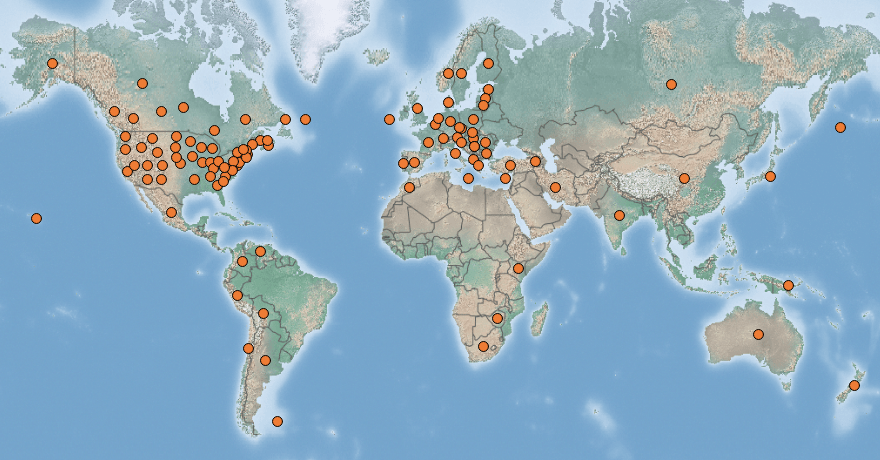
Brook trout 1918Introductions of Salvelinus fontinalis (Mitchill, 1814) began in the nineteenth century, to more than 40 countries in temperate areas on all continents, including the southern hemisphere. The brook trout is considered a poor to moderate invader. Potential impacts include predation on various species of amphibians, zooplankton and other invertebrates as well as increases in primary productivity, alteration of nutrient cycles, and hybridization with native species. This species is competitive, with broad dietary breadth, has a fast growth rate, often lacks predators or parasites, and is moderately tolerant of abiotic conditions. Introductions may lead to replacement of native salmonids (e.g. brown trout, Salmo trutta) (CABI 2019).
Status and distribution in Luxembourg

Records of Salvelinus fontinalis Mitchill, 1814 in Luxembourg. Data source: Recorder-Lux, iNaturalist & GBIF, 2025-12-18.

Salvelinus fontinalis (Mitchill, 1814) was first mentioned in 1872 by Alphonse de la Fontaine, who wrote that the brook trout occasionally enters the Moselle from time to time (De la Fontaine 1872).

The species was introduced in Luxembourg in 1902 in Limbach (Lintgen), Rollingerbach and Berschbach (Feltgen 1902).

In 2005, a systematic inventory of Luxembourg rivers only showed isolated individuals in the Alzette. There is no indication of reproduction of the species in Luxembourg.

The distribution map is not complete because records still have to be entered into the Recorder-Lux database (MNHNL, iNaturalist & GBIF 2019).

Currently, 6 records of in Luxembourg are accessible through the MNHNL-mdata portal (MNHNL, iNaturalist & GBIF 2020).

Risk assessment

ISEIA protocol

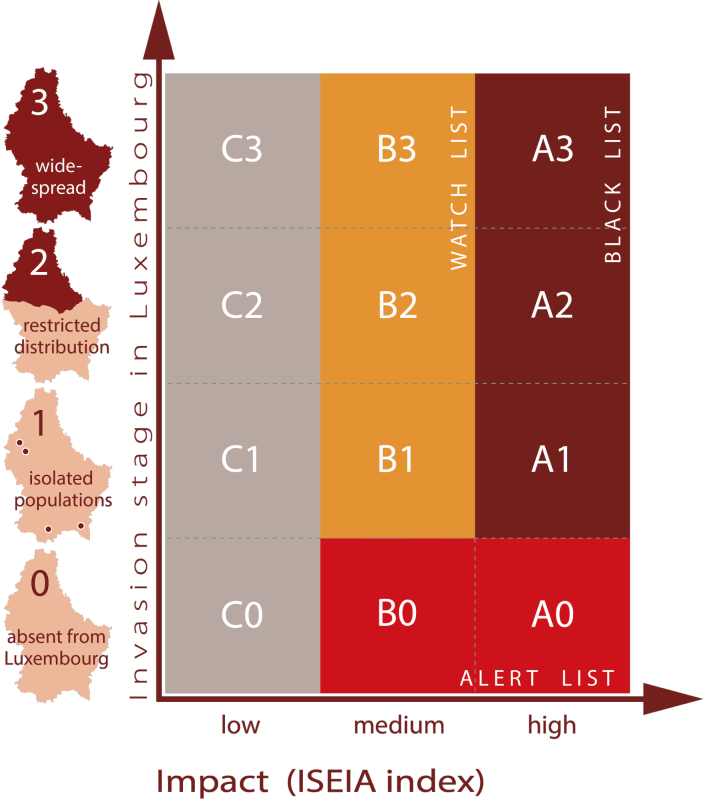
C1 (1+1+1+1) (Ries et al. 2014: 199).

Harmonia+ protocol

Not assessed yet.

Worldwide distribution

Bibliography

  • Administration de la gestion de l’eau, 2010. Les poissons au Luxembourg, Cartographie des poissons, lamproies et écrevisses du Grand-Duché de Luxembourg. 2e éd. 213 pp.
  • CABI, 2019. Salvelinus fontinalis (Mitchill, 1814). In: Invasive Species Compendium. Wallingford, UK: CAB International. URL: www.cabi.org/isc [accessed 2020-04-23]
  • De la Fontaine, A., 1872. Faune du Pays du Luxembourg. Poissons. Publ. Inst. Roy. Gr.-D. Luxb. 8: 1-88.
  • Feltgen, E., 1902. Vademecum des Luxemburger Fischereiliebhabers. P. Worré-Mertens, Luxemburg. 148 S.
  • Klees, H., 1981. Luxemburger Tiernamen. Beiträge zur luxemburgischen Sprach- und Volkskunde XIV. Institut grand-ducal, Section de linguistique, de folklore et de toponymie. 2. Aufl. 131 S. Imprimerie Pierre Linden, Luxembourg.
  • MNHNL, iNaturalist & GBIF, 2019. MNHNL-mdata, online portal combining species observation from Recorder-Lux, iNaturalist and GBIF. National Museum of Natural History, Luxembourg. URL: https://mdata.mnhn.lu [Accessed 2019-10-25]
  • Ries, C., M. Pfeiffenschneider, Engel, E., J.-C. Heidt & M. Lauff, 2014. Environmental impact assessment and black, watch and alert list classification after the ISEIA Protocol of vertebrates in Luxembourg. Bull. Soc. Nat. luxemb. 115: 195-201. [PDF 247 KB]

 Page content last updated on 2020-04-27.

  1. Saibling cf. Klees 1981: 26.[]

Sander lucioperca (Linnaeus, 1758)

English Zander Status LU: established. 1st record: 1894.
Lëtzebuergesch Zander Status Eur.: established.
Français Sandre doré européen RA: ISEIA: B2, Watch List. Harmonia+: 0,22
Deutsch Zander Wikipedia: Wikipedia - English - Zander Wikipedia - Français - Sandre doré européen Wikipedia - Deutsch - Zander Wikipedia - Nederlands - Snoekbaars | Wikispecies: Wikispecies - Sander lucioperca | CABI
Nederlands Snoekbaars Back to the list of vertebrates

Brief description

Sander lucioperca 1Sander lucioperca (Linnaeus, 1758) can be invasive in lakes, channels and slow running waters. The introduction of this predatory fish in Western Europe created a crash in some cyprinid fish communities. Populations of native piscivorous fish species (Esox lucius, Perca fluviatilis) were locally depleted due to interspecific competition. The pike-perch is also a vector of the Bucephalus polymorphus parasite, that can affect native cyprinid fish species; however, a massive outbreak of this parasite has never been reported from Belgium (Anseeuw et al. 2008).

Status and distribution in Luxembourg

Records of Sander lucioperca Linnaeus, 1758 in Luxembourg. Data source: Recorder-Lux, iNaturalist & GBIF, 2025-12-18.

In Luxembourg, Sander lucioperca (Linnaeus, 1758) was first documented in 1894 in the Moselle, probably near Ehnen in the municipality of Wormeldange, and in 1898 in the Sûre near Moersdorf, municipality of Mompach (Feltgen 1902).

Currently, 34 records of in Luxembourg are accessible through the MNHNL-mdata portal (MNHNL, iNaturalist & GBIF 2020). Its most important populations are located in the Moselle and the Upper Sûre lake.

Risk assessment

ISEIA protocol

B2 (2+2+3+2) = Watch List (Ries et al. 2014: 199).

Harmonia+ protocol

Overall risk score 0,22 = (Overall Invasion score 0,84 x Overall Impact score 0,26) (evaluated by Carole Molitor, Roland Proess and Manou Pfeiffenschneider).

0,84Invasion
0,26Impact
0,22Risk

Worldwide distribution

Bibliography

  • Administration de la gestion de l’eau, 2010. Les poissons au Luxembourg, Cartographie des poissons, lamproies et écrevisses du grand-duché de Luxembourg, 213 pp.
  • Anseeuw D., E. Branquart, F. Lieffrig, J.-C. Micha, D. Parkinson & H. Verreycken, 2008. Harmonia database: Sander lucioperca (Linnaeus, 1758). Harmonia version 1.2, Belgian Forum on Invasive Species. URL: http://ias.biodiversity.be [accessed 2020-04-27]
  • CABI, 2019. Sander lucioperca (Linnaeus, 1758). In: Invasive Species Compendium. Wallingford, UK: CAB International. URL: www.cabi.org/isc [accessed 2020-04-27]
  • Feltgen, E. (1902): Vademecum des Luxemburger Fischereiliebhabers. – P. Worré-Mertens, Luxemburg: 148 S.
  • MNHNL, iNaturalist & GBIF, 2020. Sander lucioperca (Linnaeus, 1758) in MNHNL-mdata, online portal combining species observation from Recorder-Lux, iNaturalist and GBIF. National Museum of Natural History, Luxembourg. URL: https://mdata.mnhn.lu [accessed 2020-04-27]
  • Moris, J.P., 1900. Ein Wort über den Zander (Lucioperca Sandra), und sein Vorkommen in unsern Flüssen. Bull. Soc. Nat. luxemb. 10: 131-132. [PDF 88 KB]
  • Ries, C., M. Pfeiffenschneider, Engel, E., J.-C. Heidt & M. Lauff, 2014. Environmental impact assessment and black, watch and alert list classification after the ISEIA Protocol of vertebrates in Luxembourg. Bull. Soc. Nat. luxemb. 115: 195-201. [PDF 247 KB]

 Page content last updated on 2024-03-06.

Elodea nuttallii (Planch.) H. St. John

English Nuttall’s Waterweed Status LU: established. 1st record: LU & ITW 1975.
Lëtzebuergesch Schmuelbliedereg Waasserpescht Status Eur.: established. 1st record: BE 1939. IAS of EU concern (2017).
Français Elodée de Nuttall RA: ISEIA: A3, Black List. Harmonia+: 0,42
Deutsch Schmalblättrige Wasserpest Wikipedia: Wikipedia - English - Nuttall's Waterweed Wikipedia - Français - Elodée de Nuttall Wikipedia - Deutsch - Schmalblättrige Wasserpest | Wikispecies: Wikispecies - Elodea nuttallii | CABI
Nederlands Smalle waterpest Back to the list of neophytes

Brief description

Elodea nuttallii (Planch.) H. St. John is an aquatic plant that thrives in various types of freshwater habitats, from still to slow-flowing systems and from very shallow to deep waters. It is very tolerant to water pollution and prefers warm eutrophic and calcareous waters; it is often found in species-poor macrophyte communities. This submerged perennial makes dense monospecific populations which often colonise whole water bodies, restrict water movement, cut off light, produce anoxic conditions and trap sediments in the system. Due to its quick nutrient uptake and very high growth rate, the species has been reported to outcompete several native aquatic plants (Branquart et al. 2019).

IAS of Union concern

In 2017, Elodea nuttallii (Planch.) H. St. John was added to the list of invasive alien species of Union concern (Anonymous 2017) which implies that member states shall take all necessary steps to prevent it’s unintentional introduction or spread.

Status and distribution in Luxembourg

Records of Elodea nuttallii (Planch.) H. St. John in Luxembourg. Data source: Recorder-Lux, iNaturalist & GBIF, 2025-12-18.

Elodea nuttallii (Planch.) H. St. John has been first documented by Paul Verheggen in the Upper Sûre lake near Boulaide in 1975 (Parent 1983 cit. in Diederich 1984: 39)1. The species, observed since 1941 in the Netherlands, was harvested in 1939 in northern Belgium, but was only identified later (around 1967). It tends to locally supplant Elodea canadensis Michx. (Lambinon & Verloove 2012: 790).

Elodea nuttallii (Planch.) H. St. John is so far less common in Luxembourg than the Canadian waterweed. 

An identification sheet of the species has been published by the MECB in French and German.

Management

Action plan

The action plan dedicated to Nuttall’s Waterweed was published September 2020:

Finalised Action Plan for Elodea nuttallii (Pfeiffenschneider & Hoppe 2020).

Risk assessment

ISEIA protocol

A3 (3+3+3+3) = Black List (Ries et al. 2013: 18).

Harmonia+ protocol

Overall risk score 0,42 = (Overall Invasion score 0,71 x Overall Impact score 0,60) (Ries et al. 2020).

0,71Invasion
0,60Impact
0,42Risk

Worldwide distribution

Bibliography

  • Anonymous, 2017. Commission implementing regulation (EU) 2017/1263 of 12 July 2017 updating the list of invasive alien species of Union concern established by Implementing Regulation (EU) 2016/1141 pursuant to Regulation (EU) No 1143/2014 of the European Parliament and of the Council. Official Journal of the European Union L 182: 37-39 (13.7.2017).
  • CABI, 2019. Elodea nuttallii. In: Invasive Species Compendium. Wallingford, UK: CAB International. URL: www.cabi.org/isc [accessed 2020-02-28]
  • Branquart, E., I. Stiers, L. Triest, S. Vanderhoeven, W. Van Landuyt, F. Van Rossum, F. Verloove, 2019. Harmonia database: Elodea nuttallii (Planch.) H. St. John. Harmonia version 1.2, Belgian Forum on Invasive Species. URL: http://ias.biodiversity.be [accessed on 2019-10-09]
  • Diederich, P., 1984. Les monocotylédones aquatiques (excl. Potamogeton s.l.) du Grand-Duché de Luxembourg. Dumortiera 29-30: 34-41. [PDF 5 MB].
  • Lambinon J. & F. Verloove, 2012. Nouvelle flore de la Belgique, du grand-duché de Luxembourg, du Nord de la France et des régions voisines. Sixième édition. Avec la collaboration de L. Delvosalle, B. Toussaint, D. Geerinck, I. Hoste, F. Van Rossum, B. Cornier, R. Schumacker, A. Vanderpoorten et H. Vannerom. Jardin botanique national de Belgique, Meise. CXXXIX + 1195 pp. ISBN : 9789072619884.
  • MNHNL, 2000-. Elodea nuttallii (Planch.) H. St. John in Recorder-Lux, database on the natural heritage of the Grand Duchy of Luxembourg. Musée national d’histoire naturelle, Luxembourg. URL: https://mdata.mnhn.lu [Accessed 2019-09-05]
  • MNHNL, iNaturalist & GBIF, 2019. Elodea nuttallii (Planch.) H. St. John in MNHNL-mdata, online portal combining species observation from Recorder-Lux, iNaturalist and GBIF. National Museum of Natural History, Luxembourg. URL: https://mdata.mnhn.lu [Accessed 2019-09-06]
  • Oly, M., 2022. Kartierung invasiver gebietsfremder Wasserpflanzen im Großherzotum Luxemburg, Untersuchungen zur Verbreitung von invasiven gebietsfremden Wasserpflanzen in einer beispielhaften Auswahl an Stillgewässern, Musée national d’histoire naturelle, Luxembourg. 117 pp. 
  • Parent, G. H., 1983. Données floristiques inédites tirées de l’herbier du docteur Paul Verheggen. Dumortiera 25 : 12-21.
  • Pfeiffenschneider, M. & F. Hoppe, 2020. Plan d’action pour espèces exotiques envahissantes au GrandDuché de Luxembourg : Elodéede Nuttall, Elodea nuttallii (Planch.) H. St. John. Version 23/09/2020. Administration de la nature et des forêts, Luxembourg. 22pp.
  • Ries, C. & Y. Krippel, 2021. First records of 56 invasive alien vascular plants in Luxembourg. Bulletin de la Société des naturalistes luxembourgeois 123: 115-127. [PDF 241 KB]
  • Ries, C., Y. Krippel & M. Pfeiffenschneider, 2020. Risk assessment after the Harmonia+ protocol of invasive alien vascular plant species in Luxembourg. Bull. Soc. Nat. luxemb. 122: 197-205. [PDF 132 KB]
  • Ries, C., Y. Krippel, M. Pfeiffenschneider & S. Schneider, 2013. Environmental impact assessment and black, watch and alert list classification after the ISEIA Protocol of non-native vascular plant species in Luxembourg. Bull. Soc. Nat. luxemb. 114: 15-21. [PDF 652 KB]

 Page content last updated on 2024-07-31. Last proofread by Caroline Grounds on 2019-11-17.

  1. Diederich 1984, p. 39: Oesling : Boulaide, au lac, K7.48. 1975. herb. Verheggen (PARENT. 1983).[]

Erigeron annuus (L.) Pers.

English Tall fleabane Status LU: established. 1st record: LU & ITW <1836.
Lëtzebuergesch Jäerlecht Beruffkraut Status Eur.: established. 1st record: DK 1810.
Français Vergerette annuelle RA: ISEIA: C1. Harmonia+: 0,03
Deutsch Feinstrahl Wikipedia: Wikipedia - English - Tall fleabane Wikipedia - Français - Vergerette annuelle Wikipedia - Deutsch - Feinstrahl Wikipedia - Nederlands - Zomerfijnstraal | Wikispecies: Wikispecies - Erigeron annuus | CABI
Nederlands Zomerfijnstraal Back to the list of neophytes

Brief description

Daisy Fleabane (1292154577)Erigeron annuus (L.) Pers. is a North American plant that often populates ruderal sites. Because of its ability to form dense stands, the species can become problematic from a nature conservation point of view, if it enters established natural plant communities.

Erigeron annuus is a highly variable species, in which American studies have distinguished several infraspecific taxa, generally with a more or less limited geographical distribution. Their application to naturalised populations in Europe has led to their being reported as two or even three distinct subspecies. In the environment two subspecies have often been distinguished: Erigeron annuus subsp. annuus and Erigeron annuus subsp. septentrionalis (Lambinon & Verloove 2012: 707-708).

Status and distribution in Luxembourg

Records of Erigeron annuus (L.) Pers. in Luxembourg. Data source: Recorder-Lux, iNaturalist & GBIF, 2025-12-18.

Tinant (1836: 428) indicates Erigeron annuus (L.) Pers. under its synonym Aster annuus L. on “the gravels of the banks of the Moselle near Remich”. Erigeron annuus was sampled on the edge of the Moselle river near Remich before 1842 (Holandre 1842: 336).1 The first edition of this flora from 1829 does not mention the species (Holandre 1829: 450). According to Lefort (1949: 46), Holandre’s “Flore de la Moselle” mentions Erigeron annuus near Schengen. It seems that all these refer to original material and observations of Tinant dating before 1836. An explanation of the confusion between Remich and Schengen as location may be read in the “Flore de Lorraine” by Grodron (1857: 387) who mentions Aster annuus L. at the “Banks of the Moselle near Remich, a little beyond the French border”2, which suggests the location of the finding by Tinant might have been closer to Schengen than to Remich. In 1873, Koltz lists the species under its synonyms Stenactis alba [in the text] and Aster stenactis [in the index] and confirms that it occurs on roadsides, in hedges, lawns, and at forest edges. “Remich. T. près Schengen (Hollandre)” (Koltz 1873: 129).

The next documented observation of the species in Luxembourg dates from 1953. Marcel Etringer collected a specimen of the species on a slag heap in Dommeldange on 15th September 1953 (Specimen № 48214, MNHNL 2000-). Nowadays Erigeron annuus is quite common to quite rare in the Lorraine district (AC-AR) and very rare (RR) or non-existent in the Ardennes district (Lambinon & Verloove 2012: 707).

Risk assessment

ISEIA protocol

C1 (2+2+1+1) (Ries et al. 2013: 18).

Harmonia+ protocol

Overall risk score 0,03 = (Overall Invasion score 0,28 x Overall Impact score 0,13) (Ries et al. 2020).

0,28Invasion
0,13Impact
0,03Risk

Worldwide distribution

Bibliography

  • CABI, 2019. Erigeron annuus. In: Invasive Species Compendium. Wallingford, UK: CAB International. URL: www.cabi.org/isc [accessed 2020-03-02]
  • Gordon, A., 1857. Flore de Lorraine. 504 p. 2e édition, tome 1. Nancy, Metz & Paris.
  • Holandre, J.-J.-J., 1829. Flore de la Moselle, ou, Manuel d’herborisation, précédé d’un aperçu géologique sur le département et d’élémens abrégés de botanique. Tome 1. 712 p. Metz : Mme Thiel, libraire-éditeur.
  • Holandre, J.-J.-J., 1842. Nouvelle flore de la Moselle, ou Manuel d’herborisation dans les environs de Metz principalement, et les autres parties du département. Tome 1 et 2, 948 p. Metz : Verronnais. Paris : Roret.
  • Koltz, J.-P.-J., 1873. Prodrome de la flore du grand-duché de Luxembourg. Première partie. Plantes phanérogames. Imprimerie V. Buck, Luxembourg. 279 S.
  • Lambinon J. & F. Verloove, 2012. Nouvelle flore de la Belgique, du grand-duché de Luxembourg, du Nord de la France et des régions voisines. Sixième édition. Avec la collaboration de L. Delvosalle, B. Toussaint, D. Geerinck, I. Hoste, F. Van Rossum, B. Cornier, R. Schumacker, A. Vanderpoorten et H. Vannerom. Jardin botanique national de Belgique, Meise. CXXXIX + 1195 pp. ISBN : 9789072619884.
  • Lefort, F. L., 1950. Contribution à l’histoire botanique du Luxembourg (av. 18 planches). Bull. Soc. Nat. luxemb. 54: 31-160. [PDF 6781 KB]
  • MNHNL, 2000-. Erigeron annuus (L.) Pers. in Recorder-Lux, database on the natural heritage of the Grand Duchy of Luxembourg. Musée national d’histoire naturelle, Luxembourg. URL: https://mdata.mnhn.lu [Accessed 2018-01-18]
  • MNHNL, iNaturalist & GBIF, 2019. Erigeron annuus (L.) Pers. in MNHNL-mdata, online portal combining species observation from Recorder-Lux, iNaturalist and GBIF. National Museum of Natural History, Luxembourg. URL: https://mdata.mnhn.lu [Accessed 2019-09-06]
  • Ries, C. & Y. Krippel, 2021. First records of 56 invasive alien vascular plants in Luxembourg. Bulletin de la Société des naturalistes luxembourgeois 123: 115-127. [PDF 241 KB]
  • Ries, C., Y. Krippel & M. Pfeiffenschneider, 2020. Risk assessment after the Harmonia+ protocol of invasive alien vascular plant species in Luxembourg. Bull. Soc. Nat. luxemb. 122: 197-205. [PDF 132 KB]
  • Ries, C., Y. Krippel, M. Pfeiffenschneider & S. Schneider, 2013. Environmental impact assessment and black, watch and alert list classification after the ISEIA Protocol of non-native vascular plant species in Luxembourg. Bull. Soc. Nat. luxemb. 114: 15-21. [PDF 652 KB]

 Page content last updated on 2023-02-03. Last proofread by Caroline Grounds on 2019-11-18.

  1. Cette plante a été trouvée sur les bords de la Moselle près de Remich, d’où proviennent mes échantillons.[]
  2. Bords de la Moselle près de Remich, un peu au-delà de la frontière de France[]

Egeria densa Planch.

English Large-flowered waterweed Status LU: established. 1st record: LU & ITW 2016.
Lëtzebuergesch Dichtbliedreg Waasserpescht Status Eur.: established. 1st record: unkn.
Français Égérie dense RA: ISEIA: A1 – Black List. Harmonia+: 0,32
Deutsch Dichtblättrige Wasserpest Wikipedia: Wikipedia - English - Large-flowered waterweed Wikipedia - Deutsch - Dichtblättrige Wasserpest Wikipedia - Nederlands - Egeria (plant) | Wikispecies: Wikispecies - Egeria densa | CABI
Nederlands Egeria (plant) Back to the list of neophytes

Brief description

Egeria densa Planch. is a South American aquatic plant with a very wide ecological amplitude. It thrives in a variety of freshwater habitats: while it prefers flowing systems it may also be found in still waters. The species is not light-demanding and is able to develop in deep and turbid waters. The submerged perennial makes dense monospecific populations which often colonise whole water bodies, restrict water movement, cut off light, produce anoxic conditions and trap sediments in the system. The large-flowered water weed has been reported to outcompete native aquatic plants and to adversely affect fish communities (Branquart et al. 2013).

Status and distribution in Luxembourg

Records of Egeria densa Planch. in Luxembourg. Data source: Recorder-Lux, iNaturalist & GBIF, 2025-12-18.

Egeria densa Planch. was observed twice in 2016 in the Eisch valley East of Hobscheid (mdata.mnhn.lu) and in 2019 in Luxembourg City (MNHNL, iNaturalist & GBIF 2019).

Risk assessment

ISEIA protocol

A1 (2+3+3+3) = Black List. Updated on 22 June 2018 by Christian Ries and Manou Pfeiffenschneider. Former assessment: A0 (2+3+3+3) = Alert List (Ries et al. 2013: 18).

Harmonia+ protocol

Overall risk score 0,32 = (Overall Invasion score 0,53 x Overall Impact score 0,62) (Ries et al. 2020).

0,53Invasion
0,62Impact
0,32Risk

Worldwide distribution

Bibliography

  • Branquart, E., I. Stiers, L. Triest, S. Vanderhoeven, W. Van Landuyt, F. Van Rossum & F. Verloove, 2013. Harmonia database: . Harmonia version 1.2, Belgian Forum on Invasive Species. URL: http://ias.biodiversity.be [accessed on 2020-02-28]
  • CABI, 2019. Egeria densa. In: Invasive Species Compendium. Wallingford, UK: CAB International. URL: www.cabi.org/isc [accessed 2020-02-28]
  • MNHNL, iNaturalist & GBIF, 2019. Egeria densa in MNHNL-mdata, online portal combining species observation from Recorder-Lux, iNaturalist and GBIF. National Museum of Natural History, Luxembourg. URL: https://mdata.mnhn.lu [Accessed 2020-02-28]
  • Oly, M., 2022. Kartierung invasiver gebietsfremder Wasserpflanzen im Großherzotum Luxemburg, Untersuchungen zur Verbreitung von invasiven gebietsfremden Wasserpflanzen in einer beispielhaften Auswahl an Stillgewässern, Musée national d’histoire naturelle, Luxembourg. 117 pp. 
  • Ries, C. & Y. Krippel, 2021. First records of 56 invasive alien vascular plants in Luxembourg. Bulletin de la Société des naturalistes luxembourgeois 123: 115-127. [PDF 241 KB]
  • Ries, C., Y. Krippel & M. Pfeiffenschneider, 2020. Risk assessment after the Harmonia+ protocol of invasive alien vascular plant species in Luxembourg. Bull. Soc. Nat. luxemb. 122: 197-205. [PDF 132 KB]
  • Ries, C., Y. Krippel, M. Pfeiffenschneider & S. Schneider, 2013. Environmental impact assessment and black, watch and alert list classification after the ISEIA Protocol of non-native vascular plant species in Luxembourg. Bull. Soc. Nat. luxemb. 114: 15-21. [PDF 652 KB]

 Page content last updated on 2023-08-17. Last proofread by Caroline Grounds on 2019-11-14.

Myriophyllum aquaticum (Vell.) Verdc.

English Parrot’s-feather Status LU: established. 1st record: LU & ITW ~1990.
Lëtzebuergesch Brasilien-Dausendblat Status Eur.: established. 1st record: unkn. IAS of EU concern (2016).
Français Myriophylle du Brésil RA: ISEIA: B1, Watch List. Harmonia+: 0,51.
Deutsch Brasilianisches Tausendblatt Wikipedia: Wikipedia - English - Parrot's-feather Wikipedia - Français - Myriophylle du Brésil Wikipedia - Deutsch - Brasilianisches Tausendblatt | Wikispecies: Wikispecies - Myriophyllum_aquaticum | CABI
Nederlands Parelvederkruid Back to the list of neophytes

Brief description

Starr 070515-7059 Myriophyllum aquaticumMyriophyllum aquaticum (Vell.) Verdc. is an invasive submerged/emergent aquatic weed characteristic of sub-tropical to warm-temperate regions, but found as far north as the UK. The species thrives in well-lit ponds, ditches, canals and slow-running streams. It is most often found in eutrophic water bodies and is able to grow as a terrestrial plant when ponds dry out, making it well-adapted to medium water level fluctuations (Branquart et al. 2013).

IAS of Union concern

In 2016, Myriophyllum aquaticum (Vell.) Verdc. was added to the list of invasive alien species of Union concern (Anonymous 2016) which implies that member states shall take all necessary steps to prevent it’s unintentional introduction or spread.

Status and distribution in Luxembourg

Records of Myriophyllum aquaticum (Vell.) Verdc. in Luxembourg. Data source: Recorder-Lux, iNaturalist & GBIF, 2025-12-18.

Myriophyllum aquaticum (Vell.) Verdc. was first documented by Roland Proess in his Herbarium in June 2000 at Freschewisen near Roeser, a dead branch stream of the Alzette river. According to Proess, this large population in a pond has existed for at least 10 years (Colling & Krippel 2003: 16). Parrot’s-feather’s first record for Luxembourg can thus approximately be dated to ~1990. Another observation by Mikka Mootz on 1 April 2019 in a nearby pond in Houwisen confirms the presence of the species in the same area.

In 2019, extensive patches were discovered in the Thilleweier pond in a forest environment (Dudelange). A third site was detected in 2020 near Saeul (Krippel et al. 2020: 42).

This eastern North American species is very rare, subspontaneous or naturalised [in the Luxembourg environment]. In Europe, only female flowers have been reported, which are necessarily sterile in the absence of male flowers. Apparently, however, the plants observed in the wild are only known in the vegetative state. This species became naturalised here during the 1990s. Its expansion seems to be continuing (Lambinon & Verloove 2012: 422-423).

Risk assessment

ISEIA protocol

B1 (2+2+3+3) = Watch List (Ries et al. 2013: 18).

Harmonia+ protocol

Overall risk score 0,51 = (Overall Invasion score 0,68 x Overall Impact score 0,75) (Ries et al. 2020).

0,68Invasion
0,75Impact
0,51Risk

Worldwide distribution

Bibliography

  • Anonymous, 2016. Commission implementing regulation (EU) 2016/1141 of 13 July 2016 adopting a list of invasive alien species of Union concern pursuant to Regulation (EU) No 1143/2014 of the European Parliament and of the Council. Official Journal of the European Union L 189: 4-5.
  • Branquart, E., L. Triest, S. Vanderhoeven, W. Van Landuyt, F. Van Rossum & F. Verloove, 2013. Harmonia database: Myriophyllum aquaticum (Vell.) Verdc. Harmonia version 1.2, Belgian Forum on Invasive Species. URL: http://ias.biodiversity.be [accessed on 2019-10-14]
  • CABI, 2019. Myriophyllum aquaticum. In: Invasive Species Compendium. Wallingford, UK: CAB International. URL: www.cabi.org/isc [accessed 2020-03-02]
  • Colling, G. & Y. Krippel, 2003. Notes floristiques. Observations faites au Luxembourg (2000-2001). Bull. Soc. Nat. luxemb. 103: 3-23. [PDF 342 KB]
  • Krippel, Y., T. Helminger & G. Colling, 2020. Notes floristiques. Observations faites au Luxembourg (2018-2019). Bulletin Soc. Nat. luxemb. 122 : 29-55. [PDF 132 KB]
  • Lambinon J. & F. Verloove, 2012. Nouvelle flore de la Belgique, du grand-duché de Luxembourg, du Nord de la France et des régions voisines. Sixième édition. Avec la collaboration de L. Delvosalle, B. Toussaint, D. Geerinck, I. Hoste, F. Van Rossum, B. Cornier, R. Schumacker, A. Vanderpoorten et H. Vannerom. Jardin botanique national de Belgique, Meise. CXXXIX + 1195 pp. ISBN : 9789072619884.
  • MNHNL, 2000-. Myriophyllum aquaticum (Vell.) Verdc. in Recorder-Lux, database on the natural heritage of the Grand Duchy of Luxembourg. Musée national d’histoire naturelle, Luxembourg. URL: https://mdata.mnhn.lu [Accessed 2019-10-14]
  • MNHNL, iNaturalist & GBIF, 2020. Myriophyllum aquaticum (Vell.) Verdc. in MNHNL-mdata, online portal combining species observation from Recorder-Lux, iNaturalist and GBIF. National Museum of Natural History, Luxembourg. URL: https://mdata.mnhn.lu [Accessed 2019-10-14]
  • Oly, M., 2022. Kartierung invasiver gebietsfremder Wasserpflanzen im Großherzotum Luxemburg, Untersuchungen zur Verbreitung von invasiven gebietsfremden Wasserpflanzen in einer beispielhaften Auswahl an Stillgewässern, Musée national d’histoire naturelle, Luxembourg. 117 pp. 
  • Ries, C. & Y. Krippel, 2021. First records of 56 invasive alien vascular plants in Luxembourg. Bulletin de la Société des naturalistes luxembourgeois 123: 115-127. [PDF 241 KB]
  • Ries, C., Y. Krippel & M. Pfeiffenschneider, 2020. Risk assessment after the Harmonia+ protocol of invasive alien vascular plant species in Luxembourg. Bull. Soc. Nat. luxemb. 122: 197-205. [PDF 132 KB]
  • Ries, C., Y. Krippel, M. Pfeiffenschneider & S. Schneider, 2013. Environmental impact assessment and black, watch and alert list classification after the ISEIA Protocol of non-native vascular plant species in Luxembourg. Bull. Soc. Nat. luxemb. 114: 15-21. [PDF 652 KB]

 Page content last updated on 2023-08-18. Last proofread by Caroline Grounds on 2019-11-20.

Myriophyllum heterophyllum Michx.

English Various-leaved water-milfoil Status LU: absent. 1st record: n/a.
Lëtzebuergesch Verschiddebliederegt Dausendblat Status Eur.: established. 1st record: DE 1960s.1 IAS of EU concern (2017).
Français Myriophylle hétérophylle RA: ISEIA: B0, Alert List. Harmonia+: 0,47.
Deutsch Verschiedenblättriges Tausendblatt Wikipedia: Wikipedia - Français - Myriophylle hétérophylle Wikipedia - Deutsch - Verschiedenblättriges Tausendblatt | Wikispecies: Wikispecies - Myriophyllum heterophyllum | CABI
Nederlands Ongelijkbladig vederkruid Back to the list of neophytes

Brief description

Myriophyllum heterophyllum 5457876Myriophyllum heterophyllum Michx. grows in well-lit ponds, ditches, canals and slow-running streams. It is found growing under a wide range of chemical conditions, but tends to prefer acidic waters. Variable watermilfoil is able produce very dense populations and high biomass. It is highly competitive and may lead to the exclusion of other submerged water plants. The dense mats it produces reduce sunlight and can restrict water movement; when decomposing, they alter water quality and reduce available oxygen. The low oxygen conditions can kill fish and harm other aquatic organisms. The plant can also cause boating and swimming hazards (Baus et al. 2013).

IAS of Union concern

In 2017, Myriophyllum heterophyllum Michx. was added to the list of invasive alien species of Union concern (Anonymous 2017) which implies that member states shall take all necessary steps to prevent it’s unintentional introduction or spread.

Status and distribution in Luxembourg

Myriophyllum heterophyllum Michx. has not yet been observed in Luxembourg (MNHNL, iNaturalist & GBIF 2020).

Risk assessment

ISEIA protocol

B0 (2+3+2+3) = Alert List (Ries et al. 2013: 18).

Harmonia+ protocol

Overall risk score 0,47 = (Overall Invasion score 0,63 x Overall Impact score 0,75) (Ries et al. 2020).

0,63Invasion
0,75Impact
0,47Risk

Worldwide distribution

Bibliography

  • Anonymous, 2017. Commission implementing regulation (EU) 2017/1263 of 12 July 2017 updating the list of invasive alien species of Union concern established by Implementing Regulation (EU) 2016/1141 pursuant to Regulation (EU) No 1143/2014 of the European Parliament and of the Council. Official Journal of the European Union L 182: 37-39 (13.7.2017).
  • Baus E., Branquart, E., I. Stiers, L. Triest, S. Vanderhoeven, W. Van Landuyt, F. Van Rossum & F. Verloove, 2013. Harmonia database: Myriophyllum heterophyllum Michx.. Harmonia version 1.2, Belgian Forum on Invasive Species. URL: http://ias.biodiversity.be [accessed on 2019-11-21]
  • CABI, 2021. Myriophyllum heterophyllum. In: Invasive Species Compendium. Wallingford, UK: CAB International. URL: www.cabi.org/isc [accessed 2021-03-04]
  • MNHNL, iNaturalist & GBIF, 2020. Myriophyllum heterophyllum in MNHNL-mdata, online portal combining species observation from Recorder-Lux, iNaturalist and GBIF. National Museum of Natural History, Luxembourg. URL: https://mdata.mnhn.lu [Accessed 2020-03-02]
  • Ries, C., Y. Krippel & M. Pfeiffenschneider, 2020. Risk assessment after the Harmonia+ protocol of invasive alien vascular plant species in Luxembourg. Bull. Soc. Nat. luxemb. 122: 197-205. [PDF 132 KB]
  • Ries, C., Y. Krippel, M. Pfeiffenschneider & S. Schneider, 2013. Environmental impact assessment and black, watch and alert list classification after the ISEIA Protocol of non-native vascular plant species in Luxembourg. Bull. Soc. Nat. luxemb. 114: 15-21. [PDF 652 KB]

 Page content last updated on 2021-09-03. Last proofread by Caroline Grounds on 2019-11-20.

  1. Cf. CABI 2021.[]

Castor canadensis Kuhl, 1820

English North American beaver, Canadian beaver Status LU: casual. 1st record: 2000.
Lëtzebuergesch Kanadësche Biwer1 Status Eur.: established.
Français Castor du Canada RA: ISEIA: B1, Watch List. Harmonia+: 0,26
Deutsch Kanadischer Biber Wikipedia: Wikipedia - English - North American beaver Wikipedia - Français - Castor du Canada Wikipedia - Deutsch - Kanadischer Biber Wikipedia - Nederlands - Canadese bever | Wikispecies: Wikispecies - Castor canadensis | CABI
Nederlands Canadese bever Back to the list of vertebrates

Brief description

Bevers

Canadian beavers in captivity, Mierlo, Netherlands, October 2005

Like Castor fiber Linnaeus, 1758, Castor canadensis Kuhl, 1820 lives in riparian zones, rivers and lakes, usually included in a forest matrix providing food and building material. Lodges may be completely surrounded by water or built on the banks of streams and lakes. The Canadian beaver has a greater ecological flexibility – it survives better under severe climatic conditions and adapts more easily to substitute foods than its Eurasian counterpart. The Canadian beaver is likely to outcompete the native the Eurasian beaver due to higher reproductive output. It is a more active builder of dams and lodges and regulates hydrological regimes of water bodies better than C. fiber. The two species do not hybridise due to a difference in chromosome numbers. The fact that these are two different species was only confirmed by genetic studies in 1973 (Schley & Herr 2019: 138).

Status and distribution in Luxembourg

Records of Castor canadensis Kuhl, 1820 in Luxembourg. Data source: Recorder-Lux, iNaturalist & GBIF, 2025-12-18.

Castor canadensis Kuhl, 1820 was first documented in 2000 in Drauffelt (Pir & Schley 2015: 443): “A beaver that appeared in Luxembourg in 2000 (Schley et al. 2001) was crushed by a train in 2002 and subsequently identified as a Canadian beaver (Schley & Herr, unpublished data).”

The species was next reported by Alexander Kristiansen on 29 November 2018 near the Sûre, upstream from Wallendorf-Pont (MNHNL 2000-).

Pir & Schley (2015: 443) report the current situation: “Genetic analyses carried out by the ANF have shown that Luxembourg is facing colonisation by the Canadian beaver from a population in Rhineland-Palatinate (Schley et al. 2009). The latter was able to develop from individuals escaping from a zoo near Pronsfeld (D) (Michaux et al. 2012).”

Actions are taken to eliminate the Canadian beaver, in order to limit its negative impacts on the fragile population of Castor fiber in Luxembourg.

The distribution map is not complete because records still have to be entered into the Recorder-Lux database (MNHNL, iNaturalist & GBIF 2019). However, a monitoring of 42 sites in winter 2021 showed a 100% occurrence of the European beaver (Dr. L. Schley, ANF, personal communication, February 27, 2023) . Currently, the Canadian beaver does not seem to be a problem in Luxembourg.

Risk assessment

ISEIA protocol

B1 (3+3+2+1) = Watch List (Ries et al. 2014: 199).

Harmonia+ protocol

Overall risk score 0,26 = (Overall Invasion score 0,52 x Overall Impact score 0,50) (evaluated by Sandra Cellina, Jan Herr and Manou Pfeiffenschneider).

0,52Invasion
0,50Impact
0,26Risk

Worldwide distribution

Bibliography

    • CABI, 2009. Castor canadensis Kuhl, 1820 [original text by Viki Aldridge]. In: Invasive Species Compendium. Wallingford, UK: CAB International. URL: www.cabi.org/isc [accessed 2019-11-26]
    • Dewas M, Herr J, Schley L, Angst C, Manet B, et al. (2011) Recovery and status of native and introduced beavers Castor fiber and Castor canadensis in France and neighboring countries. Mammal Review 42: 144–165. [DOI]
    • Herr, J., L. Schley, C. Gonner, A. Arendt, G. Biver, A. Bombardella, M. Dostert, A. Frantz, B. Goebel, S. Hermes, Y. Mersch, N. Negretti, C. Origer, M. Peters, P. Reis, C. Schortgen, F. Steffes, N. Welschbillig & M. Weydert, 2018. Aktions- und Managementplan für den Umgang mit Bibern in Luxemburg. Technischer Bericht der Naturverwaltung betreffend Wildtiermanagement und Jagd, 6 (Spezialnummer): 1-40.
    • Michaux, J., C. Frosch, B. Manet, J. Herr, M. Eugène, L. Dalbeck, R. Denné, M.-L. Schwoerer, S. Venske, F. Rosell, P. Hurel, N. Chevallier & L. Schley, 2012. Genetic analysis of beavers (Castor sp.) in the greater region of Belgium, Luxembourg, northern France and Western Germany. In: Book of Abstracts of the 6th International Beaver Symposium (éds Bjedov L., G. Schwab & M. Grubešić), 17-20 September 2012, Ivanić-Grad, Croatia: 110.
    • MNHNL, 2000-. Castor canadensis Kuhl, 1820 in Recorder-Lux, database on the natural heritage of the Grand Duchy of Luxembourg. Musée national d’histoire naturelle, Luxembourg. URL: https://mdata.mnhn.lu [Accessed 2019-10-24]
    • MNHNL, iNaturalist & GBIF, 2019. Castor canadensis Kuhl, 1820 in MNHNL-mdata, online portal combining species observation from Recorder-Lux, iNaturalist and GBIF. National Museum of Natural History, Luxembourg. URL: https://mdata.mnhn.lu [Accessed 2019-10-24]
    • Pir, J.B. & L. Schley, 2015. Développement des connaissances sur la répartition et l’écologie des mammifères au Luxembourg entre 1990 et 2015. Bull. Soc. Nat. luxemb. 116: 437-455.
    • Ries, C., M. Pfeiffenschneider, Engel, E., J.-C. Heidt & M. Lauff, 2014. Environmental impact assessment and black, watch and alert list classification after the ISEIA Protocol of vertebrates in Luxembourg. Bull. Soc. Nat. luxemb. 115: 195-201. [PDF 247 KB]
    • Schley, L., C. Sinner, S. Venske & A. Stern, 2004. Biber in Luxemburg. Administration des eaux et forêts, Luxembourg, 20 pp.
    • Schley, L. & J. Herr, 2019. Säugetiere Luxemburgs. Hrsg.: natur&ëmwelt a.s.b.l., Ministère du développement durable et des infrastructures, Administration de la nature et des forêts. 219 S. ISBN 978-2-9199511-0-9 [French edition: Les mammifères du Luxembourg, ISBN 978-2-9199511-2-3]
    • Schley, L., J. Herr, L. Dalbeck, R. Denné, B. Manet, M.-L. Schwoerer, S.Venske & J. Michaux, 2009. Evidence for the presence of the North American beaver Castor canadensis in Western Europe. In: Programme, Abstracts, Participants of the 5th International Beaver Symposium, 20-23 September 2009, Dubingiai, Lithuania: 58.
    • Schley, L., L. Dalbeck, R. Denné, B. Manet, M.-L. Schwoerer, S. Venske & J. Herr, 2012. Management and eradication of the North American beaver Castor canadensis in Western Europe. In: Book of Abstracts of the 6th International Beaver Symposium (éds Bjedov L., G. Schwab & M. Grubešić), 17-20 September 2012, Ivanić-Grad, Croatia: 31.
    • Schley, L., L. Schmitz & C. Schanck, 2001. First record of the beaver Castor fiber in Luxembourg since at least the 19th century. Lutra 44: 41-42.
    • Wörterbuchkommission (Hrsg.), 1987. Luxemburger Wörterbuch. 5 Bd. Im Auftrag der Grossherzoglichen Luxemburgischen Regierung. Linden, Luxemburg.

 Page content last updated on 2024-03-11. Last proofread by Caroline Grounds on 2019-11-27.

  1. Cf. Biwer in Wörterbuchkommission 1987.[]

Nyctereutes procyonoides (Gray, 1834)

English Raccoon dog Status LU: casual. First record: 2021.
Lëtzebuergesch Marderhond1 Status Eur.: established. IAS of EU concern (2017).
Français Chien viverrin RA: ISEIA: C1. Harmonia+: n/a.
Deutsch Marderhund Wikipedia: Wikipedia - English - Raccoon dog Wikipedia - Français - Chien viverrin Wikipedia - Deutsch - Marderhund Wikipedia - Nederlands - Wasbeerhond | Wikispecies: Wikispecies - Nyctereutes procyonoides | CABI
Nederlands Wasbeerhond Back to the list of vertebrates

Brief description

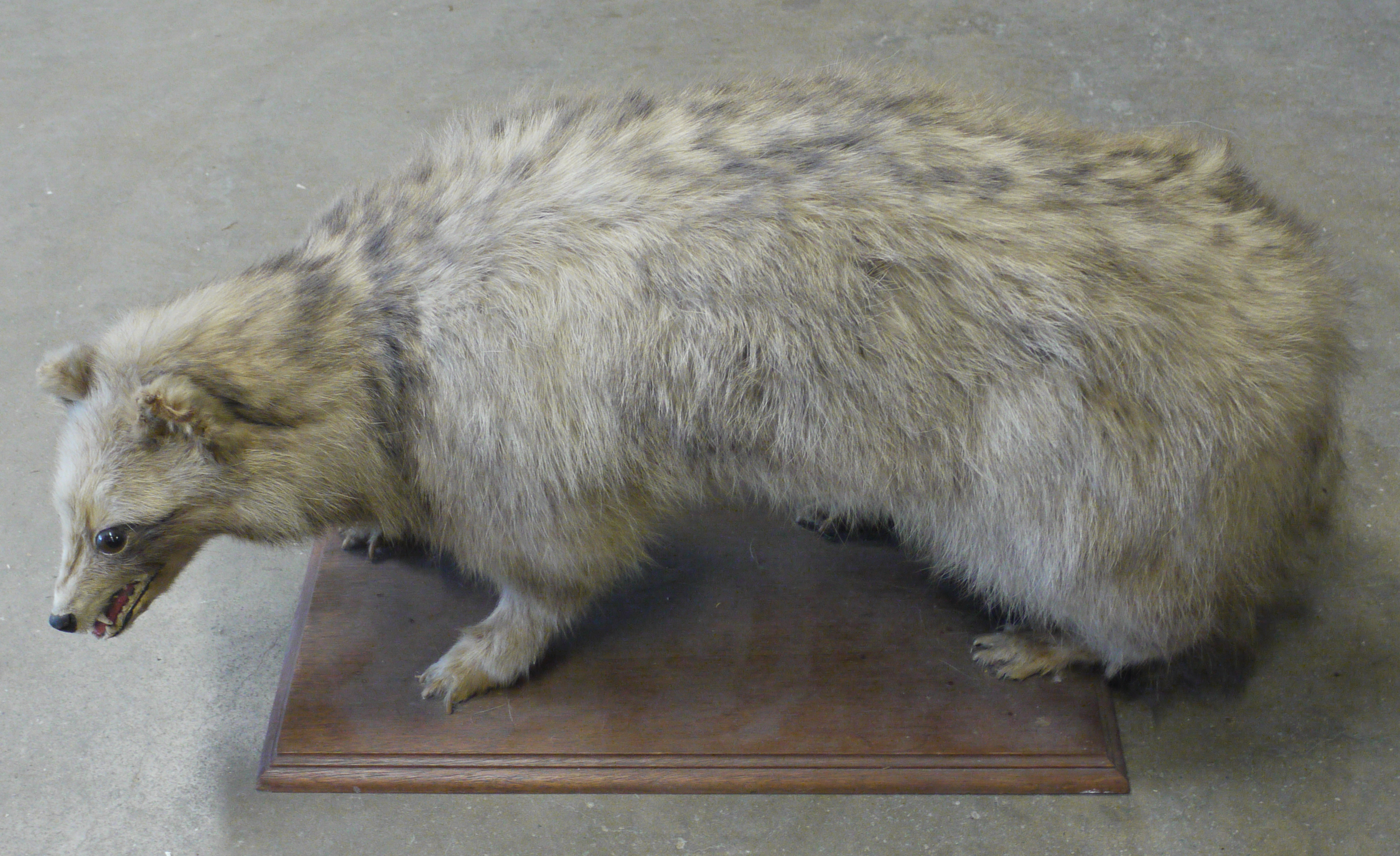
Specimen of Nyctereutes procyonoides from the MNHNL collection. Origin, date and location unknown.

Nyctereutes procyonoides (Gray, 1834) often lives near water and prefers moist deciduous or mixed forests with abundant undergrowth. It may also occur in wetlands and in a mosaic of woodlands and agricultural areas. The raccoon dog is an opportunistic omnivore with a very wide food niche and is an excellent disperser. It has been reported to cause severe damage to amphibians, waterfowl colonies and tetraonid birds and may compete with native species such as red foxes and badgers.

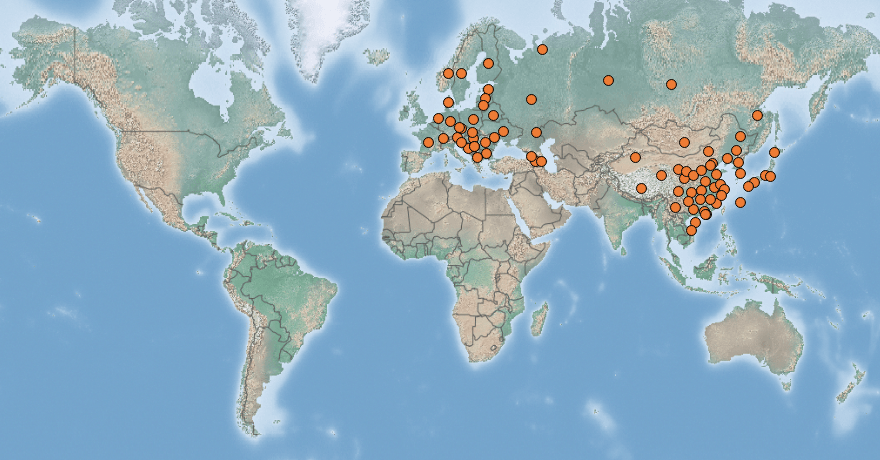
The raccoon dog is a small canine species (weighing 3-7 kg) originally from East Asia. Between 1929 and 1955, about 9,000 raccoon dogs were released for hunting purposes in the European part of Russia and Ukraine. From there, the species spread rapidly westwards (Naturverwaltung, 2021).

IAS of Union concern

In 2017, Nyctereutes procyonoides (Gray, 1834) was added to the list of invasive alien species of Union concern (Anonymous, 2017) which implies that member states shall take all necessary steps to prevent its unintentional introduction or spread.

Status and distribution in Luxembourg

Records of Nyctereutes procyonoides (Gray, 1834) in Luxembourg. Data source: Recorder-Lux, iNaturalist & GBIF, 2025-12-18.

On 2021-02-03, a raccoon dog was officially recorded for the first time in Luxembourg, in Bettembourg (Naturverwaltung 2021, Schley et al 2021). It can be assumed that the raccoon dog has been sporadically present in the country for a long time; however, as the species is very discreet, it is often not detected for a long time. In recent years, the nature and forest administration has received several indications of raccoon dogs, which, however, were mostly unverifiable (Naturverwaltung 2012). In the few cases where photos or even roadkill were available, it was always a badger or raccoon; for the layman, the latter especially looks very similar to the raccoon dog at first sight. In Luxembourg, according to the 2011 hunting law, the raccoon dog may be hunted all year round – with the exception of the 6-week hunting rest period from 1 March to 15 April.

Risk assessment

ISEIA protocol

Following its first confirmed record in Luxembourg on 2021-02-03, the species has been reassessed on 2021-03-12 to C1 (3+3+1+1) by Manou Pfeiffenschneider & Christian Ries. Assessment before the appearance of the species in Luxembourg: C0 (3+3+1+1) (Ries et al. 2014: 199).

Harmonia+ protocol

Not assessed yet.

Worldwide distribution

Bibliography

  • Anonymous, 2017. Commission implementing regulation (EU) 2017/1263 of 12 July 2017 updating the list of invasive alien species of Union concern established by Implementing Regulation (EU) 2016/1141 pursuant to Regulation (EU) No 1143/2014 of the European Parliament and of the Council. Official Journal of the European Union L 182: 37-39 (13.7.2017).
  • CABI, 2019. Nyctereutes procyonoides (Gray, 1834). In: Invasive Species Compendium. Wallingford, UK: CAB International. URL: www.cabi.org/isc [accessed 2020-04-22]
  • Hagen, S., 2021. E Marderhond zu Lëtzebuerg. De Panewippchen 134 (1/2021): 15.
  • Kirsch, E., K. Klein, L. Bonblet, M. Weishaar, T. Duscher, T. De Sousa & M. Jacobs, 2021. Waschbären & Marderhunde in Luxemburg. 48 S. Hrsg.: Administration de la nature et des forêts (ANF) & Musée national d’histoire naturelle (MNHNL). [PDF >5 MB]
  • MNHNL, iNaturalist & GBIF, 2019. MNHNL-mdata, online portal combining species observation from Recorder-Lux, iNaturalist and GBIF. National Museum of Natural History, Luxembourg. URL: https://mdata.mnhn.lu [Accessed 2019-10-25]
  • Naturverwaltung (ed.), 2012. Technischer Bericht der Naturverwaltung betreffend Wildtiermanagement und Jagd, Nummer 2 (2012), 68 pp.
  • Naturverwaltung (ed.), 2013. Jagbare Wildtierarten Luxemburgs. 96 pp.
  • Naturverwaltung, 2021. Marderhund erstmals in Luxemburg nachgewiesen (08.02.2021). Communiqué de presse par courriel du Service information et presse du gouvernement luxembourgeois.
  • Ries, C., M. Pfeiffenschneider, Engel, E., J.-C. Heidt & M. Lauff, 2014. Environmental impact assessment and black, watch and alert list classification after the ISEIA Protocol of vertebrates in Luxembourg. Bull. Soc. Nat. luxemb. 115: 195-201. [PDF 247 KB]
  • Schley, L., C. Schanck, M. Schaul & C. Sinner, 2001. Neubürger und Heimkehrer unter den Wildtieren Luxemburgs. Beiträge zur Jagd- und Wildforschung 26: 141-154.
  • Schley L., M. Jacobs, T. De Sousa & J. Hatlauf, 2021. First record of the raccoon dog Nyctereutes procyonoides (Gray, 1834) in Luxembourg. Belgian Journal of Zoology 151: 57–61. https://doi.org/10.26496/bjz.2021.85
  • Schley, L. & J. Herr, 2018. Säugetiere Luxemburgs. Natur&ëmwelt, Ministère du Développement durable et des Infrastructures & Administration de la nature et des forêts, Luxembourg, 220 p.
  • Wörterbuchkommission (Hrsg.), 1987. Luxemburger Wörterbuch. 5 Bd. Im Auftrag der Grossherzoglichen Luxemburgischen Regierung. Linden, Luxemburg.

 Page content last updated on 2022-02-18. Last proofread by Caroline Grounds on 2021-02-09.

  1. The actual common name for martens is “Marder” (Schley & Herr 2018) → “Marderhond”. An outdated name, occasionally used by older people, is “Mardéier” (Wörterbuchkommission 1987) → “Mardéierhond”.[]

Trachemys scripta elegans (Wied-Neuwied, 1839)

English Red-eared slider Status LU: established. 1st record: ?
Lëtzebuergesch Routbaken-Deckelsmouk Status Eur.: established. IAS of EU concern (2016).
Français Tortue de Floride RA: ISEIA: C1. Harmonia+: 0,10
Deutsch Rotwangen-Schmuckschildkröte Wikipedia: Wikipedia - English - Red-eared slider Wikipedia - Français - Tortue de Floride Wikipedia - Deutsch - Rotwangen-Schmuckschildkröte Wikipedia - Nederlands - Roodwangschildpad | Wikispecies: Wikispecies - Trachemys scripta elegans
Nederlands Roodwangschildpad Back to the list of vertebrates

Brief description

Tortoise1 cepolina Trachemys scripta elegans (Wied-Neuwied, 1839) is a semiaquatic turtle belonging to the family Emydidae. It is a subspecies of the pond slider and is popular as a pet across the world. Because of this, they are the most commonly traded turtle in the world. Red-eared sliders are native to the southern United States and northern Mexico, but have become established in other places because of pet releases, and have become an invasive species in many areas where they outcompete native species. The red-eared slider is included in the list of the world’s 100 most invasive species published by the IUCN. When they mature they can inflict painful bites, leading irresponsible owners to release them into the wild with negative ecological, social and, economic impacts (Wikipedia contributors 2020).

The competitive advantages of the slider may include lower age at maturity, higher fecundity, and larger adult body size. Turtles may compete for food, egg-laying sites, or basking places. Other studies have also shown red-eared sliders to compete with indigenous species for food and basking sites. Competitive interactions between T. scripta elegans and the European pond turtle (Emys orbicularis) are of particular interest, as the latter is registered as an endangered species (Appendix II of the Bern Convention). Turtles introduced near Paris were revealed to have consumed aquatic plants and animals (mostly arthropods and molluscs). Continuous releasing of exotic pet turtles in natural ecosystems increases the risk of parasite transmission to native species; the red-eared slider is known to carry nematodes. Reptiles, including turtles, are well-recognised reservoirs for Salmonella, and are a source of human salmonellosis (Global Invasive Species Database 2020).

IAS of Union concern

In 2016, the species Trachemys scripta (Thunberg in Schoepff, 1792), to which belongs the present subspecies Trachemys scripta elegans, was added to the list of invasive alien species of Union concern (Anonymous 2016) under it’s synonym Trachemys scripta (Schoepff, 1792). This implies that member states shall take all necessary steps to prevent it’s unintentional introduction or spread.

Status and distribution in Luxembourg

Records of Trachemys scripta elegans Wied-Neuwied, 1839 in Luxembourg. Data source: Recorder-Lux, iNaturalist & GBIF, 2025-12-18.

Currently, 15 records of Trachemys scripta elegans (Wied-Neuwied, 1839) in Luxembourg are accessible through the MNHNL-mdata portal (MNHNL, iNaturalist & GBIF 2020).

Notwithstanding the EU import suspension of this species since 1997, every year new records of this turtle are reported in most European countries, due to ongoing dumping of animals formerly kept as pets into the wild. Occurrences in Luxembourg include the gravel pit area in Remerschen-Wintringen, the Lower Sauer close to Diekirch, the Brill area in Schifflange, the ponds Braakeweier (Kockelscheuer) and Gipsweieren (Bridel/Steinsel) and the Alzette north of Hunsdorf.

In 2024, some 340 records of the two subspecies Trachemys scripta scripta (Thunberg in Schoepff, 1792) and Trachemys scripta elegans (Wied-Neuwied, 1839) in Luxembourg are accessible through the MNHNL-mdata portal (MNHNL, iNaturalist & GBIF 2024).The status of these two taxa remains unclear though.

Invasive pond sliders have been observed climbing the platforms of waterbirds, especially great crested grebes (Podiceps cristatus), to sunbathe, thus preventing successful breeding (Konter 2020: 81). Although there is currently every indication that turtle hatchlings are unable to produce viable embryos in the climatic conditions currently prevailing in Luxembourg, this could change with global warming (De Sousa 2020).

Records of Trachemys scripta (Thunberg in Schoepff, 1792) in Luxembourg. Data source: Recorder-Lux, iNaturalist & GBIF, 2025-12-18.

Management

Action plan

An action plan concerning the two subspecies has been published in 2020:

Finalised Action Plan for Trachemys scripta (De Sousa 2020)

Risk assessment

ISEIA protocol

C1 (1+2+3+1) (Ries et al. 2014: 199).

Harmonia+ protocol

Overall risk score 0,10 = (Overall Invasion score 0,53 x Overall Impact score 0,18) (evaluated by Sandra Cellina, Roland Proess and Manou Pfeiffenschneider).

0,53Invasion
0,18Impact
0,10Risk

Worldwide distribution

Fact sheet

PDF fact sheet of the Nature and Forestry Administration: FR | DE

Other Trachemys taxa

The pond slider Trachemys scripta (Thunberg in Schoepff, 1792) has three subspecies (Wikipedia contributors 2020b), of which the first two occur in Luxembourg:

  • Trachemys scripta scripta (Thunberg in Schoepff, 1792), the yellow-bellied slider;
  • Trachemys scripta elegans (Wied-Neuwied, 1839), the red-eared slider;
  • Trachemys scripta troostii (Holbrook, 1836), the Cumberland slider. According to GBIF (2019b) this subspecies is already present in Europe (Belgium, The netherlands, Germany, Poland and Spain)

Bibliography

  • Anonymous, 2016. Commission implementing regulation (EU) 2016/1141 of 13 July 2016 adopting a list of invasive alien species of Union concern pursuant to Regulation (EU) No 1143/2014 of the European Parliament and of the Council. Official Journal of the European Union L 189: 4-5.
  • De Sousa, T., 2020. Plan d’action pour espèces exotiques envahissantes au Grand-Duché de Luxembourg: la Tortue de Floride, Trachemys scripta ssp. (Schoepff, 1792). Version 2020-09-04. Administration de la nature et des forêts, Luxembourg. 24 pp.
  • GBIF, 2019a. Trachemys scripta subsp. elegans (Wied, 1838) in GBIF Secretariat (2019). GBIF Backbone Taxonomy. Checklist dataset https://doi.org/10.15468/39omei [accessed 2020-04-27]
  • GBIF, 2019b. Trachemys scripta subsp. troostii (Holbrook, 1836) in GBIF Secretariat (2019). GBIF Backbone Taxonomy. Checklist dataset https://doi.org/10.15468/39omei accessed via GBIF.org on 2020-04-27.
  • Global Invasive Species Database, 2020. Species profile: Trachemys scripta elegans. URL: http://www.iucngisd.org/gisd/speciesname/Trachemys+scripta+elegans [accessed 2020-05-07].
  • Konter, A., 2020. Schmuckschildkröten Trachemys scripla verhindern mehrere Haubentaucherbruten Podiceps cristalus auf dem Echternacher See. Regulus Wissenschaftliche Berichte 35: 81-86.
  • MNHNL, iNaturalist & GBIF, 2020. in MNHNL-mdata, online portal combining species observation from Recorder-Lux, iNaturalist and GBIF. National Museum of Natural History, Luxembourg. URL: https://mdata.mnhn.lu [accessed 2020-04-27]
  • Proess, R. (éd.), 2007. Verbreitungsatlas der Reptilien des Großherzogtums Luxemburg. Ferrantia 52, Musée national d’histoire naturelle, Luxembourg, ISSN 1682-5519, 58 pp.
  • Ries, C., M. Pfeiffenschneider, Engel, E., J.-C. Heidt & M. Lauff, 2014. Environmental impact assessment and black, watch and alert list classification after the ISEIA Protocol of vertebrates in Luxembourg. Bull. Soc. Nat. luxemb. 115: 195-201. [PDF 247 KB]
  • Wikipedia contributors, 2020. ‘Red-eared slider’, Wikipedia, The Free Encyclopedia, 23 March 2020, 02:48 UTC, <https://en.wikipedia.org/w/index.php?title=Red-eared_slider&oldid=946907243> [accessed 2020-04-27]

 Page content last updated on 2024-07-31. Last proofread by Caroline Grounds on 2019-11-29.