Leiobunum sp.

English n/a Status LU: established. 1st record: ?
Lëtzebuergesch n/a Status Eur.: established. 1st record: ~2000 (NL).
Français n/a RA: ISEIA: C2. Harmonia+: n/a.
Deutsch Namenloser Rückenkanker Wikipedia: Wikipedia - English - Leiobunum Wikipedia - Deutsch - Namenloser Rückenkanker Nederlands | Wikispecies: n/a (2020)
Nederlands n/a Back to the list of invertebrates

Brief description

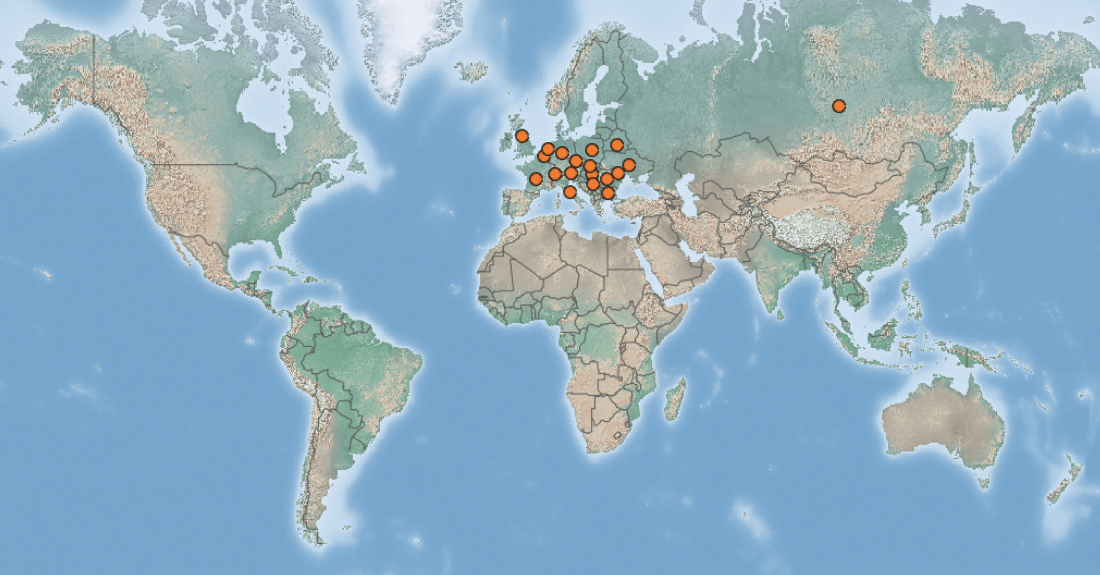
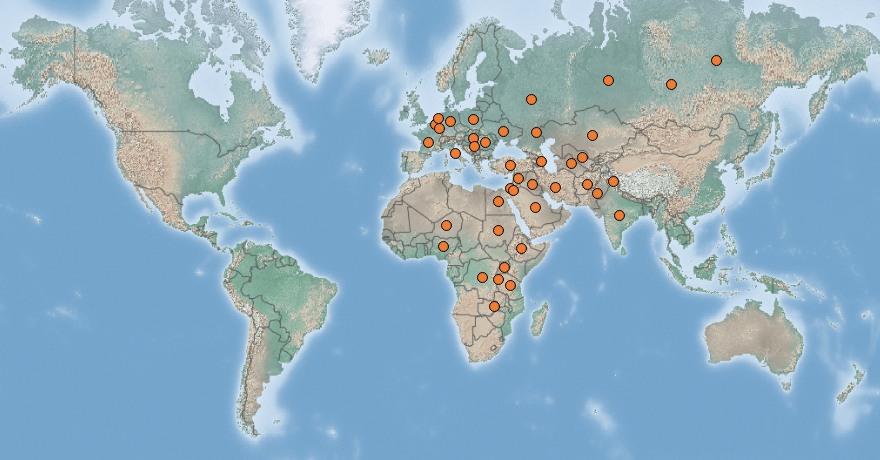
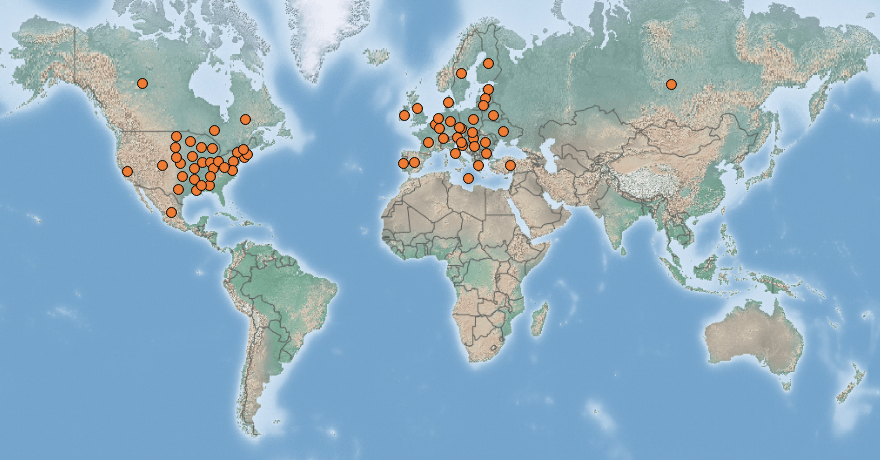
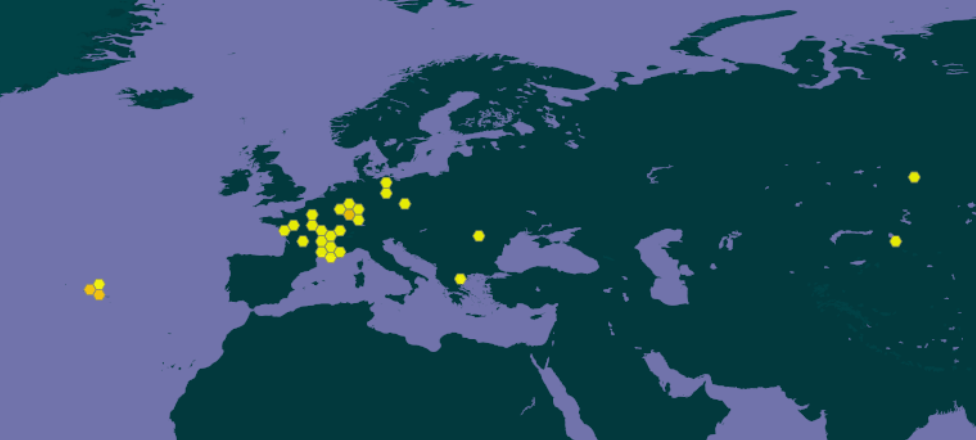
Mainz fg03Since probably 2000, a completely unknown harvestman started its quick expansion through Central Europe. The species could be classified in the genus Leiobunum, but is different from other European species. It has been named provisionally as Leiobunum sp. (sensu Wijnhoven et al. 2007). It is assumed that it arrived with ships from overseas, probably reaching the Netherlands first. It is still unknown exactly where it came from (Wijnhoven et al. 2007).

The area of origin is unknown to date, since about 2000 the species has probably spread from the Netherlands into Western Germany on both sides of the Rhine valley to Switzerland and Vorarlberg (Wijnhoven et al. 2007), in the meantime also to Schleswig-Holstein (Staudt 2012).

Habitat: Primarily possibly a rock dweller, in Europe in habitats of anthropogenic origin: industrial wastelands, ruins and house walls (Wijnhoven et al. 2007). Leiobunum sp. generally tend to cluster together during the day. This behaviour is even more pronounced in the species in question. Mass aggregations of several hundreds of individuals have been observed. Many observations show that in spite of its high reproduction rate this “new” Leiobunum sp. seems to coexist well with indigenous species and integrates in the native fauna without great damage. But surely great colonies of the species compete for food with other similar predators.

Status and distribution in Luxembourg
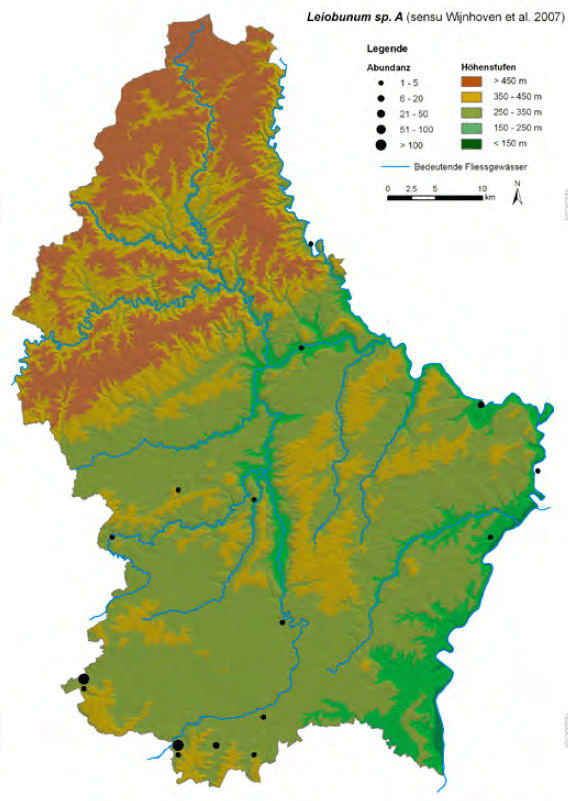
Distribution map of Leiobunum sp. in Luxembourg. Source: Muster & Meyer 2014: 80.

No records of Leiobunum sp. (sensu Wijnhoven et al. 2007) are present in the MNHNL-mdata portal (MNHNL, iNaturalist & GBIF, 2020).

Already widespread in the Gutland, Leiobunum sp. still largely absent in the Ösling (Muster & Meyer 2014: 79). In Luxembourg exclusively synanthropic, larger aggregations have so far only been observed on industrial ruins in the Minette area, in small numbers of individuals in many places on average house walls.

Remarks (Muster & Meyer 2014: 82): Due to the occurrence of mass aggregations with > 1000 specimens the species became the focus of media and sensation-hungry public after 2007. Suddenly, weavers were the focus of exhibitions, local publications, radio and television broadcasts. Wijnhoven et al. (2007) also warned urgently of an imminent invasion of unprecedented proportions and possible dramatic effects on the native opilionid fauna. A few years after this initial uncertainty, the situation is now much more relaxed. Despite the now widespread distribution in Luxembourg, no mass increases could be registered. Only in the former Goodyear test site near Esch-sur-Alzette and at industrial ruins near Rodange larger colonies of 100-200 specimens were sighted. Otherwise only smaller groups of maximum 10 specimens were observed, often only single specimens. It was noticeable that often only one dwelling house per small village was inhabited, while other similar houses remained unoccupied. In this context, observations from the Ruhr area seem interesting, according to which the animals show a preference for calcareous surfaces rich in structure (Toss 2010). The effects on other weaver’s apprentice species are also likely to be less severe than originally assumed. Leiobunum rotundum is often found at or even within aggregations of the Nameless Spine Anchor, while they even seem to evade Dicranopalpus ramosus (Wijnhoven 2011).

Risk assessment

ISEIA protocol
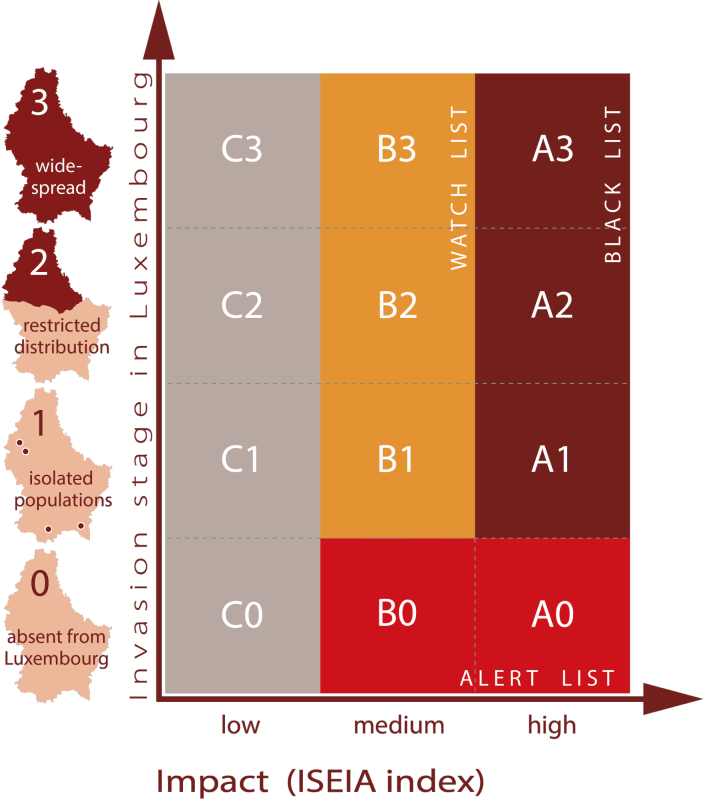
C2 (2+2+2+1) (Ries et al. 2017: 68).

Harmonia+ protocol

Not assessed yet.

Bibliography

  • MNHNL, iNaturalist & GBIF, 2020. MNHNL-mdata, online portal combining species observation from Recorder-Lux, iNaturalist and GBIF. National Museum of Natural History, Luxembourg. URL: https://mdata.mnhn.lu [Accessed 2020-03-05]
  • Muster, C. & M. Meyer, 2014. Verbreitungsatlas der Weberknechte des Großherzogtums Luxemburg, Ferrantia 70. Musée national d’histoire naturelle, Luxembourg, 112 S. [pp. 79-82] (PDF 3.8 MB)
  • Ries, C., A. Arendt, C. Braunert, S. Christian, A. Dohet, A. Frantz, G. Geimer, M. Hellers, J. A. Massard, X. Mestdagh, R. Proess, N. Schneider & M. Pfeiffenschneider, 2017. Environmental impact assessment and black, watch and alert list classification after the ISEIA Protocol of invertebrates in Luxembourg. Bull. Soc. Nat. luxemb. 119: 63-70. [PDF 360 KB]
  • Staudt, A., 2012. Nachweiskarten der Spinnentiere Deutschlands (Arachnida: Araneae, Opiliones, Pseudoscorpiones). http://www.spiderling.de/arages/
  • Toss, K., 2010. Auffällig unauffällig: Der bislang unbestimmte Weberknecht der Gattung Leiobunum ist im westlichen Ruhrgebiet weit verbreitet. Elektronische Aufsätze der Biologischen Station Westliches Ruhrgebiet 19: 1-5.
  • Wijnhoven, H., A.L. Schönhofer & J. Martens, 2007. An unidentified harvestman Leiobunum sp. alarmingly invading Europe (Arachnida: Opiliones). Arachnol. Mitt. 34: 27-38. (https://www.natur-in-nrw.de/Download/Martens_Leiobunum_2007.pdf)

 Page content last updated on 2020-03-05. Last proofread by Caroline Grounds on 2019-12-10.

Dermacentor marginatus Leach, 1815

English Sheep tick Status LU: absent
Lëtzebuergesch Schofszeck Status Eur.: established.
Français n/a RA: ISEIA: C0. Harmonia+: n/a.
Deutsch Schafzecke Wikipedia: Wikipedia - Français - Dermacentor marginatus Wikipedia - Deutsch - Schafzecke | Wikispecies: Wikispecies - Dermacentor marginatus
Nederlands  n/a Back to the list of invertebrates

Important note

In 2015, six Dermacentor ticks were collected in SE-Luxembourg. Previously, these individuals had been identified as Dermacentor marginatus Leach, 1815. However, morphological re-investigation as well as DNA barcoding identified the specimens as Dermacentor reticulatus (Fabricius, 1794). Thus only D. reticulatus is known from Luxembourg (Weigand et al. 2020).

Brief description

Dermacentor marginatusDermacentor marginatus Leach, 1815 is a species of tick of the family Ixodidae, which is a vector of several zoonotic diseases, which is why this tick is considered to pose particular eco-epidemiological and public health risks for humans (Wikipedia contributors 2019).

In Central Europe the sheep tick is the most common species of the genus. It lives here only in heat islands and on sunny slopes or dry grasslands. Mammals, including humans, are preferred as hosts. The animals of the genus transmit tularemia (Francisella tularensis), Rocky Mountain spotted fever (Rickettsia richettsii), Q-fever (Rickettsia burneti), bovine anaplasmosis, puppy-babesiosis (Babesia canis) (Source: http://www.ijon.de/zecken/system.html#zecke).

It is one of the species that could be favoured by global warming, which would allow it to move northwards, but also upwards (Wikipedia contributors 2019).

Status and distribution in Luxembourg

The tick Dermacentor marginatus Leach, 1815 is absent from Luxembourg.

Risk assessment

ISEIA protocol

Following the morphological re-investigation as well as DNA barcoding that identified all the specimens as Dermacentor reticulatus (Fabricius, 1794) (Weigand et al. 2020), Dermacentor marginatus is considered absent from Luxembourg and was reassessed on 29 October 2020 to C0 (2+1+2+1). Initial assessment: C1 (2+1+2+1) (Ries et al. 2017: 68).

Harmonia+ protocol

Not assessed yet.

Worldwide distribution

Bibliography

  • Direction de la Santé, 2016. Attention aux tiques! Comment se protéger? Dépliant. Luxembourg. URL: https://sante.public.lu/fr/prevention/tiques/
  • GBIF, 2020. Dermacentor marginatus in GBIF Secretariat (2019). GBIF Backbone Taxonomy. Checklist dataset https://doi.org/10.15468/39omei [accessed 2020-03-05]
  • Ries, C., A. Arendt, C. Braunert, S. Christian, A. Dohet, A. Frantz, G. Geimer, M. Hellers, J. A. Massard, X. Mestdagh, R. Proess, N. Schneider & M. Pfeiffenschneider, 2017. Environmental impact assessment and black, watch and alert list classification after the ISEIA Protocol of invertebrates in Luxembourg. Bull. Soc. Nat. luxemb. 119: 63-70. [PDF 360 KB]
  • Weigand, A., J. Teixeira & S. Christian, 2020. First record of Hyalomma marginatum sensu stricto C.L. Koch, 1844 and distribution of Dermacentor reticulatus (Fabricius, 1794) (Acari, Ixodidae) in Luxembourg. Bull. Soc. nat. luxemb. 122 : 253-263.
  • Wikipedia contributors, 2019. Dermacentor marginatus. Wikipédia, l’encyclopédie libre. URL: https://fr.wikipedia.org/wiki/Dermacentor_marginatus [accessed 2020-03-05]

 Page content last updated on 2022-04-27. Last proofread by Caroline Grounds on 2019-12-10.

Procambarus clarkii (Girard, 1852)

English Red swamp crayfish Status LU: absent.
Lëtzebuergesch Roude Suppekriibs Status Eur.: established. IAS of EU concern (2016).
Français Écrevisse de Louisiane RA: ISEIA: A0, Alert List.
Deutsch Roter Amerikanischer Sumpfkrebs Wikipedia: Wikipedia - English - Signal crayfish Wikipedia - Français - Ecrevisse de Californie Wikipedia - Deutsch - Signalkrebs Nederlands | Wikispecies: Wikispecies | CABI
Nederlands Rode rivierkreeft Back to the list of invertebrates

Brief description

Procambarus clarkii (Girard, 1852) is a species of cambarid freshwater crayfish, native to northern Mexico, and southern and southeastern United States, but also introduced elsewhere, where it is often an invasive pest. P. clarkii is typically dark red, with long claws and head, small or no spines on the sides of its carapace just below the head, and rows of bright red bumps on the front and side of the first leg (Wikipedia contributors 2020).

The red swamp crayfish is most commonly found in warm fresh water, such as slowly flowing rivers, marshes, reservoirs, irrigation systems and rice paddies. It is considered to be the most ecologically plastic species in the order Decapoda, and is able to grow quickly even in only seasonally present water, being able to tolerate dry spells of up to four months. The red swamp crayfish grows quickly, and is capable of reaching weights in excess of 50 g, and sizes of 5.5–12 cm long. It is also able to tolerate slightly saline water, which is unusual for a crayfish. Additionally, P. clarkii are physiologically capable of tolerating relatively low dissolved oxygen concentrations. The average lifetime of Procambarus clarkii is five years (Wikipedia contributors 2020).

The burrowing activities of the red swamp crayfish can lead to damage to water courses and to crops, particularly rice, and its feeding can disrupt native ecosystems. It may out-compete the native crayfish species, and is a vector for the crayfish plague fungus Aphanomyces astaci, for crayfish virus vibriosis, and a number of worms parasitic on vertebrates. Their burrowing activities may also be a threat to civil infrastructure such as storm ponds and levees (Wikipedia contributors 2020).

Status and distribution in Luxembourg

There is no documented occurrence of Procambarus clarkii (Girard, 1852) in Luxembourg yet (MNHNL, iNaturalist & GBIF 2020).

Risk assessment

ISEIA protocol

A0 (3+3+3+3) = Alert List (Ries et al. 2017: 68).

Harmonia+ protocol

Not assessed yet.

Worldwide distribution

Bibliography

  • CABI, 2019. Procambarus clarkii. In: Invasive Species Compendium. Wallingford, UK: CAB International. URL: www.cabi.org/isc [accessed 2020-03-13]
  • MNHNL, iNaturalist & GBIF, 2020. Procambarus clarkii in MNHNL-mdata, online portal combining species observation from Recorder-Lux, iNaturalist and GBIF. National Museum of Natural History, Luxembourg. URL: https://mdata.mnhn.lu [accessed 2020-03-13]
  • Ries, C., A. Arendt, C. Braunert, S. Christian, A. Dohet, A. Frantz, G. Geimer, M. Hellers, J. A. Massard, X. Mestdagh, R. Proess, N. Schneider & M. Pfeiffenschneider, 2017. Environmental impact assessment and black, watch and alert list classification after the ISEIA Protocol of invertebrates in Luxembourg. Bull. Soc. Nat. luxemb. 119: 63-70. [PDF 360 KB]
  • Wikipedia contributors, 2020. Procambarus clarkii, Wikipedia, The Free Encyclopedia, 3 February 2020, 18:43 UTC, <https://en.wikipedia.org/w/index.php?title=Procambarus_clarkii&oldid=939000553> [accessed 2020-03-13]

 Page content last updated on 2021-05-14.

Gammarus tigrinus Sexton, 1939

English n/a Status LU: established. 1st record: 1991.
Lëtzebuergesch Tiger-Floukriibs Status Eur.: established.
Français n/a RA: ISEIA: C2. Harmonia+: n/a.
Deutsch Gefleckter Flussflohkrebs Wikipedia: n/a (2020) | Wikispecies: n/a (2020)
Nederlands Tijgervlokreeft Back to the list of invertebrates

Brief description

Gammarus tigrinus Sexton, 1939 has eliminated some native species in parts of the river Rhine and the Baltic Sea; it is frequently a superior predator in comparison to indigenous species.

See the copyrighted picture at cabi.org

Status and distribution in Luxembourg

Gammarus tigrinus Sexton, 1939 was first documented on 22 May 1991 in the Moselle river across from Bech-Kleinmacher, municipality of Schengen (Massard & Geimer 1992). Dhur (1993) showed that Gammarus tigrinus was present in the Moselle all the way from Schengen to Wasserbillig.

There is no distribution map available because no data has been entered into the Recorder-Lux database so far (MNHNL, iNaturalist & GBIF 2019).

Risk assessment

ISEIA protocol

C2 (3+1+3+1) (Ries et al. 2017: 68).

Harmonia+ protocol

Not assessed yet.

Worldwide distribution

Bibliography

  • CABI, 2019. Gammarus tigrinus. In: Invasive Species Compendium. Wallingford, UK: CAB International. URL: www.cabi.org/isc [accessed 2020-03-13]
  • Dhur, G., 1993. Étude des espèces d’invertébrés immigrées ou introduites dans la Moselle luxembourgeoise et dans les écosystèmes aquatiques qui en dépendent. Historique et répartition actuelle. Centre univ. Luxemb., Dép. Form. pédag., mém. sci., 213 pp.
  • Dhur, G. & J.A. Massard, 1995. Etude historique et faunistique des Invertébrés immigrés ou introduits dans la Moselle luxembourgeoise et ses affluents. Bull. Soc. Nat. luxemb. 96: 127-156. [PDF 1896 KB]
  • Massard, J.A. & G. Geimer, 1992. Découverte de Gammarus tigrinus Sexton, 1939 dans la Moselle frontalière entre le Luxembourg et l’Allemagne (Crustacea: Amphipoda). Bull. Soc. Nat. luxemb. 93: 195-198. [PDF 173 KB]
  • Meisch, C. & J.A. Massard, 2015. Les recherches sur les crustacés (Crustacea) du Luxembourg : aperçu historique. Bull. Soc. Nat. luxemb. 116: 381-390. [PDF 1,22 MB]
  • MNHNL, iNaturalist & GBIF, 2019. MNHNL-mdata, online portal combining species observation from Recorder-Lux, iNaturalist and GBIF. National Museum of Natural History, Luxembourg. URL: https://mdata.mnhn.lu [Accessed 2019-10-24]
  • Ries, C., A. Arendt, C. Braunert, S. Christian, A. Dohet, A. Frantz, G. Geimer, M. Hellers, J. A. Massard, X. Mestdagh, R. Proess, N. Schneider & M. Pfeiffenschneider, 2017. Environmental impact assessment and black, watch and alert list classification after the ISEIA Protocol of invertebrates in Luxembourg. Bull. Soc. Nat. luxemb. 119: 63-70. [PDF 360 KB]

 Page content last updated on 2023-09-27. Last proofread by Caroline Grounds on 2019-12-10.

Dikerogammarus villosus (Sowinsky, 1894)

English Killer shrimp Status LU: present. 1st record: 2006.
Lëtzebuergesch Killercrevette Status Eur.: established.
Français Crevette tueuse RA: ISEIA: A1, Black List. Harmonia+: 0,50
Deutsch Großer Höckerflohkrebs Wikipedia: Wikipedia - English - Killer shrimp Wikipedia - Français - Crevette tueuse Wikipedia - Deutsch - Großer Höckerflohkrebs Nederlands | Wikispecies: n/a (2020)
Nederlands Pontokaspische Vlokreeft Back to the list of invertebrates

Brief description

Dikerogammarus villosus (8740859563)Dikerogammarus villosus (Sowinsky, 1894) is a freshwater amphipod originating from the Ponto-Caspian region. Its range expansion began in the late twentieth century and was associated with re-opening of the shipping canal between the Danube River and Main River (Vaate et al., 2002). Large body size, extremely voracious predatory behaviour, high fecundity and wide environmental tolerance make this amphipod a very successful invader of European waters. Invasion of D. villosus often results in significant local reduction or even extinction of native amphipods and other macroinvertebrates on which it preys (CABI 2019).

D. villosus is included on the list of the 100 most invasive exotic species of Europe (Devin & Beisel 2009).

Status and distribution in Luxembourg

Dikerogammarus villosus (Sowinsky, 1894) was first recorded in 2006: several specimen collected on 2006-05-12 in the river Moselle near Stadtbredimus were discovered in the Museums collections in July 2021 (Weigand in litt.). Another observation was made on 2018-06-20 in the river Sure near Wasserbillig / Langsur (MNHNL, iNaturalist & GBIF 2021). Accordingly, the Killer shrimp has been moved from the Alert List (Ries et al. 2017: 68) to the Black List.

Risk assessment

ISEIA protocol

Following the discovery of the Killer shrimp in July 2021 in the Museums collections (Weigand in litt.), the species was reassessed on 2021-07-29 to A1 (3+2+3+3) = Black List by C. Ries. Initial assessment: A0 (3+2+3+3) = Alert List (Ries et al. 2017: 68).

Harmonia+ protocol

Overall risk score 0,50 = (Overall Invasion score 0,82 x Overall Impact score 0,61) (evaluated by Tiago De Sousa, Manou Pfeiffenschneider and Roland Proess).

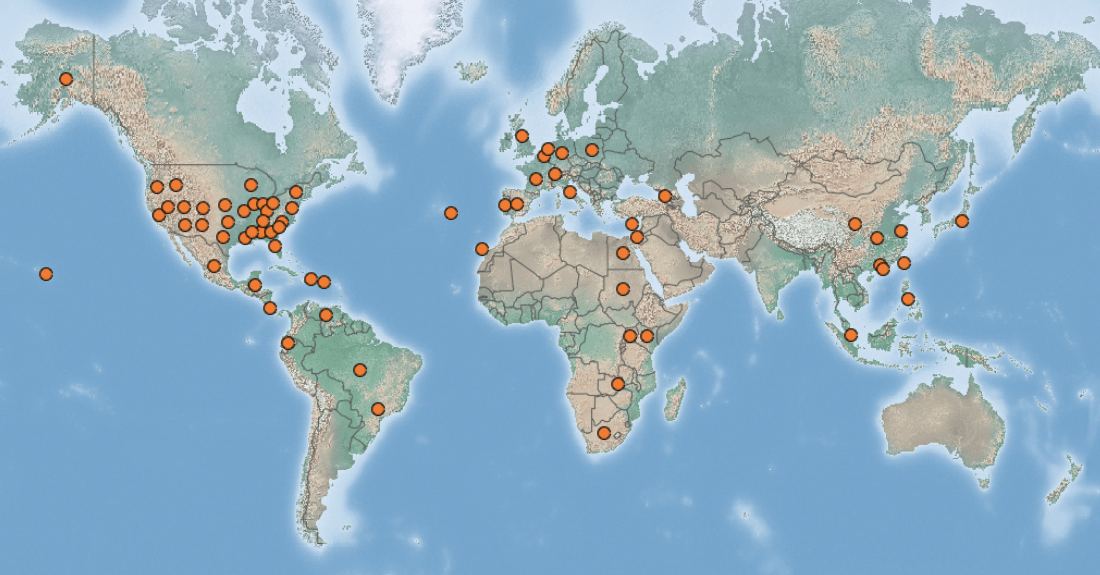
0,82Invasion
0,61Impact
0,50Risk

Worldwide distribution

Bibliography

  • CABI, 2019. Dikerogammarus villosus. In: Invasive Species Compendium. Wallingford, UK: CAB International. URL: www.cabi.org/isc [accessed 2020-03-13]
  • Devin, S. & J.-N. Beisel, 2009. Dikerogammarus villosus (Sowinsky), killer shrimp (Gammaridae, Crustacea). In: Handbook of alien species in Europe. Springer, 309.
  • MNHNL, iNaturalist & GBIF, 2021. Dikerogammarus villosus in MNHNL-mdata, online portal combining species observation from Recorder-Lux, iNaturalist and GBIF. National Museum of Natural History, Luxembourg. URL: https://mdata.mnhn.lu [accessed 2020-03-13]
  • Ries, C., A. Arendt, C. Braunert, S. Christian, A. Dohet, A. Frantz, G. Geimer, M. Hellers, J. A. Massard, X. Mestdagh, R. Proess, N. Schneider & M. Pfeiffenschneider, 2017. Environmental impact assessment and black, watch and alert list classification after the ISEIA Protocol of invertebrates in Luxembourg. Bull. Soc. Nat. luxemb. 119: 63-70. [PDF 360 KB]

 Page content last updated on 2024-03-06. Last proofread by Caroline Grounds on 2019-12-10.
Potamopyrgus antipodarum (Gray, 1843)

English New Zealand mud snail Status LU: established. 1st record: 1996.
Lëtzebuergesch Neiséilännesch Zwergdeckelschleek Status Eur.: established.
Français Hydrobie des antipodes RA: ISEIA: A3, Black List. Harmonia+: n/a.
Deutsch Neuseeländische Zwergdeckelschnecke Wikipedia: Wikipedia - English - New Zealand mud snail Wikipedia - Français - Wikipedia - Deutsch - Neuseeländische Zwergdeckelschnecke Nederlands | Wikispecies: n/a (2020) | CABI
Nederlands Jenkins’ waterhoren Back to the list of invertebrates

Brief description

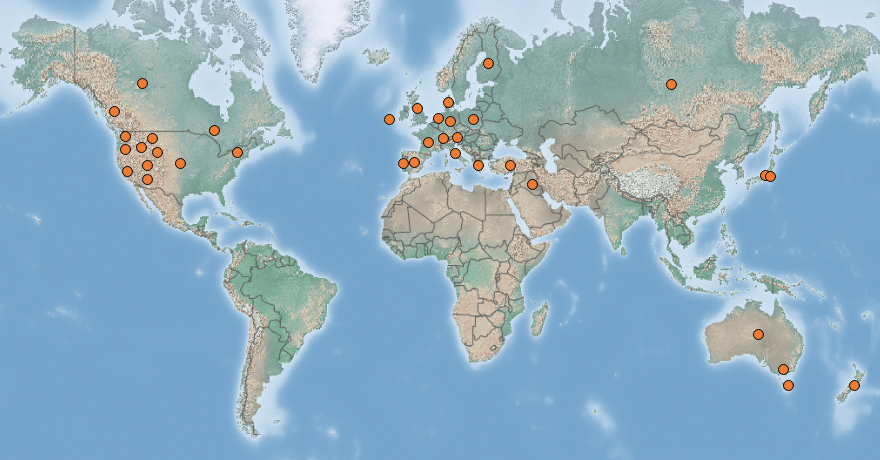
New Zealand Mud snailsPotamopyrgus antipodarum (Gray, 1843) is an aquatic snail native to New Zealand. It has been introduced to Europe, North America, Australia, Iraq, Turkey and Japan. In several ecosystems it is considered invasive because it becomes highly abundant, impacting the structure and function of the invaded ecosystems. Females are parthenogenetic, meaning they can reproduce without males, so a population can be founded by a single female. Most the non-native populations are female. There can be up to six generations per year, with an average number of 230 offspring per adult per year. P. antipodarum can also tolerate desiccation for several days, which allows for rapid spread (such as by birds and fishing tools) throughout different aquatic ecosystems. In several countries, including Spain, USA and Australia, it is considered as an invasive species (CABI 2019).

Status and distribution in Luxembourg

Records of Potamopyrgus antipodarum (Gray, 1843) in Luxembourg. Data source: Recorder-Lux, iNaturalist & GBIF, 2025-12-20.

Potamopyrgus antipodarum (Gray, 1843) was first documented by Gerhard Weitmann and Klaus Groh on 17 June 1996 in the Moselle river in the municipality of Remich (MNHNL 2000-).

Currently, 52 records of the New Zealand mud snail are accessible through the MNHNL-mdata portal (MNHNL, iNaturalist & GBIF 2019).

Risk assessment

ISEIA protocol

A3 (3+2+3+3) = Black List (Ries et al. 2017: 68).

Harmonia+ protocol

Not assessed yet.

Worldwide distribution

Bibliography

  • CABI, 2019. Potamopyrgus antipodarum (Gray, 1843). In: Invasive Species Compendium. Wallingford, UK: CAB International. URL: www.cabi.org/isc [accessed 2020-04-21]
  • MNHNL, 2000-. Potamopyrgus antipodarum (Gray, 1843) in Recorder-Lux, database on the natural heritage of the Grand Duchy of Luxembourg. Musée national d’histoire naturelle, Luxembourg. URL: https://mdata.mnhn.lu [Accessed 2019-10-24]
  • MNHNL, iNaturalist & GBIF, 2019. Potamopyrgus antipodarum (Gray, 1843) in MNHNL-mdata, online portal combining species observation from Recorder-Lux, iNaturalist and GBIF. National Museum of Natural History, Luxembourg. URL: https://mdata.mnhn.lu [Accessed 2019-10-24]
  • Ries, C., A. Arendt, C. Braunert, S. Christian, A. Dohet, A. Frantz, G. Geimer, M. Hellers, J. A. Massard, X. Mestdagh, R. Proess, N. Schneider & M. Pfeiffenschneider, 2017. Environmental impact assessment and black, watch and alert list classification after the ISEIA Protocol of invertebrates in Luxembourg. Bull. Soc. Nat. luxemb. 119: 63-70. [PDF 360 KB]

 Page content last updated on 2020-04-21.

Sinanodonta woodiana (Lea, 1834)

English Chinese pond mussel Status LU: absent.
Lëtzebuergesch Chinesesch Weiermuschel Status Eur.: established.
Français Anodonte chinois RA: ISEIA: C0. Harmonia+: n/a.
Deutsch Chinesische Teichmuschel Wikipedia: Wikipedia - English - Chinese pond mussel Wikipedia - Français - Anodonte chinois Nederlands | Wikispecies: n/a (2020) | CABI
Nederlands n/a Back to the list of invertebrates

Brief description

1k Sinanodonta-woodiana 01Sinanodonta woodiana (Lea, 1834) is a species of freshwater mussel, an aquatic bivalve mollusk in the family Unionidae, the river mussels. The Chinese pond mussel can reach sizes of up to 30 cm and an age of 12–14 years. Yet, they can reproduce in their first year while only 3–4 cm in size. This large freshwater mussel is a habitat generalist with high silt tolerance. It is established worldwide despite having, like all unionid mussels, an obligatory parasitic stage (glochidium), which must encyst on host fish. The species is a broad host generalist, which can complete its development on all fish species tested, both coinvasive and native. The presence of S. woodiana can seriously influence indigenous unionid populations. Sinanodonta woodiana’s great success is attributed to importation and commercialization of Asian carp, its native host. S. woodiana was introduced in Tuscany both inadvertently, and for artificial pearl production. The species is also sold in garden centers as biofiltration for artificial ponds (CABI 2019).

Status and distribution in Luxembourg

Sinanodonta woodiana (Lea, 1834) has not yet been observed in Luxembourg (MNHNL, iNaturalist & GBIF 2020).

A flyer about invasive mussels has been published by natur&ëmwelt.

Risk assessment

ISEIA protocol

C0 (2+1+2+1) (Ries et al. 2017: 68).

Harmonia+ protocol

Not assessed yet.

Worldwide distribution

Bibliography

  • CABI, 2019. Sinanodonta woodiana (Lea, 1834). In: Invasive Species Compendium. Wallingford, UK: CAB International. URL: www.cabi.org/isc [accessed 2020-04-21]
  • MNHNL, iNaturalist & GBIF, 2020. Sinanodonta woodiana (Lea, 1834) in MNHNL-mdata, online portal combining species observation from Recorder-Lux, iNaturalist and GBIF. National Museum of Natural History, Luxembourg. URL: https://mdata.mnhn.lu [Accessed 2020-04-21]
  • Ries, C., A. Arendt, C. Braunert, S. Christian, A. Dohet, A. Frantz, G. Geimer, M. Hellers, J. A. Massard, X. Mestdagh, R. Proess, N. Schneider & M. Pfeiffenschneider, 2017. Environmental impact assessment and black, watch and alert list classification after the ISEIA Protocol of invertebrates in Luxembourg. Bull. Soc. Nat. luxemb. 119: 63-70. [PDF 360 KB]

 Page content last updated on 2024-09-09.

Corbicula fluminalis (O.F. Müller, 1774)

English n/a Status LU: established. 1st record: 1996.
Lëtzebuergesch Asiatesch Kuerfmuschel Status Eur.: established.
Français Corbicule asiatique RA: ISEIA: A2, Black List. Harmonia+: n/a.
Deutsch Feingerippte Körbchenmuschel Wikipedia: Wikipedia - English - Corbicula fluminalis Wikipedia - Français - Corbicula fluminalis Wikipedia - Deutsch - Nederlands | Wikispecies: n/a (2020) | CABI
Nederlands Toegeknepen korfmossel Back to the list of invertebrates

Brief description

Feingerippte, innen und außenCorbicula fluminalis (O.F. Müller, 1774) is a species of freshwater clam, an aquatic bivalve mollusk in the family Cyrenidae. This species is distinct from, but often confused with, the rather similar species Corbicula fluminea. Even though both species are native to Asia, they are both present as introduced species in the United States and Europe, and they are both commonly known as “Asian clams” (Wikipedia contributors 2019).

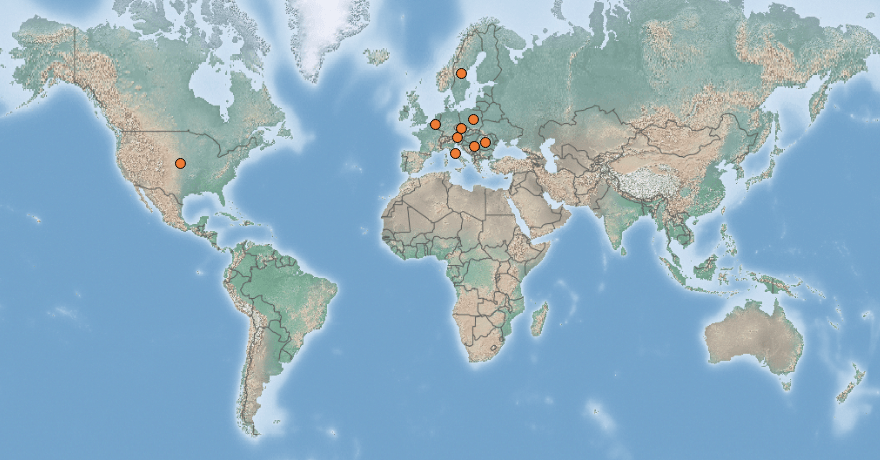
The original distribution area of Corbicula fluminalis includes the Near East (the type material came from the Euphrates), Central Asia (Uzbekistan) and the Caucasus (Azerbaijan) and North Africa. The animals prefer to live on sandy and muddy river bottoms. Corbicula fluminalis is found today in almost all major Central European rivers, often sympatric with Corbicula fluminea (Wikipedia Editor 2019).

Status and distribution in Luxembourg

Records of Corbicula fluminalis (O.F. Müller, 1774) in Luxembourg. Data source: Recorder-Lux, iNaturalist & GBIF, 2025-12-20.

In Luxembourg, Corbicula fluminalis (O.F. Müller, 1774) was first found by Klaus Groh on 17 June 1996 in the Moselle river in the municipality of Remich (MNHNL 2000-, Bachmann & Usseglio-Polatera 1999).

An identification sheet of the species has been published by the MECDD in French and German. A flyer about invasive mussels has been published by natur&ëmwelt.

Risk assessment

ISEIA protocol

A2 (3+3+3+3) = Black List (Ries et al. 2017: 68).

Harmonia+ protocol

Not assessed yet.

Worldwide distribution

Bibliography

  • Bachmann V. & P. Usseglio-Polatera, 1999. Contribution of the macrobenthic compartment to the oxygen budget of a large regulated river: the Mosel. Hydrobiologia. 410 (17), 39-46.
  • CABI, 2019. Corbicula fluminalis (O.F. Müller, 1774). In: Invasive Species Compendium. Wallingford, UK: CAB International. URL: www.cabi.org/isc [accessed 2020-04-21]
  • MNHNL, 2000-. Corbicula fluminalis (O.F. Müller, 1774) in Recorder-Lux, database on the natural heritage of the Grand Duchy of Luxembourg. Musée national d’histoire naturelle, Luxembourg. URL: https://mdata.mnhn.lu [Accessed 2019-10-24]
  • MNHNL, iNaturalist & GBIF, 2019. Corbicula fluminalis (O.F. Müller, 1774) in MNHNL-mdata, online portal combining species observation from Recorder-Lux, iNaturalist and GBIF. National Museum of Natural History, Luxembourg. URL: https://mdata.mnhn.lu [Accessed 2019-10-24]
  • Ries, C., A. Arendt, C. Braunert, S. Christian, A. Dohet, A. Frantz, G. Geimer, M. Hellers, J. A. Massard, X. Mestdagh, R. Proess, N. Schneider & M. Pfeiffenschneider, 2017. Environmental impact assessment and black, watch and alert list classification after the ISEIA Protocol of invertebrates in Luxembourg. Bull. Soc. Nat. luxemb. 119: 63-70. [PDF 360 KB]
  • Wikipedia Bearbeiter, 2019. Feingerippte Körbchenmuschel. In: Wikipedia, Die freie Enzyklopädie. Bearbeitungsstand: 20. Dezember 2019, 15:19 UTC. URL: https://de.wikipedia.org/w/index.php?title=Feingerippte_K%C3%B6rbchenmuschel&oldid=195082277 [accessed 2020-04-21]
  • Wikipedia contributors, 2019. Corbicula fluminalis, Wikipedia, The Free Encyclopedia, 10 April 2019, 21:39 UTC, <https://en.wikipedia.org/w/index.php?title=Corbicula_fluminalis&oldid=891900774> [accessed 2020-04-21]

 Page content last updated on 2024-09-09.

Corbicula fluminea (O.F. Müller, 1774)

English Asian clam Status LU: established. 1st record: 1996.
Lëtzebuergesch Kleng asiatesch Kuerfmuschel Status Eur.: established.
Français Palourde asiatique RA: ISEIA: A2, Black List. Harmonia+: n/a.
Deutsch Asiatische Körbchenmuschel Wikipedia: Wikipedia - English - Asian clam Wikipedia - Français - Palourde asiatique Wikipedia - Deutsch - Asiatische Körbchenmuschel Nederlands | Wikispecies: n/a (2020) | CABI
Nederlands Aziatische korfmossel Back to the list of invertebrates

Brief description

Corbicula flumineaCorbicula fluminea (O.F. Müller, 1774) is an inland water, filter-feeding bivalve native to southeast Asia but causing numerous problems in its new range of distribution in the Americas, Europe and Australia. C. fluminea spreads when it is attached to boats or carried in ballast water, used as bait, sold through the aquarium trade and carried with water currents. Its reproductive success and ability to spread rapidly has resulted in this species having one of the most rapid expansions of any non-native species in North America. Before the invasion of the zebra mussel Dreissena polymorpha, in North America, C. fluminea was described by McMahon (1983) as ‘one of the most important molluscan pest species ever introduced into the United States’. Aldridge and Muller (2001) review the potential impacts that the spread of C. fluminea may have on British industry and aquatic systems. In the DAISIE project, C. fluminea is listed on the 100 worst invasive species (CABI 2019).

Status and distribution in Luxembourg

Records of Corbicula fluminea (O.F. Müller, 1774) in Luxembourg. Data source: Recorder-Lux, iNaturalist & GBIF, 2025-12-20.

In Luxembourg, Corbicula fluminea (O.F. Müller, 1774) was first documented by Klaus Groh on 17 June 1996 in the Moselle river in the municipality of Remich (MNHNL 2000-). It was expected by 1995 that the species would soon appear in the Moselle (Dhur & Massard 1995: 150).

An identification sheet of the species has been published by the MECDD in French and German. A flyer about invasive mussels has been published by natur&ëmwelt.

Risk assessment

ISEIA protocol

A2 (3+3+3+3) = Black List (Ries et al. 2017: 68).

Harmonia+ protocol

Not assessed yet.

Worldwide distribution

Bibliography

  • CABI, 2019. Corbicula fluminea (O.F. Müller, 1774). In: Invasive Species Compendium. Wallingford, UK: CAB International. URL: www.cabi.org/isc [accessed 2020-04-21]
  • Dhur, G. & J.A. Massard, 1995. Étude historique et faunistique des Invertébrés immigrés ou introduits dans la Moselle luxembourgeoise et ses affluents. Bull. Soc. Nat. luxemb. 96: 127-156. [PDF 1896 KB]
  • MNHNL, 2000-. Corbicula fluminea (O.F. Müller, 1774) in Recorder-Lux, database on the natural heritage of the Grand Duchy of Luxembourg. Musée national d’histoire naturelle, Luxembourg. URL: https://mdata.mnhn.lu [Accessed 2019-10-24]
  • MNHNL, iNaturalist & GBIF, 2019. Corbicula fluminea (O.F. Müller, 1774) in MNHNL-mdata, online portal combining species observation from Recorder-Lux, iNaturalist and GBIF. National Museum of Natural History, Luxembourg. URL: https://mdata.mnhn.lu [Accessed 2019-10-24]
  • Ries, C., A. Arendt, C. Braunert, S. Christian, A. Dohet, A. Frantz, G. Geimer, M. Hellers, J. A. Massard, X. Mestdagh, R. Proess, N. Schneider & M. Pfeiffenschneider, 2017. Environmental impact assessment and black, watch and alert list classification after the ISEIA Protocol of invertebrates in Luxembourg. Bull. Soc. Nat. luxemb. 119: 63-70. [PDF 360 KB]

 Page content last updated on 2024-09-09.

Dreissena polymorpha (Pallas, 1771)

English Zebra mussel  Status LU: established. 1st record: <1892.
Lëtzebuergesch Zebramuschel Status Eur.: established.
Français Moule zébrée RA: ISEIA: A2, Black List. Harmonia+: n/a.
Deutsch Zebramuschel Wikipedia: Wikipedia - English - Zebra mussel Wikipedia - Français - Moule zébrée Wikipedia - Deutsch - Zebramuschel Nederlands | Wikispecies: n/a | CABI
Nederlands Driehoeksmossel Back to the list of invertebrates

Brief description

Dreissena polymorpha (I1957) 0265 (39449820624)To date, D. polymorpha has been the most aggressive freshwater invader worldwide. Dreissenids are the only freshwater bivalves that attach to hard substrates in high densities and have a planktonic larval stage. This life history facilitates their abilities as invaders, and allows them to become enormously abundant when introduced into a new water body. Once introduced their populations can grow rapidly, and the total biomass of a population can exceed 10 times that of all other native benthic invertebrates. D. polymorpha is native to the drainage basins of the Black, Caspian and Aral Seas. During the nineteenth century its range has expanded westward to most of western Europe, the UK, and North America, where it is found in the Great Lakes and all major river drainages east of the Rocky Mountains and causes multiple economic impacts on fisheries, aquaculture, water attractions and aquatic transport (CABI 2019).

Status and distribution in Luxembourg

Records of Dreissena polymorpha (Pallas, 1771) in Luxembourg. Data source: Recorder-Lux, iNaturalist & GBIF, 2025-12-20.

In Luxembourg, Dreissena polymorpha (Pallas, 1771) was first mentioned by Victor Ferrant in 1892 as occurring in the Moselle river (Ferrant 1892; Dhur & Massard 1995; MNHNL 2000-).

An identification sheet of the species has been published by the MECDD in French and German. A flyer about invasive mussels has been published by natur&ëmwelt.

Risk assessment

ISEIA protocol

A2 (3+3+3+3) = Black List (Ries et al. 2017: 68).

Harmonia+ protocol

Not assessed yet.

Worldwide distribution

Bibliography

  • CABI, 2019. Dreissena polymorpha (Pallas, 1771). In: Invasive Species Compendium. Wallingford, UK: CAB International. URL: www.cabi.org/isc [accessed 2020-04-21]
  • Dhur, G. & J.A. Massard, 1995. Étude historique et faunistique des Invertébrés immigrés ou introduits dans la Moselle luxembourgeoise et ses affluents. Bull. Soc. Nat. luxemb. 96: 127-156. [PDF 1896 KB]
  • Ferrant, V., 1892. Beiträge zur Molluskenfauna des Grossherzogtums Luxemburg (Schluss). Bull. Soc. Nat. luxemb. 2: 21-26. [PDF 419 KB]
  • MNHNL, 2000-. Dreissena polymorpha (Pallas, 1771) in Recorder-Lux, database on the natural heritage of the Grand Duchy of Luxembourg. Musée national d’histoire naturelle, Luxembourg. URL: https://mdata.mnhn.lu [Accessed 2019-10-24]
  • MNHNL, iNaturalist & GBIF, 2019. Dreissena polymorpha (Pallas, 1771) in MNHNL-mdata, online portal combining species observation from Recorder-Lux, iNaturalist and GBIF. National Museum of Natural History, Luxembourg. URL: https://mdata.mnhn.lu [Accessed 2019-10-24]
  • Ries, C., A. Arendt, C. Braunert, S. Christian, A. Dohet, A. Frantz, G. Geimer, M. Hellers, J. A. Massard, X. Mestdagh, R. Proess, N. Schneider & M. Pfeiffenschneider, 2017. Environmental impact assessment and black, watch and alert list classification after the ISEIA Protocol of invertebrates in Luxembourg. Bull. Soc. Nat. luxemb. 119: 63-70. [PDF 360 KB]

 Page content last updated on 2024-09-09.