Atriplex micrantha Ledeb.

English n/a Status LU: established. 1st record: LU & ITW 2007.
Lëtzebuergesch Verschiddesomeg Méil Status Eur.: established. 1st record: FR 1906.
Français Arroche hétérosperme RA: ISEIA: C2. Harmonia+: 0,09
Deutsch Verschiedensamige Melde Wikipedia: Wikipedia - Deutsch - Verschiedensamige_Melde | Wikispecies: Wikispecies - Atriplex micrantha | CABI
Nederlands Grijze melde Back to the list of neophytes

Brief description

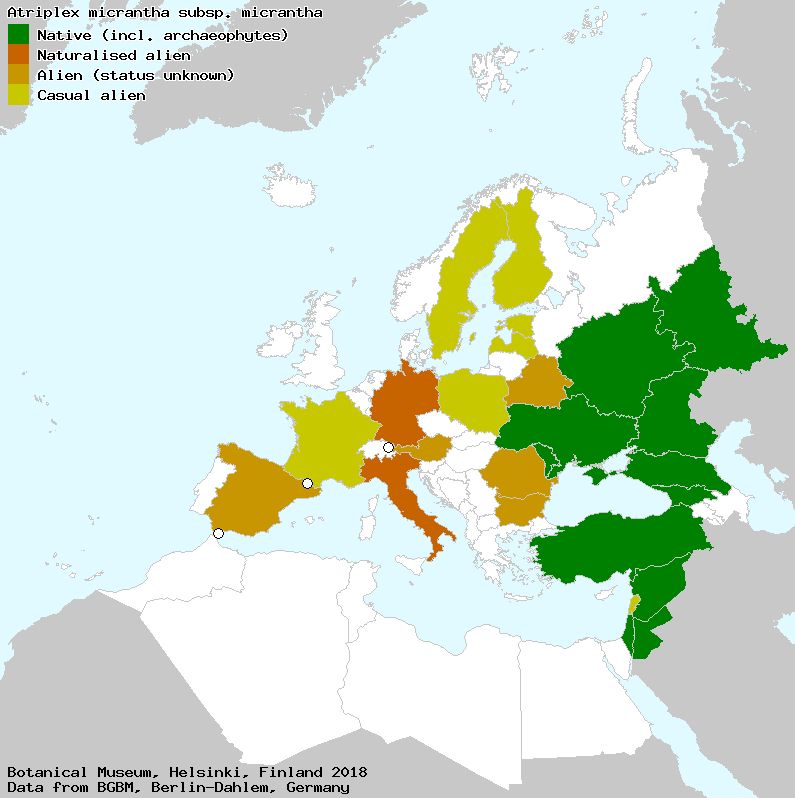
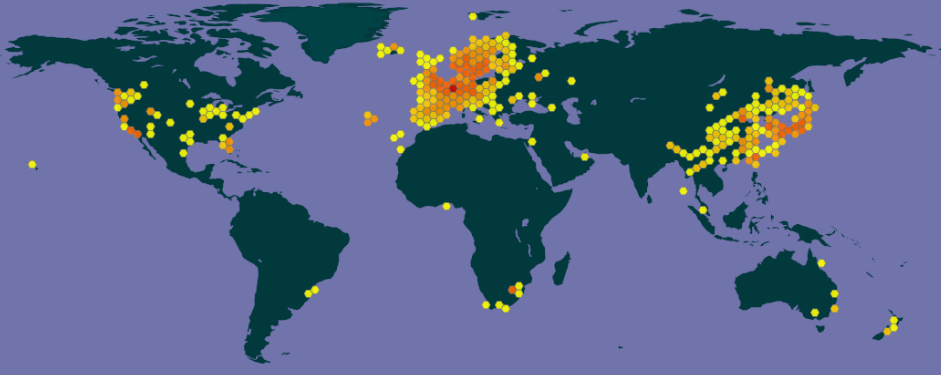
In its native Central Asia, Atriplex micrantha Ledeb. grows in steppes on saline soil, on the shores of water, or in the steppe and semi-desert zone. The species was introduced into large parts of Europe through trade and traffic. It was probably unintentionally introduced to Central Europe from Russia with grain supplies. Its first finds date from 1906 in Alsace (Rhine port). From there, it has spread out strongly along the waterways and traffic routes in recent decades (Wikipedia contributors 2019).

Status and distribution in Luxembourg

Records of Atriplex micrantha Ledeb. in Luxembourg. Data source: Recorder-Lux, iNaturalist & GBIF, 2021-07-23.

The annual halophyte Atriplex micrantha Ledeb. (syn.: A. heterosperma Bunge), once known as a very rare weed, began to naturalize in the flora territory in 2003. It spread rapidly along motorways, entering this territory apparently from the east and southwest (Germany and French Lorraine) (Lambinon & Verloove 2012: 168).

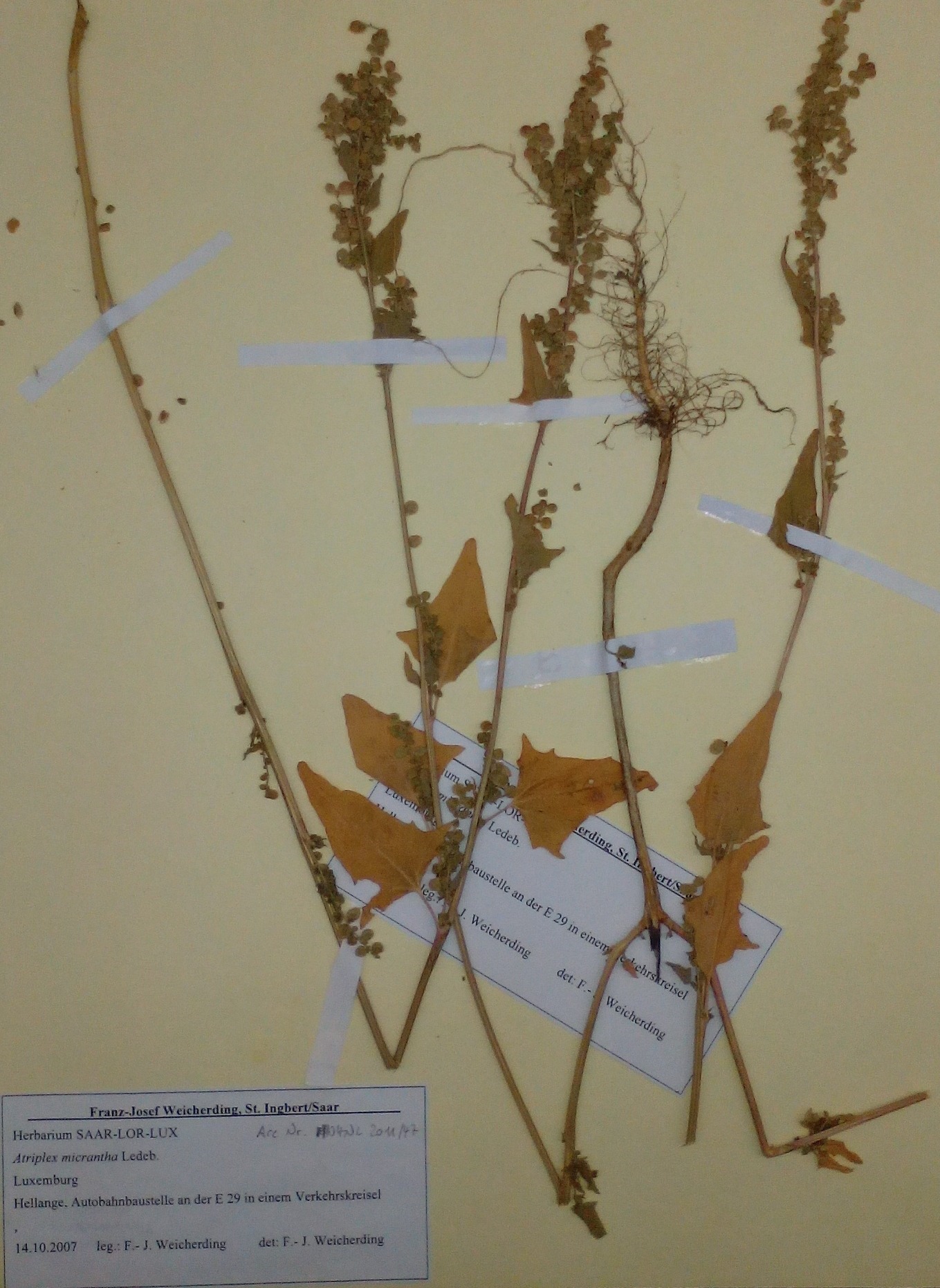
The species was first spotted in Hellange (Municipality of Frisange) on 14 October 2007, in a roundabout at a construction site on controlled-access highway E29 (Weicherding 2007, MNHNL 2000-, herbarium nr 22483). 1

Since this single observation, the species managed to invade the Luxembourg highway network unnoticed, until a large population was spotted in summer 2015 in Potaschberg on the A1 highway between Trier and Luxembourg (Krippel & Colling 2016: 30). 2

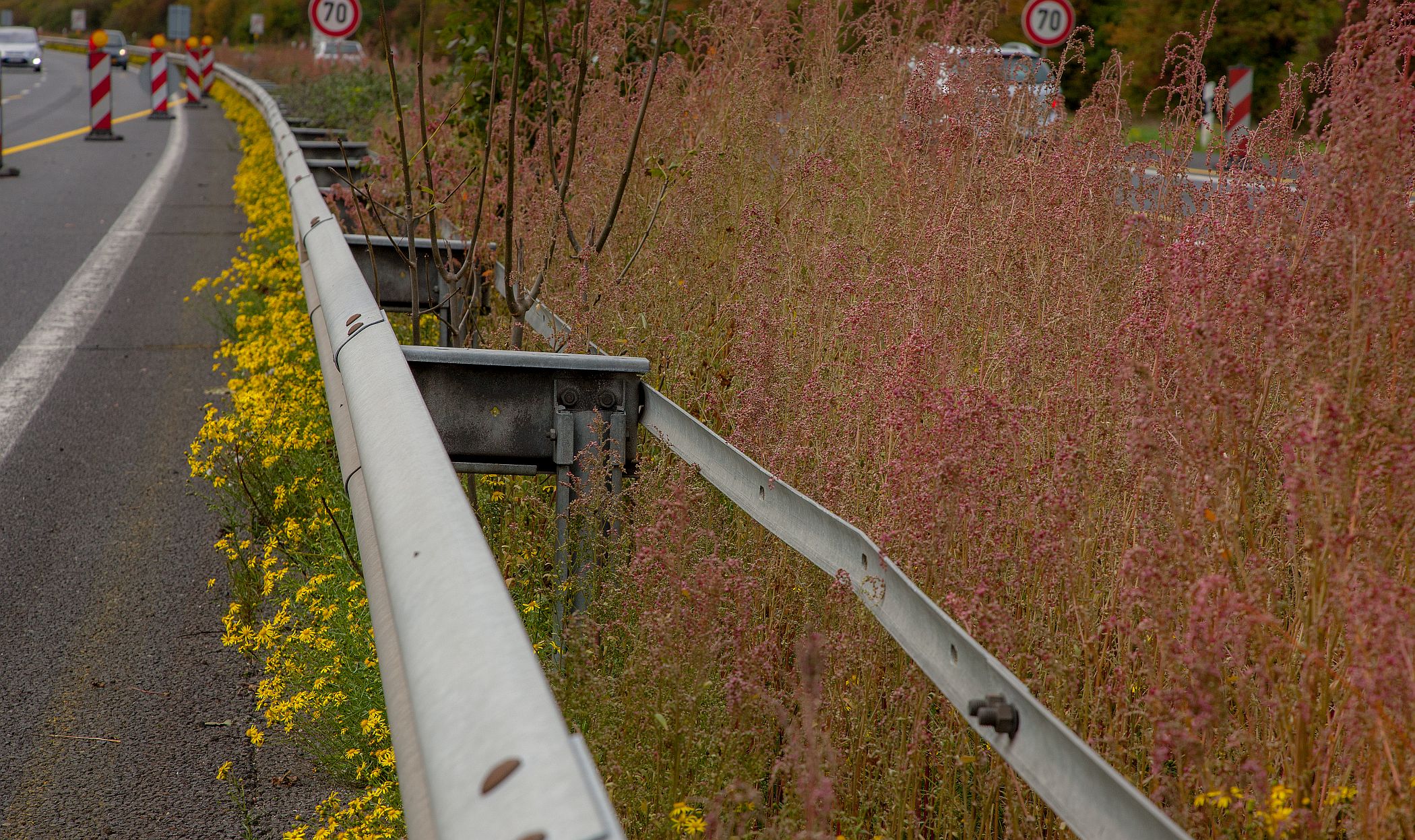
A field inspection in autumn 2015 revealed the invasive plant grows in the median strip of the A1 almost from the German border until Luxembourg city in huge very dense populations 3, which confirms the Belgian point of view that “the species is still insufficiently known and widely neglected”. 4 Atriplex micrantha, which was dominant in the middle part of the median strip, occurred together with the following species: Senecio inaequidens (dominant on the borders of the median strip), Mercurialis annua, Plantago intermedia, Prunus spinosa and Rosa rugosa.

On 13 October 2015 the species was spotted along the Jersey barrier of highway A6 between the Belgian border and Mamer 5.

Since then the species managed to travel north along the A7 highway until Colmar-Berg and the B7 national highway until Ettelbruck (Krippel et al. 2018: 60). Since then, the expansion of the species is ongoing along these highways (Krippel et. al 2020: 33).

Atriplex micrantha is very salt-tolerant and benefits from the extensive use of de-icing salt along motorways during winter. It probably arrived in Luxembourg via its large secondary distribution area in Germany, namely the A1 from Trier. It is present in our neighbouring regions in Belgium (Verloove 2006), Lorraine (Georges 2006) and Saarland (Weicherding 2007).

Atriplex micrantha Herbier MNHNL 2007

Specimen of the MNHNL Herbarium (Acc Nr. MNHNL 2011/47)

Atriplex micrantha in the median strip of the A1 highway near Potaschberg. Photo: Jim Meisch, 08.10.2014.

Atriplex micrantha in the median strip of the A1 highway near Potaschberg. Photo: Jim Meisch, 08.10.2014.

Atriplex micrantha in the median strip of the A1 highway, together with Senecio inaequidens. Photo: Jim Meisch, 08.10.2014.

Atriplex micrantha in the median strip of the A1 highway near Potaschberg, together with Senecio inaequidens. Photo: Jim Meisch, 08.10.2014.

Risk assessment

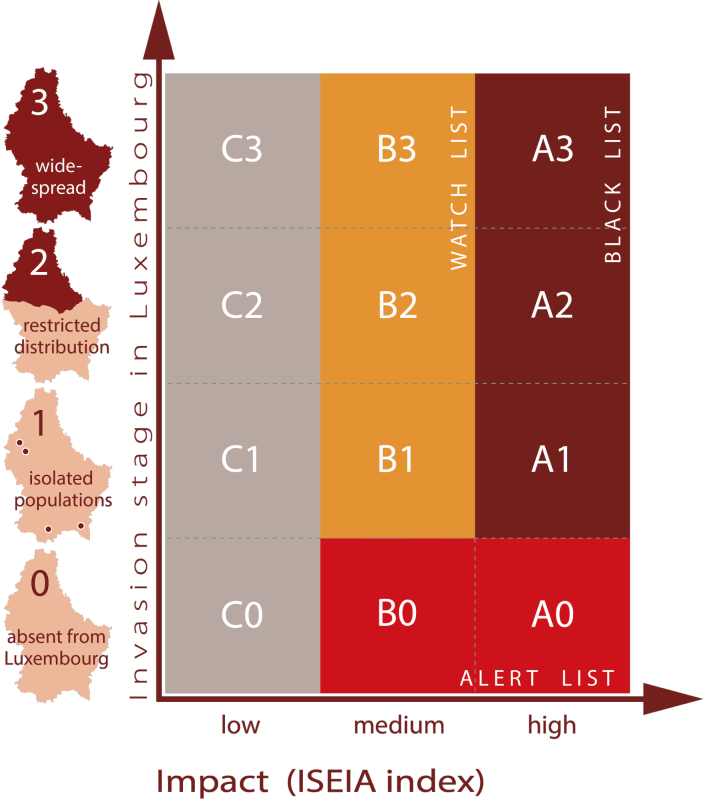
ISEIA protocol

C2 (3+1+1+1). First assessed 16 February 2017 by Yves Krippel and Christian Ries.

Harmonia+ protocol

Overall risk score 0,09 = (Overall Invasion score 0,36 x Overall Impact score 0,25) (Ries et al. 2020).

0,36Invasion
0,25Impact
0,09Risk

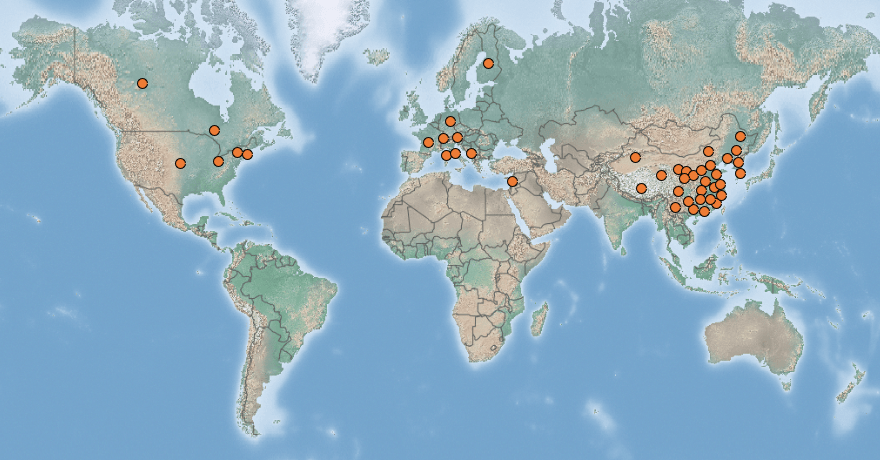
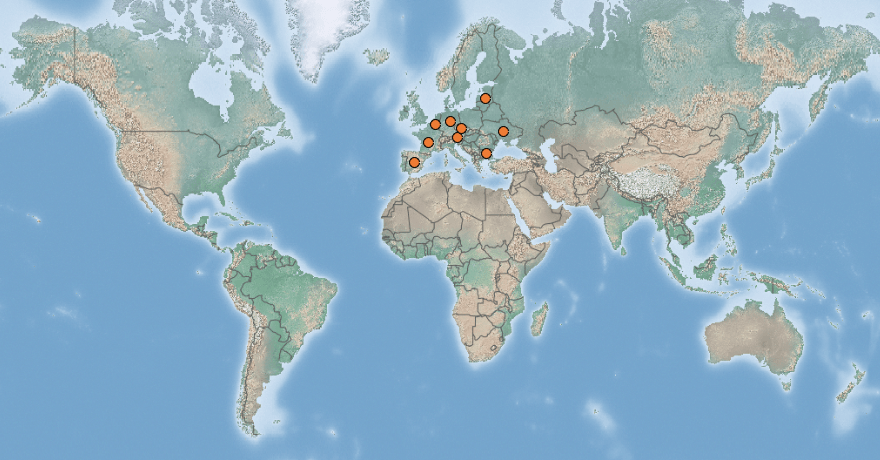
Worldwide distribution

Bibliography

  • Georges, N., 2006. Note sur deux nouvelles espèces de Chenopodiaceae adventices en Lorraine : Bassia scoparia (L.) Voss et Atriplex micrantha Ledeb. Willemetia 48: 1-4. [PDF]
  • Krippel, Y. & G. Colling, 2016. Notes floristiques. Observations faites au Luxembourg (2014-2015). Bull. Soc. Nat. luxemb. 118 : 27-51.
  • Krippel, Y., T. Helminger & G. Colling, 2018. Notes floristiques. Observations faites au Luxembourg (2016-2017). Bull. Soc. Nat. luxemb. 120: 57-76. [PDF 265 KB]
  • Krippel, Y., T. Helminger & G. Colling, 2020. Notes floristiques. Observations faites au Luxembourg (2018-2019). Bulletin Soc. Nat. luxemb. 122 : 29-55. [PDF 132 KB]
  • Lambinon J. & F. Verloove, 2012. Nouvelle flore de la Belgique, du grand-duché de Luxembourg, du Nord de la France et des régions voisines. Sixième édition. Avec la collaboration de L. Delvosalle, B. Toussaint, D. Geerinck, I. Hoste, F. Van Rossum, B. Cornier, R. Schumacker, A. Vanderpoorten et H. Vannerom. Jardin botanique national de Belgique, Meise. CXXXIX + 1195 pp. ISBN : 9789072619884.
  • MNHNL, 2000-. Atriplex micrantha Ledeb. in Recorder-Lux, database on the natural heritage of the Grand Duchy of Luxembourg. Musée national d’histoire naturelle, Luxembourg. URL: https://mdata.mnhn.lu [Accessed 2019-10-02]
  • MNHNL, iNaturalist & GBIF, 2019. Atriplex micrantha Ledeb. in MNHNL-mdata, online portal combining species observation from Recorder-Lux, iNaturalist and GBIF. National Museum of Natural History, Luxembourg. URL: https://mdata.mnhn.lu [Accessed 2019-10-02]
  • Ries, C. & Y. Krippel, 2021 [Unpublished manuscript]. First records of 56 invasive alien vascular plants in Luxembourg. MNHNL & Naturpark Öewersauer.
  • Ries, C., Y. Krippel & M. Pfeiffenschneider, 2020. Risk assessment after the Harmonia+ protocol of invasive alien vascular plant species in Luxembourg. Bull. Soc. Nat. luxemb. 122: 197-205. [PDF 132 KB]
  • Verloove, F., 2006. Atriplex micrantha, een nieuwe neofyt langs belangrijke verkeerswegen in België. Dumortiera 88: 15-20.
  • Weicherding, F.-J., 2007. Zur Verbreitung und Soziologie der adventiven Melden Atriplex micrantha Ledeb. (Verschiedensamige Melde), Atriplex sagittata Borkh. (Glanz-Melde) und Atriplex oblongifolia Waldst. et Kit. (Langblättrige Melde) (Chenopodiaceae) im Saarland und in angrenzenden Gebieten. Abh. Delattinia 33: 117-139.
  • Wikipedia contributors, 2019. Seite „Verschiedensamige Melde“ in Wikipedia, Die freie Enzyklopädie. Bearbeitungsstand: 1. Mai 2019, 23:11 UTC. URL: https://de.wikipedia.org/w/index.php?title=Verschiedensamige_Melde&oldid=188124273 [accessed 23 October 2019]

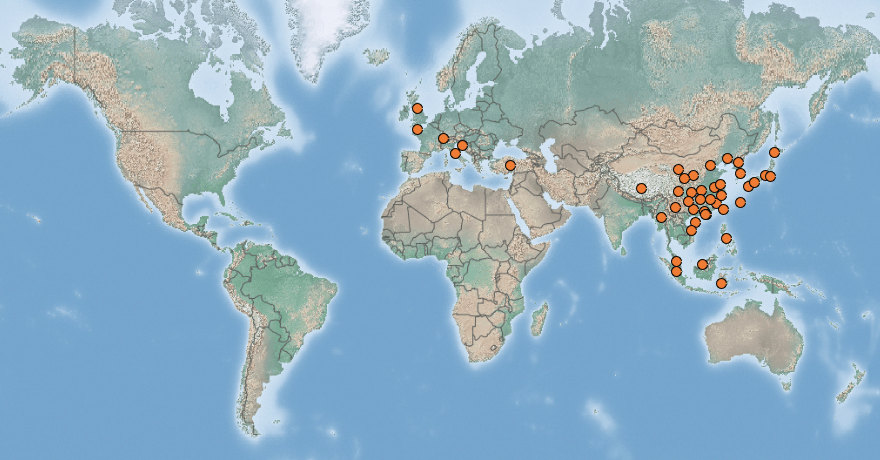
http://euromed.luomus.fi/euromed_map.php?taxon=544848&size=medium

 Page content last updated on 2021-06-02. Last proofread by Caroline Grounds on 2019-11-13.

Aix galericulata (Linnaeus, 1758)

English Mandarin duck Status LU: casual.
Lëtzebuergesch Mandarinint 1 Status Eur.: established.
Français Canard mandarin RA: ISEIA: C1. Harmonia+: n/a.
Deutsch Mandarinente Wikipedia: Wikipedia - English - Mandarin duck Wikipedia - Français - Canard mandarin Wikipedia - Deutsch - Mandarinente Wikipedia - Nederlands - Mandarijneend | Wikispecies: Wikispecies - Aix galericulata
Nederlands Mandarijneend Back to the list of vertebrates

Brief description

Aix galericulata - Zürich - Hafen Riesbach 2011-01-14 15-58-32Aix galericulata (Linnaeus, 1758) is native to Asia but has become established in several European countries. The species, which breeds mainly in tree holes, shows a preference for pools, lakes, rivers and marshes surrounded by deciduous forest. Potential competition with hole-nesting vertebrates has been suggested. The European population is resident and might be of some importance for the conservation of the species (Anselin et al. 2011).

Status and distribution in Luxembourg

Records of Aix galericulata L. in Luxembourg. Data source: Recorder-Lux, iNaturalist & GBIF, 2021-07-23.

Aix galericulata (Linnaeus, 1758) was first documented on 15 March 1998 by Claude Heidt on a dam of the Alzette in the Grund district of Luxembourg City (MNHNL 2000-).

Currently, 6 records of the mandarin duck in Luxembourg are accessible through the MNHNL-mdata portal (MNHNL, iNaturalist & GBIF 2020).

Risk assessment

ISEIA protocol

C0 (3+1+1+1); the species is considered as not established (Ries et al. 2014: 199).

Harmonia+ protocol

Not assessed yet.

Worldwide distribution

Bibliography

  • Anselin, A., E. Branquart, K. Devos, J.-Y. Paquet, D. Strubbe, D. Vangeluwe & A. Weiserbs, 2011. Harmonia database: Aix galericulata (Linnaeus, 1758). Harmonia version 1.2, Belgian Forum on Invasive Species. URL: http://ias.biodiversity.be [accessed 2020-04-22]
  • GBIF, 2019. Aix galericulata (Linnaeus, 1758) in GBIF Secretariat (2019). GBIF Backbone Taxonomy. Checklist dataset https://doi.org/10.15468/39omei [accessed 2020-04-21]
  • MNHNL, 2000-. Aix galericulata (Linnaeus, 1758) in Recorder-Lux, database on the natural heritage of the Grand Duchy of Luxembourg. Musée national d’histoire naturelle, Luxembourg. URL: https://mdata.mnhn.lu [Accessed 2020-04-21]
  • MNHNL, iNaturalist & GBIF, 2020. Aix galericulata (Linnaeus, 1758) in MNHNL-mdata, online portal combining species observation from Recorder-Lux, iNaturalist and GBIF. National Museum of Natural History, Luxembourg. URL: https://mdata.mnhn.lu [Accessed 2020-04-21]
  • Ries, C., M. Pfeiffenschneider, Engel, E., J.-C. Heidt & M. Lauff, 2014. Environmental impact assessment and black, watch and alert list classification after the ISEIA Protocol of vertebrates in Luxembourg. Bull. Soc. Nat. luxemb. 115: 195-201. [PDF 247 KB]
  • Weiss, J., 2015. Liste der Luxemburger Vogelnamen. Regulus Wissenschaftliche Berichte 29 (2014): 69-79. [PDF 1.1 MB]

 Page content last updated on 2020-04-28. Last proofread by Caroline Grounds on 2019-11-27.

Spiraea ×billardii Hérincq

English Billard’s bridewort Status LU: established. 1st record: LU <1875, ITW 1949.
Lëtzebuergesch Billard-Kluddertrausch Status Eur.: established. 1st record: ?
Français Spirée de billard RA: ISEIA: B1, Watch List. Harmonia+: 0,00.
Deutsch Billards Spierstrauch Wikipedia: Wikipedia - Français - Spirée de billard | Wikispecies: Wikispecies - Spiraea × billardii
Nederlands Billardspirea Back to the list of neophytes

Brief description

Spierstrauch ZwieselSpiraea ×billardii Hérincq is a sterile horticultural hybrid between Spiraea alba Du Roi and Spiraea douglasii Hook. It only reproduces clonally. It grows mainly in ruderal areas and in riparian habitats. Plant habitat preferences are poorly known so far.

S. billardii is a fast-growing rhizomatous species, propagating clonally. As for other Spiraea species, it may easily form dense monospecific thickets smothering native vegetation. It is not known, however, if it has the capacity to inhibit plant successions like S. alba (Branquart et al. 2010).

Status and distribution in Luxembourg

Records of Spiraea ×billardii Hérincq in Luxembourg. Data source: Recorder-Lux, iNaturalist & GBIF, 2021-07-23.

Spiraea ×billardii Hérincq was first mentioned for Luxembourg by Koltz (1875: 66) in the section about S. salicifolia. We thus consider the first record to be anterior to 1875 (Ries & Krippel 2021).

François Léon Lefort (1917-1975) first documented the species in the wild on 1949-08-03 “along the Ernz Blanche downstream of Medernach, 300 m from the road to Diekirch”  (Herb. LUX specimen № 21985; MNHNL 2000-).

Currently, 5 records of Billard’s bridewort are accessible through the MNHNL-mdata portal (MNHNL, iNaturalist & GBIF 2019).

This horticultural species is often grown for ornamental purposes in parks and gardens. Subspontaneous or naturalised: old hedges, roadsides, embankments, wastelands (Lambinon & Verloove 2012: 326).

This Spiraea is by far the most widespread in the wild. However, the identity of the plant remains debatable: some authors distinguish Spiraea ×billardii (very pale pink corolla; narrowly conical inflorescence) and Spiraea ×Silverside Silverside (Spiraea douglasii × salicifolia) (bright pink corolla; subcylindrical inflorescence; leaf blade more regularly toothed, almost to the base), which would be much more common. However, the recognition of these two taxa seems difficult and therefore S. billardii is sometimes treated in a broad sense as a hybridogenic species that is more or less variable (Lambinon & Verloove 2012: 326).

Risk assessment

ISEIA protocol

B1 (2+2+3+2) = Watch List, reassessed on 24 January 2019 by C. Ries and M. Pfeiffenschneider. Original assessment: B0 (2+2+3+2) = Alert List (Ries et al. 2013: 19).

Harmonia+ protocol

Overall risk score 0,00 = (Overall Invasion score 0,00 x Overall Impact score 0,43) (Ries et al. 2020).

Overall risk score 0,00 = (Overall Invasion score 0,00 x Overall Impact score 0,43) (Ries et al. 2020).

0,00Invasion
0,43Impact
0,00Risk

Worldwide distribution

No worldwide distribution map available at CABI or GBIF (2020-03-04).

Bibliography

  • Branquart, E., P. Dupriez, S. Vanderhoeven, W. Van Landuyt, F. Van Rossum & F. Verloove, 2010. Harmonia database: Spiraea ×billardii Hérincq. Harmonia version 1.2, Belgian Forum on Invasive Species. URL: http://ias.biodiversity.be [accessed on 2019-10-15]
  • Lambinon J. & F. Verloove, 2012. Nouvelle flore de la Belgique, du grand-duché de Luxembourg, du Nord de la France et des régions voisines. Sixième édition. Avec la collaboration de L. Delvosalle, B. Toussaint, D. Geerinck, I. Hoste, F. Van Rossum, B. Cornier, R. Schumacker, A. Vanderpoorten et H. Vannerom. Jardin botanique national de Belgique, Meise. CXXXIX + 1195 pp. ISBN : 9789072619884.
  • MNHNL, 2000-. Recorder-Lux, database on the natural heritage of the Grand Duchy of Luxembourg. National Museum of Natural History, Luxembourg. Spiraea ×billardii Hérincq observed on 1949-08-03, occurrence ID DSS00439000013HF, via https://mdata.mnhn.lu [accessed 2021-03-12].
  • MNHNL, iNaturalist & GBIF, 2019. Spiraea ×billardii Hérincq in MNHNL-mdata, online portal combining species observation from Recorder-Lux, iNaturalist and GBIF. National Museum of Natural History, Luxembourg. URL: https://mdata.mnhn.lu [Accessed 2019-10-15]
  • Ries, C. & Y. Krippel, 2021 [Unpublished manuscript]. First records of 56 invasive alien vascular plants in Luxembourg. MNHNL & Naturpark Öewersauer.
  • Ries, C., Y. Krippel & M. Pfeiffenschneider, 2020. Risk assessment after the Harmonia+ protocol of invasive alien vascular plant species in Luxembourg. Bull. Soc. Nat. luxemb. 122: 197-205. [PDF 132 KB]
  • Ries, C., Y. Krippel, M. Pfeiffenschneider & S. Schneider, 2013. Environmental impact assessment and black, watch and alert list classification after the ISEIA Protocol of non-native vascular plant species in Luxembourg. Bull. Soc. Nat. luxemb. 114: 15-21. [PDF 652 KB]

 Page content last updated on 2021-03-12. Last proofread by Caroline Grounds on 2019-11-21.

Solidago gigantea Ait.

English Tall goldenrod Status LU: established. 1st record: LU & ITW 1882.
Lëtzebuergesch Riseg Goldrutt Status Eur.: established. 1st record: ~1700. 1
Français Verge d’or géante RA: ISEIA: A2, Black List. Harmonia+: 0,26.
Deutsch Riesen-Goldrute Wikipedia: Wikipedia - English - Tall goldenrod Wikipedia - Français - Verge d'or géante Wikipedia - Deutsch - Riesen-Goldrute Wikipedia - Nederlands - Late guldenroede | Wikispecies: Wikispecies - Solidago gigantea | CABI
Nederlands Late guldenroede Back to the list of neophytes

Brief description

Solidago gigantea (subsp. serotina) sl20Solidago gigantea Ait. can grow in a wide range of soil conditions but is not shade-tolerant. The plant is found in many disturbed and nitrogen-rich sites such as ruderal areas, fallow lands, abandoned fields, river banks, etc. and also colonises humid grasslands. It can build up dense and long-lasting populations and easily outcompete native plants, including tree seedlings. Competitive ability is favoured by allelopathic interactions. Once established, the plant may remain dominant for a long period of time and often prevents natural colonisation by woody species (Branquart et al. 2010).

Status and distribution in Luxembourg

Records of Solidago gigantea Ait. in Luxembourg. Data source: Recorder-Lux, iNaturalist & GBIF, 2021-07-23.

The oldest herbarium specimen at the MNHNL was collected in 1882 by Jean Feltgen (1833-1904) in a hedge near the village of Angelsberg (Specimen № 15568, MNHNL 2000-). This specimen was labeled Solidago canadensis L. and later verified as Solidago gigantea var. serotina (O. Kunze) Cronq..

The next oldest herbarium specimen at the MNHNL was collected under its synonym Solidago serotina Ait. on 1887-09-08 by Jean Feltgen (1833-1904) in a garden (“jardin Bosseler”) in Mersch (Specimen № 15601, MNHNL 2000-). The next record is a herbarium specimen collected by Jos Witry on 15 July 1937 in gardens in Rumelange (Specimen № 50850, MNHNL 2000-).

Léopold Reichling (1921-2009) reported the species on 1960-09-22 in several locations of the Grund district in Luxembourg City (Bock, Stierchen, Breedewee) (MNHNL 2000-).

Currently, 78 records of tall goldenrod are accessible through the MNHNL-mdata portal (MNHNL, iNaturalist & GBIF 2019).

This melliferous species native to North America is naturalised in Europe: fairly common to fairly rare, present in waterfronts, forest edges, wastelands, wastelands; often in large stands (Lambinon & Verloove 2012: 703).

This species includes populations in North America with variable chromosome numbers. Naturalised plants in Europe have generally been reported to Solidago gigantea subsp. serotina (O. Kuntze) McNeill, still known to be tetraploid. The question remains, however, whether Solidago gigantea subsp. gigantea, diploid, also exists in Europe, and especially whether the two taxa are morphologically identifiable. The problem remains to be studied in the wild (Lambinon & Verloove 2012: 703).

Risk assessment

ISEIA protocol

A2 (3+2+3+3) = Black List (Ries et al. 2013: 19).

Harmonia+ protocol

Overall risk score 0,20 = (Overall Invasion score 0,63 x Overall Impact score 0,42) (Ries et al. 2020).

0,63Invasion
0,42Impact
0,20Risk

Worldwide distribution

Bibliography

  • Branquart, E., S. Vanderhoeven, W. Van Landuyt, F. Van Rossum & F. Verloove, 2010. Harmonia database: Solidago gigantea Harmonia version 1.2, Belgian Forum on Invasive Species. URL: http://ias.biodiversity.be [accessed on 2019-10-15]
  • CABI, 2019. Solidago gigantea. In: Invasive Species Compendium. Wallingford, UK: CAB International. URL: www.cabi.org/isc [accessed 2020-03-04]
  • Lambinon J. & F. Verloove, 2012. Nouvelle flore de la Belgique, du grand-duché de Luxembourg, du Nord de la France et des régions voisines. Sixième édition. Avec la collaboration de L. Delvosalle, B. Toussaint, D. Geerinck, I. Hoste, F. Van Rossum, B. Cornier, R. Schumacker, A. Vanderpoorten et H. Vannerom. Jardin botanique national de Belgique, Meise. CXXXIX + 1195 pp. ISBN : 9789072619884.
  • MNHNL, 2000-. Solidago gigantea Aiton in Recorder-Lux, database on the natural heritage of the Grand Duchy of Luxembourg. Musée national d’histoire naturelle, Luxembourg. URL: https://mdata.mnhn.lu [Accessed 2019-10-15]
  • MNHNL, iNaturalist & GBIF, 2019. Solidago gigantea Aiton in MNHNL-mdata, online portal combining species observation from Recorder-Lux, iNaturalist and GBIF. National Museum of Natural History, Luxembourg. URL: https://mdata.mnhn.lu [Accessed 2019-10-15]
  • Ries, C. & Y. Krippel, 2021 [Unpublished manuscript]. First records of 56 invasive alien vascular plants in Luxembourg. MNHNL & Naturpark Öewersauer.
  • Ries, C., Y. Krippel & M. Pfeiffenschneider, 2020. Risk assessment after the Harmonia+ protocol of invasive alien vascular plant species in Luxembourg. Bull. Soc. Nat. luxemb. 122: 197-205. [PDF 132 KB]
  • Ries, C., Y. Krippel, M. Pfeiffenschneider & S. Schneider, 2013. Environmental impact assessment and black, watch and alert list classification after the ISEIA Protocol of non-native vascular plant species in Luxembourg. Bull. Soc. Nat. luxemb. 114: 15-21. [PDF 652 KB]

 Page content last updated on 2021-03-11. Last proofread by Caroline Grounds on 2019-11-21.

Solidago canadensis L.

English Canada goldenrod Status LU: established. 1st record: LU & ITW <1872.
Lëtzebuergesch Kanadesch Goldrutt Status Eur.: established. 1st record: 1645. 1
Français Verge d’or du Canada RA: ISEIA: A2, Black List. Harmonia+: 0,39.
Deutsch Kanadische Goldrute Wikipedia: Wikipedia - English - Canada goldenrod Wikipedia - Français - Verge d'or du Canada Wikipedia - Deutsch - Kanadische Goldrute Wikipedia - Nederlands - Canadese guldenroede | Wikispecies: Wikispecies - Solidago canadensis | CABI
Nederlands Canadese guldenroede Back to the list of neophytes

Brief description

Solidago canadense, Step & Watson 1896 v2 pl 127, cleanIn its native range, the Canada goldenrod is found mainly on forest edges and roadsides, in abandoned fields and other unmanaged areas which it colonises rapidly after abandonment. Where it has been introduced, it occupies the same habitats as in its native range but also occurs in dry meadows of high conservation value and on wetland fringes. S. canadensis is a pioneer and light-demanding species that occurs over a wide range of soil fertility and texture conditions. It can eliminate almost all other plant species; competitive ability is favoured by allelopathic interactions. Once established, the plant may remain dominant for a long period of time and often prevents natural colonisation by woody species (Branquart et al. 2011).

Status and distribution in Luxembourg

Records of Solidago canadensis L. in Luxembourg. Data source: Recorder-Lux, iNaturalist & GBIF, 2021-07-23.

The oldest reference to the species dates from 1872 and states that the species is cultivated for garden decoration, and that it often becomes naturalised in the vicinity of homes and on cemeteries (Fischer 1872: 82). Koltz (1873: 128) lists the species as “cultivated and sometimes subspontaneous near homes and waterways”. Koltz (1874: 30) states that it also becomes naturalised in the vicinity of watercourses. Krombach (1875: 343) states that the species is cultivated and occurs subspontaneously very rarely (RR) in the vicinity of houses. According to Lambinon & Verloove (2012: 703), this naturalised and melliferous species can be found quite rarely (AR-R) in waterfront, forest edges, vacant lots and wastelands.

The first scientific record for Luxembourg that we know of was made by François Léon Lefort (1917-1975) on 17th August 1949 in the Clausen district of Luxembourg City, in neglected gardens and beside paths at the site of the former Mansfeld park (Specimen № 26916, MNHNL 2000-). 174 observations are accessible via the MNHNL-mdata portal (MNHNL, iNaturalist & GBIF 2019).

Risk assessment

ISEIA protocol

A2 (3+2+3+3) = Black List (Ries et al. 2013: 19).

Harmonia+ protocol

Overall risk score 0,39 = (Overall Invasion score 0,71 x Overall Impact score 0,55) (Ries et al. 2020).

0,71Invasion
0,55Impact
0,39Risk

Worldwide distribution

Bibliography

  • Branquart, E., S. Vanderhoeven, W. Van Landuyt, F. Van Rossum, F. Verloove, 2011. Harmonia database: Solidago canadensis L. Harmonia version 1.2, Belgian Forum on Invasive Species. URL: http://ias.biodiversity.be [accessed on 2019-10-03]
  • CABI, 2014. Solidago canadensis. In: Invasive Species Compendium. Wallingford, UK: CAB International. URL: www.cabi.org/isc [accessed 2020-03-04]
  • Fischer, E., 1872. Les plantes subspontanées et naturalisées de la flore du grand-duché de Luxembourg. Publications de l’Institut royal grand-ducal de Luxembourg, section des sciences naturelles et mathématiques XII: 1-115. Imprimerie V. Buck, Luxembourg.
  • Koltz, J.-P.-J., 1873. Prodrome de la flore du grand-duché de Luxembourg. Première partie. Plantes phanérogames. Imprimerie V. Buck, Luxembourg. 279 S.
  • Koltz, J.-P.-J., 1874. Plantes Phanérogames découvertes dans le Grand-Duché depuis la publication de la Flore luxembourgeoise de Tinant (1836). Recueil des mémoires et des travaux publiés par la Société de botanique du grand-duché de Luxembourg 1: 12-39.
  • Krombach, J.-H.-G., 1875. Flore du grand-duché de Luxembourg. Plantes phanérogames. 564 p. Luxembourg, Imprimerie Joris.
  • Lambinon J. & F. Verloove, 2012. Nouvelle flore de la Belgique, du grand-duché de Luxembourg, du Nord de la France et des régions voisines. Sixième édition. Avec la collaboration de L. Delvosalle, B. Toussaint, D. Geerinck, I. Hoste, F. Van Rossum, B. Cornier, R. Schumacker, A. Vanderpoorten et H. Vannerom. Jardin botanique national de Belgique, Meise. CXXXIX + 1195 pp. ISBN : 9789072619884.
  • MNHNL, 2000-. Solidago canadensis L. in Recorder-Lux, database on the natural heritage of the Grand Duchy of Luxembourg. Musée national d’histoire naturelle, Luxembourg. URL: https://mdata.mnhn.lu [Accessed 2019-09-06]
  • MNHNL, iNaturalist & GBIF, 2019. Solidago canadensis L. in MNHNL-mdata, online portal combining species observation from Recorder-Lux, iNaturalist and GBIF. National Museum of Natural History, Luxembourg. URL: https://mdata.mnhn.lu [Accessed 2019-09-06]
  • Ries, C. & Y. Krippel, 2021 [Unpublished manuscript]. First records of 56 invasive alien vascular plants in Luxembourg. MNHNL & Naturpark Öewersauer.
  • Ries, C., Y. Krippel & M. Pfeiffenschneider, 2020. Risk assessment after the Harmonia+ protocol of invasive alien vascular plant species in Luxembourg. Bull. Soc. Nat. luxemb. 122: 197-205. [PDF 132 KB]
  • Ries, C., Y. Krippel, M. Pfeiffenschneider & S. Schneider, 2013. Environmental impact assessment and black, watch and alert list classification after the ISEIA Protocol of non-native vascular plant species in Luxembourg. Bull. Soc. Nat. luxemb. 114: 15-21. [PDF 652 KB]

 Page content last updated on 2021-03-11. Last proofread by Caroline Grounds on 2019-11-21.

Quercus rubra L.

English Northern red oak Status LU: established. 1st record: LU <1873, ITW unkn.
Lëtzebuergesch Rout Eech Status Eur.: established. 1st record: 1700s. 1
Français Chêne rouge d’Amérique RA: ISEIA: C1. Harmonia+: 0,29.
Deutsch Roteiche Wikipedia: Wikipedia - English - Northern red oak Wikipedia - Français - Chêne rouge d'Amérique Wikipedia - Deutsch - Roteiche Wikipedia - Nederlands - Amerikaanse eik | Wikispecies: Wikispecies - Quercus rubra
Nederlands Amerikaanse eik Back to the list of neophytes

Brief description

Histoire des arbres forestiers de l'Amérique septentrionale (Pl. 26) (8720656612)Often planted in parks and woods, Quercus rubra L. grows on a variety of dry-mesic to mesic sites; it occurs in rich, mesic woods, on sandy plains, rock outcrops and at the outer edges of floodplains. It is intermediate in shade tolerance and is generally considered a midseral species, but its successional status is poorly known. It is generally unable to establish beneath its own canopy. In Lithuania, red oak seedlings have been reported to spread successfully over distances exceeding 300 metres from the parent trees. Its potential to colonise semi-natural habitats through long-distance dispersal is however uncertain in Belgian eco-climatic conditions (Branquart et al. 2012).

Where planted, red oak recruitment rate is very high and young trees can form a dense understorey excluding ground vegetation and other tree species. Exclusion of ferns and grasses is favoured by the release of allelochemicals by leaves and roots. It is favoured over other tree species by heavy cutting because of its sprouting ability. Red oak is characterised by a species-poor phytophagous and saproxylic community in comparison to native oaks. Litter is hardly degraded and favours soil acidification. The species has also been reported to accelerate colonisation of open habitats near forest edges (Branquart et al. 2012).

Status and distribution in Luxembourg

Records of Quercus rubra L. in Luxembourg. Data source: Recorder-Lux, iNaturalist & GBIF, 2021-07-23.

Quercus rubra L. was first mentioned by Koltz (1873: 150) as grown in the forests, e.g. Johannisberg, Schäferei: Schönfels; this information is also listed by Krombach (1875: 407).

Since before 1850, when the tree nursery “de Planti” was founded by the municipal administration south of Hosingen, and until 1895, oak trees were grown here, which were used to create and replenish oak bark coppices. The quantity of acorns sown each year was 60 quintals. The gleaned acorns are not very abundant here, the seed was often bought abroad; this detail explains, incidentally, a curious fact: the presence of many American red oak trees in the coppices of the eastern part of the Oesling (R.F. 1951). 2

The oldest herbarium specimen of Quercus rubra L. at the MNHNL was collected in July 1949 by Jos. Witry near Fischbach (Specimen № 50691, MNHNL 2000-).

Currently, 64 records of the northern red oak are accessible through the MNHNL-mdata portal (MNHNL, iNaturalist & GBIF 2019).

The northern red oak is not rare, planting is even in progress, also as a street tree (Welter et al. 2008: 54).

Grown for wood production, usually on acidic and relatively dry soils, more rarely for ornamental purposes in parks and along roads. Subspontaneous or naturalised here and there (Lambinon & Verloove 2012: 116).

Risk assessment

ISEIA protocol

C1 (1+1+1+1) (Ries et al. 2013: 18).

Harmonia+ protocol

Overall risk score 0,29 = (Overall Invasion score 0,63 x Overall Impact score 0,47) (Ries et al. 2020).

0,63Invasion
0,47Impact
0,29Risk

Worldwide distribution

Bibliography

  • Branquart, E., S. Vanderhoeven, W. Van Landuyt, F. Van Rossum & F. Verloove, 2012. Harmonia database: Quercus rubra L. Harmonia version 1.2, Belgian Forum on Invasive Species. URL: http://ias.biodiversity.be [accessed on 2019-10-15]
  • GBIF 2020. Quercus rubra J.F.Arnold in GBIF Secretariat (2019). GBIF Backbone Taxonomy. Checklist dataset https://doi.org/10.15468/39omei accessed via GBIF.org on 2020-03-02.
  • Koltz, J.-P.-J., 1873. Prodrome de la flore du grand-duché de Luxembourg. Première partie. Plantes phanérogames. Imprimerie V. Buck, Luxembourg. 279 S.
  • Krombach, J.-H.-G., 1875. Flore du grand-duché de Luxembourg. Plantes phanérogames. 564 p. Luxembourg, Imprimerie Joris.
  • Lambinon J. & F. Verloove, 2012. Nouvelle flore de la Belgique, du grand-duché de Luxembourg, du Nord de la France et des régions voisines. Sixième édition. Avec la collaboration de L. Delvosalle, B. Toussaint, D. Geerinck, I. Hoste, F. Van Rossum, B. Cornier, R. Schumacker, A. Vanderpoorten et H. Vannerom. Jardin botanique national de Belgique, Meise. CXXXIX + 1195 pp. ISBN : 9789072619884.
  • MNHNL, 2000-. Quercus rubra L. in Recorder-Lux, database on the natural heritage of the Grand Duchy of Luxembourg. Musée national d’histoire naturelle, Luxembourg. URL: https://mdata.mnhn.lu [Accessed 2019-10-15]
  • MNHNL, iNaturalist & GBIF, 2019. Quercus rubra L. in MNHNL-mdata, online portal combining species observation from Recorder-Lux, iNaturalist and GBIF. National Museum of Natural History, Luxembourg. URL: https://mdata.mnhn.lu [Accessed 2019-10-15]
  • R.F., 1951. Historique de la Pépinière domaniale de Hosingen. Service Information et presse, Bulletin d’information 5: 88. [PDF 183 KB]
  • Ries, C. & Y. Krippel, 2021 [Unpublished manuscript]. First records of 56 invasive alien vascular plants in Luxembourg. MNHNL & Naturpark Öewersauer.
  • Ries, C., Y. Krippel & M. Pfeiffenschneider, 2020. Risk assessment after the Harmonia+ protocol of invasive alien vascular plant species in Luxembourg. Bull. Soc. Nat. luxemb. 122: 197-205. [PDF 132 KB]
  • Ries, C., Y. Krippel, M. Pfeiffenschneider & S. Schneider, 2013. Environmental impact assessment and black, watch and alert list classification after the ISEIA Protocol of non-native vascular plant species in Luxembourg. Bull. Soc. Nat. luxemb. 114: 15-21. [PDF 652 KB]
  • Welter A., J.Turk & J. Trossen, 2008. Les arbres introduits au Luxembourg. Inventaire des essences arborescentes non indigènes de pleine terre présentes sur le territoire du Grand-Duché de Luxembourg. Ferrantia 53, Musée national d’histoire naturelle, Luxembourg, ISSN 1682-5519, 111 pp.
  • Wikipedia contributors, 2021. Quercus rubra. In Wikipedia, The Free Encyclopedia. Retrieved 14:58, March 5, 2021, from https://en.wikipedia.org/w/index.php?title=Quercus_rubra&oldid=1002701429

 Page content last updated on 2021-03-05. Last proofread by Caroline Grounds on 2019-11-20.

Prunus serotina Ehrh.

English Black cherry Status LU: established. 1st record: LU <1910, ITW 1960.
Lëtzebuergesch Spéid Drauwekiischt Status Eur.: established. 1st record: FR 1620s. 1
Français Cerisier d’automne RA: ISEIA: B1, Watch List. Harmonia+: 0,32.
Deutsch Spätblühende Traubenkirsche Wikipedia: Wikipedia - English - Black cherry Wikipedia - Français - Cerisier d'automne Wikipedia - Deutsch - Spätblühende Traubenkirsche Wikipedia - Nederlands - Amerikaanse_vogelkers | Wikispecies: Wikispecies - Prunus serotina | CABI
Nederlands Amerikaanse vogelkers Back to the list of neophytes

Brief description

Amerikaanse vogelkers Prunus serotinaPrunus serotina Ehrh. prefers dry to moist sandy soils. It is an opportunistic gap-phase tree species efficiently dispersed over long distances by fruit-eating birds and mammals. It thrives in forest clearings and woodlands dominated by light-demanding species such as oak, pine or birch. It can also invade various types of semi-natural open habitats with a wide range of humidity levels like wetlands, bogs, heathlands, dry grasslands and dunes.

Black cherry forms dense, highly competitive thickets, e.g. through root sprouting. In forest ecosystems, it locally affects the development of ground and shrub layers. It may temporarily inhibit vegetation succession, especially in large forest openings. It is able to reduce plant species richness or modify the composition of plant communities (e.g. in heavily invaded stands on moist soils). Invasion of forest ecosystems by P. serotina can change humus conditions and reduce soil water availability due to increased interception and transpiration. It can also prevent forest rejuvenation and increase plantation costs. Impact on biodiversity is especially marked when black cherry colonises open habitats containing rare species like heathlands, dry grasslands or dune ecosystems. The whole plant contains cyanic acid and is toxic for livestock. It is poorly consumed by deer, which may favour invasion rate in habitats where deer are overabundant (Branquart et al. 2012).

Status and distribution in Luxembourg

Records of Prunus serotina Ehrh. in Luxembourg. Data source: Recorder-Lux, iNaturalist & GBIF, 2021-07-23.

At the beginning of the 20th century, the forestry administration decided to carry out trials of growing coniferous trees and exotic plants, little known in the Grand Duchy until then, in the Paschent estate in the Marscherwald forest. Between 1903 and 1910, 266870 plants of 19 species were planted, including 400 Prunus serotina. Half a century later it was found that the black cherry had not given the result expected of it, that it is of no importance in the young hardwood forest (Gillen 1951: 87). 2

During an excursion of the Luxembourg Naturalist Society on 1952-05-01 in these plantations, Prunus serotina was observed amongst most species listed by Gillen (1951) (Anonyme 1953). 3

We thus conclude that the first record of Prunus serotina should be dated before 1910 and the first documented sighting can be dated on 1952-05-01.

The first observation in the wild was made by Léopold Reichling on 1960-08-31 at Grondmillen in the municipality of Esch-sur-Sûre (MNHNL 2000-).

Currently, 36 records of the black cherry are accessible through the MNHNL-mdata portal (MNHNL, iNaturalist & GBIF 2021).

The black cherry is grown for ornamental purposes in parks and along roads. Often subspontaneous or naturalised: woods, moors, hedges, wastelands (Lambinon & Verloove 2012: 366).

Risk assessment

ISEIA protocol

B1 (2+2+3+3) = Watch List (Ries et al. 2013: 18).

Harmonia+ protocol

Overall risk score 0,32 = (Overall Invasion score 0,56 x Overall Impact score 0,58) (Ries et al. 2020).

0,56Invasion
0,58Impact
0,32Risk

Worldwide distribution

Bibliography

  • Anonyme, 1953. Excursion du 1er mai 1952. Herborisation de Rippig à Junglinster par Marscherwald, moulin de Reuland, Blumenthal, Belenbusch. Guides: Eugène Beck & Emile Gillen. Bulletin de la Société des naturalistes luxembourgeois 57 (1952): 233-234.
  • Branquart, E., S. Vanderhoeven, M. Vanhellemont, W. Van Landuyt, F. Van Rossum, K. Verheyen & F. Verloove, 2012. Harmonia database: Prunus serotina Ehrh.. Harmonia version 1.2, Belgian Forum on Invasive Species. URL: http://ias.biodiversity.be [accessed on 2019-10-15]
  • CABI, 2021. Prunus serotina. In: Invasive Species Compendium. Wallingford, UK: CAB International. URL: www.cabi.org/isc [accessed 2021-03-05]
  • Gillen, E., 1951. La Forêt de « Marscherwald ». Service Information et presse, Bulletin d’information 5: 86-87. [PDF 300 KB]
  • Lambinon J. & F. Verloove, 2012. Nouvelle flore de la Belgique, du grand-duché de Luxembourg, du Nord de la France et des régions voisines. Sixième édition. Avec la collaboration de L. Delvosalle, B. Toussaint, D. Geerinck, I. Hoste, F. Van Rossum, B. Cornier, R. Schumacker, A. Vanderpoorten et H. Vannerom. Jardin botanique national de Belgique, Meise. CXXXIX + 1195 pp. ISBN : 9789072619884.
  • MNHNL, 2000-. Prunus serotina Ehrh. in Recorder-Lux, database on the natural heritage of the Grand Duchy of Luxembourg. Musée national d’histoire naturelle, Luxembourg. URL: https://mdata.mnhn.lu [Accessed 2019-10-15]
  • MNHNL, iNaturalist & GBIF, 2019. Prunus serotina Ehrh. in MNHNL-mdata, online portal combining species observation from Recorder-Lux, iNaturalist and GBIF. National Museum of Natural History, Luxembourg. URL: https://mdata.mnhn.lu [Accessed 2021-01-13]
  • Ries, C. & Y. Krippel, 2021 [Unpublished manuscript]. First records of 56 invasive alien vascular plants in Luxembourg. MNHNL & Naturpark Öewersauer.
  • Ries, C., Y. Krippel & M. Pfeiffenschneider, 2020. Risk assessment after the Harmonia+ protocol of invasive alien vascular plant species in Luxembourg. Bull. Soc. Nat. luxemb. 122: 197-205. [PDF 132 KB]
  • Ries, C., Y. Krippel, M. Pfeiffenschneider & S. Schneider, 2013. Environmental impact assessment and black, watch and alert list classification after the ISEIA Protocol of non-native vascular plant species in Luxembourg. Bull. Soc. Nat. luxemb. 114: 15-21. [PDF 652 KB]
  • Welter A., J.Turk & J. Trossen, 2008. Les arbres introduits au Luxembourg. Inventaire des essences arborescentes non indigènes de pleine terre présentes sur le territoire du Grand-Duché de Luxembourg. Ferrantia 53, Musée national d’histoire naturelle, Luxembourg, ISSN 1682-5519, 111 pp.

 Page content last updated on 2021-03-05. Last proofread by Caroline Grounds on 2019-11-20.

Populus ×canadensis Moench

English Canadian poplar Status LU: established. 1st record: LU 1823, ITW 1987.
Lëtzebuergesch Kanadesch Pëppel Status Eur.: established.
Français Peuplier noir hybride RA: ISEIA: C3. Harmonia+: 0,24.
Deutsch Bastard-Schwarz-Pappel Wikipedia: Wikipedia - Deutsch - Bastard-Schwarz-Pappel Wikipedia - Nederlands - Canadapopulier | Wikispecies: Wikispecies - Populus × canadensis 
Nederlands Canadapopulier Back to the list of neophytes

Brief description

AltneckarBastardSchwarzpappel 2011-04Populus ×canadensis Moench is a tree species that originates from hybridisation events between P. nigra, the European poplar and two American poplars, P. deltoides and P. angulata. It occurs in many varieties and can appear spontaneously wherever the parent species is present, but is also commonly bred and planted all over the world. The Canadian poplar thrives on periodically inundated flood plains, nonetheless it can also be found in ruderal areas. The tree threatens to extinguish its parent species and can contribute to the desiccation of its wetland habitats.

Status and distribution in Luxembourg

Records of Populus ×canadensis Moench in Luxembourg. Data source: Recorder-Lux, iNaturalist & GBIF, 2021-07-23.

Populus ×canadensis Moench was first mentioned in Luxembourg under its synonym Populus monilifera Willd. (Tinant 1836: 490). Koltz (1873: 153) and Krombach (1875: 415) state that Populus canadensis [sic] is “common and grown in avenues where only male feet are most often found”.

But Koltz (1875: 138) specifies its 1st record in today Luxembourg in 1823: “Originally from North America as far away as Illinois and Virginia, Populus canadensis Moench was introduced in 1812 in Preisch Park, and in 1842 as P. lævigata and P. molinifera in Walferdange Park. Cultivated as avenue tree. The one which was planted in the Schrassig Park in 1823, has now a trunk girth of 3,66m at shoulder height”.

The oldest herbarium specimen at the MNHNL was collected on 21 April 1935 by Jos. Witry in Bergem (Specimen № 50719, MNHNL 2000-). The next scientific record that we know of was made by Léopold Reichling (1921-2009) on 2nd September 1983 in Ehnen (Municipality of Wormeldange).

The first record in the wild seems to have been documented on 1987-09-03 by Max Lauff and Mariette Scheuer along the Millebaach in Beckerich (MNHNL 2000-).

Currently, 86 records of the Canadian poplar are accessible through the MNHNL-mdata portal (MNHNL, iNaturalist & GBIF 2019).

The Canadian poplar is rather common in Luxembourg.

Other poplar hybrids and varieties

Many poplar hybrids from artificial crosses between P. nigra and North American P. deltoides, complicated by return crosses, selections and various improvements, are grouped under the name of Populus ×canadensis; some cultivars are old (about two centuries), others of more or less recent origin. Often, some only include male individuals, while others are female gen. The main varieties and forms traditionally cultivated are var. canadensis, var. gelrica (Houtzagers) Geerinck and var. marilandica (Bosc ex Poiret) Rehd. Some subspontaneous poplars (riversides…), which may result from spontaneous return crosses between Populus ×canadensis and P. nigra, are of delicate determination (Lambinon & Verloove 2012: 230-231).

Risk assessment

ISEIA protocol

C3 (2+2+2+1) (Ries et al. 2013: 18).

Harmonia+ protocol

Overall risk score 0,24 = (Overall Invasion score 0,66 x Overall Impact score 0,37) (Ries et al. 2020).

0,66Invasion
0,37Impact
0,24Risk

Worldwide distribution

Bibliography

  • GBIF 2020. Populus canadensis Moench in GBIF Secretariat (2019). GBIF Backbone Taxonomy. Checklist dataset https://doi.org/10.15468/39omei [accessed 2020-03-02]
  • Koltz, J.-P.-J., 1873. Prodrome de la flore du grand-duché de Luxembourg. Première partie. Plantes phanérogames. Imprimerie V. Buck, Luxembourg. 279 S.
  • Koltz, J.-P.-J., 1875. Dendrologie luxembourgeoise. Catalogue des arbres, arbrisseaux et arbustes spontanés, subspontanés ou introduits dans la culture du Grand-Duché de Luxembourg. Imprimerie V. Buck, Luxembourg. 217 p.
  • Krombach, J.-H.-G., 1875. Flore du grand-duché de Luxembourg. Plantes phanérogames. 564 p. Luxembourg, Imprimerie Joris.
  • Lambinon J. & F. Verloove, 2012. Nouvelle flore de la Belgique, du grand-duché de Luxembourg, du Nord de la France et des régions voisines. Sixième édition. Avec la collaboration de L. Delvosalle, B. Toussaint, D. Geerinck, I. Hoste, F. Van Rossum, B. Cornier, R. Schumacker, A. Vanderpoorten et H. Vannerom. Jardin botanique national de Belgique, Meise. CXXXIX + 1195 pp. ISBN : 9789072619884.
  • MNHNL, 2000-. Populus ×canadensis Moench in Recorder-Lux, database on the natural heritage of the Grand Duchy of Luxembourg. Musée national d’histoire naturelle, Luxembourg. URL: https://mdata.mnhn.lu [Accessed 2019-10-14]
  • MNHNL, iNaturalist & GBIF, 2019. Populus ×canadensis Moench in MNHNL-mdata, online portal combining species observation from Recorder-Lux, iNaturalist and GBIF. National Museum of Natural History, Luxembourg. URL: https://mdata.mnhn.lu [Accessed 2019-10-14]
  • Ries, C. & Y. Krippel, 2021 [Unpublished manuscript]. First records of 56 invasive alien vascular plants in Luxembourg. MNHNL & Naturpark Öewersauer.
  • Ries, C., Y. Krippel & M. Pfeiffenschneider, 2020. Risk assessment after the Harmonia+ protocol of invasive alien vascular plant species in Luxembourg. Bull. Soc. Nat. luxemb. 122: 197-205. [PDF 132 KB]
  • Ries, C., Y. Krippel, M. Pfeiffenschneider & S. Schneider, 2013. Environmental impact assessment and black, watch and alert list classification after the ISEIA Protocol of non-native vascular plant species in Luxembourg. Bull. Soc. Nat. luxemb. 114: 15-21. [PDF 652 KB]
  • Tinant, F. A., 1836. Flore luxembourgeoise, ou, Description des plantes phanérogames, recueillies et observées dans le grand-duché de Luxembourg, classées d’après le système sexuel de Linnée. 512 p. Luxembourg, J. P. Kuborn.

 Page content last updated on 2021-03-05. Last proofread by Caroline Grounds on 2019-11-20.

Pinus nigra Arnold

English Black pine Status LU: established. 1st record: LU 1823, ITW unkn..
Lëtzebuergesch Schwaarzkifer Status Eur.: established.
Français Pin noir d’Autriche RA: ISEIA: A2, Black List. Harmonia+: 0,25.
Deutsch Schwarzkiefer Wikipedia: Wikipedia - English - Black pine Wikipedia - Français - Pin noir d'Autriche Wikipedia - Deutsch - Schwarzkiefer Wikipedia - Nederlands - Zwarte den | Wikispecies: Wikispecies - Pinus_nigra
Nederlands Zwarte den Back to the list of neophytes

Brief description

SchwarzkieferPinus nigra Arnold is a wide-ranging and extremely variable evergreen conifer that usually has a straight trunk, pyramidal shape and strong horizontal branches that have upswept tips. It grows on a variety of soils, from podzolic sands to limestone.

The black pine can have negative impacts on semi-dry and dry grassland biotopes.

Status and distribution in Luxembourg

Records of Pinus nigra Arnold in Luxembourg. Data source: Recorder-Lux, iNaturalist & GBIF, 2021-07-23.

Pinus nigra (syn: Pinus austriaca Höss) originated in the limestone mountains of Carinthia, Styria and Lower Austria, in Moravia, Galicia, Banat and Transylvania, and was introduced into the Schrassig Park in 1823. It is cultivated in the forest and is often confused with Pinus laricio: Neudorf (1853), Grünewald (1856), Baumbüsch ( 1863), Ernster (1867), etc. (Koltz 1875: 173).

Koltz (1873: 155) and Krombach (1875: 421) mention the species under its synonym Pinus austriaca Höss as quite common, cultivated in woods on limestone: Edingsberg, Neudorf (Koltz: 1859; Krombach: 1853), Grünenwald (1856), Baumbusch (Koltz: 1868; Krombach: 1860), etc.

Pinus nigra Arnold was next documented in Luxembourg by Léopold Reichling on 22nd May 1954 in Nommern, Municipality of Nommern (MNHNL 2000-). It remains unclear if this was cultivated or in the wild.

180 records are accessible through the MNHNL-mdata portal (MNHNL, iNaturalist & GBIF 2019).

Two subspecies are cultivated: Pinus nigra subsp. nigra (Austrian black pine) and Pinus nigra subsp. laricio Maire (Corsican pine) (Lambinon & Verloove 2012: 49). All individuals that occur in Luxembourg probably belong to the subspecies Pinus nigra subsp. nigra, Austrian black pine (Welter et al. 2008: 32).

Risk assessment

ISEIA protocol

A2 (2+3+3+3) = Black List , reassessed on 25 November 2019 by C. Ries. First assessment: A1 (2+3+3+3) = Black List (Ries et al. 2013: 18).

Harmonia+ protocol

Overall risk score 0,25 = (Overall Invasion score 0,58 x Overall Impact score 0,43) (Ries et al. 2020).

0,58Invasion
0,43Impact
0,25Risk

Worldwide distribution

Bibliography

  • GBIF 2020. Pinus nigra J.F.Arnold in GBIF Secretariat (2019). GBIF Backbone Taxonomy. Checklist dataset https://doi.org/10.15468/39omei accessed via GBIF.org on 2020-03-02.
  • Koltz, J.-P.-J., 1873. Prodrome de la flore du grand-duché de Luxembourg. Première partie. Plantes phanérogames. Imprimerie V. Buck, Luxembourg. 279 S.
  • Koltz, J.-P.-J., 1875. Dendrologie luxembourgeoise. Catalogue des arbres, arbrisseaux et arbustes spontanés, subspontanés ou introduits dans la culture du Grand-Duché de Luxembourg. Imprimerie V. Buck, Luxembourg. 217 p.
  • Krombach, J.-H.-G., 1875. Flore du grand-duché de Luxembourg. Plantes phanérogames. 564 p. Luxembourg, Imprimerie Joris.
  • Lambinon J. & F. Verloove, 2012. Nouvelle flore de la Belgique, du grand-duché de Luxembourg, du Nord de la France et des régions voisines. Sixième édition. Avec la collaboration de L. Delvosalle, B. Toussaint, D. Geerinck, I. Hoste, F. Van Rossum, B. Cornier, R. Schumacker, A. Vanderpoorten et H. Vannerom. Jardin botanique national de Belgique, Meise. CXXXIX + 1195 pp. ISBN : 9789072619884.
  • MNHNL, 2000-. Pinus nigra Arnold in Recorder-Lux, database on the natural heritage of the Grand Duchy of Luxembourg. Musée national d’histoire naturelle, Luxembourg. URL: https://mdata.mnhn.lu [Accessed 2019-10-14]
  • MNHNL, iNaturalist & GBIF, 2019. Pinus nigra Arnold in MNHNL-mdata, online portal combining species observation from Recorder-Lux, iNaturalist and GBIF. National Museum of Natural History, Luxembourg. URL: https://mdata.mnhn.lu [Accessed 2019-10-14]
  • Ries, C. & Y. Krippel, 2021 [Unpublished manuscript]. First records of 56 invasive alien vascular plants in Luxembourg. MNHNL & Naturpark Öewersauer.
  • Ries, C., Y. Krippel & M. Pfeiffenschneider, 2020. Risk assessment after the Harmonia+ protocol of invasive alien vascular plant species in Luxembourg. Bull. Soc. Nat. luxemb. 122: 197-205. [PDF 132 KB]
  • Ries, C., Y. Krippel, M. Pfeiffenschneider & S. Schneider, 2013. Environmental impact assessment and black, watch and alert list classification after the ISEIA Protocol of non-native vascular plant species in Luxembourg. Bull. Soc. Nat. luxemb. 114: 15-21. [PDF 652 KB]
  • Welter A., J.Turk & J. Trossen, 2008. Les arbres introduits au Luxembourg. Inventaire des essences arborescentes non indigènes de pleine terre présentes sur le territoire du Grand-Duché de Luxembourg. Ferrantia 53, Musée national d’histoire naturelle, Luxembourg, ISSN 1682-5519, 111 pp.

 Page content last updated on 2021-03-05. Last proofread by Caroline Grounds on 2019-11-20.

Epimedium alpinum L.

English Bishop’s hat Status LU: established. 1st record: <1825.
Lëtzebuergesch Alpe-Sockeblumm Status Eur.: established.
Français Fleur des elfes des Alpes RA: ISEIA: C1. Harmonia+: 0,03
Deutsch Alpen-Sockenblume Wikipedia: Wikipedia - Deutsch - Alpen-Sockenblume Wikipedia - Nederlands - Elfenbloempje | Wikispecies: Wikispecies - Epimedium alpinum | CABI
Nederlands Elfenbloempje Back to the list of neophytes

Brief description

Epimedium alpinum is a rhizomatous perennial plant which spreads more rapidly than most other Epimedium species. The plant is native to southern Europe and is now present throughout the continent. Once established, it tolerates drought and heavy shade.

Status and distribution in Luxembourg

Records of Epimedium alpinum L. in Luxembourg. Data source: Recorder-Lux, iNaturalist & GBIF, 2021-07-23.

Lejeune (1824: 226) reports Tinant found the species in the Grünewald, we thus date the first record to <1825. Tinant (1836: 94) notes “This beautiful barberry grows in the coppice of the Grünewald, near the Roman Road. It is very rare.” 1. Löhr (1844: 11) notes “At overgrown shady places only in Lxb. in the Grunewald, near the Roman road (Tin.) probably only run wild.” 2 The first detailed documented observation of the species dates from 1826. It was found on 19th July 1826 near the river Sûre in the municipality of Bettendorf (Bronn & Courtois 1827). Fischer (1872: 14) found it escaping from the gardens in the bushes at Limpertsberg and in the fortifications of Luxembourg. 3 Krombach (1875: 38) notes the species is “rarely grown in our gardens, found by Tinant in Grunenwald, but has not been observed since.” 4 Nowadays, Epimedium alpinum is considered as very rare (RR) in the Luxembourgian part of the western Lorraine (Lambinon & Verloove 2012: 91).

In July 1910, Joseph Robert (1880-1918) found it again near Bettendorf, in the “Fohrberg” below the quarries; he could count about 30 well developed specimens, so he considered the species native, but very rare (Robert 1910 cit. in Reichling 1958: 95).

The four observations found in the Recorder-Lux database (1956, 1957, 1970) are from the Fouerbierg/Nidderbierg area north of Bettendorf (MNHNL, iNaturalist & GBIF 2019). The earliest one was a specimen collected by Jean-Jacques Kariger on 3 June 1956 north of Bettendorf, at the place known as Fohrberg, on the western end of the Niederberg, in a forest on shell limestone (Specimen № 24945, MNHNL 2000-).

The current status of the species is unknown, it may be extinct.

Epimedium alpinum is often grown as an ornamental plant in gardens. This explains its current existence in a more or less naturalised state in appropriate sites in various European countries outside its area. The location near Bettendorf has been maintained in this way for at least 130 years! (Reichling 1958: 95).

Risk assessment

ISEIA protocol

C1 (1+1+1+1) (Ries et al. 2013: 18).

Harmonia+ protocol

Overall risk score 0,03 = (Overall Invasion score 0,12 x Overall Impact score 0,10) (Ries et al. 2020).

0,12Invasion
0,10Impact
0,03Risk

Worldwide distribution

Bibliography

  • Bronn, M. & R. Courtois, 1827. Verslag van een plant- en landbouwkundig Reisje, gedaan in Julij 1826, langs de oevers de Maas, van Luik naar Dinant, in de Ardennes en het Groothertogdom Luxemburg. Bijdragen tot de natuurkundige Wetenschappen 2: 450–479. [google books]
  • CABI, 2019. Epimedium alpinum. In: Invasive Species Compendium. Wallingford, UK: CAB International. URL: www.cabi.org/isc [accessed 2020-02-28]
  • Fischer, E., 1872. Les plantes subspontanées et naturalisées de la flore du grand-duché de Luxembourg. Publications de l’Institut royal grand-ducal de Luxembourg, section des sciences naturelles et mathématiques XII: 1-115. Imprimerie V. Buck, Luxembourg.
  • Krombach, J.-H.-G., 1875. Flore du grand-duché de Luxembourg. Plantes phanérogames. 564 p. Luxembourg, Imprimerie Joris.
  • Lambinon J. & F. Verloove, 2012. Nouvelle flore de la Belgique, du grand-duché de Luxembourg, du Nord de la France et des régions voisines. Sixième édition. Avec la collaboration de L. Delvosalle, B. Toussaint, D. Geerinck, I. Hoste, F. Van Rossum, B. Cornier, R. Schumacker, A. Vanderpoorten et H. Vannerom. Jardin botanique national de Belgique, Meise. CXXXIX + 1195 pp. ISBN : 9789072619884.
  • Lejeune, A. L. S., 1824. Revue de la flore des environs de Spa. 264 p. Liège: imprimerie Duvivier.
  • Löhr, M. J., 1844. Taschenbuch der Flora von Trier und Luxemburg : mit Berücksichtigung der Nahe- und Glan-Gegenden. 319 S. Trier, Verlag C. Troschel.
  • MNHNL, 2000-. Epimedium alpinum L. in Recorder-Lux, database on the natural heritage of the Grand Duchy of Luxembourg. Musée national d’histoire naturelle, Luxembourg. URL: https://mdata.mnhn.lu [Accessed 2019-09-04]
  • MNHNL, iNaturalist & GBIF, 2019. Epimedium alpinum L. in MNHNL-mdata, online portal combining species observation from Recorder-Lux, iNaturalist and GBIF. National Museum of Natural History, Luxembourg. URL: https://mdata.mnhn.lu [Accessed 2019-09-06]
  • Reichling, L., 1958. Notes floristiques – Observations faites dans le grand-duché de Luxembourg en 1956. Bull. Soc. Nat. luxemb. 61: 63-123. [PDF 3355 KB]
  • Ries, C., Y. Krippel & M. Pfeiffenschneider, 2020. Risk assessment after the Harmonia+ protocol of invasive alien vascular plant species in Luxembourg. Bull. Soc. Nat. luxemb. 122: 197-205. [PDF 132 KB]
  • Ries, C., Y. Krippel, M. Pfeiffenschneider & S. Schneider, 2013. Environmental impact assessment and black, watch and alert list classification after the ISEIA Protocol of non-native vascular plant species in Luxembourg. Bull. Soc. Nat. luxemb. 114: 15-21. [PDF 652 KB]
  • Robert J., 1910. Beiträge zur Flora des Grossherzogtums Luxemburg. lnst. G.-D. Lux., Sect. Sc. natur., phvs., math., Arch. trimestr. n.s. V: 1-35. Luxembourg: Imprimerie de la Cour Victor-Buck.
  • Tinant, F. A., 1836. Flore luxembourgeoise, ou, Description des plantes phanérogames, recueillies et observées dans le grand-duché de Luxembourg, classées d’après le système sexuel de Linnée. 512 p. Luxembourg, J. P. Kuborn.

 Page content last updated on 2021-02-12. Last proofread by Caroline Grounds on 2019-11-18.