Cydalima perspectalis (Walker, 1859)

English Box tree moth Status LU: established. 1st record: 2015.
Lëtzebuergesch Pällemmatt Status Eur.: established.
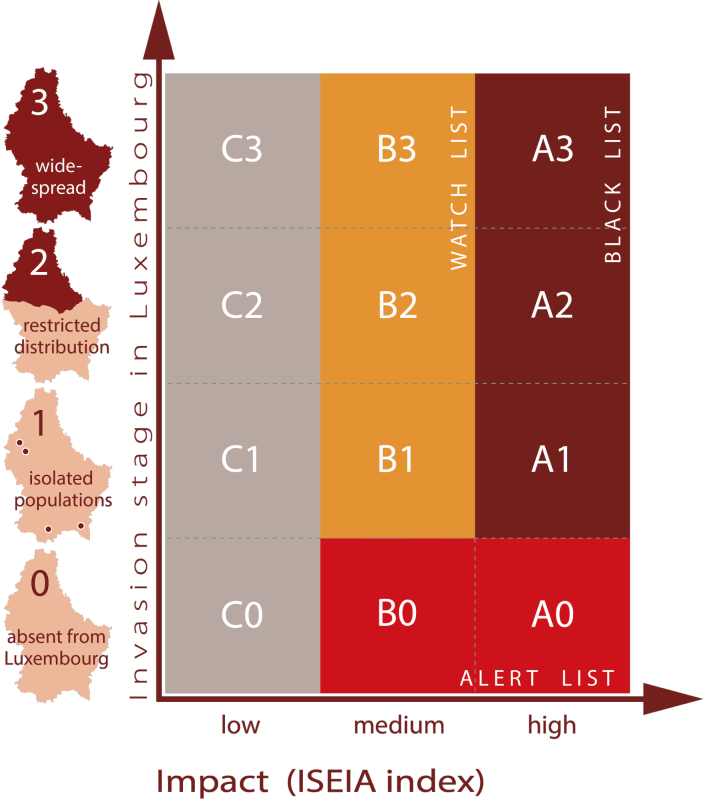
Français Pyrale du buis RA: ISEIA: A1, Black List. Harmonia+: n/a.
Deutsch Buchsbaumzünsler Wikipedia: Wikipedia - English - Box tree moth Wikipedia - Français - Pyrale du buis Wikipedia - Deutsch - Buchsbaumzünsler Nederlands | Wikispecies: Wikispecies - Cydalima perspectalis | CABI
Nederlands Buxusmot Back to the list of invertebrates

Brief description

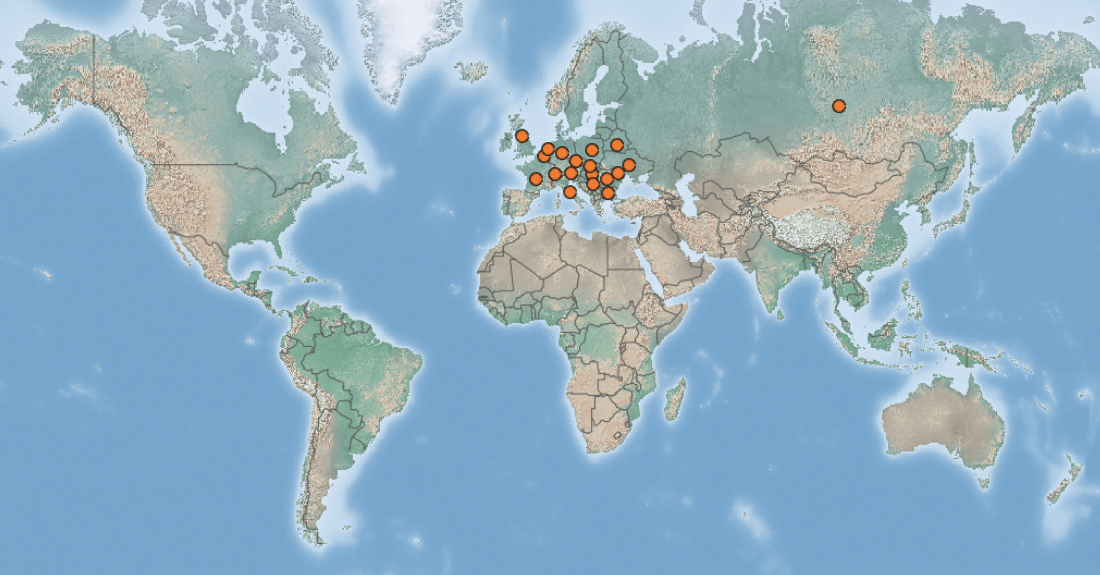
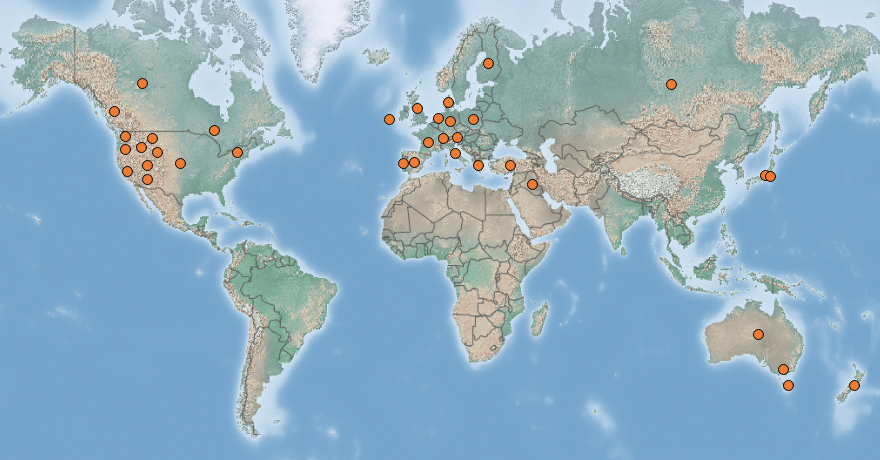
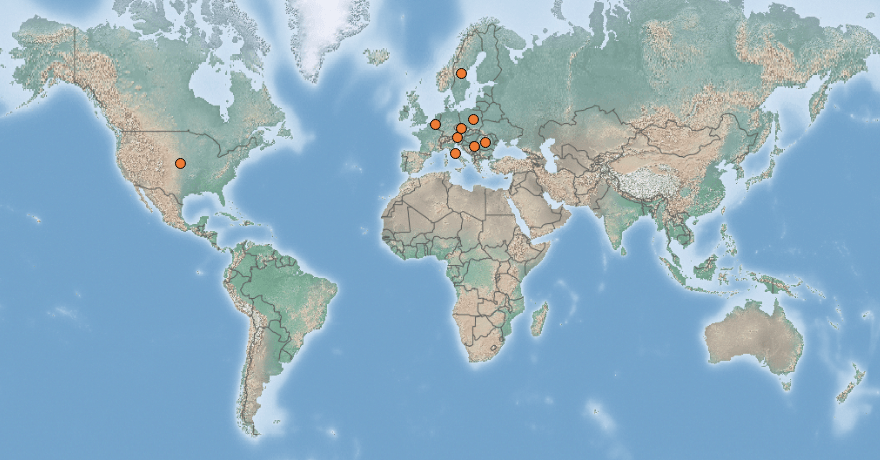
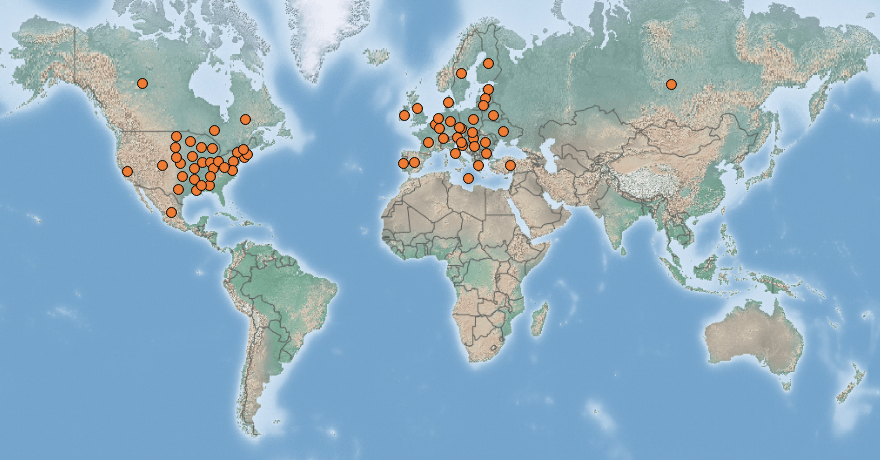
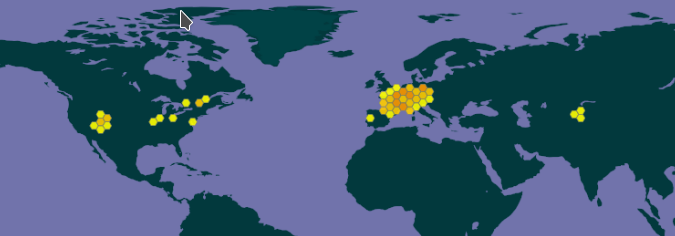
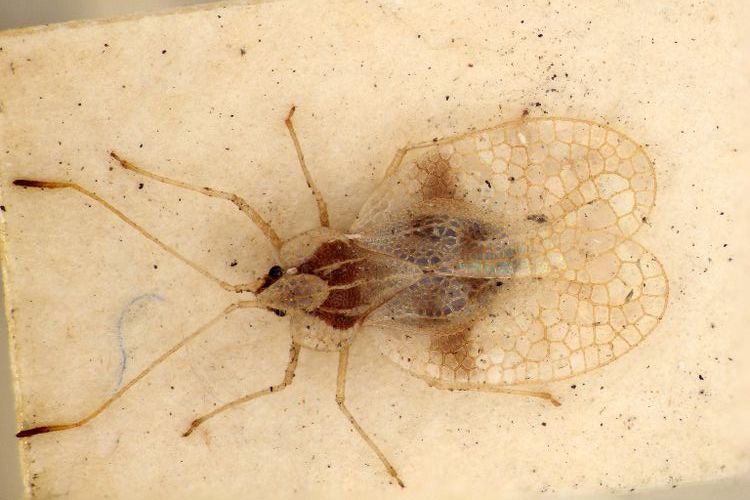
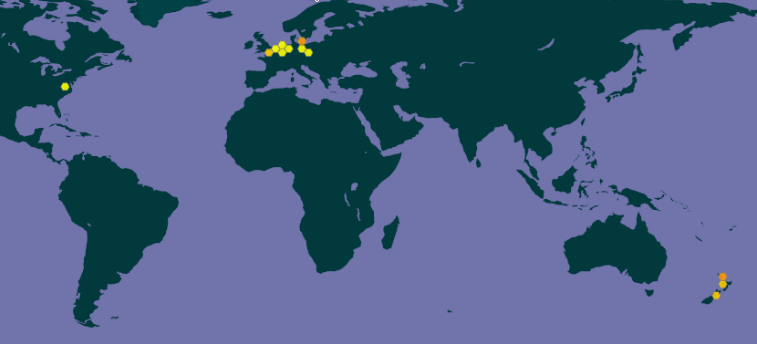
Box tree moth larval feeding damageCydalima perspectalis (Walker, 1859) is a species of moth of the family Crambidae. It is native to eastern Asia (Japan, China, Taiwan, Korea, the Russian Far East and India), where the caterpillars feed on Buxus microphylla without causing any damage. It is an invasive species in Europe, first recorded in Germany in 2006, and subsequently in Switzerland and the Netherlands in 2007, Great Britain in 2008, France and Austria in 2009, Hungary in 2011, Romania, Spain and Turkey. It is also known from Slovakia, Belgium and Croatia, and in 2016 in Bosnia and Hercegovina. During the preparation for the 2014 Olympics, in 2012 it was introduced from Italy to Sochi with the planting stock of Buxus sempervirens and during the next year it began to defoliate Buxus colchica in large quantities.

The larvae feed on the leaves and shoots of Buxus species. Young larvae only eat the upper part of the leaf, leaving the hardest inside structure. The leaves are not destroyed completely but appear as “peeled” in small parallel beats lines, or almost completely. These peeled leaves eventually die. Old larvae are the most damaging: they massively and completely eat the leaves, sometimes leaving a thin part at the contour and centre of the leaf, however. Green ball-shaped frass can usually be seen on host plants (Wikipedia contributors 2020).

Status and distribution in Luxembourg

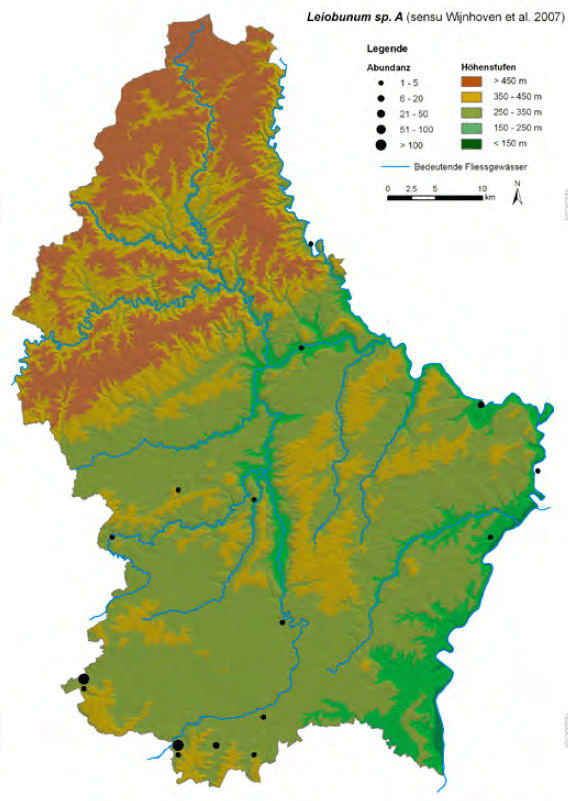
Records of Cydalima perspectalis (Walker, 1859) in Luxembourg. Data source: Recorder-Lux, iNaturalist & GBIF, 2021-04-22.

In Luxembourg, Cydalima perspectalis (Walker, 1859) was first observed on 11th September 2015 by Svenja Christian in Wasserbillig, municipality of Mertert (Hellers & Christian 2016). In 2016, the moth was observed in Dudelange by Georges Bechet.

55 records are available at the mdata.mnhn.lu portal (MNHNL, iNaturalist & GBIF 2020).

Risk assessment

ISEIA protocol

A1 (3+3+3+3) = Black List (Ries et al. 2017: 68).

Harmonia+ protocol

Not assessed yet.

Worldwide distribution

Bibliography

  • CABI, 2019. Cydalima perspectalis. In: Invasive Species Compendium. Wallingford, UK: CAB International. URL: www.cabi.org/isc [accessed 2020-03-13]
  • Hellers, M. & S. Christian, 2016. Eine neue invasive Art in Luxemburg: der Buchsbaumzünsler Cydalima perspectalis (Walker, 1859). Bull. Soc. Nat. luxemb. 118 : 131-134. [PDF 350 KB]
  • MNHNL, iNaturalist & GBIF, 2020. Cydalima perspectalis in MNHNL-mdata, online portal combining species observation from Recorder-Lux, iNaturalist and GBIF. National Museum of Natural History, Luxembourg. URL: https://mdata.mnhn.lu [accessed 2020-03-13]
  • Ries, C., A. Arendt, C. Braunert, S. Christian, A. Dohet, A. Frantz, G. Geimer, M. Hellers, J. A. Massard, X. Mestdagh, R. Proess, N. Schneider & M. Pfeiffenschneider, 2017. Environmental impact assessment and black, watch and alert list classification after the ISEIA Protocol of invertebrates in Luxembourg. Bull. Soc. Nat. luxemb. 119: 63-70. [PDF 360 KB]
  • Wikipedia contributors, 2020. ‘Cydalima perspectalis’, Wikipedia, The Free Encyclopedia, 5 January 2020, 15:35 UTC, <https://en.wikipedia.org/w/index.php?title=Cydalima_perspectalis&oldid=934256164> [accessed 13 March 2020]

 Page content last updated on 2020-04-30. Last proofread by Caroline Grounds on 2020-04-30.

Orconectes limosus Rafinesque, 1817

English Spinycheek crayfish Status LU: established. 1st record: 1978.
Lëtzebuergesch Gefleckte Flosskriibs, Kamberkriibs Status Eur.: established. IAS of EU concern (2016).
Français Écrevisse américaine RA: ISEIA: C2. Harmonia+: n/a.
Deutsch Kamberkrebs Wikipedia: Wikipedia - English - Spinycheek crayfish Wikipedia - Français - Ecrevisse américaine Wikipedia - Deutsch - Kamberkrebs Nederlands | Wikispecies: n/a (2019) | CABI
Nederlands Gevlekte rivierkreeft Back to the list of invertebrates

Brief description

Orconectes limosus - KamberkrebsOrconectes limosus Rafinesque 1817 is native to the east coast of North America. It is unusual in that it lives in silty streams, rather than the clear water usually preferred by crayfish. Like Pacifastacus leniusculus, another invasive North American crayfish, O. limosus carries crayfish plague and is a threat to native European crayfish. The spinycheek crayfish was introduced to Germany in 1890, and has since spread across much of Northern Europe, recently reaching the United Kingdom. It has also spread southwards as far as the Danube in Serbia. These Crayfish live on the bottom of the freshwater pools, such as lakes, ponds and swamps. They prefer flat, sandy, and rocky floors. They are also found outside the water on beaches or lawns near the pool of water. They use rocks to make burrows while in the water (Wikipedia contributors 2019).

Faxonius limosus (= synonym) is omnivorous and, being able to reach high densities, can impact native macroinvertebrates and macrophytes (CABI 2019).

IAS of Union concern

In 2016, Orconectes limosus Rafinesque 1817 was added to the list of invasive alien species of Union concern (Anonymous 2016) which implies that member states shall take all necessary steps to prevent it’s unintentional introduction or spread.

Status and distribution in Luxembourg

Records of Orconectes limosus Rafinesque 1817 in Luxembourg. Data source: Recorder-Lux, iNaturalist & GBIF, 2021-04-22.

Orconectes limosus Rafinesque 1817 was first documented in Luxembourg in 1978 in the river Moselle near Wasserbillig, municipality of Mertert (Neitzke 1978 cit. in Dhur & Massard 1995: 144). Atten (1987) located the immigrant in several places in Moselle (Schengen, Remich), Duhr (1993) downstream of Stadtbredimus, in the Remerschen ponds and in the lower reaches of the Sûre (cit. in Duhr & Massard 1995: 144 & 147).

55 observations are documented so far (25/11/2019): Upper Sûre lake, Moselle, Sûre (Pferdemosel, Aalbaach), ponds of the Haff Réimech nature conservation reserve (MNHNL 2000-).

It is no longer possible to eliminate the spinycheek crayfish populations present (Troschel 2010: 202, Troschel & Bartl 1998: 146).

Risk assessment

ISEIA protocol

C2 (1+2+3+1) (Ries et al. 2017: 68).

Harmonia+ protocol

Not assessed yet.

Worldwide distribution

cabi.org: https://www.cabi.org/isc/datasheet/72033#toDistributionMaps

Fact sheet

PDF fact sheet of the Nature and Forestry Administration: FR | DE

Bibliography

  • Administration des eaux et forêts, service de la chasse et de la pêche, 1998. Fische in Luxemburg. Kartierung der Fische, Neunaugen und Flußkrebse des Großherzogtums Luxemburg. ISBN 2-495-28004-8. 153 pp.
  • Anonymous, 2016. Commission implementing regulation (EU) 2016/1141 of 13 July 2016 adopting a list of invasive alien species of Union concern pursuant to Regulation (EU) No 1143/2014 of the European Parliament and of the Council. Official Journal of the European Union L 189: 4-5.
  • Atten, D., 1987. Étude des populations d’Ecrevisses d’eau douce au grand-duché de Luxembourg et spécialement de l’Écrevisse de Californie. Luxembourg, Mémoire sci. asp. prof., 190 pp.
  • CABI, 2010. Faxonius limosus (Rafinesque, 1817) [original text by Elena Tricarico]. In: Invasive Species Compendium. Wallingford, UK: CAB International. URL: www.cabi.org/isc [accessed 2019-11-25]
  • Duhr, G., 1993. Étude des espèces d’invertébrés immigrés ou introduites dans la Moselle luxembourgeoise et dans les écosystèmes aquatiques qui en dépendent. Historique et répartition actuelle. Centre univ. Luxemb., Dép. Form. pédag., mém. sci. 213 p.
  • Dhur, G. & J.A. Massard, 1995. Étude historique et faunistique des Invertébrés immigrés ou introduits dans la Moselle luxembourgeoise et ses affluents. Bull. Soc. Nat. luxemb. 96: 127-156. [PDF 1896 KB]
  • Meisch, C. & J.A. Massard, 2015. Les recherches sur les crustacés (Crustacea) du Luxembourg : aperçu historique. Bull. Soc. Nat. luxemb. 116: 381-390. [Orconectes limosus: p. 282]
  • MNHNL, 2000-. Orconectes limosus Rafinesque 1817 in Recorder-Lux, database on the natural heritage of the Grand Duchy of Luxembourg. Musée national d’histoire naturelle, Luxembourg. URL: https://mdata.mnhn.lu [Accessed 2019-11-25]
  • MNHNL, iNaturalist & GBIF, 2019. Orconectes limosus Rafinesque 1817 in MNHNL-mdata, online portal combining species observation from Recorder-Lux, iNaturalist and GBIF. National Museum of Natural History, Luxembourg. URL: https://mdata.mnhn.lu [Accessed 2019-11-25]
  • Neitzke, C., 1978. Zur Kenntnis des Makrozoobenthons der Mosel: Weichtiere (Mollusca). Wissenschaftliche Hausarbeit zum Staatsexamen für das Lehramt an Gymnasien, Mainz.
  • Ries, C., A. Arendt, C. Braunert, S. Christian, A. Dohet, A. Frantz, G. Geimer, M. Hellers, J. A. Massard, X. Mestdagh, R. Proess, N. Schneider & M. Pfeiffenschneider, 2017. Environmental impact assessment and black, watch and alert list classification after the ISEIA Protocol of invertebrates in Luxembourg. Bull. Soc. Nat. luxemb. 119: 63-70. [PDF 360 KB]
  • Troschel, H.J., 2010. Les poissons au Luxembourg. Cartographie des poissons, lamproies et écrevisses du grand-duché de Luxembourg. 2e édition. Administration de la gestion de l’eau, Luxembourg. ISBN 978-2-91989-713-1. 223 pp. [Orconectes limosus: p. 202-203]
  • Troschel, H.J. & G. Bartl, 1998. Fische in Luxem-burg. Kartierung der Fische, Neunaugen und Flusskrebse des Großherzogtums Luxemburg. Administration des Eaux et Forêts (éd.), Luxembourg, 168 pp. [Orconectes limosus: p. 146-147]
  • Wikipedia contributors, 2019. Orconectes limosus in Wikipedia, The Free Encyclopedia, 23 September 2019. URL: https://en.wikipedia.org/wiki/Orconectes_limosus [accessed 2019-11-25]

 Page content last updated on 2020-03-13.

Pacifastacus leniusculus Dana, 1852

English Signal crayfish Status LU: established. 1st record: 1996.
Lëtzebuergesch Signalkriibs Status Eur.: established. IAS of EU concern.
Français Écrevisse de Californie RA: ISEIA: A3, Black List. Harmonia+: n/a.
Deutsch Signalkrebs Wikipedia: Wikipedia - English - Signal crayfish Wikipedia - Français - Ecrevisse de Californie Wikipedia - Deutsch - Signalkrebs Nederlands | Wikispecies: n/a (2020)
Nederlands Signaalkreeft Back to the list of invertebrates

Brief description

Signal crayfish female Pacifastacus leniusculus Pacifastacus leniusculus Dana, 1852 is a North American species of crayfish. It was introduced to Europe in the 1960s to supplement the North European Astacus astacus fisheries, which were being damaged by crayfish plague, but the imports turned out to be a carrier of that disease. The signal crayfish is now considered an invasive species across Europe, Japan, and California ousting native species there. The signal crayfish is now the most widespread alien crayfish in Europe, occurring in 25 countries. From 1907, crayfish plague, an infectious disease caused by the water mould Aphanomyces astaci, damaged stocks of the native European crayfish Astacus astacus. All American species carry the infection, but it is only lethal to individuals that are already stressed; to European species, the infection is rapidly fatal (Wikipedia contributors 2020).

The signal crayfish is an omnivore, with most of its dietary intake being detritus. Members of this species are typically 6–9 centimetres long, although sizes up to 16–20.32 centimetres are possible. They are bluish-brown to reddish-brown in colour, with robust, large, smooth claws. They have a white to pale blue-green patch near the claw hinge, like the white flags that signalmen used for directing trains—hence the name. Around 200–400 eggs are laid after mating in the autumn, and are carried under the female’s tail until they are ready to hatch the following spring. The eggs hatch into juveniles, which pass through three stages (two moults) before leaving their mother. Sexual maturity is reached after two to three years, and the lifespan can be up to 20 years (Wikipedia contributors 2020).

Status and distribution in Luxembourg

Records of Pacifastacus leniusculus Dana 1852 in Luxembourg. Data source: Recorder-Lux, iNaturalist & GBIF, 2021-04-22.

1020 occurrences of Pacifastacus leniusculus Dana, 1852 are documented in the Recorder-Lux database, the first from 1996 (MNHNL, iNaturalist & GBIF, 2020). The species has been present in Luxembourg since much earlier though. Dhur & Massard (1995) describe stockings of P. leniusculus in the lake of Esch/Sûre (1972), Kriibseweier/Gonderange (1974, 1975, 1976), Attert, Wark, Tandlerbaach, Dirbach, ponds at Kockelscheuer and Gostingen, the lake in Echternach, the Sûre close to Wallendorf and the Syre, ranging from 1977 to 1986.

Risk assessment

ISEIA protocol

A3 (3+3+3+2) = Black List (Ries et al. 2017: 68).

Harmonia+ protocol

Not assessed yet.

Worldwide distribution

Fact sheet

PDF fact sheet of the Nature and Forestry Administration: FR | DE

Bibliography

  • Administration des eaux et forêts, Service de la chasse et de la pêche, 1998. Fische in Luxemburg. Kartierung der Fische, Neunaugen und Flußkrebse des Großherzogtums Luxemburg. ISBN 2-495-28004-8. 153 pp.
  • Administration de la gestion de l’eau, 2010. Les poissons au Luxembourg, Cartographie des poissons, lamproies et écrevisses du grand-duché de Luxembourg. 2e édition. ISBN 978-2-91989-713-1. 213 pp.
  • Atten, D., 1987. Étude des populations d’Ecrevisses d’eau douce au grand-duché de Luxembourg et spécialement de l’Écrevisse de Californie. Luxembourg, Mémoire sci. asp. prof., 190 pp.
  • Dhur, G. & J.A. Massard, 1995. Étude historique et faunistique des Invertébrés immigrés ou introduits dans la Moselle luxembourgeoise et ses affluents. Bull. Soc. Nat. luxemb. 96: 127-156. [PDF 1896 KB]
  • GBIF, 2020. Pacifastacus leniusculus (Dana, 1852) in GBIF Secretariat (2019). GBIF Backbone Taxonomy. Checklist dataset https://doi.org/10.15468/39omei [accessed 2020-03-13]
  • Meisch, C. & J.A. Massard, 2015. Les recherches sur les crustacés (Crustacea) du Luxembourg : aperçu historique. Bull. Soc. Nat. luxemb. 116: 381-390.
  • MNHNL, iNaturalist & GBIF, 2020. Pacifastacus leniusculus in MNHNL-mdata, online portal combining species observation from Recorder-Lux, iNaturalist and GBIF. National Museum of Natural History, Luxembourg. URL: https://mdata.mnhn.lu [accessed 2020-03-13]
  • Ries, C., A. Arendt, C. Braunert, S. Christian, A. Dohet, A. Frantz, G. Geimer, M. Hellers, J. A. Massard, X. Mestdagh, R. Proess, N. Schneider & M. Pfeiffenschneider, 2017. Environmental impact assessment and black, watch and alert list classification after the ISEIA Protocol of invertebrates in Luxembourg. Bull. Soc. Nat. luxemb. 119: 63-70. [PDF 360 KB]
  • Wikipedia contributors, 2020. ‘Signal crayfish’, Wikipedia, The Free Encyclopedia, 31 January 2020, 01:54 UTC, <https://en.wikipedia.org/w/index.php?title=Signal_crayfish&oldid=938417407> [accessed 2020-03-13]

 Page content last updated on 2020-03-13. Last proofread by Caroline Grounds on 2019-12-11.

Trachemys scripta scripta (Thunberg in Schoepff, 1792)

English Yellow-bellied slider Status LU: established. 1st record: ?
Lëtzebuergesch Gielpanz-Schillkröt, -Deckelsmouk Status Eur.: established. IAS of EU concern (2016).
Français RA: ISEIA: C1. Harmonia+: n/a.
Deutsch Gelbbauch-Schmuckschildkröte Wikipedia: Wikipedia - English - Yellow-bellied slider Wikipedia - Français - Trachemys scripta scripta Wikipedia - Deutsch - Gelbbauch-Schmuckschildkröte Wikipedia - Nederlands - Geelbuikschildpad | Wikispecies: Wikispecies - Trachemys scripta scripta
Nederlands Geelbuikschildpad Back to the list of vertebrates

Brief description

Yellow-bellied Slider 2Trachemys scripta scripta (Thunberg in Schoepff, 1792), the yellow-bellied slider, is a land and water turtle belonging to the family Emydidae. This subspecies of pond slider is native to the southeastern United States, specifically from Florida to southeastern Virginia, and is the most common turtle species in its range. It is found in a wide variety of habitats, including slow-moving rivers, floodplain swamps, marshes, seasonal wetlands, and permanent ponds. Yellow-Bellied Sliders are popular as pets (Wikipedia contributors, 2020a).

The species has been introduced to many parts of the world primarily through escape or deliberate release, which often occurs when the “cute tiny turtles” have grown to large sizes up to 30 cm in a small aquarium.

IAS of Union concern

In 2016, the species Trachemys scripta (Thunberg in Schoepff, 1792), to which belongs the present subspecies Trachemys scripta scripta, was added to the list of invasive alien species of Union concern (Anonymous 2016) under it’s synonym Trachemys scripta (Schoepff, 1792). This implies that member states shall take all necessary steps to prevent it’s unintentional introduction or spread.

Status and distribution in Luxembourg

Records of Trachemys scripta scripta Thunberg in Schoepff, 1792 in Luxembourg. Data source: Recorder-Lux, iNaturalist & GBIF, 2021-04-22.

Currently, 7 records of Trachemys scripta scripta (Thunberg in Schoepff, 1792) in Luxembourg are accessible through the MNHNL-mdata portal (MNHNL, iNaturalist & GBIF 2020).

An early observation in the wild in Luxembourg was made on 21st July 2015 by Manou Pfeiffenschneider in the river Chiers on the northern edge of the nature conservation area Dreckwiss (MNHNL, iNaturalist & GBIF 2020). It remains unclear if this observation can be considered as a first record of the subspecies in Luxembourg.

The status of the taxa remains unclear, as most reports concern the species pond slider (145), not its subspecies yellow-bellied slider (11), see the second map below (MNHNL, iNaturalist & GBIF 2020).

Invasive pond sliders have been observed climbing the platforms of waterbirds, especially great crested grebes (Podiceps cristatus), to sunbathe, thus preventing successful breeding (Konter 2020: 81).

Records of Trachemys scripta (Thunberg in Schoepff, 1792) in Luxembourg. Data source: Recorder-Lux, iNaturalist & GBIF, 2021-04-22.

Risk assessment

ISEIA protocol

C1 (1+2+3+1) (Ries et al. 2014: 199).

Harmonia+ protocol

Not assessed yet.

Worldwide distribution

Other Trachemys taxa

The pond slider Trachemys scripta (Thunberg in Schoepff, 1792) has three subspecies (Wikipedia contributors 2020b), of which the first two occur in Luxembourg:

  • Trachemys scripta scripta (Thunberg in Schoepff, 1792), the yellow-bellied slider;
  • Trachemys scripta elegans (Wied-Neuwied, 1839), the red-eared slider;
  • Trachemys scripta troostii (Holbrook, 1836), the Cumberland slider. According to GBIF (2019b) this subspecies is already present in Europe (Belgium, The Netherlands, Germany, Poland and Spain)

Bibliography

  • Anonymous, 2016. Commission implementing regulation (EU) 2016/1141 of 13 July 2016 adopting a list of invasive alien species of Union concern pursuant to Regulation (EU) No 1143/2014 of the European Parliament and of the Council. Official Journal of the European Union L 189: 4-5.
  • GBIF, 2019a. Trachemys scripta subsp. scripta in GBIF Secretariat (2019). GBIF Backbone Taxonomy. Checklist dataset https://doi.org/10.15468/39omei [accessed 2020-04-27]
  • GBIF, 2019b. Trachemys scripta subsp. troostii (Holbrook, 1836) in GBIF Secretariat (2019). GBIF Backbone Taxonomy. Checklist dataset https://doi.org/10.15468/39omei accessed via GBIF.org on 2020-04-27.
  • Konter, A., 2020. Schmuckschildkröten Trachemys scripla verhindern mehrere Haubentaucherbruten Podiceps cristalus auf dem Echternacher See. Regulus Wissenschaftliche Berichte 35: 81-86.
  • MNHNL, 2000-. Trachemys scripta scripta (Thunberg in Schoepff, 1792) in Recorder-Lux, database on the natural heritage of the Grand Duchy of Luxembourg. Musée national d’histoire naturelle, Luxembourg. URL: https://mdata.mnhn.lu [Accessed 2020-02-04]
  • MNHNL, iNaturalist & GBIF, 2019. Trachemys scripta scripta (Thunberg in Schoepff, 1792) in MNHNL-mdata, online portal combining species observation from Recorder-Lux, iNaturalist and GBIF. National Museum of Natural History, Luxembourg. URL: https://mdata.mnhn.lu [Accessed 2020-02-04]
  • Ries, C., M. Pfeiffenschneider, Engel, E., J.-C. Heidt & M. Lauff, 2014. Environmental impact assessment and black, watch and alert list classification after the ISEIA Protocol of vertebrates in Luxembourg. Bull. Soc. Nat. luxemb. 115: 195-201. [PDF 247 KB]
  • Wikipedia contributors, 2020a. ‘Yellow-bellied slider’, Wikipedia, The Free Encyclopedia, 18 March 2020, 03:07 UTC, <https://en.wikipedia.org/w/index.php?title=Yellow-bellied_slider&oldid=946106051> [accessed 2020-04-27]
  • Wikipedia contributors, 2020b. ‘Pond slider’, Wikipedia, The Free Encyclopedia, 8 January 2020, 04:07 UTC, <https://en.wikipedia.org/w/index.php?title=Pond_slider&oldid=934733603> [accessed 2020-04-27]

 Page content last updated on 2021-01-14. Last proofread by Caroline Grounds on 2019-11-29.

Pimephales promelas (Rafinesque, 1820)

English Fathead minnow Status LU: casual. 1st record: ~1996.
Lëtzebuergesch Amerikaneschen Déckkapp-Dreckseller 1 Status Eur.: established.
Français Tête de boule RA: ISEIA: C0. Harmonia+: n/a.
Deutsch Amerikanische Dickkopfelritze Wikipedia: Wikipedia - English - Fathead_minnow Wikipedia - Français - Tête de boule  Wikipedia - Nederlands - Amerikaanse dikkop-elrits | Wikispecies: Wikispecies - Pimephales promelas | CABI
Nederlands Amerikaanse dikkop-elrits Back to the list of vertebrates

Brief description

Pimephales promelasPimephales promelas (Rafinesque, 1820), commonly known as the fathead minnow, is a small-bodied, short-lived, nest guarding cyprinid fish. It is one of the most widely distributed fishes in North America and its native range covers large expanses from the Rocky Mountains in Canada south to Texas and northern Mexico. It has been accidently or intentionally introduced to many areas, where it has been stocked for its use as bait or as an aquarium pet. It is tolerant of a range of environmental conditions, has a high reproductive output and consumes a variety of food resources. It therefore has a high invasive potential and has been recorded as a pest in many countries. It is known to cause declines of native and endangered species including Colorado pikeminnow (Ptychocheilus lucius), the Lost River sucker (Deltistes luxatus) and shortnose sucker (Chasmistes brevirostris) in Oregon and California. It has also negatively impacted habitats, such as wetlands in the Prairie Pothole Region, USA. In Europe, its introduction has resulted in the spread of enteric redmouth disease through the introduction of a bacterial pathogen (Yersinia ruckeri) (CABI 2019).

Status and distribution in Luxembourg

In Luxembourg, Pimephales promelas (Rafinesque, 1820) was first documented during a species inventory in 1996/1997 (Administration des eaux et forêts 1998). Five individuals were caught in three different spots (Lower Sauer, Alzette and Diddelengerbaach). These occurrences are probably due to the animals’ use as live bait or the release of aquarium fish.

During an identical inventory in 2005, the species was not found in Luxembourgian watercourses anymore (Administration de la gestion de l’eau 2010).

There is no distribution map available because no data has been entered into the Recorder-Lux database so far (MNHNL, iNaturalist & GBIF 2019).

Risk assessment

ISEIA protocol

C01 (1+1+1+1) (Ries et al. 2014: 199).

Harmonia+ protocol

Not assessed yet.

Worldwide distribution

Bibliography

  • Administration des eaux et forêts, Service de la Chasse et de la Pêche (1998): Fische in Luxemburg, Kartierung der Fische, Neunaugen und Flußkrebse des Großherzogtums Luxemburg, ISBN: 2-495-28004-8, 153 pp.
  • Administration de la gestion de l’eau (2010): Les poissons au Luxembourg, Cartographie des poissons, lamproies et écrevisses du Grand-Duché de Luxembourg, 2ième édition, ISBN: 978-2-91989-713-1, 213 pp.
  • CABI, 2019. Pimephales promelas (Rafinesque, 1820). In: Invasive Species Compendium. Wallingford, UK: CAB International. URL: www.cabi.org/isc [accessed 2020-04-22]
  • Klees, H., 1981. Luxemburger Tiernamen. Beiträge zur luxemburgischen Sprach- und Volkskunde XIV. Institut grand-ducal, Section de linguistique, de folklore et de toponymie. 2. Aufl. 131 S. Imprimerie Pierre Linden, Luxembourg.
  • MNHNL, iNaturalist & GBIF, 2019. MNHNL-mdata, online portal combining species observation from Recorder-Lux, iNaturalist and GBIF. National Museum of Natural History, Luxembourg. URL: https://mdata.mnhn.lu [Accessed 2019-10-24]
  • Ries, C., M. Pfeiffenschneider, Engel, E., J.-C. Heidt & M. Lauff, 2014. Environmental impact assessment and black, watch and alert list classification after the ISEIA Protocol of vertebrates in Luxembourg. Bull. Soc. Nat. luxemb. 115: 195-201. [PDF 247 KB]

 Page content last updated on 2020-04-23. Last proofread by Caroline Grounds on 2019-11-28.

Neogobius melanostomus (Pallas, 1814)

English Round goby Status LU: established. 1st record: ~2010.
Lëtzebuergesch Schwaarzmond-Grondel Status Eur.: established.
Français Gobie à taches noires RA: ISEIA: A2, Black List. Harmonia+: n/a.
Deutsch Schwarzmund-Grundel Wikipedia: Wikipedia - English - Round goby Wikipedia - Français - Gobie à taches noires Wikipedia - Deutsch - Schwarzmund-Grundel Wikipedia - Nederlands - Zwartbekgrondel | Wikispecies: Wikispecies - Neogobius melanostomus
Nederlands Zwartbekgrondel Back to the list of vertebrates

Brief description

Little maile round goby caught in HollandNeogobius melanostomus (Pallas, 1814) is a bottom dwelling fish that lives in slow brackish and fresh waters. It is typically found near rocky substrates, but also in fine gravel and sandy bottoms. The round goby is a voracious feeder of benthic freshwater invertebrates (e.g. bivalves) and small fishes. It has been reported to reduce populations of native fish through predation and food competition, its main advantage being its ability to feed in darkness. Adults may occupy the prime spawning areas and defend those sites aggressively, keeping natives out. The round goby may rapidly become a dominant fish species and may be responsible for fish species displacement and for the impoverishment of aquatic communities (Branquart & Verreycken 2014).

Status and distribution in Luxembourg

Records of Neogobius melanostomus (Pallas, 1814) in Luxembourg. Data source: Recorder-Lux, iNaturalist & GBIF, 2021-04-22.

Neogobius melanostomus (Pallas, 1814) is known to colonise the Luxembourg part of the Moselle river since around 2010. Together with Neogobius kessleri, the species was sampled regulary in the lower Sauer in the last years; in 2017 it was sampled in the Our (Dohet 2017).

Currently, 2 records of the round goby are accessible through the MNHNL-mdata portal (MNHNL, iNaturalist & GBIF 2019).

On 27th July 2015, a parliamentary question was raised in the Luxembourg parliament about the invasion of Neogobius species in the Moselle river. This was echoed in the daily newspaper Tageblatt on the same day (Wildschutz 2015).

The distribution map is incomplete because records still have to be entered into the Recorder-Lux database (MNHNL, iNaturalist & GBIF 2019).

Risk assessment

ISEIA protocol

A2 (3+3+3+2) = Black List (Ries et al. 2014: 199).

Harmonia+ protocol

Not assessed yet.

Natural range and places of introduction

Worldwide distribution

Bibliography

    • Branquart, E. & H. Verreycken, 2014. Harmonia database: Neogobius melanostomus (Pallas, 1814). Harmonia version 1.2, Belgian Forum on Invasive Species. URL: http://ias.biodiversity.be [accessed on 2019-10-24]
    • CABI, 2019. Neogobius melanostomus (Pallas, 1814). In: Invasive Species Compendium. Wallingford, UK: CAB International. URL: www.cabi.org/isc [accessed 2020-04-22]
    • Dohet, A., 2017. Personal communication. LIST.
    • MNHNL, 2000-. Neogobius melanostomus (Pallas, 1814) in Recorder-Lux, database on the natural heritage of the Grand Duchy of Luxembourg. Musée national d’histoire naturelle, Luxembourg. URL: https://mdata.mnhn.lu [Accessed 2019-10-24]
    • MNHNL, iNaturalist & GBIF, 2019. Neogobius melanostomus (Pallas, 1814) in MNHNL-mdata, online portal combining species observation from Recorder-Lux, iNaturalist and GBIF. National Museum of Natural History, Luxembourg. URL: https://mdata.mnhn.lu [Accessed 2019-10-24]
    • Ries, C., M. Pfeiffenschneider, Engel, E., J.-C. Heidt & M. Lauff, 2014. Environmental impact assessment and black, watch and alert list classification after the ISEIA Protocol of vertebrates in Luxembourg. Bull. Soc. Nat. luxemb. 115: 195-201. [PDF 247 KB]
    • Wildschutz, N., 2015. Grundel-Plage in der Mosel. Tageblatt online 27.07.2015. URL: http://www.tageblatt.lu/nachrichten/grundel-plage-in-der-mosel-16593303/ [2018.04.13]

 Page content last updated on 2020-04-22. Last proofread by Caroline Grounds on 2019-11-27.

Psittacula krameri (Scopoli, 1769)

English Rose-ringed parakeet Status LU: established. 1st record: 2018.
Lëtzebuergesch Kollisperruche 1 Status Eur.: established.
Français Perruche à collier RA: ISEIA: C1. Harmonia+: n/a.
Deutsch Halsbandsittich Wikipedia: Wikipedia - English - Rose-ringed parakeet Wikipedia - Français - Perruche à collier Wikipedia - Deutsch - Halsbandsittich Wikipedia - Nederlands - Halsbandparkiet | Wikispecies: Wikispecies - Psittacula krameri | CABI
Nederlands Halsbandparkiet Back to the list of vertebrates

Brief description

Ring-necked parakeet in Esch/Alzette (27/03/2019)

Psittacula krameri (Scopoli, 1769) prefers habitats like parks, gardens and forests, especially those situated in suburban areas. However, as long as food supplies are adequate, enough cavities are available and temperatures do not drop too low, the species (also known as the ring-necked parakeet) is not restricted to the (sub)urban environment. This bird species has the potential to out-compete native cavity-nesting species for nest sites – effects on rare cavity-nesting birds are, however, not yet documented. In addition, the species could become a serious agricultural pest (fruit trees, vineyards, etc) and may carry diseases that could be harmful to poultry, other native fauna and humans (Anselin et al. 2009).

Status and distribution in Luxembourg

Records of Psittacula krameri (Scopoli, 1769) in Luxembourg. Data source: Recorder-Lux, iNaturalist & GBIF, 2021-04-12.

Psittacula krameri (Scopoli, 1769) was first documented by a member of naturgucker.de on 25 December 2018 in Esch-sur-Alzette (GBIF, 2018; MNHNL, iNaturalist & GBIF 2020).

The first brood of the species in Luxembourg was observed on 10 July 2019 in the Clair-Chêne forest in Esch/Alzette.

There is no distribution map available because no data has been entered into the Recorder-Lux database so far (MNHNL, iNaturalist & GBIF 2020).

Breeding couple of the ring-necked parakeet at its breeding site in Esch/Alzette (10.07.2019, picture by Karolin Mildenberger)

Risk assessment

ISEIA protocol

C1 (3+1+1+1) (Ries et al. 2014: 199).

Harmonia+ protocol

Not assessed yet.

Worldwide distribution

Bibliography

    • Anselin, A., E. Branquart, D. Strubbe & A. Weiserbs, 2009. Harmonia database: Psittacula krameri (Scopoli, 1769). Harmonia version 1.2, Belgian Forum on Invasive Species. URL: http://ias.biodiversity.be [accessed 2020-04-22]
    • CABI, 2019. Psittacula krameri (Scopoli, 1769). In: Invasive Species Compendium. Wallingford, UK: CAB International. URL: www.cabi.org/isc [accessed 2020-04-22]
    • GBIF, 2018. naturgucker.de. naturgucker. Occurrence dataset https://doi.org/10.15468/uc1apo accessed via GBIF.org on 2020-04-22. https://www.gbif.org/occurrence/2329619741
    • MNHNL, iNaturalist & GBIF, 2020. Psittacula krameri (Scopoli, 1769) in MNHNL-mdata, online portal combining species observation from Recorder-Lux, iNaturalist and GBIF. National Museum of Natural History, Luxembourg. URL: https://mdata.mnhn.lu [accessed 2020-04-22]
    • Ries, C., M. Pfeiffenschneider, Engel, E., J.-C. Heidt & M. Lauff, 2014. Environmental impact assessment and black, watch and alert list classification after the ISEIA Protocol of vertebrates in Luxembourg. Bull. Soc. Nat. luxemb. 115: 195-201. [PDF 247 KB]
    • Weis, Jean, 2015. Liste der Luxemburger Vogelnamen. Regulus Wissenschaftliche Berichte 29 (2014): 69-79. [PDF 1.1 MB]

 Page content last updated on 2020-04-22. Last proofread by Caroline Grounds on 2019-11-29.

Lepomis gibbosus (Linnaeus, 1758)

English Pumpkinseed Status LU: established. 1st record: 1996.
Lëtzebuergesch Gewéinlech Sonnepiisch Status Eur.: established.
Français Perche soleil RA: ISEIA: C2. Harmonia+: n/a.
Deutsch Gemeiner Sonnenbarsch Wikipedia: Wikipedia - English - Pumpkinseed Wikipedia - Français - Perche soleil Wikipedia - Deutsch - Gemeiner Sonnenbarsch Wikipedia - Nederlands - Zonnebaars | Wikispecies: Wikispecies - Lepomis gibbosus | CABI
Nederlands Zonnebaars Back to the list of vertebrates

Brief description

Lepomis gibbosus PAQIntroduced to Europe from North America in the late 1800s (Maes, 1898), Lepomis gibbosus (Linnaeus, 1758) is now established in a minimum of 28 countries in Europe and Asia Minor (Copp and Fox, 2007), with a population reported for Brazil and possibly also Chile. Initial reports (early 1900s) mentioned large specimens but with repeated introductions needed for establishment. Later in the 1930s, the species was blamed for the decline of native Eurasian perch (Perca fluviatilis), but this hypothesis was never tested. There is little direct evidence of adverse impacts except from Iberia. Few parasites are reported, though non-native monogeneans have been reported for Norwegian and English populations. Invasiveness in L. gibbosus appears to be a function of juvenile growth (length at age two) and age at maturity, with invasive populations reported almost exclusively for southern Europe, However, even in northern Europe, L. gibbosus may represent a considerable proportion of the fish assemblage in water bodies that have been subjected to human impacts. The species is not listed on any conservation alert list (CABI 2019).

Status and distribution in Luxembourg

Records of Lepomis gibbosus Linnaeus, 1758 in Luxembourg. Data source: Recorder-Lux, iNaturalist & GBIF, 2021-04-22.

Lepomis gibbosus (Linnaeus, 1758) was first documented by Julius Troschel on 19th July 1996 in Syr/Syre north of Medingen (municipality of Contern), in Syr/Syre in Schrassig (municipality of Schuttrange) and in the delta of Lennéngerbach in Ehnen (municipality of Wormeldange) (MNHNL, iNaturalist & GBIF 2020).

During river surveys in 2005, the species was documented in 6 out of 68 sampling spots in the rivers Alzette, Moselle and Syre.

Risk assessment

ISEIA protocol

C2 (2+2+2+2) (Ries et al. 2014: 199).

Harmonia+ protocol

Not assessed yet.

Worldwide distribution

Bibliography

  • Administration de la gestion de l’eau, 2010. Les poissons au Luxembourg, Cartographie des poissons, lamproies et écrevisses du grand-duché de Luxembourg, 213 pp.
  • CABI, 2019. Lepomis gibbosus (Linnaeus, 1758). In: Invasive Species Compendium. Wallingford, UK: CAB International. URL: www.cabi.org/isc [accessed 2020-04-22]
  • MNHNL, iNaturalist & GBIF, 2020. Lepomis gibbosus (Linnaeus, 1758) in MNHNL-mdata, online portal combining species observation from Recorder-Lux, iNaturalist and GBIF. National Museum of Natural History, Luxembourg. URL: https://mdata.mnhn.lu [accessed 2020-04-22]
  • Ries, C., M. Pfeiffenschneider, Engel, E., J.-C. Heidt & M. Lauff, 2014. Environmental impact assessment and black, watch and alert list classification after the ISEIA Protocol of vertebrates in Luxembourg. Bull. Soc. Nat. luxemb. 115: 195-201. [PDF 247 KB]

 Page content last updated on 2020-04-22. Last proofread by Caroline Grounds on 2019-11-27.

Oncorhynchus mykiss (Walbaum, 1792)

English Rainbow trout Status LU: established. 1st record: 1887.
Lëtzebuergesch Reeboufrell 1 Status Eur.: established.
Français Truite arc-en-ciel RA: ISEIA: C2. Harmonia+: n/a.
Deutsch Regenbogenforelle Wikipedia: Wikipedia - English - Rainbow trout Lëtzebuergesch Wikipedia - Français - Truite arc-en-ciel Wikipedia - Deutsch - Regenbogenforelle Wikipedia - Nederlands - Regenboogforel | Wikispecies: Wikispecies - Oncorhynchus mykiss | CABI
Nederlands Regenboogforel Back to the list of vertebrates

Brief description

Female Rainbow Trout in handOncorhynchus mykiss (Walbaum, 1792) is a competitive trout species which can displace native trout species when introduced into new environments; the fisheries management literature is replete with papers that document this phenomenon. The fact that O. mykiss has been widely distributed throughout the temperate regions of the world for 125 years virtually guarantees that they have had a negative impact on biodiversity in areas outside their original distribution. Even within their native range, the indiscriminate planting of trout derived from coastal stocks into areas containing inland stocks has had a profound effect on population abundance of native strains of redband trout, cutthroat trout, bull trout and other native salmonids. Escapees from fish farms are an additional concern, but the most harm to biodiversity has resulted from fisheries management agencies planting O. mykiss over the past century (CABI 2019).

Status and distribution in Luxembourg

Records of Oncorhynchus mykiss Walbaum, 1792 in Luxembourg. Data source: Recorder-Lux, iNaturalist & GBIF, 2021-04-22.

Oncorhynchus mykiss (Walbaum, 1792) (Syn: Trutta iridea (Gibbons, 1855)) was introduced to Luxembourg in 1887: “On 2 July 1887 Mr. Koltz introduced the ‘rainbow trout’ (Trutta iridea) to us and released it in the Canacherbach (Anonym 1892; Feltgen 1902). 2

During the river inventory of 1996/1997 the Rainbow trout was found in 33 spots. During a similar inventory in 2005, the species was only documented in two rivers: the Lower Syre (3 individuals) and the Reierbaach in the vicinity of Lasauvage (49 indivduals). The latter population indicates natural reproduction in the Reierbaach, which happens rarely in Europe (Administration de la gestion de l’eau 2010).

The introduction of the Rainbow trout was reduced considerably with, for example, a total ban in border rivers since 1986 (Administration de la gestion de l’eau 2010), resulting in the decline of the species in Luxembourg.

Currently, 59 records of in Luxembourg are accessible through the MNHNL-mdata portal (MNHNL, iNaturalist & GBIF 2020).

Risk assessment

ISEIA protocol

C2 (1+2+1+1) (Ries et al. 2014: 199).

Harmonia+ protocol

Not assessed yet.

Worldwide distribution

Bibliography

  • Administration de la gestion de l’eau (2010): Les poissons au Luxembourg, Cartographie des poissons, lamproies et écrevisses du grand-duché de Luxembourg. 213 pp.
  • A.E., 1951. La truite arc-en-ciel dans les cours d’eau luxembourgeois. Service Information et presse, Bulletin d’information 5: 88-90. [PDF 544 KB]
  • Anonym, 1892. Sitzung vom 8. Februar 1892. Bull. Soc. Nat. luxemb. 2, H. 1: 3. [eluxemburgensia]
  • CABI, 2019. Oncorhynchus mykiss (Walbaum, 1792). In: Invasive Species Compendium. Wallingford, UK: CAB International. URL: www.cabi.org/isc [accessed 2020-04-22]
  • Feltgen, E., 1902. Vademecum des Luxemburger Fischereiliebhabers. P. Worré-Mertens, Luxemburg. 148 S.
  • Klees, H., 1981. Luxemburger Tiernamen. Beiträge zur luxemburgischen Sprach- und Volkskunde XIV. Institut grand-ducal, Section de linguistique, de folklore et de toponymie. 2. Aufl. 131 S. Imprimerie Pierre Linden, Luxembourg.
  • MNHNL, iNaturalist & GBIF, 2020. Oncorhynchus mykiss (Walbaum, 1792) in MNHNL-mdata, online portal combining species observation from Recorder-Lux, iNaturalist and GBIF. National Museum of Natural History, Luxembourg. URL: https://mdata.mnhn.lu [accessed 2020-04-22]
  • Ries, C., M. Pfeiffenschneider, Engel, E., J.-C. Heidt & M. Lauff, 2014. Environmental impact assessment and black, watch and alert list classification after the ISEIA Protocol of vertebrates in Luxembourg. Bull. Soc. Nat. luxemb. 115: 195-201. [PDF 247 KB]

 Page content last updated on 2021-02-02. Last proofread by Caroline Grounds on 2019-11-28.

Pseudorasbora parva Temminck & Schlegel, 1846

English Topmouth Gudgeon Status LU: established. 1st record: 2005.
Lëtzebuergesch Asiatesche Goujong 1 Status Eur.: established. IAS of EU concern (2016).
Français Goujon asiatique RA: ISEIA: C1. Harmonia+: n/a.
Deutsch Blaubandbärbling Wikipedia: Wikipedia - English - Topmouth Gudgeon Wikipedia - Français - Goujon asiatiqueo Wikipedia - Deutsch - Blaubandbärbling Wikipedia - Nederlands - Blauwband | Wikispecies: Wikispecies - Pseudorasbora parva | CABI
Nederlands Blauwband Back to the list of vertebrates

Brief description

Pseudorasbora parva(edited version)Pseudorasbora parva Temminck & Schlegel, 1846 typically inhabits eutrophic ponds, ditches and muddy brooks rich in aquatic vegetation; it is sometimes found in larger streams and lakes. It is very tolerant to a wide range of environmental conditions. This highly invasive fish in Europe is a healthy host for a deadly, non-specific pathogen (Sphaerothecum destruens) that poses a threat to the conservation of European fish diversity. Moreover, it consumes large quantities of planktonic crustaceans which results in a high exploitative competition with native fish species (e.g. indigenous gudgeon) and an increase in the biomass of phytoplankton, and further in increasing eutrophication of water bodies (Anseeuw et al. 2007).

IAS of Union concern

In 2016, Pseudorasbora parva Temminck & Schlegel, 1846 was added to the list of invasive alien species of Union concern (Anonymous 2016) which implies that member states shall take all necessary steps to prevent it’s unintentional introduction or spread.

Status and distribution in Luxembourg

Records of Pseudorasbora parva Temminck & Schlegel, 1846 in Luxembourg. Data source: Recorder-Lux, iNaturalist & GBIF, 2021-04-22.

Pseudorasbora parva Temminck & Schlegel, 1846 was first detected in Luxembourg during the systematic river inventory of 2005, when it was found in the upstream dam of the Upper Sauer Lake in Bavigne (Administration de la gestion de l’eau 2010).

Currently, 3 records of in Luxembourg are accessible through the MNHNL-mdata portal (MNHNL, iNaturalist & GBIF 2020).

Risk assessment

ISEIA protocol

C1 (1+1+1+1) (Ries et al. 2014: 199).

Harmonia+ protocol

Not assessed yet.

Worldwide distribution

Fact sheet

PDF fact sheet of the Nature and Forestry Administration: FR | DE

Bibliography

  • Administration de la gestion de l’eau, 2010. Les poissons au Luxembourg, Cartographie des poissons, lamproies et écrevisses du grand-duché de Luxembourg, 213 pp.
  • Anonymous, 2016. Commission implementing regulation (EU) 2016/1141 of 13 July 2016 adopting a list of invasive alien species of Union concern pursuant to Regulation (EU) No 1143/2014 of the European Parliament and of the Council. Official Journal of the European Union L 189: 4-5.
  • Anseeuw, D., E. Branquart, F. Lieffrig, J.-C. Micha, D. Parkinson & H. Verreycken, 2007. Harmonia database: Pseudorasbora parva Temminck & Schlegel, 1846. Harmonia version 1.2, Belgian Forum on Invasive Species. URL: http://ias.biodiversity.be [accessed 2020-04-23]
  • CABI, 2019. Pseudorasbora parva Temminck & Schlegel, 1846. In: Invasive Species Compendium. Wallingford, UK: CAB International. URL: www.cabi.org/isc [accessed 2020-04-22]
  • Klees, H., 1981. Luxemburger Tiernamen. Beiträge zur luxemburgischen Sprach- und Volkskunde XIV. Institut grand-ducal, Section de linguistique, de folklore et de toponymie. 2. Aufl. 131 S. Imprimerie Pierre Linden, Luxembourg.
  • MNHNL, iNaturalist & GBIF, 2020. Pseudorasbora parva Temminck & Schlegel, 1846 in MNHNL-mdata, online portal combining species observation from Recorder-Lux, iNaturalist and GBIF. National Museum of Natural History, Luxembourg. URL: https://mdata.mnhn.lu [accessed 2020-04-22]
  • Ries, C., M. Pfeiffenschneider, Engel, E., J.-C. Heidt & M. Lauff, 2014. Environmental impact assessment and black, watch and alert list classification after the ISEIA Protocol of vertebrates in Luxembourg. Bull. Soc. Nat. luxemb. 115: 195-201. [PDF 247 KB]

 Page content last updated on 2020-04-23. Last proofread by Caroline Grounds on 2019-11-28.