Nezara viridula


English Southern green shield bug Status LU: established
Lëtzebuergesch   Status Eur.: established.
Français Punaise verte puante RA: ISEIA: n/a. Harmonia+: n/a.
Wikipedia - Deutsch - Andromeda-Netzwanze Grüne Reiswanze Wikipedia: Wikipedia - English - Andromeda lace bug Wikipedia - Deutsch - Andromeda-Netzwanze Nederlands Français | Wikispecies: Wikispecies - Popillia japonica
Nederlands Zuidelijke groene schildwants Back to the list of invertebrates

Brief description

Nezara viridula L., commonly known as southern green shield bug or green vegetable bug, is a plant-feeding stink bug. Believed to have originated in Ethiopia, it can now be found across the world due to its strong flight and human transport along trade routes. Because of its preference for certain species of legumes, such as beans and soybeans, it is an economically important pest on such crops.

Status and distribution in Luxembourg

The first documented sighting of this species in Luxembourg was in Hesperange in 2019. Based on the data found in the Recorder-Lux database, the species has established itself primarily in the centre of the country and in the Moselle valley. It appears to be less common in the Ösling region so far.

Risk assessment

ISEIA protocol
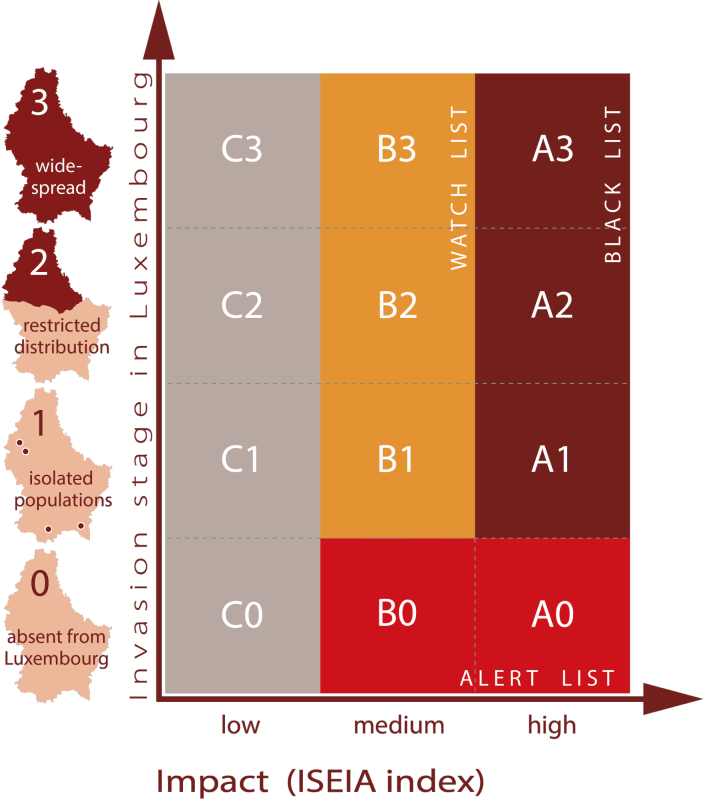
no assessed yet

Harmonia+ protocol

no assessed yet

Worldwide distribution
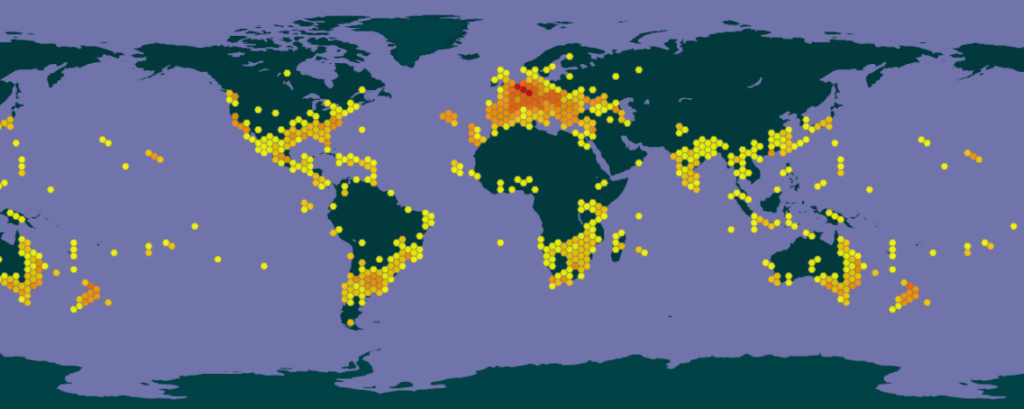
GBIF (2026): https://www.gbif.org/species/2078852

Bibliography

  • Wikipedia contributors, 2025. Nezara viridula, Wikipedia, The Free Encyclopedia, 7 October 2025, 17:22 UTC, <https://en.wikipedia.org/wiki/Nezara_viridula> [Accessed 2026-01-05]

 Page content last updated on 2026-01-05.

Public consultation on action plans for invasive alien species

Press release on 17/12/2019 by the Ministry of the Environment, Climate and Sustainable Development (MECDD)
Source: https://environnement.public.lu/fr/natur/biodiversite/lutte_contre_les_eee/reglement_ue_1143-2014/gestion.html

As provided for by Article 4 of the Law of 2 July 2018 (Mémorial 2018) on certain implementing rules and sanctions of Regulation (EU) No 1143/2014, the draft action plans for invasive alien species (IAS AP) are made available to the public on the website of the Ministry of the Environment, Climate and Sustainable Development.

Currently a public consultation on the action plans for 11 species is underway. All comments on these draft action plans should be sent by e-mail to or by post to the Administration de la nature et des forêts (81, avenue de la Gare, L-9233 Diekirch). The deadline for sending your comments and suggestions is 13 February 2020.

Draft action plans under public consultation

    1. Alopochen aegyptiacus: Egyptian goose, ouette d’Égypte, Nilgans (PDF 1,7 MO)
    2. Elodea nuttallii: Nuttall’s Waterweed, élodée de Nuttall, Schmalblättrige Wasserpest (PDF 1,3 MO)
    3. Heracleum mantegazzianum: Giant hogweed, berce du Caucase, Riesen-Bärenklau (PDF 1,3 MO)
    4. Impatiens glandulifera: Himalayan Balsam, impatiente de l’Inde, Drüsiges Springkraut (PDF 1,4 MO)
    5. Myocastor coypus: Coypu, ragondin, Nutria (PDF 2 MO)
    6. Ondatra zibethicus: Muskrat, rat musqué, Bisamratte (PDF 1,9 MO)
    7. Orconectes limosus: Spinycheek crayfish, écrevisse américaine, Kamberkrebs (PDF 3 MO)
    8. Pacifastacus leniusculus: Signal crayfish, écrevisse de Californie, Signalkrebs (PDF 3 MO)
    9. Procyon lotor: Raccoon, raton laveur, Waschbär (PDF 2,4 MO)
    10. Pseudorasbora parva: Topmouth, goujon asiatique, Blaubandbärbling (PDF 1,2 MO)
    11. Trachemys scripta: pond slider, n/a, Nordamerikanische Buchstaben-Schmuckschildkröte (PDF 1,8 MO)

Bibliography

  • Mémorial, 2018. Loi du 2 juillet 2018 concernant certaines modalités d’application et les sanctions du règlement (UE)n° 1143/2014 du Parlement européen et du Conseil du 22 octobre 2014 relatif à la prévention et à lagestion de l’introduction et de la propagation des espèces exotiques envahissantes. Mémorial A (04/07/2018), 553: 1-4. [PDF]

 Page content last updated on 2020-01-24.